
Part 4
Akeer is saved at the clinic and strangers promise water, while Salva crosses river and desert — and loses Uncle.
Water That SickensIn 2008, Akeer, too weak to walk, is carried the long way to a clinic, where medicine pulls her back. The nurse warns that the sickness came from the water itself, which carries something invisible and should be boiled — advice Nya's mother knows is worthless, since the small amounts they fetch would half vanish as steam before boiling finished.
Strangers with JeepsThen something new rolls into the village: a jeep carrying two strangers, who speak with the older boys and sit with the village chief to talk, of all things, about water. Ground is cleared between two big trees, where the visitors say water lies underneath — a claim Nya cannot believe about her dry, dusty home.
River and DesertIn 1985 the group crosses the great river in canoes of lashed papyrus reeds, resting at a midstream island where generous fishing families give fish, yams, cassava, and sugar cane; the travelers eat their fill, then slap at mosquitoes all night. Beyond lies the desert: relentless heat, rocks, thorns, a three-day march. When Salva's toenail tears away, Uncle rebuilds him, calling him Salva Mawien Dut Ariik and asking him to walk only to the next clump of bushes.
Uncle Is KilledDeeper in the desert they find nine men collapsed and dying of thirst; some women share sips from their gourds, and a few men rise, but five are past saving. Then six armed men step from the emptiness, strip the group of everything worth taking, tie Uncle to a tree, and shoot him three times. The group can only keep walking — and Salva, for the first time, is truly alone.
| Section | What you will practice |
|---|---|
| Vocabulary | Rivers, deserts, and loss: papyrus, current, parched, gourd, grief… |
| Literary Elements | Juxtaposition across two timelines, understatement at the story’s hardest moment, and a motif of water that keeps changing sides |
| Cross-Curricular | The White Nile — where the great river comes from, how people cross it on bundled reeds, and why it is both a road and a wall |
| Ch. | What happens |
|---|---|
| Chapter 8 | Across the Great River — At the clinic, medicine pulls Akeer back, and a nurse warns that the family’s water caused the sickness and should be boiled — advice nearly impossible to follow. Salva’s group crosses the Nile in reed canoes, is fed generously in an island fishing village, and spends a sleepless night under whining clouds of mosquitoes. |
| Chapter 9 | One Clump of Bushes — A jeep brings two strangers to Nya’s village, and they sit down with the chief to talk about water. In the desert, Salva’s toenail tears away on a rock; Uncle steadies him with his full name and leads him across the burning flat one small goal at a time. |
| Chapter 10 | Guns in the Desert — Ground is cleared between two big trees, where the visitors say water waits underneath; Nya doubts it. Salva’s group tends nine men dying of thirst — some of the women share water from their gourds, yet five cannot be saved. Then six armed men rob the travelers of everything, tie Uncle Jewiir to a tree, and shoot him. |
ⓘ The vocabulary words in this list are selected to help you understand and complete this workbook. Some may not appear verbatim in the original novel.
- Uncle leads Salva across the desert one clump of bushes at a time.
- The group paddles across the great river in reed canoes.
- The women wet the lips of dying men with water from their gourds.
- A sleepless, mosquito-filled night passes in the fishing village.
- Armed raiders rob the group and kill Uncle Jewiir.
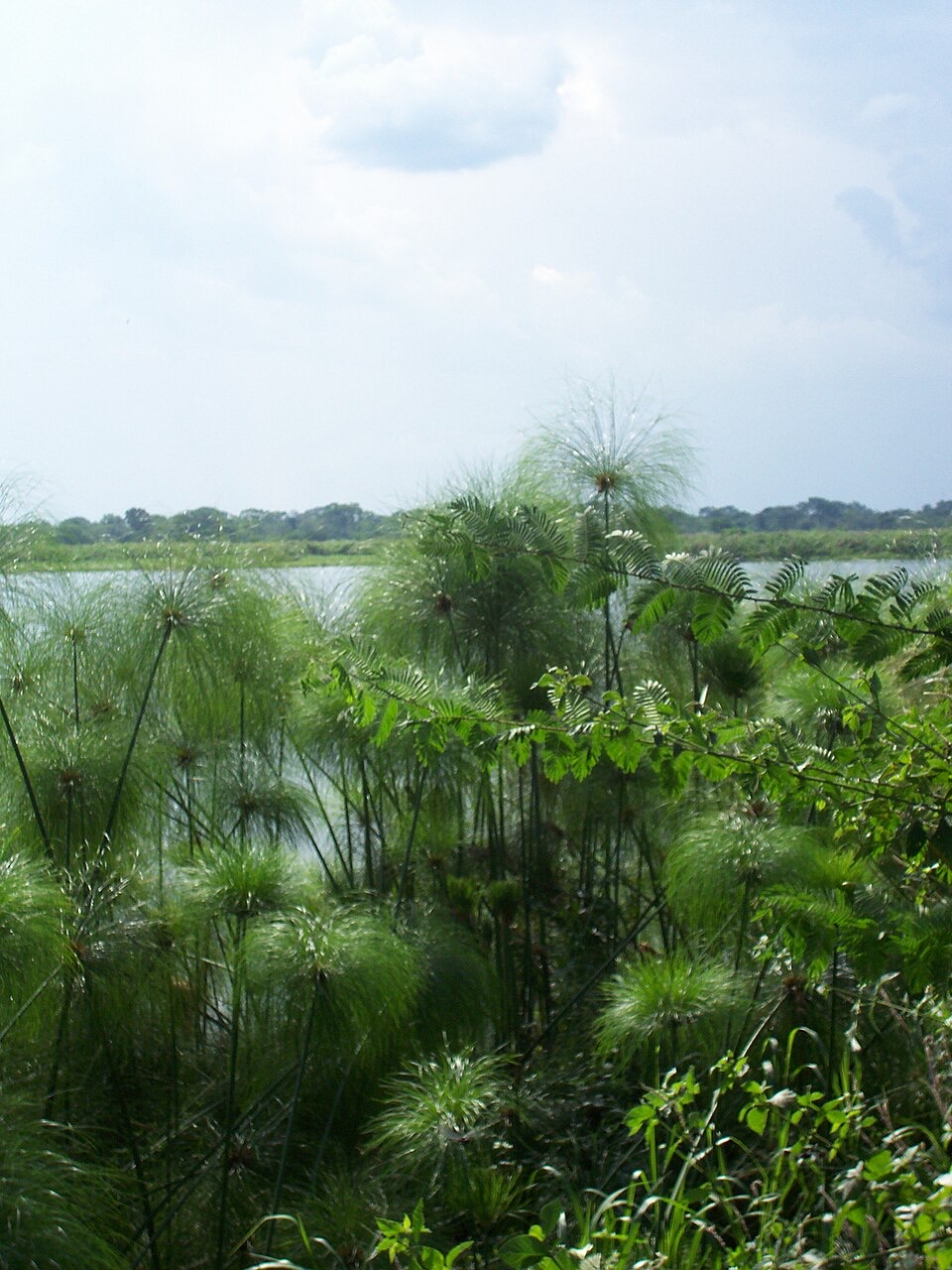
Picture a river so wide that the far bank is only a gray line, and the boat under you is nothing but reeds — papyrus stalks lashed into a bundle, riding the current of the longest river on Earth. Salva crosses the Nile by canoe, eats his first real meal in weeks in a fishing village built on an island in the middle of the water, and then lies awake all night while mosquitoes whine in his ears. On the far side waits the opposite of a river: a desert that takes three days to walk if nothing goes wrong. Something goes wrong. And twenty-three years later, in the same country, a girl named Nya sits beside her little sister’s sickbed and hears a simple, terrible sentence: the water made her sick. The same water the family drinks every single day. Part 4 is where water shows both of its faces.
Measured from its farthest headwaters, the Nile runs about 4,100 miles — usually enough to call it the longest river on Earth. The branch known as the White Nile begins where highland streams gather into Lake Victoria, in east-central Africa. From the lake's northern shore the young river tumbles north through rapids and enters the flat country of South Sudan. There it slows and spreads into the Sudd, one of the largest wetlands in the world, a shifting maze of papyrus and floating grass. In that endless swamp the river loses roughly half of its water to evaporation.
For the people along its banks, the river has always been both gift and obstacle. Bridges are rare — for years South Sudan had just one permanent bridge — so nearly every crossing is made by boat. The oldest boat is also the simplest: papyrus stalks, their spongy cores packed with air, are lashed into bundles so buoyant that a slender canoe rides high even under a grown man's weight. A builder can shape one in days from plants growing free at the water's edge, and replace it when it soaks through.
No one, however, steps carelessly into the relentless current, which never slackens. Crocodiles and hippopotamuses live in these waters, and the channels are treacherous, braiding and shifting with every flood season. A crossing can swallow an entire day of paddling, broken by rest stops on mid-river islands where fishing families make their homes and offer travelers simple hospitality. Yet the same waters sustain every village within reach, supplying fish, reeds for boats and roofs, and water for cattle and gardens. On a map a river divides the land; in daily life it feeds everyone bold enough to cross it.
“Whatever survives that slow, wandering passage continues north toward the sea.”
This writing task is optional and is not part of your auto-graded score. The feedback below checks only the basics — length, spelling, and grammar — not whether your ideas are right or wrong. It is meant for classroom discussion and creative practice, so feel free to use your imagination!
Writing Task — Part 4 “One Clump of Bushes at a Time”
In the desert, Uncle never asks Salva to be brave about the whole journey. He points to a clump of bushes and asks him to walk only that far — then finds him the next goal, and the next. Write about a time something in your life felt too big to finish — a project, a move, a season, a loss — and how it changed when you broke it into small steps, or how it might have. 6–10 sentences. End with the words you would say to someone standing at the edge of their own desert.
No right or wrong — close the screen and tell someone nearby what happened in this part. Can’t find anyone? Tell yourself out loud. The moment you teach it, you truly understand it.

Part 4 Complete!
You finished Chapters 8–10 of A Long Walk to Water.
Here are your auto-graded results:
Independent study guide by Garden Heights. Not affiliated with or endorsed by Linda Sue Park. Contains original analysis only; no text from the novel is reproduced. Reference text: This workbook follows Linda Sue Park’s classic text (the standard Puffin edition sold worldwide). Revised 2023 UK editions change some wording and may not match the vocabulary studied here.