New here? Just sign up with Google — your account includes Matilda, our gift book, forever.
A Wrinkle in Time · Garden Heights
Part 8
for A Wrinkle in Time · Part 8 · Chapter 12
8 Parts40 min
What Happens in Part 8
Meg alone returns to Camazotz and frees Charles Wallace from IT with the one thing IT lacks: love.
Someone must go backMeg wakes on Ixchel, healed by Aunt Beast, feeling fury, not relief — at IT, and at her father for tessering her away without Charles Wallace. Mrs Whatsit, Mrs Who and Mrs Which arrive, and Mrs Which announces that someone must go back for the boy. Meg waits for another name and slowly understands: the three cannot enter Camazotz, her father tried and failed, Calvin's words could not reach him, and only she is close enough to matter. Terrified, she volunteers.
Gifts for the roadEach guide gives her something. Mrs Whatsit gives her love. Mrs Who offers lines from an ancient letter — foolishness and weakness outdoing wisdom and strength, the chapter's title — telling her to bring her faults with the rest of herself. Mrs Which says Meg has one thing IT lacks but will not name it; Meg must find it herself. Mrs Whatsit adds that Meg's much-scolded faults — anger, impatience, stubbornness — are exactly what she needs. Mr. Murry and Calvin tesser home.
Alone with ITMrs Which carries Meg through the Dark Thing and leaves her alone on Camazotz with the great disembodied brain. Meg searches for a weapon. Anger? IT is made of anger. Hate? IT has more. Stubbornness? IT has that too, and stronger. Then possessed Charles Wallace, in IT's voice, says Mrs Whatsit hates her — a lie so exactly backwards that Meg sees the answer inside it. Mrs Whatsit loves her; love is the one thing IT never had and cannot copy.
Love brings him homeMeg cannot love IT, but can love Charles Wallace, and does — aloud, naming him, calling him hers, pouring everything at him until IT's grip tears loose. He runs into her arms, himself again, crying. They fall through darkness and land hard onto Calvin and Mr. Murry in the twins' vegetable garden, in sweet autumn earth. Mrs. Murry and the twins pound out; the family is whole. A wind gust brings the guides' farewell; they vanish before finishing saying where next.
Climax and resolution, the character arc that turns faults into tools, and allusion in the chapter title
Cross-Curricular
Altruism — what researchers have found about why people help at a cost to themselves
Chapter Summary
Ch.
What happens
Ch.12 · Ixchel
The Anger and the Errand — Meg wakes healed by Aunt Beast and still furious at her father for tessering away without Charles Wallace; the three arrive, and Mrs Which says someone must go back.
Ch.12 · The Gifts
Love, a Phrase, and a Riddle — Mrs Whatsit gives Meg her love, Mrs Who offers a line from an ancient letter about the foolish and the weak, and Mrs Which says Meg has one thing IT lacks — but will not name it.
Ch.12 · Camazotz and Home
The One Thing IT Has Not — alone before the brain, Meg finds that anger and hate belong to IT too; a lie about Mrs Whatsit shows her the answer, she loves Charles Wallace free, and they fall home into the vegetable garden.
Part 1
Vocabulary
Study 10 key words from Chapter 12, then answer each question.
🧠Knowledge Bank · Words for the Last Chapter
Lexical Semantics · Words for the Last Chapter
The last word set repeats two words on purpose. Fury is wild, violent anger, and Meg wakes on Ixchel carrying it — at her father, of all people. Resolute means firmly determined, not to be turned aside, which is what she becomes the moment she agrees to go back alone. Futile means certain to fail, pointless; her anger by itself had already proved exactly that against IT. To taunt is to mock someone cruelly in order to provoke them, and IT does it through her brother’s mouth, which is the cruelest arrangement in the book. Fury and futile both appeared earlier, and that repetition is the measurement. The same anger that accomplished nothing in Part 6 is still there in the last chapter. Meg has not been given a new feeling, only a second one to set beside it — and the book ends by making her choose which of the two to use.
furyn.Ch.12
Wild, violent anger
“Meg wakes on Ixchel full of fury at her father.”
resoluteadj.Ch.12
Firmly determined; not to be turned aside
“She is resolute once she agrees to go back alone.”
futileadj.Ch.12
Certain to fail; pointless
“Her anger alone proved futile against IT.”
tauntv.Ch.12
To mock someone cruelly to provoke them
“IT taunts Meg through her brother’s mouth.”
relinquishv.Ch.12
To give up or let go of something
“IT will not willingly relinquish Charles Wallace.”
exultantadj.Ch.12
Filled with triumphant joy
“The exultant family tumbles together in the garden.”
reconcilev.Ch.12
To settle a quarrel and become friendly again
“Meg must reconcile with her father before she goes.”
imperativeadj.Ch.12
Urgently necessary
“It is imperative that Meg return at once.”
compassionn.Ch.12
Sympathy that moves you to help
“Aunt Beast tends Meg with quiet compassion.”
frailtyn.Ch.12
Weakness of body or of character
“Mrs Who tells Meg to accept her own frailty.”
ⓘ The vocabulary words in this list are selected to help you understand and complete this workbook. Some may not appear verbatim in the original novel.
🧠Knowledge Bank question
1According to the Knowledge Bank, why does the last word set repeat fury and futile from earlier parts?Ch.12
2Someone ‘resolute’ is firmly determined and hard to turn aside.Ch.12
3A ‘futile’ effort is one that ___.Ch.12
4To ‘taunt’ someone is to praise them warmly.Ch.12
5Fill in each blank with the correct word.Ch.12
Word choices:relinquishfutileexultantfrailty- some words will not be used
IT will not willingly Charles Wallace.
Meg’s anger alone proved against IT.
6Someone ‘exultant’ feels ___.Ch.12
7‘Reconcile’ means to settle a quarrel and become friendly again.Ch.12
8Something ‘imperative’ is ___.Ch.12
9Fill in each blank with the correct word.Ch.12
Word choices:compassionfrailtyfurytaunt- some words will not be used
Aunt Beast tends Meg with great .
Meg must accept her own and go anyway.
10‘Frailty’ means ___.Ch.12
Part 2
Comprehension
Show you understood what happens in Chapter 12.
🧠Knowledge Bank · Back to Camazotz, Alone
Narrative Causality · Back to Camazotz, Alone
The ending can be followed as a climax, a meaningful return, and a final closure rather than as isolated incidents. Meg wakes on Ixchel, healed by Aunt Beast, and her first feeling is not relief but fury — at IT, and at her father, who tessered her away and left Charles Wallace behind. Mrs Whatsit, Mrs Who and Mrs Which arrive, and Mrs Which announces that one of them must go back for the boy. Meg waits for someone else to be named and slowly understands the truth: the three cannot enter Camazotz, her father already tried and failed, Calvin’s words could not reach Charles Wallace, and she alone is close enough to her brother to matter. Terrified, she volunteers. Each of the three gives her something for the road. At the close, “Back to Camazotz, Alone” completes the book’s movement toward resolution.
🧠Knowledge Bank question
1According to the Knowledge Bank, why must Meg be the one who returns to Camazotz for Charles Wallace?Ch.12
2Why must Meg be the one to return to Camazotz?Ch.12
3Mrs Whatsit tells Meg that her faults will be of no use to her.Ch.12
4What does Mrs Who give Meg before she goes?Ch.12
5Write the numbers 1–5 in the boxes to show the correct order of events. Number 1 = what happens first.Chapter 12
The children land in the twins’ vegetable garden.
Mrs Which says someone must go back for Charles Wallace.
Meg faces IT alone and names her love for her brother.
The three guides give Meg their parting gifts.
Meg wakes on Ixchel, still furious at her father.
6Meg discovers that her anger and hatred are the weapons IT cannot match.Ch.12
7What lie does the possessed Charles Wallace tell Meg?Ch.12
8How does Meg free Charles Wallace?Ch.12
9Meg is able to love IT itself, and that is what defeats it.Ch.12
10Where do the children land when they return to Earth?Ch.12
Part 3
Literary Elements
Understanding HOW and WHY Madeleine L'Engle (author) tells the story across Chapter 12.
🧠Knowledge Bank · Where the Title Comes From
Narrative Technique · Where the Title Comes From
The closing movement joins resolution, arc, and allusion, allowing the ending to answer the beginning. The chapter is called “The Foolish and the Weak,” and the phrase is not L’Engle’s. Mrs Who, who speaks almost entirely in borrowed lines, hands Meg a sentence from a letter written by Paul of Tarsus to a Greek congregation at Corinth in roughly the middle of the first century — a text now printed in the New Testament as First Corinthians. The argument in that passage is that what looks foolish may be wiser than human cleverness, and what looks weak may be stronger than human strength. L’Engle, who was a practicing Anglican and wrote openly about her faith, uses it here as an allusion: a short reference that asks the reader to carry a second, older text alongside the story. That authorial design makes “Where the Title Comes From” a lesson in deliberate payoff.
Visual AidNineteen centuries between the letter and the book
Timeline to scale, AD 1 to 2000. The letter Mrs Who quotes was written by Paul to the congregation at Corinth in about AD 55 — a scholars’ estimate, not a recorded date — and A Wrinkle in Time was published in 1962. Nothing is marked in between: the timeline measures the gap and makes no claim about how the words traveled across it.
Dating of First Corinthians (c. AD 53–55) per standard New Testament introductions, e.g. Raymond E. Brown, An Introduction to the New Testament (1997); publication date from the first edition, Farrar, Straus & Giroux, 1962. Drawn for Garden Heights Academy.
Climax & resolution
Meg standing alone before IT is the highest point of tension; everything after it settles the plot and brings the family home.
Character arc
Meg ends the novel using the very faults — anger, impatience, stubbornness — that made her miserable on the first page.
Allusion
A brief nod to another well-known text. The chapter title borrows a phrase from an ancient letter about the foolish and the weak.
🧠Knowledge Bank question
1The Knowledge Bank explains that the chapter title “The Foolish and the Weak” comes from ___.Ch.12
2The chapter title’s nod to a phrase from an ancient letter is an example of ___.Ch.12
3A character arc is the way a character changes across a story.Ch.12
4Mrs Whatsit telling Meg her faults will help her matters because it ___.Ch.12
5A story’s climax must always be a physical fight.Ch.12
6Fill in each blank with the correct literary term.Ch.12
Word choices:climaxallusionrhymeindex- some words will not be used
Meg alone before IT is the .
The chapter title is an to an older text.
7The events after Charles Wallace breaks free make up the ___.Ch.12
8Arming Meg with love rather than a weapon mainly develops the ___.Ch.12
9The three guides stay on Earth to see the family settled.Ch.12
10Fill in each blank with the correct literary term.Ch.12
Word choices:character arcresolutionsettingfootnote- some words will not be used
Meg’s change from angry misfit to rescuer is her .
The reunion in the garden is the .
Part 4
Think Deeper
Four deeper challenges — no single-word recall. Read, weigh the evidence, and reason it out.
🧠Knowledge Bank · Why Anyone Helps
The Science of Altruism · Why Anyone Helps
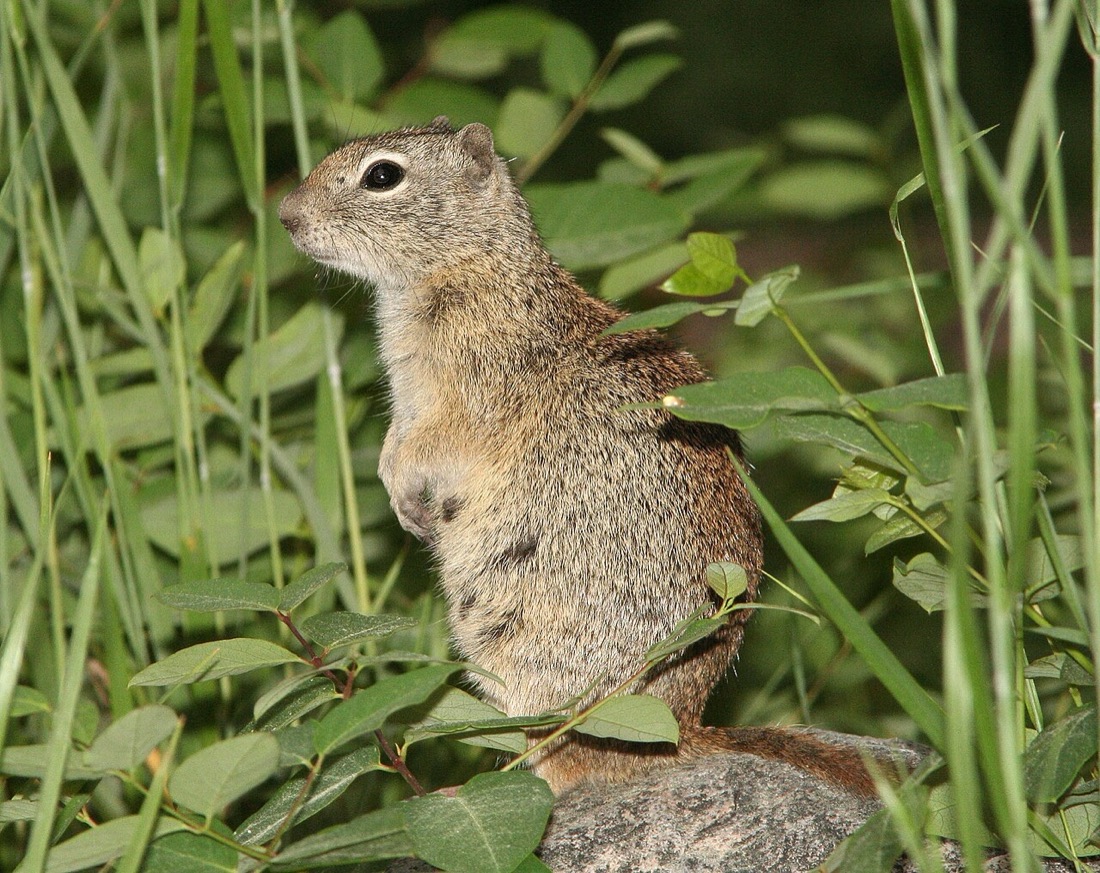
Mrs Which tells Meg she owns something IT does not, and refuses to name it. The answer turns out to be the thing scientists have spent sixty years trying to explain. Altruism means helping another at a real cost to yourself, with nothing coming back. For a long time it looked like a flaw in the theory of evolution: if survival rewards looking after yourself, why does a ground squirrel scream a warning that tells the hawk exactly where the screamer is? Two answers arrived. The first is kin selection — helping close relatives protects genes you share with them, so the helping spreads even when the helper dies. The second is reciprocal altruism: in animals that live together long enough to remember one another, helping today is repaid tomorrow, and a reputation for helping is worth having in itself. Neither answer covers what Meg does. She goes back for a brother who cannot thank her, on a planet nobody on Earth will ever hear of, which is why the book gives the last word not to science but to love.
Visual AidThe squirrel that screams a warning
Photograph of a Belding’s ground squirrel standing upright near Tioga Pass, California, 2009 — the posture it takes to watch for hawks. Biologists studying this species found that the squirrels most likely to give an alarm call are females with close relatives nearby, which is the kin-selection evidence the Knowledge Bank describes. The picture shows a squirrel on watch; whether this one ever called, nobody knows.
Belding’s ground squirrel (Urocitellus beldingi), east of Tioga Pass, California; photograph by Alan Schmierer, 2009. Source: Wikimedia Commons, File:SQUIRREL, BELDING’S GROUND (spermophilis beldingi) (6-29-09) east of tioga pass, ca -02 (9645840154).jpg, CC0.
Imagine a girl who has just been carried back from the edge of death by a creature with no eyes, and whose first clear feeling is not gratitude but rage — rage at her own father, who saved her and left her little brother behind. Now imagine three strange guides arriving to tell her that the rescue is hers to make, that they cannot come, and that she owns one thing the thing on that planet has never owned. They will not tell her what it is. She is set down alone in front of a pulsing disembodied brain, and she runs through everything in her hands: her fury, her hatred, her flat refusal to give in. The brain has all of it. Then the small boy it is wearing tells her a lie so exactly backwards that the truth falls out of it — and she finally knows what she brought.
Original passage written for Garden Heights — not a quotation from the novel.
1Claim: “Meg wins because of who she already is, not because the guides make her stronger.” — choose the two details that best prove it.Claim & Evidence
2Belongs to IT as well, or Meg alone has it? Tap each detail to sort it — tap again to switch sides. You can keep tapping to change your answer.Sort into two
◄ Belongs to IT as wellMeg alone has it ►
3Match each cause to its result. For each cause, pick its result.Cause & Effect
Mr. Murry tessers Meg away from Camazotz→
The three cannot enter Camazotz themselves→
Charles Wallace says Mrs Whatsit hates Meg→
Meg loves her brother out loud→
🧠Knowledge Bank question
4Fill both blanks to complete the reasoning.Build the Argument
The Knowledge Bank argues that neither kin selection nor reciprocal altruism fully explains Meg's choice because , which shows that .
Part 5
Standardized Test
Reading passage · Why People Help · SAT & TOEFL-style practice
Read the passage — the highlighted words are tested — then answer. Tap an answer, then tap it again to confirm.
SATCentral Ideas — the passage's main point
SATDetail — a fact stated in the passage
SATWords in Context — a word's meaning in this passage
SATText Structure & Purpose — how the passage is built, and why
SATInference — a conclusion the passage implies
SATText Connections — how two parts of the text relate
TOEFLFactual Information — a fact stated in the passage
TOEFLInsert Text — where a sentence best fits
TOEFLVocabulary — a tested word's meaning here
The Biology of Helping Strangers
Biologists have a word for helping that costs the helper and returns nothing: altruism, which for most of the last century looked like a hole in the theory of evolution. If survival rewards animals that look after themselves, why does a ground squirrel give an alarm call that saves the colony but tells the hawk where it stands, and why do honeybees die defending a hive? Two explanations did most of the work. The first, developed by William Hamilton in the 1960s, is kin selection: helping close relatives protects the genes you share with them. The second is reciprocity, since help given today may be returned tomorrow.
Neither idea reaches the person who goes into a freezing river for a stranger. Researchers have interviewed people who did such things, including those who sheltered hunted families during the Second World War, and the interviews are consistent. The rescuers seldom describe a decision; they describe acting before there was time to weigh anything — fast, almost automatic, as though helping were imperative, something that had to be done. In studies by the psychologist Daniel Batson, people led to feel what another was feeling helped even when slipping away was easy and unseen.
This is why laboratories study love as behavior, not feeling: a feeling cannot be measured, but an action can. Toddlers of eighteen months will cross a room to open a cabinet for an adult with full hands, unprompted and unrewarded, even for a stranger. None of this proves that people are good; cruelty is equally well documented and easier to explain. What the research establishes is that compassion — putting someone else first — is not rare equipment issued to heroes; it shows up early, and sixty years of trying has not explained it away.
Original passage written for Garden Heights — not a quotation from the novel.
1What is the main idea of the passage?SAT · Central Ideas
2According to the passage, William Hamilton explained altruism by pointing to ___.TOEFL · Factual Information
3The passage says rescuers usually describe their act as ___.SAT · Detail
4What did Batson’s experiments show?TOEFL · Factual Information
5Insert Text (TOEFL). Look at the four squares [1]–[4] in the excerpt below. They show where this sentence could be added: “Neither explanation reaches the stranger a helper will never meet again.”
Two explanations did most of the work. [1] The first, developed by William Hamilton in the 1960s, is kin selection: helping close relatives protects the genes you share with them. [2] The second is reciprocity, since help given today may be returned tomorrow. [3] Researchers have interviewed people who did such things, and the interviews are remarkably consistent. [4]
Where would the sentence fit best?TOEFL · Insert Text
6In the passage, compassion most nearly means ___.SAT · Words in Context
7In the passage, imperative most nearly means ___.TOEFL · Vocabulary
8Why do researchers study love as behavior?SAT · Text Structure & Purpose
9The toddler experiments suggest that helping ___.SAT · Inference
10How does this passage best help explain Part 8?SAT · Text Connections
Part 6 · Optional
Creative Writing
A bonus challenge to practice your English. Take your time and have fun with it.
About This Section
This writing task is optional and is not part of your auto-graded score. The feedback below checks only the basics — length, spelling, and grammar — not whether your ideas are right or wrong. It is meant for classroom discussion and creative practice, so feel free to use your imagination!
Writing Task — Part 8 “The One Thing You Have”
Mrs Which tells Meg she owns something IT does not, but refuses to say what it is — Meg has to find it under pressure, alone. Write about a time you had to face something difficult and discovered that what you brought was not what you expected. What did you try first? What actually worked? 6–10 sentences. End with the one strength you did not know you had.
You can start with: “I thought the thing that would save me was...”
0 / 40 words minimum
🗣 Teach It · Just for Fun (optional)
No right or wrong — tell someone nearby what happened in this part. Can’t find anyone? Tell yourself out loud. The moment you teach it, you truly understand it.
Part 8 Complete — You Finished the Book! 🎉
You finished Chapter 12 — the final part of A Wrinkle in Time.
Here are your auto-graded results:
-
points out of 100
Teach it to someone
The best last step is to teach it. In your own words, explain what happened — retell a favorite scene, teach a character’s big choice, or sum up the main idea for a parent, friend, or classmate. When you can teach it clearly, you truly own it.
Independent study guide by Garden Heights. Not affiliated with or endorsed by Madeleine L'Engle. Contains original analysis only; no text from the novel is reproduced. Reference text: This workbook follows Madeleine L'Engle’s classic text (the standard Puffin edition sold worldwide). Revised 2023 UK editions change some wording and may not match the vocabulary studied here.
SAT® is a registered trademark of College Board, which is not affiliated with, and does not endorse, these materials. TOEFL® is a registered trademark of ETS. These materials are not endorsed or approved by ETS. Garden Heights is an independent provider of test-style reading practice.