New here? Just sign up with Google — your account includes Matilda, our gift book, forever.
Charlie and the Chocolate Factory · Garden Heights
Part 1
for Charlie and the Chocolate Factory · Part 1 · Chapters 1–4
8 Parts40 min
What Happens in Part 1
Part 1 introduces Charlie Bucket, a kind boy whose family is terribly poor. Seven people share one tiny house: Charlie, his mother and father, and all four grandparents, who are so old and tired that they stay together in the one big bed. There is never quite enough food, yet Charlie loves nothing more than chocolate — and he can only afford it once a year, on his birthday. Every day he walks past the enormous, mysterious factory of Mr. Willy Wonka, the greatest chocolate-maker in the world. In the evenings, Grandpa Joe fills Charlie’s head with wonders: ice cream that never melts, and the tale of an Indian prince who once asked Mr. Wonka to build him a whole palace out of chocolate — a palace that melted in the hot sun. Strangest of all is the factory itself: its chimneys smoke and its machines roar, yet no worker is ever seen going in or coming out — not since spies stole Mr. Wonka’s secret recipes and he shut the great iron gates.
What We Will Learn
Section
What you will practice
Vocabulary
Vivid words from a poor boy’s world: enormous, scarcely, desperately, marvelous, abandon…
Literary Elements
Imagery, hyperbole, and how setting builds a story’s mood
Cross-Curricular
How chocolate is really made (and why it melts), plus what poverty and scarcity mean
Chapter Summary
Ch.
What happens
1
Here Comes Charlie — meet the poor Bucket family and Charlie, who loves chocolate but gets only one bar a year.
2
Mr. Willy Wonka’s Factory — Grandpa Joe describes the world’s greatest chocolate-maker and his magical sweets.
3
Mr. Wonka and the Indian Prince — the tale of a chocolate palace that melted in the sun.
4
The Secret Workers — spies steal Wonka’s recipes; he shuts the factory, which now runs with no workers in sight.
Part 1
Vocabulary
Study 10 key words from Chapters 1–4, then answer each question.
🧠Knowledge Bank · Secret Recipes and Real Spies
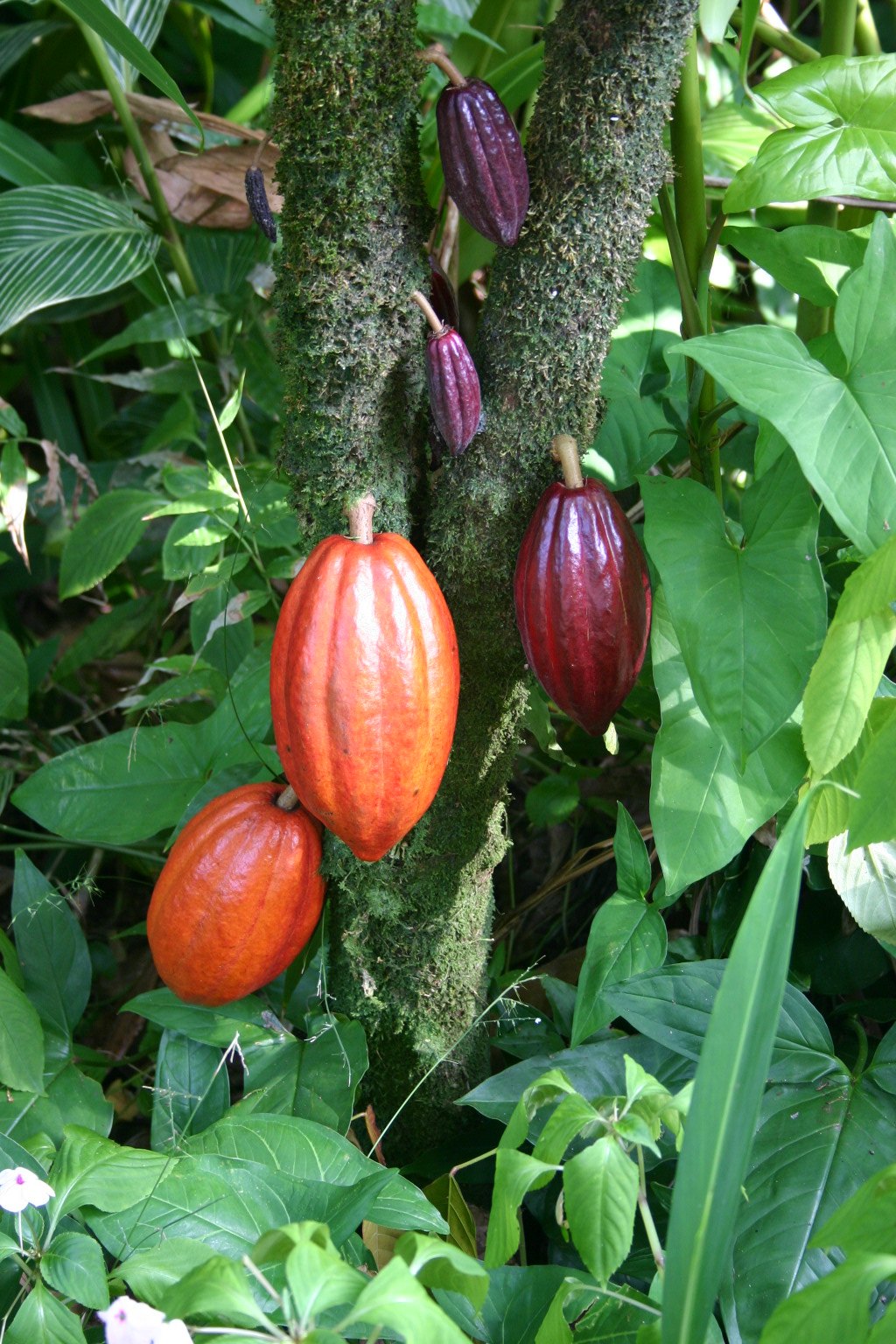
Chocolate Science · Guarded RecipesChocolate begins as bitter seeds inside the pods of the cacao tree, which grows only in the hot, wet lands near the equator. Makers dry those seeds, roast them until a deep smell rises, grind them into a thick paste, and blend that paste with sugar and milk. How long, how hot, and how much of each — that exact method is a maker’s fortune, and the law shields it as a trade secret. This part of the story is not invented. Real British chocolate firms such as Cadbury and Rowntree once guarded their methods so fiercely that each was said to slip spies into the other’s works, and Dahl folded that true rivalry straight into his tale of a factory locked against the world to protect one stolen recipe.
enormousadj.Ch.2
Extremely large; huge
“Mr. Wonka’s enormous factory towers over the town.”
scarcelyadv.Ch.1
Hardly; almost not at all
“The family scarcely had enough food to eat.”
desperatelyadv.Ch.1
With great, urgent need or longing
“Charlie desperately wished for more chocolate.”
inventorn.Ch.2
A person who creates new things
“Mr. Wonka is a brilliant inventor of sweets.”
marvelousadj.Ch.2
Wonderful; causing amazement
“Grandpa Joe told marvelous tales of the factory.”
sensibleadj.Ch.3
Showing good judgment; wise
“Mr. Wonka gave the prince sensible advice.”
recipen.Ch.4
Instructions for making a food
“Spies wanted to steal each secret recipe.”
spyn.Ch.4
One who secretly gathers others’ secrets
“A spy sneaked in dressed as a worker.”
ordinaryadj.Ch.1
Normal; not special
“Charlie was an ordinary boy in an ordinary town.”
abandonv.Ch.4
To leave behind and not return
“Wonka had to abandon the closed factory.”
1Something ‘enormous’ is —Ch.2
2To do something ‘desperately’ is to do it —Ch.1
3Fill in each blank with the correct word.Chs. 1–4
Word choices:scarcelymarvelousordinaryenormous- some words will not be used
The Buckets had enough money for food.
Grandpa Joe told stories about the factory.
4An ‘inventor’ is a person who —Ch.2
5If something is ‘ordinary,’ it is normal and not special.Ch.1
6A ‘recipe’ is —Ch.4
7Fill in each blank with the correct word.Chs. 3–4
Word choices:recipespyinventorabandon- some words will not be used
A sneaky stole Wonka’s secrets.
Wonka had to the empty factory.
8Something ‘marvelous’ is —Ch.2
9To be ‘sensible’ is to —Ch.3
10To ‘scarcely’ have something means you have plenty of it.Ch.1
Part 2
Comprehension
Show you understood what happens in Chapters 1–4.
🧠Knowledge Bank · Reading a Character’s Heart
Reading Skill · CharacterizationSkilled readers learn the most about a person not from labels but from small, telling details. Dahl rarely stops to announce that Charlie is kind; instead he shows a boy who takes tiny nibbles to make one bar last a month, and who visits his grandparents’ bed to listen rather than to complain. From those actions we infer character, the way a doctor reads health from a heartbeat. This skill matters because the whole book will hand us four other children to judge, and Dahl will define each one through behavior — how they eat, speak, and treat their parents. So read the opening chapters like a detective gathering evidence. Ask what each choice reveals about the heart beneath it, and you will already sense why this gentle, patient boy is being quietly marked as someone special.
1How many people live together in the Bucket family’s little house?Ch.1
2Why can Charlie eat chocolate only once a year?Ch.1
3Fill in each blank with the correct word.Chs. 1–2
Word choices:bedtoothpastepalacegold- some words will not be used
All four grandparents are so old they share a single .
Charlie’s father works screwing caps onto tubes of .
4Who fills Charlie’s head with stories about Mr. Wonka?Ch.2
5Prince Pondicherry asked Mr. Wonka to build him a palace made entirely of chocolate.Ch.3
6What happened to the prince’s chocolate palace?Ch.3
7Why did Mr. Wonka close his factory for a time?Ch.4
8Write the numbers 1–5 in the boxes to show the correct order of events in Part 1. Number 1 = what happens first.Chs. 1–4
Mr. Wonka builds the Indian prince a palace made all of chocolate.
The hot sun melts the chocolate palace into a sticky mess.
We meet Charlie Bucket, a poor boy who loves chocolate more than anything.
Grandpa Joe tells Charlie about Mr. Wonka’s marvelous factory.
Spies steal Mr. Wonka’s secret recipes, so he shuts the factory.
9What is most mysterious about the factory now?Ch.4
10Charlie’s family always has plenty of food to eat.Ch.1
Part 3
Literary Elements
Understanding HOW and WHY Roald Dahl tells the story across Chapters 1–4.
🧠Knowledge Bank · Exaggeration That Paints Poverty
Author’s Craft · Hyperbole & ImageryDahl loves hyperbole — deliberate, playful exaggeration stretched far past the truth. He tells us the Bucket house holds one room and beds too small for the family, that wind pours through the cracks, that everyone is nearly starving on watery cabbage soup. No real house is quite this bare, but the exaggeration paints their poverty in bold, unmistakable strokes. The device works hand in hand with imagery, language aimed at the senses, so we can almost feel the cold and taste the thin soup. Watch his word choices too: enormous, marvelous, desperately. Each one takes an ordinary idea — big, nice, wanting — and stretches it to its limit, which is how a plain gray town begins to feel.
📚 Literary Devices in This Part · definitions & examples
Imagery is language that appeals to the five senses (the smell of melting chocolate). Hyperbole is wild exaggeration for effect (the greatest chocolate-maker the world has ever seen). Setting is the time and place of a story (a cold, poor town beside a giant factory).
1Calling Mr. Wonka “the greatest chocolate-maker the world has ever seen” is an example of —Ch.2
2Imagery is language that appeals to the five senses.Ch.1
3Fill in each blank with the correct word.Chs. 1–2
Word choices:imageryhyperbolesettingplot- some words will not be used
Dahl’s picture of the freezing house and thin soup is vivid .
Calling Wonka the greatest maker ever is .
4The cold little town where the Buckets live is the story’s —Ch.1
5Hyperbole means the writer is lying in order to trick the reader.Ch.2
6Fill in the blank with the correct word.Ch.2
Word choices:imageryhyperboleindex- some words will not be used
The smell of melting chocolate drifting over the whole town is rich .
7Why does Dahl describe the Buckets’ cold and hunger in such careful detail?Ch.1
8The tale of a whole palace built of chocolate mainly shows Dahl’s love of —Ch.3
9Fill in the blank with the correct word.Chs. 1–4
Word choices:settinghyperbolerhyme- some words will not be used
The time and place in which a story unfolds is called its .
10Dahl keeps the factory feeling mysterious mainly by —Ch.4
Part 4
Think Deeper
Four deeper challenges — no single-word recall. Read, weigh the evidence, and reason it through.
🧠Knowledge Bank · What Scarcity Teaches
Ethics · Poverty & GratitudeEconomists use the word scarcity for what the Buckets live with daily: when money runs short, even food and warmth stop being ordinary and become luxuries. Their meals are bread, margarine, and thin cabbage soup, and Charlie’s one yearly bar is rationed a nibble at a time so that it lasts for months. Yet Dahl never lets the family lose its dignity. They are poor in money and rich in love, patience, and gratitude, and that difference sits at the moral center of the book. A child who rarely gets sweets learns to savor them slowly; a child handed everything often savors nothing. Dahl is quietly arguing that having less can grow a fuller heart, which is why the poorest boy in town is also the most thankful.
1Claim: “The Buckets are so poor that even food and warmth are luxuries.” — choose the two details that best prove it.Claim & Evidence
2The Buckets’ hard life, or Wonka’s wonders? Tap each item to send it left or right.Sort into two
◄ Hard lifeWonka’s wonders ►
3Match each cause to its result. For each cause, pick its result.Cause & Effect
Mr. Bucket earns only tiny wages→
The hot sun beats down on the chocolate palace→
Spies sneak in and steal the secret recipes→
Charlie is given just one bar a year→
4Fill both blanks to complete the reasoning.Build the Argument
Charlie treasures his one yearly chocolate bar, while a rich child might barely notice it, because , which shows that .
Part 5
Standardized Test
From Bean to Bar — and Why Chocolate Melts · SAT & TOEFL-style practice
🎯 You already have the skills from the sections above — this is just a fun way to meet real SAT & TOEFL-style questions. Read the passage (the highlighted words are tested below), then answer the questions below. Tap an answer to select it, then tap it again to confirm — you can change your choice until you confirm.
Every chocolate bar begins on a tree. The cacao tree grows large pods, and inside each pod are pale seeds we call cocoa beans. Workers dry the beans in the sun; then the beans are roasted until they turn dark and give up their deep flavor. Next the roasted beans are crushed and ground into a thick, gritty paste. Sugar, and usually milk, is stirred in, and the mixture is rolled for hours until it is perfectly smooth. Finally it is poured into molds and cooled, and the liquid sets into the solid bar you unwrap.
But that solid bar hides a secret. A large share of chocolate is cocoa butter, a natural fat with an unusual habit: it stays firm at room temperature yet melts at just below the warmth of the human body. That is why a bar snaps cleanly in your hand but turns to silk the moment it touches your tongue. It is also why chocolate cannot survive real heat: leave a bar in the sun and it slumps into a puddle — the very fate that ruined the Indian prince’s chocolate palace in the story.
Original passage written for Garden Heights — not a quotation from the novel.
1Where does every chocolate bar begin?SAT · Detail
2What are the pale seeds inside a cacao pod called?TOEFL · Factual Information
3The beans are “roasted,” meaning they are —SAT · Words in Context
4What is stirred into the ground cocoa mixture?SAT · Detail
5The beans are ground into a “paste,” meaning a —TOEFL · Vocabulary
6A large share of chocolate is made of —TOEFL · Factual Information
7Cocoa butter “melts” near body warmth, meaning it —SAT · Words in Context
8Why does a bar turn to silk on your tongue?SAT · Cause & Effect
9What is the passage mainly about?SAT · Central Idea
10This passage connects to Part 1 because it explains why —TOEFL · Rhetorical Purpose
Part 6 · Optional
Creative Writing
A bonus challenge to practice your English. Take your time and have fun with it.
About This Section
This writing task is optional and is not part of your auto-graded score. The feedback below checks only the basics — length, spelling, and grammar — not whether your ideas are right or wrong. It is meant for classroom discussion and creative practice, so feel free to use your imagination!
Writing Task — Part 1 “A Treat Worth Waiting For”
Charlie gets only one chocolate bar a year, and he makes it last as long as he can. Write about a treat or a moment you once had to wait a long time for. What was it, how did the waiting feel, and was it worth it in the end? Write at least 40 words.
You can start with: “I had waited so long for this that…”
0 / 40 words minimum
🗣 Teach It · Just for Fun (optional)
No right or wrong — close the screen and tell someone nearby what happened in this part. Can’t find anyone? Tell yourself out loud. The moment you teach it, you truly understand it.

Part 1 Complete!
You finished Chapters 1–4 of Charlie and the Chocolate Factory.
Here are your auto-graded results:
-
points out of 100
Your Writing
Your writing was checked automatically for length, spelling, grammar, and whether you included the key parts of the scene. Scroll back to Part 5 anytime to read your feedback and improve your work.
Independent study guide by Garden Heights. Not affiliated with or endorsed by Roald Dahl. Contains original analysis only; no text from the novel is reproduced. Reference text: This workbook follows Roald Dahl’s classic text (the standard Puffin edition sold worldwide). Revised 2023 UK editions change some wording and may not match the vocabulary studied here.