New here? Just sign up with Google — your account includes Matilda, our gift book, forever.
Charlie and the Chocolate Factory · Garden Heights
Part 7
for Charlie and the Chocolate Factory · Part 7 · Chapters 24–27
8 Parts40 min
What Happens in Part 7
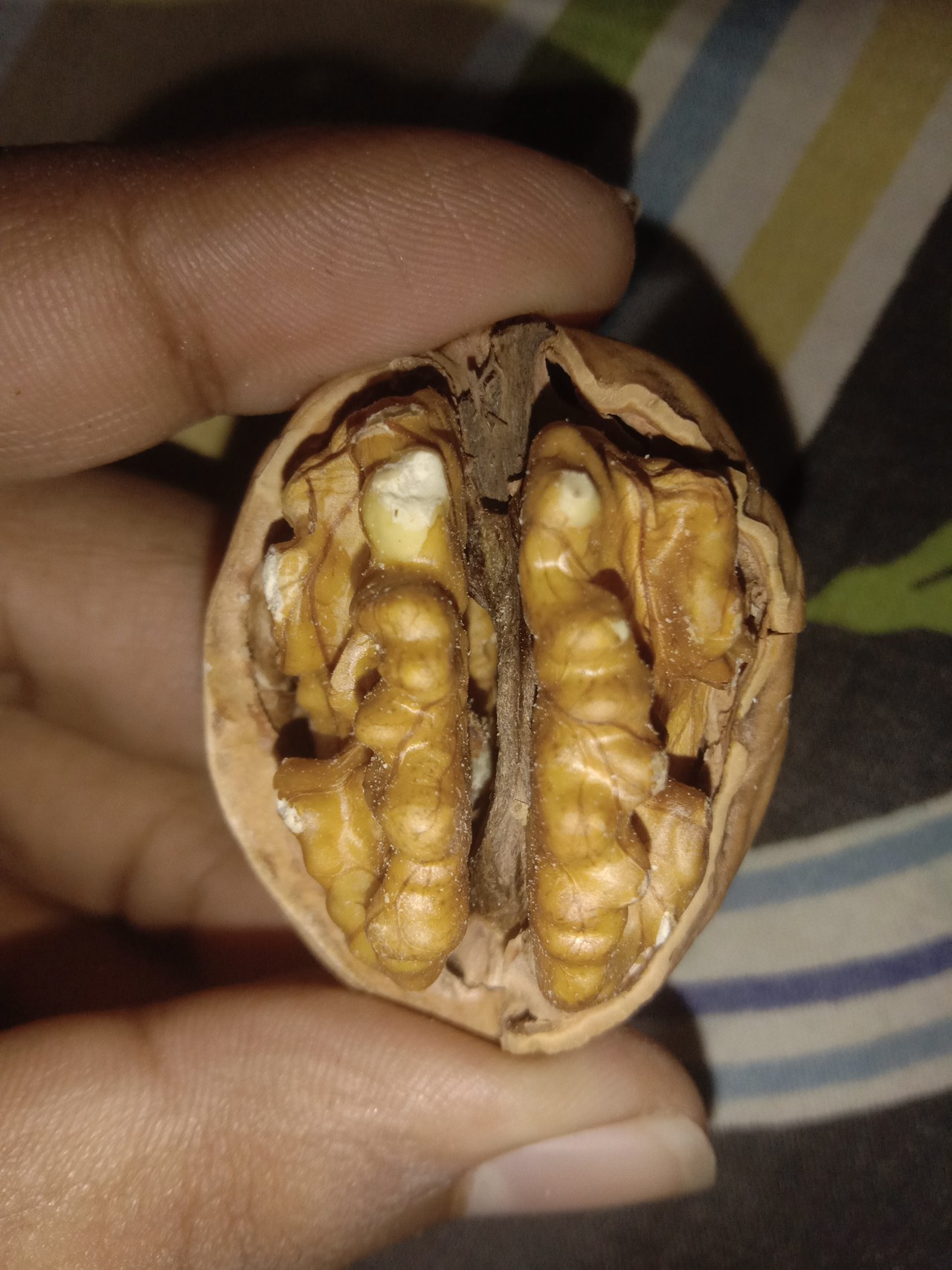
Two more children fall away. In the Nut Room, a hundred trained squirrels shell walnuts, tapping each one to inspect it and tossing the bad ones down a rubbish chute. Spoiled Veruca Salt demands a squirrel of her own and charges in to grab one — so the squirrels test her, judge her a “bad nut,” and drop her down the chute, with her parents tumbling after. Then the survivors ride the astonishing Great Glass Elevator, which can shoot in any direction, to the dazzling Television-Chocolate Room, where Wonka is learning to send chocolate by television. Reckless Mike Teavee, who cares only for TV, ignores every warning and sends himself instead — and pops up on the screen just one inch tall. Wonka promises to stretch him back to size.
What We Will Learn
Section
What you will practice
Vocabulary
Words of testing and trouble: demand, shell, inspect, chute, transmit, shrink…
Literary Elements
Satire, situational irony, and theme
Cross-Curricular
How television sends a picture, and how animals are trained for skilled work
Chapter Summary
Ch.
What happens
24
The Nut Room — trained squirrels judge Veruca a “bad nut” and drop her down the chute.
25
The Great Glass Elevator — the glass lift can fly in any direction to any room.
26
The Television-Chocolate Room — Wonka tests sending chocolate by television.
27
Mike Teavee is Sent by Television — Mike sends himself and shrinks to one inch tall.
Part 1
Vocabulary
Study 10 key words from Chapters 24–27, then answer each question.
🧠Knowledge Bank · Sorting the Good from the Bad
Factory Science · Sorting the Good NutsVeruca meets her fate in a room full of nuts, and behind the trained squirrels lies a genuine factory job: sorting. Candy makers must separate good from bad every day — ripe nuts from rotten ones, whole kernels from splintered shells — because a single spoiled nut can ruin an entire batch. People once did this by hand and by ear; modern plants use machines that shake, weigh, and listen for the hollow rattle of a bad kernel. Wonka’s squirrels are a joke about that work, yet trained animals really do skilled jobs: dogs sniff out danger no sensor can catch, and pigeons once carried messages across whole countries. When an animal’s senses beat the best machine, the sensible thing is to hire the creature.
demandv.Ch.24
To ask for firmly
“Veruca demanded a squirrel of her own.”
shellv.Ch.24
To take out of its shell
“The squirrels shell the walnuts.”
inspectv.Ch.24
To look at closely
“Each squirrel inspects its nut.”
chuten.Ch.24
A slide for dropping things
“Bad nuts go down the rubbish chute.”
furnacen.Ch.24
A very hot fire or oven
“The chute leads toward a furnace.”
transmitv.Ch.26
To send across a distance
“A tower can transmit a picture.”
shrinkv.Ch.27
To grow smaller
“Mike began to shrink on the screen.”
recklessadj.Ch.27
Careless of danger
“Reckless Mike ignored every warning.”
dreadfuladj.Ch.27
Terrible; very bad
“Mrs. Teavee thought it dreadful.”
stretchv.Ch.27
To pull out longer
“Wonka will stretch Mike back to size.”
1To ‘demand’ something is to —Ch.24
2To ‘inspect’ something is to —Ch.24
3Fill in each blank with the correct word.Ch.24
Word choices:shellchutefurnacedemand- some words will not be used
The clever squirrels can a walnut whole.
A bad nut is dropped down the rubbish .
4To ‘transmit’ something is to —Ch.26
5To ‘shrink’ is to grow smaller.Ch.27
6Someone ‘reckless’ is —Ch.27
7Fill in each blank with the correct word.Ch.27
Word choices:shrinkrecklessstretchdreadful- some words will not be used
Wonka says he can Mike back to his full size.
Mrs. Teavee found the whole thing quite .
8Something ‘dreadful’ is —Ch.27
9To ‘shell’ a nut is to —Ch.24
10A ‘chute’ is a slide or passage for dropping things down.Ch.24
Part 2
Comprehension
Show you understood what happens in Chapters 24–27.
🧠Knowledge Bank · Adding the Clues Together
Reading Skill · Drawing ConclusionsWith four children gone, a reader can now draw a conclusion — a wide judgment built from many gathered clues rather than from one line. The greedy, the spoiled, the boastful, and the screen-struck have each fallen, while the grateful boy remains. Add those departures together and something firm appears: Dahl is not punishing children at random, he is sorting them by character. A conclusion is not the same as a small inference; it is the wide view you earn only after the evidence has piled high. Practice it here by asking what all four exits share and what they say about the writer’s beliefs. Then test your conclusion the way a careful reader should, by hunting for any moment in the book that your reading of it cannot explain.
1What animals work in the Nut Room?Ch.24
2How do the squirrels test whether a nut is good or bad?Ch.24
3Fill in each blank with the correct word.Ch.24
Word choices:nutchutesquirrelfurnace- some words will not be used
The squirrels judge Veruca to be a bad .
They drop her down the rubbish .
4What happens to Mr. and Mrs. Salt in the Nut Room?Ch.24
5The Great Glass Elevator can travel in any direction, not just up and down.Ch.25
6What is Wonka testing in the Television-Chocolate Room?Ch.26
7What does Mike Teavee do despite the warnings?Ch.27
8Write the numbers 1–5 in the boxes to show the correct order of events in Part 7. Number 1 = what happens first.Chs. 24–27
Wonka shows how he can send a chocolate bar by television.
The squirrels judge Veruca a bad nut and drop her down the chute.
Mike sends himself by television and shrinks to one inch tall.
Mr. and Mrs. Salt are pushed down the chute after Veruca.
The group rides the Great Glass Elevator to the Television Room.
9What happens to Mike after he is sent by television?Ch.27
10Wonka plans to stretch Mike back out in the gum-testing machine.Ch.27
Part 3
Literary Elements
Understanding HOW and WHY Roald Dahl tells the story across Chapters 24–27.
🧠Knowledge Bank · Satire, Irony & Theme
Author’s Craft · Satire & IronyThese chapters sharpen two grown-up tools: satire and irony. Satire is writing that mocks a fault in order to correct it, and Dahl aims his squarely at how some children are raised. Mike Teavee, who lives glued to violent television, is not just a boy but a target — through him Dahl teases a whole habit he thinks is rotting young minds. Irony is the gap between what seems fitting and what actually happens, and Mike’s fate drips with it: the boy who worships the screen is himself sent whizzing through the air and shrunk to television size. The punishment turns his own obsession against him, which is both funny and pointed. Satire smiles while it scolds, hiding a serious complaint inside a joke. As you read, notice what real-world habit each ruined child stands for, and you will hear Dahl quietly criticizing the grown-up world’s mistaken parenting.
📚 Literary Devices in This Part · definitions & examples
Satire uses humor to criticize a fault (mocking TV-obsession). Situational irony is an outcome that fittingly reverses what a character wants (a TV-lover sent away by television). Theme is the big idea of a story (bad habits bring their own downfall).
1Dahl mocks a child who watches TV all day by having TV shrink him. This kind of mockery is —Ch.27
2Situational irony is when the outcome is a fitting opposite of what a character wants.Ch.27
3Fill in each blank with the correct word.Ch.27
Word choices:satireironysettingrhyme- some words will not be used
Mocking TV-obsession by TV itself is sharp .
A TV-lover shrunk by a television is clear situational .
4The big idea of the whole book — that greedy, spoiled children come to grief — is its —Chs. 24–27
5That the television-mad boy is punished by a television is just a meaningless accident.Ch.27
6Fill in the blank with the correct word.Chs. 24–27
Word choices:themehyperboleindex- some words will not be used
The book’s big lesson about greed and good behavior is its .
7Why does Dahl make each spoiled child’s own fault cause their downfall?Chs. 24–27
8The Oompa-Loompa song about Veruca mostly blames —Ch.24
9Fill in the blank with the correct word.Ch.27
Word choices:satirerhymeplot- some words will not be used
Poking fun at a fault to criticize it is called .
10By Part 7, the pattern of the flawed children makes the book’s message clear:Chs. 24–27
Part 4
Think Deeper
Four deeper challenges — no single-word recall. Read, weigh the evidence, and reason it through.
🧠Knowledge Bank · Whose Fault Is It?
Ethics · Whose Fault Is It?Now Dahl presses a harder question: whose fault is it, really? It would be easy to blame the children alone, but a parent stands behind every ruined child. Mr. Salt bought Veruca whatever she screamed for, and Mike’s mother and father let a screen do the raising. Dahl was writing in the 1960s, when television was still new in most homes and many adults genuinely feared what it was doing to children — the same argument now aimed at phones. His answer is that a spoiled child is usually a made child, shaped by grown-ups who never once said no. That spreads the blame and deepens the lesson, turning a comic punishment into a warning meant for the adults who hold the responsibility.
1Claim: “The Oompa-Loompas blame the parents, not only the child, for how each spoiled kid turned out.” — choose the two details that best prove it.Claim & Evidence
2Veruca, or Mike? Tap each detail to send it left or right.Sort into two
◄ VerucaMike ►
3Match each cause to its result. For each cause, pick its result.Cause & Effect
Veruca charges in to grab a squirrel→
The elevator is made of glass with a thousand buttons→
Mike sends himself by television→
Little boys are springy and elastic→
4Fill both blanks to complete the reasoning.Build the Argument
Dahl makes each child’s own worst habit cause their downfall because , which shows that .
Part 5
Standardized Test
How Television Travels Through the Air · SAT & TOEFL-style practice
🎯 You already have the skills from the sections above — this is just a fun way to meet real SAT & TOEFL-style questions. Read the passage (the highlighted words are tested below), then answer the questions below. Tap an answer to select it, then tap it again to confirm — you can change your choice until you confirm.
How does a picture reach your television from far away? It begins at a broadcast station, where a camera turns a scene into an electric signal — a coded pattern that stands for the light and sound. A microphone does the same job for the sound, folding it into the same coded stream. A tall tower then sends, or transmits, that signal out through the air as invisible waves that travel at the speed of light in every direction. Nothing about the scene itself moves; only a description of it travels.
Your television holds a receiver that catches these waves and reads the code, turning the signal back into the moving picture and sound you watch. The receiver must be tuned to the right channel, or it reads the wrong pattern and shows nothing at all. Nothing solid actually flies through the air — only the coded pattern does. Radio works in the same way, except that it carries sound alone. That is the real science Dahl twists in his Television-Chocolate Room: he imagines sending a whole chocolate bar, and even a boy, the way a television sends a picture.
Original passage written for Garden Heights — not a quotation from the novel.
1According to the passage, where does a television picture begin?TOEFL · Factual Information
2In the passage, a “signal” is —SAT · Words in Context
3In the passage, to “transmit” the signal is to —TOEFL · Vocabulary
4How do the waves travel from the tower?SAT · Detail
5In the passage, a “receiver” is the part that —SAT · Words in Context
6What does the passage say actually flies through the air?SAT · Text Evidence
7What turns the signal back into a moving picture?TOEFL · Factual Information
8How does the passage connect the science to Dahl’s story?TOEFL · Rhetorical Purpose
9What is the passage mainly about?SAT · Central Idea
10This passage connects to Part 7 because Mike Teavee —SAT · Purpose
Part 6 · Optional
Creative Writing
A bonus challenge to practice your English. Take your time and have fun with it.
About This Section
This writing task is optional and is not part of your auto-graded score. The feedback below checks only the basics — length, spelling, and grammar — not whether your ideas are right or wrong. It is meant for classroom discussion and creative practice, so feel free to use your imagination!
Writing Task — Part 7 “Too Much of One Thing”
Mike Teavee cares about nothing but television, and it lands him in trouble. Write about one thing you really love to do. How much is too much of it, and how do you keep it in balance? Write at least 40 words.
You can start with: “The thing I could do all day is…”
0 / 40 words minimum
π£ Teach It · Just for Fun (optional)
No right or wrong — tell someone what went wrong with the Wonka-Vite pills and how Charlie and Wonka rescued Georgina. Can’t find anyone? Tell yourself out loud. The moment you teach it, you truly understand it.

Part 7 Complete!
You finished Chapters 24–27 of Charlie and the Chocolate Factory.
Here are your auto-graded results:
-
points out of 100
Your Writing
Your writing was checked automatically for length, spelling, grammar, and whether you included the key parts of the scene. Scroll back to Part 5 anytime to read your feedback and improve your work.
Independent study guide by Garden Heights. Not affiliated with or endorsed by Roald Dahl. Contains original analysis only; no text from the novel is reproduced. Reference text: This workbook follows Roald Dahl’s classic text (the standard Puffin edition sold worldwide). Revised 2023 UK editions change some wording and may not match the vocabulary studied here.