The Cricket in Times Square cover
Garden Heights

The Cricket in Times Square

This workbook is for Garden Heights members. Sign in to continue.

Sign in with Google →
New here? Just sign up with Google — your account includes Matilda, our gift book, forever.
The Cricket in Times Square · Garden Heights

Part 8

for The Cricket in Times Square · Part 8 · Chapters 14–15
8 Parts40 min
What Happens in Part 8

Chester makes his decision: he will retire. When he announces it in the drainpipe, Tucker erupts with every objection a business-minded mouse can raise — the fame! the fortune! the sold-out stand! — but Harry Cat asks the quiet question that ends the argument: what good is fame if it makes you unhappy? So Chester gives New York a farewell worthy of Orpheus. For his final performance he plays an Italian song Papa loves — and plays it so beautifully that the impossible happens: traffic halts, crowds stand still, and for a few shining minutes Times Square itself stops, hushed as a meadow at evening. That night Chester spends with Mario — games, laughter, and a last private concert, improvised just for the sleeping boy, from the heart, on no schedule at all. Then, with his silver bell, Chester rides Harry’s back through the midnight tunnels to Grand Central Station, where the friends say goodbye on the platform and a chirping farewell floats from the late train as it departs for Connecticut. In the morning the cage stands empty. Mario feels the truth at once — and, loving his friend, is glad for him. The book closes in the drainpipe, where Tucker and Harry make a promise: next summer, they might just take a train of their own — to the country, to a meadow, to hear an old friend sing for joy.

What We Will Learn
SectionWhat you will practice
VocabularyWords of farewell: retire, announce, objection, improvise, depart…
Literary ElementsClimax, resolution, and a story that comes full circle
Cross-CurricularOrpheus, whose music stopped the world — and the great hall of Grand Central
Chapter Summary
Ch.What happens
14Orpheus — Chester announces his retirement; Tucker objects, Harry understands; the farewell concert stops Times Square cold — then one last private, improvised recital for a sleeping Mario.
15Grand Central Station — with his silver bell, Chester rides Harry to Grand Central and takes the late train home; Mario understands and is glad; Tucker and Harry plan a country visit next summer.
Part 1
Vocabulary
Study 10 key words from Chapters 14–15, then answer each question.
🧠Knowledge Bank · Orpheus and the Music That Moved the World
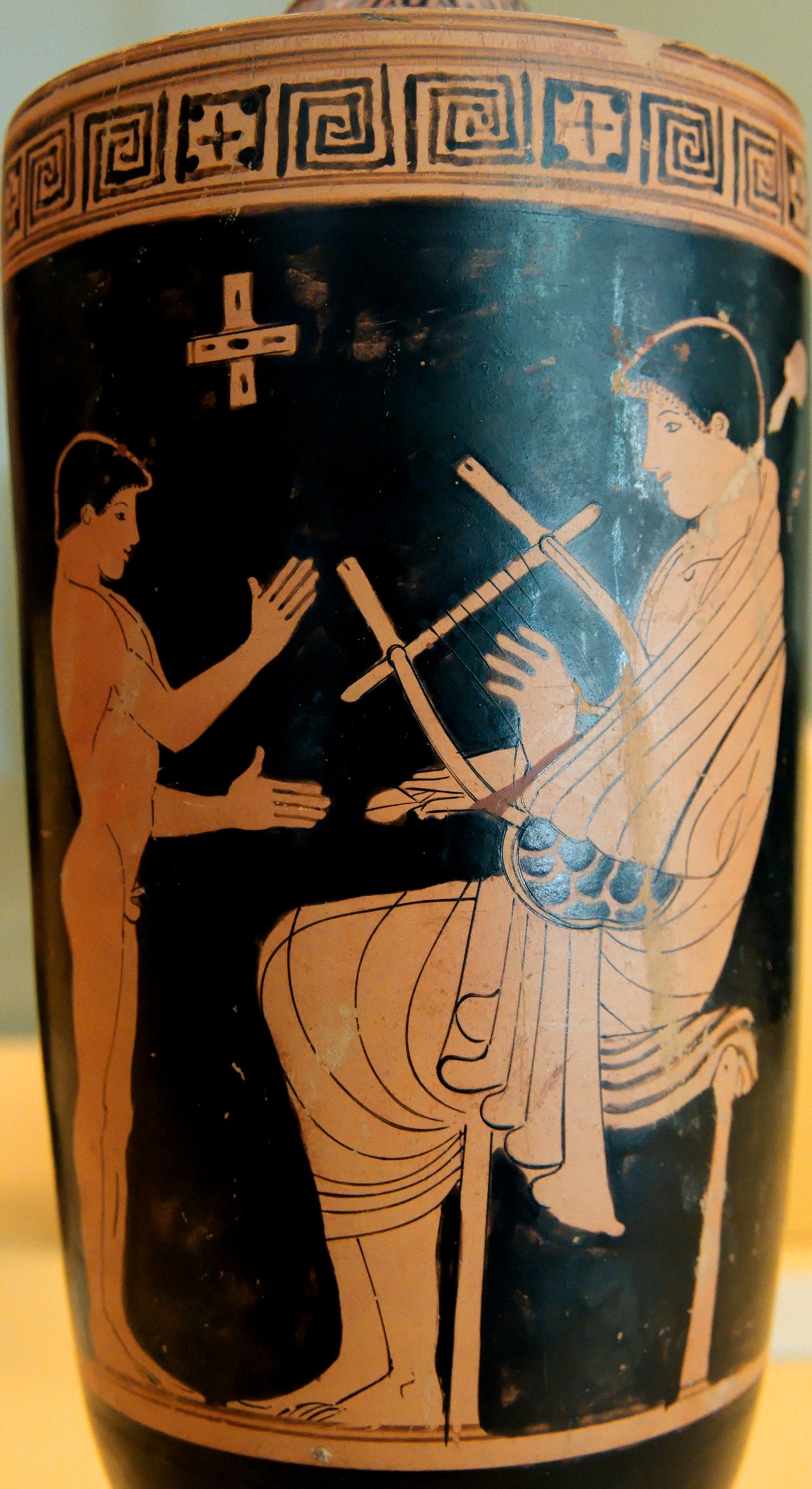
Greek Myth · The Power of SongFor thousands of years people have told stories of music so lovely it could rearrange the world, and the oldest of them belongs to the Greek singer Orpheus. He played a lyre, a small harp of seven strings, and the tales say wild beasts grew tame, trees leaned nearer, rushing rivers paused in their beds, and even stones rolled close to listen. None of it is history, yet the story holds a feeling almost every culture shares — that a great song can stop us where we stand and reach the deepest part of us. The Greeks meant the claim seriously: perfect music does not merely entertain the world, it can halt it. To call any performer an Orpheus is therefore the highest praise music knows, a way of saying that beauty is itself a kind of power.
retirev.Ch.14
To stop working at one’s job or career
“Chester had decided to retire at the very height of his fame.”
announcev.Ch.14
To tell news openly to others
“He gathered his friends to announce his decision.”
objectionn.Ch.14
A reason given against a plan
“Tucker raised one loud objection after another.”
farewelln.Ch.14
An act or concert of saying goodbye
“The farewell performance would be his greatest.”
improvisev.Ch.14
To make up music or words on the spot
“For Mario alone, Chester began to improvise a new song.”
departv.Ch.15
To leave, especially on a journey
“The late train would depart for Connecticut at midnight.”
platformn.Ch.15
The area beside train tracks where riders wait
“The three friends stood together on the empty platform.”
silencen.Ch.15
The complete absence of sound
“A strange silence fell over Times Square as he played.”
contentadj.Ch.15
Quietly happy and satisfied
“Mario felt content, knowing his friend was going home.”
promisen.Ch.15
A statement that you will surely do something
“The summer visit was a promise between two friends.”

ⓘ The vocabulary words in this list are selected to help you understand and complete this workbook. Some may not appear verbatim in the original novel.

1To stop working at your job or career is to ___.Ch.14
2To ‘improvise’ is to play music exactly as it is written down.Ch.14
3A reason given against a plan is an ___.Ch.14
4A ‘platform’ is the area beside the tracks where riders wait for trains.Ch.15
5Fill in each blank with the correct word.Ch.14–15
Word choices:farewellannouncecontentdepart- some words will not be used
Chester gathered his friends to his decision.
The concert would be his greatest performance.
6The complete absence of sound is ___.Ch.15
7If you feel ‘content,’ you are quietly happy and satisfied.Ch.15
8To leave on a journey is to ___.Ch.15
9Fill in the blanks with the correct words.Ch.14–15
Word choices:improviseobjectionpromiseplatform- some words will not be used
Chester began to a song just for the sleeping boy.
The summer visit became a between the two friends.
10To tell news openly to others is to ___ it.Ch.14
Part 2
Comprehension
Show you understood what happens in Chapters 14–15.
🧠Knowledge Bank · The Cathedral of Trains
Architecture & Rail · Grand Central TerminalGrand Central Terminal is New York’s grandest room. Its main concourse covers most of a city block beneath a blue-green ceiling painted with golden constellations, and trains gather there from dozens of tracks on two levels below the street. From those platforms the New Haven line runs northeast into Connecticut, the corridor that carries commuters in each morning and out again each evening. That is the wonder of the region’s geography: ride barely an hour from the roar of midtown and you are standing among meadows, stone walls, old trees, and autumn crickets singing in the grass. Two worlds share a single timetable. The countryside is never truly far away; it is one ticket.
1What does Chester announce to his friends?Ch.14
2How do Tucker and Harry each react to the announcement?Ch.14
3Harry asks what good fame is if it does not make you happy.Ch.14
4What happens during Chester’s farewell performance?Ch.14
5Write the numbers 1–5 in the boxes to show the correct order of events in Chapters 14–15. Number 1 = what happens first.Ch.14–15
  • The farewell concert stops Times Square.
  • Chester announces his retirement in the drainpipe.
  • Harry carries Chester through the tunnels to Grand Central.
  • Tucker and Harry plan a country visit for next summer.
  • A private, improvised recital plays for sleeping Mario.
6Chester leaves the silver bell behind in the pagoda cage as a parting gift.Ch.15
7How does Chester travel to Grand Central Station?Ch.15
8How does Mario react when he finds the cage empty?Ch.15
9The book ends with Tucker and Harry planning to visit Chester in the country next summer.Ch.15
10What was Chester’s last performance in New York?Ch.14
Part 3
Literary Elements
Understanding HOW and WHY George Selden tells the story across Chapters 14–15.
🧠Knowledge Bank · How a Story Closes Its Circle
Literary Craft · ResolutionThe final chapters bring the resolution — the stretch where the main problem is settled and loose threads are gathered in. The question raised the moment Chester woke lost underground was always one of belonging, and the ending answers it plainly. A satisfying resolution need not be purely happy; it needs to feel right, true to everything a character has become across the book. Notice how carefully Selden arranges the departure so that it reads as a leave-taking among friends rather than an escape. The circle closes: a traveler who arrived by accident departs by choice. Study how any author lands an ending, because a resolution is where a story finally shows you what it believes matters.
Climax
The story’s peak moment — the farewell concert that stops Times Square, the music motif at full power.
Resolution
The settling after the peak — the goodbye at Grand Central, Mario’s gladness, and the friends’ summer plan.
Full-circle ending
An ending that mirrors the beginning — in by train and basket, out by train and bell; the journey completes its loop.
1The farewell concert that stops Times Square is the story’s ___.Ch.14
2Fill in the blank with the correct literary term.Ch.14–15
Word choices:resolutionclimaxconflictpreface- some words will not be used
The settling of the story after its peak is the .
The story’s single highest moment is its .
3Chester arriving by train in a basket and leaving by train with a silver bell gives the book ___.Ch.15
4The chapter title ‘Orpheus’ fulfills the allusion Mr. Smedley made back in Chapter 5.Ch.14
5Selden follows the public concert with a private, improvised song for sleeping Mario to show ___.Ch.14
6Mario’s reaction — understanding and gladness instead of grief — resolves the story’s view of love as ___.Ch.15
7A resolution is the part of a story where the main conflicts are settled after the climax.Ch.15
8Fill in the blank with the correct literary term.Ch.15
Word choices:circlecliffhangerchoruschapter- some words will not be used
An ending that mirrors its beginning comes full .
9Ending the book on Tucker and Harry’s summer plan — rather than on the departing train — leaves the final note as ___.Ch.15
10The stilled Times Square is compared to a meadow at evening. In the book’s final music, that comparison means ___.Ch.14
Part 4
Think Deeper
Four deeper challenges — no single-word recall. Read, weigh the evidence, and reason it out.
🧠Knowledge Bank · The Courage to Go Home
Social-Emotional · Choosing HomeIt takes a strange kind of bravery to walk away from success, and the book treats that decision not as a loss but as the wisest act in its pages. The ending honors a quiet claim: belonging matters more than being admired, and a place where you can simply be yourself outlasts any stage. Just as tender is what happens to the friendship. Tucker and Harry do not cling or argue or make anyone feel guilty; real friends want your happiness even when it costs them a goodbye. A bond formed across the enormous differences of cat, mouse, and cricket does not snap with distance — it stretches. Sometimes the bravest and most loving thing anyone can do is go home.

Think back over the final chapters. A mouse shouts about fortunes while a cat asks one quiet question, and the question wins. A cricket plays an old Italian song so purely that taxicabs stop rolling and a thousand hurrying people stand still, remembering fields they have never seen. At midnight a cat pads through the tunnels toward the great starred ceiling of Grand Central, a cricket and a silver bell riding between his ears. And in the morning a boy looks at an empty pagoda cage and smiles — because somewhere northeast of the city, in the browning September grass, the best musician in New York is playing for no audience at all, for no schedule at all, for joy.

Original passage written for Garden Heights — not a quotation from the novel.
1Claim: “Mario truly understands his cricket.” — choose the two details that best prove it.Claim & Evidence
2Voices for staying, or Voices for going? Tap each detail to send it left or right.Sort into two
◄ Voices for stayingVoices for going ►
3Match each cause to its result. For each cause, pick its result.Cause & Effect
Chester announces his retirement
The farewell concert begins with Papa’s favorite song
Harry carries Chester through the midnight tunnels
Mario finds the pagoda cage empty in the morning
4Fill both blanks to complete the reasoning.Build the Argument
Selden ends the book not with the great concert but with a quiet promise of a summer visit because , which shows that .
Part 5
Standardized Test
Reading passage · The Musician Who Stopped the World · SAT & TOEFL-style practice
🎯 You already have the skills from the sections above — this is just a fun way to meet real SAT & TOEFL-style questions. Read the passage (the highlighted words are tested below), then answer the questions below. Tap an answer to select it, then tap it again to confirm — you can change your choice until you confirm.

Long before radios or concert halls, the ancient Greeks told of Orpheus, the greatest musician who ever lived. His instrument was the lyre, a small harp of seven strings, and when he played and sang, the legendary power of his music changed the world around him. Wild beasts — lions, wolves, bears — lay down gently at his feet to listen. Trees pulled their roots and leaned closer. Rivers, it was said, paused in their beds so their splashing would not spoil the song.

His music charmed everything that heard it — not by force or magic spells, but by pure beauty. The Greeks told this story to make a bold claim about music itself: that a perfect song does not simply entertain the world — it can stop the world, holding every listener spellbound for as long as the melody lasts. Thousands of years later, writers still reach for Orpheus whenever a musician’s gift seems too great to explain. Poets, composers, and novelists have all borrowed his name for the very same purpose. To call a performer an Orpheus is the highest praise music knows: it means the whole world might stand still to listen.

Original passage written for Garden Heights — not a quotation from the novel.
1What is the main idea of the passage?SAT · Central Idea
2What instrument did Orpheus play?TOEFL · Factual Information
3In the passage, legendary most nearly means ___.SAT · Words in Context
4According to the passage, what did the rivers do when Orpheus played?TOEFL · Factual Information
5In the passage, charmed most nearly means ___.TOEFL · Vocabulary
6The passage stresses that Orpheus’s power came from ___.TOEFL · Rhetorical Purpose
7In the passage, spellbound listeners are ___.SAT · Words in Context
8According to the passage, calling a performer ‘an Orpheus’ means ___.TOEFL · Factual Information
9Which event from the novel makes the Greeks’ bold claim come true?SAT · Text Connections
10Insert Text (TOEFL). Look at the four squares [1][4] in the excerpt below. They show where this sentence could be added:
“Even the stones, it was said, rolled closer to hear him.”
Wild beasts lay down gently at his feet to listen. [1] Trees pulled their roots and leaned closer to the song. [2] Rivers paused in their beds so their splashing would not spoil the music. [3] The Greeks told this story to claim that perfect music can stop the world. [4]
Where would the sentence fit best?
TOEFL · Insert Text
Part 6 · Optional
Creative Writing
A bonus challenge to practice your English. Take your time and have fun with it.
About This Section

This writing task is optional and is not part of your auto-graded score. The feedback below checks only the basics — length, spelling, and grammar — not whether your ideas are right or wrong. It is meant for classroom discussion and creative practice, so feel free to use your imagination!

Writing Task — Part 8 “The Best Kind of Goodbye”

Chester’s goodbye is happy and sad at the same time: he leaves the people who love him — because they love him. Write about a goodbye (real or imagined) that was also a kind of gift: a friend moving away, a season ending, a pet going to a better home, a farewell concert of your own. In 6–10 sentences, show both feelings at once, and end — like Selden — with a promise or a hope rather than a tear.

You can start with: “We all knew it was the right thing, which somehow made it harder and easier at the same time...”
0 / 40 words minimum
πŸ—£ Teach It · Just for Fun (optional)

No right or wrong — tell someone nearby what happened in this part. Can’t find anyone? Tell yourself out loud. The moment you teach it, you truly understand it.


Garden Heights

Part 8 Complete — You Finished the Book! 🎉

You finished Chapters 14–15 — the final part of The Cricket in Times Square.

Here are your auto-graded results — scroll down for your full Report Card across all parts:

-
points out of 100
Your Writing

Your writing was checked automatically for length, spelling, grammar, and whether you included the key parts of the scene. Scroll back to Part 5 anytime to read your feedback and improve your work.

Explore the next book →

Independent study guide by Garden Heights. Not affiliated with or endorsed by George Selden. Contains original analysis only; no text from the novel is reproduced. Reference text: This workbook follows George Selden’s classic text (the standard Puffin edition sold worldwide). Revised 2023 UK editions change some wording and may not match the vocabulary studied here.