New here? Just sign up with Google — your account includes Matilda, our gift book, forever.
📚
Garden Heights Academy
Members sign in to continue.
Fantastic Mr. Fox · Garden Heights Academy
Part 8
for Fantastic Mr. Fox · Part 8 · Chapters 17–18
a story by Roald Dahl
30 min6 Parts
This workbook is built on a solid pedagogical foundation, effectively integrating content and language learning based on the CLIL framework (Content and Language Integrated Learning), elevated by our unique 5th C — Connection — and an integrated Standardized Test section that weaves every SAT & TOEFL question type right into the novel, so learners build real test skills easily, naturally, and with fun.
💭 Before You Read · Just for Fun
No right or wrong answers — just think or chat about it: What is the best celebration meal you have ever eaten — and who was around the table? Why does food somehow taste better when it is shared? And if you had to raise a toast to someone in your family tonight, who would it be, and why?
What Happens in Part 8
It is time for the great feast! Deep underground, all the animals — foxes, Badgers, Rabbits, Weasels, and Moles — gather for a grand banquet of chicken, duck, ham, and cider. They celebrate and raise a toast to clever Mr. Fox. He gives a happy speech, explaining that thanks to his tunnels they can all live safe from the farmers forever, digging for food whenever they need it. And far above them? The three farmers are still waiting outside the empty hole, soaked by the rain and completely unaware of the wonderful feast going on beneath their feet.
What We Will Learn
Literary Element
What It Means
Climax
The most exciting or important high point of a story
Resolution
How a story ends and the problems are finally settled
Moral
The lesson that a story teaches the reader
Chapter Summary
Chapter
Title & Key Events
Ch.17
The Great Feast — all the animals gather underground for a grand banquet; they celebrate and toast Mr. Fox, who promises they can live safely forever
Ch.18
Still Waiting — the three farmers are still sitting outside the empty hole in the rain, soaked and unaware of the feast below
Copyright Notice
Independent study guide by Garden Heights Academy. Not affiliated with or endorsed by Roald Dahl or the Roald Dahl Story Company. No text from the novel is reproduced. Students should read the original book. Reference text: This workbook follows Roald Dahl’s classic text (the standard Puffin edition sold worldwide). Revised 2023 UK editions change some wording and may not match the vocabulary studied here.
Part 1
Vocabulary
Study 10 key words from Chapters 17–18, then answer each question.
🧠Knowledge Bank · A Hidden World Below
Science · The Underground WorldAt the end, all the woodland animals gather far below the fields for a great feast. In real life, many different burrowers do share the same underground world — foxes, badgers, rabbits, moles, and weasels living in tunnels close by. Beneath a single field there can be miles of animal burrows, crossing and connecting like secret streets. This hidden world stays cool in summer and warm in winter, a safe place to raise young away from hunters and weather. Dahl’s underground banquet is make-believe, but the busy, crowded life beneath our feet is wonderfully real.
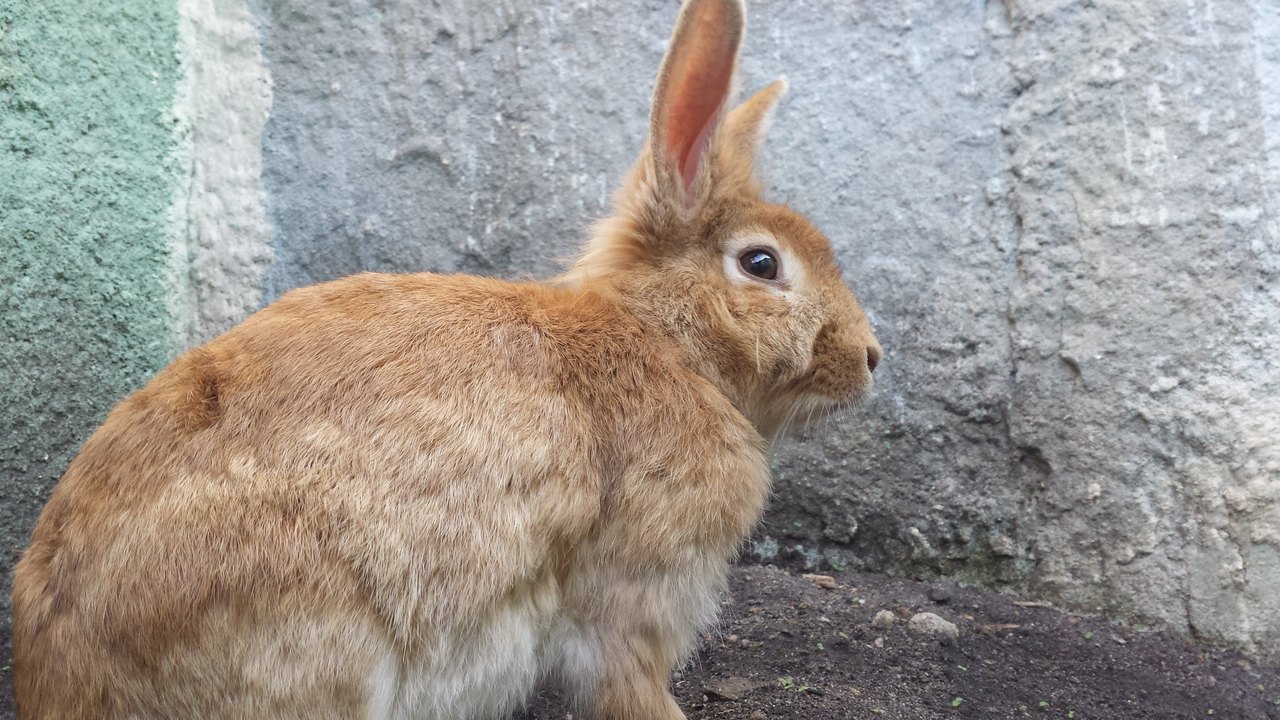
Visual AidA rabbit on watch near her burrow
Photograph taken in September 2018 of a rabbit sitting alert on the ground beside a wall near her burrow, ears straight up, watching for danger before she goes in or out. The Knowledge Bank explains that many burrowers share the same underground world, foxes, badgers, rabbits, moles, and weasels living in tunnels close by, and that beneath a single field there can be miles of burrows crossing and connecting like secret streets. She is one of those burrowers, pausing above ground. The burrow itself is out of the frame, she is not one of the guests at Mr Fox’s feast, and no other animal is in the picture. Notice the upright ears — a burrower checks for danger before every trip in or out.
Rabbit on watch near her burrow, September 2018; photograph by Themium, released under CC0. Source: Wikimedia Commons, CC0.
ⓘ Vocabulary words are selected to help you understand and complete this workbook. Some may not appear verbatim in the novel.
banquetn.Ch.17
A large, grand meal for many people
“The animals laid out a banquet fit for a king.”
celebratev.Ch.17
To do something special to show you are happy about an event
“The whole company gathered to celebrate their escape and their feast.”
toastn./v.Ch.17
To raise a drink to honor or thank someone
“They raised their cups in a toast to Fantastic Mr. Fox.”
speechn.Ch.17
A talk given out loud to a group of people
“Mr. Fox stood up to make a cheerful speech.”
undergroundadv./adj.Ch.17
Below the surface of the ground
“From now on they would live safely underground.”
safeadj.Ch.17
Free from danger or harm
“Down in the tunnels, the animals were finally safe.”
foreveradv.Ch.18
For all time; without ever ending
“Mr. Fox promised they need never go hungry again, not forever.”
soakedadj.Ch.18
Completely wet, soaked through with water
“The farmers sat by the hole, soaked to the skin by the rain.”
miserableadj.Ch.18
Very unhappy and uncomfortable
“Cold, wet, and beaten, the three farmers were utterly miserable.”
unawareadj.Ch.18
Not knowing about something that is happening
“They were completely unaware of the feast going on beneath their feet.”
🧠Knowledge Bank question
1According to the Knowledge Bank, beneath a single field there can be ___.Ch.17
2True or False: To “celebrate” means to do something special to show you are happy about an event.Ch.17
3The animals raised their cups to honor and thank Mr. Fox. What is this called?Ch.17
4Fill in each blank with the correct word.Ch.17
Word choices:speechundergroundsoakedtoast- some words will not be used
Mr. Fox stood up to make a happy to all his friends.
From now on, the animals would live safely .
5True or False: If you are “soaked,” you are completely dry.Ch.18
6The farmers did not know about the feast happening below them. Which word means “not knowing about something”?Ch.18
7Cold, wet, and beaten, the farmers were very unhappy and uncomfortable. Which word describes them?Ch.18
8True or False: “Forever” means for all time, without ever ending.Ch.18
9Fill in each blank with the correct word.Ch.18
Word choices:miserableunawarebanquetsafe- some words will not be used
The three farmers sat in the rain, cold and .
They were completely of the feast below their feet.
10Down in the tunnels, away from the farmers and their guns, the animals were finally —Ch.17
Part 2
Comprehension
How well do you understand Chapters 17–18?
🧠Knowledge Bank · Reading the Ending
Reading Skill · ResolutionThe end of a story is called the resolution — the part where problems get solved. In Part 8 the foxes are safe and feasting, while the farmers still wait, cold and foolish, by the empty hole. To understand an ending, a good reader gathers all the clues and draws a conclusion: who won, who lost, and why. Ask what each character learned, or failed to learn. A strong ending ties the story’s threads together and leaves you feeling satisfied. When you can explain how the trouble was settled and what it all means, you have truly finished the book.
Visual AidGather the clues, draw the conclusion
Diagram for the Knowledge Bank on resolution. The three cards are the three conclusions the Knowledge Bank tells a reader to draw at the end, who won, who lost, and why, filled with what the Knowledge Bank itself says about the foxes and the farmers, and the card beneath is its definition of a resolution. It does not describe the feast. Notice that the arrows run into the resolution card, not out of it — the ending is something a reader builds from the clues.
Who won, who lost, why, and the definition of a resolution, as described in the Knowledge Bank. Drawn for Garden Heights Academy.
🧠Knowledge Bank question
1The Knowledge Bank says that to understand an ending, a reader gathers the clues and decides ___.Ch.17
2True or False: In his speech, Mr. Fox says the animals can live safely underground and dig for food whenever they need it.Ch.17
3Which animals join the great feast?Ch.17
4True or False: In Chapter 18, the three farmers are still waiting outside the fox’s hole.Ch.18
5Put the events from Chapters 17–18 in the correct order. Write 1–4 (1 = first).Ch.17–18
Mr. Fox gives a speech, promising they can live safely underground forever.
Above ground, the farmers are still waiting in the rain, soaked and miserable.
The animals celebrate and raise a toast to Mr. Fox.
All the animals arrive for the banquet below ground.
6True or False: By the end, the farmers know exactly where the foxes are and what they are doing.Ch.18
7Why will the animals never have to go hungry or face the farmers again?Ch.17
8How does the book end?Ch.18
9True or False: The ending feels fair because the kind, clever animals win and the cruel, greedy farmers lose.Ch.17–18
10What is the weather like for the farmers at the end?Ch.18
Part 3
Literary Elements
Understanding HOW and WHY Dahl ends the story the way he does.
🧠Knowledge Bank · The Big Idea
Literary Craft · ThemeBy the end, one big idea shines through the whole book: the small and clever can beat the big and greedy. That deep idea behind a story is its theme. Dahl does not print the theme in plain words; he shows it. The happy foxes feasting below ground and the empty-handed farmers waiting above form a picture of the theme. Every part of the story has pointed toward it. A theme is the lesson or truth a story leaves in your heart. When you close the book and ask, ‘What did this really mean?’ you are searching for its theme.
📚 Literary Devices in This Part · definitions & examples
The climax is the most exciting or important high point of a story. In Fantastic Mr. Fox, the great underground feast is the joyful high point — the moment when Mr. Fox’s clever plan completely triumphs.The resolution is how a story ends and the problems are finally settled. Here, the animals are safe and well fed forever, and the farmers are left waiting foolishly in the rain — every loose end tied up.The moral is the lesson a story teaches. The moral of Fantastic Mr. Fox is that being clever, brave, and generous can defeat those who are powerful but greedy and cruel.
The questions below are mixed — not grouped by device. Decide which device each one is about.
🧠Knowledge Bank question
1According to the Knowledge Bank, the theme of Fantastic Mr Fox is that ___.Ch.17
2True or False: The resolution is how a story ends and the problems are finally settled.Ch.18
3Fill in the blanks with the correct words.Ch.17–18
Word choices:moralclevernessrhymeclimax- some words will not be used
The lesson a story teaches is its . Here, that lesson is that and kindness can beat greed.
4The part of the story where the problems are settled — the animals safe, the farmers beaten — is called the —Ch.18
5True or False: A good moral for this story is that cleverness, courage, and kindness can beat greed and cruelty.Ch.17–18
6Fill in the blanks with the correct words.Ch.17
Word choices:climaxfeastrhymesetting- some words will not be used
The most exciting high point of a story is the . In this book it is the great underground .
7The lesson a story teaches the reader is called its —Ch.17–18
8True or False: The climax is the calm ending where the problems are finally settled.Ch.17
9Fill in the blanks with the correct words.Ch.18
Word choices:resolutionsaferhymeclimax- some words will not be used
How a story ends and settles its problems is the . In the end the animals are and the farmers are beaten.
10Dahl does NOT end with the feast. He ends with the three soaked farmers, still waiting by the empty hole. Why is that final image the perfect RESOLUTION?Ch.18
Part 4
Think Deeper
Four deeper challenges — no single-word recall. Read, weigh the evidence, and reason it through.
🧠Knowledge Bank · Why the Ending Feels So Good
Ethics · FairnessThe ending feels wonderful, and it is worth asking why. All book long the greedy farmers were cruel, and the brave foxes suffered. Now that is set right: the kind, clever animals feast together, while the mean farmers get nothing. This is called poetic justice — when good is rewarded and cruelty is not. Deep down we want the world to be fair, so a fair ending satisfies us. Dahl also lets the fox win by sharing, not by being cruel back. The story leaves us cheering because goodness and cleverness, not greed, have earned the final feast.
1Claim: “The foxes triumph while the farmers wait in vain.” — choose the two details that best prove it.Claim & Evidence
2The foxes’ happy triumph, or the farmers’ pointless waiting? Tap each item to sort it — tap again to switch sides. You can keep tapping to change your answer.Sort into two
◄ The foxes’ triumphThe farmers’ waiting ►
3Match each cause to its result. For each cause, pick its result.Cause & Effect
The animals have plenty of food→
Mr. Fox’s plan has worked→
The farmers still wait by the hole→
Cleverness has won→
🧠Knowledge Bank question
4Fill both blanks to complete the reasoning.Build the Argument
The Knowledge Bank says the ending feels good because , and Dahl lets the fox win .
Part 5
Standardized Test · Synthesis & Mixed Practice Test
Part 8 is your mixed practice test: every question family from Parts 1–7 can appear — Vocabulary in Context, Factual Detail, Command of Evidence, Inference, Central Ideas and the TOEFL Prose Summary — in the styles the SAT and TOEFL use. Read the passage (the highlighted words are tested below), then choose the answer best supported by the text.
Read the passage — the highlighted words are tested — then answer. Tap an answer, then tap it again to confirm.
SATWords in Context — a word's meaning in this passage
SATInference — a conclusion the passage implies
SATCentral Ideas — the passage's main point
TOEFLFactual Information — a fact stated in the passage
TOEFLVocabulary — a tested word's meaning here
TOEFLProse Summary — the three sentences that sum it up
TOEFLInsert Text — where a sentence best fits
The Tradition of the Harvest Feast
All around the world, people celebrate their happiest moments the same way: with a shared meal. Harvest festivals are the oldest tradition of all: American families gather for Thanksgiving, Korean families travel home for Chuseok, and English villages once held harvest suppers when the last crop was safely in. A feast, though, is always about more than eating. Sitting at one table can unite people: neighbors become a community, and old quarrels are set aside. There are toasts and speeches to honor guests and heroes, and the sharing itself carries a message: when abundance is passed around instead of hoarded, everyone at the table knows they will face the winter together. The sweetest feasts come after hardship: a meal shared by people who have survived a hard season overflows with gratitude, because every mouthful is measured against the hunger that came before. Such celebrations strengthen a community like nothing else: those who have been hungry together, and then have feasted together, do not forget one another.
Original passage written for Garden Heights — not a quotation from the novel.
1To celebrate a happy moment is to ___ it.SAT · Words in Context
2The passage most strongly suggests that a feast after hardship feels sweeter because people —SAT · Inference
3Which celebrations does the passage name as harvest festivals?TOEFL · Factual Information
4A toast at a feast is ___.SAT · Words in Context
5According to the passage, what message does shared abundance carry?TOEFL · Factual Information
6In the passage, the word “gratitude” is closest in meaning to —TOEFL · Vocabulary
7Prose Summary. Which detail is MOST important to include in a short summary of the passage?TOEFL · Prose Summary
8Insert Text (TOEFL). Look at the four squares [1]–[4] in the passage excerpt below. They show where the following sentence could be added: “The food, in the end, matters less than the people gathered around it.”
A feast, though, is always about more than eating. [1] Sitting at one table can unite people: neighbors become a community, and old quarrels are set aside. [2] There are toasts and speeches to honor guests and heroes, and the sharing itself carries a message — when abundance is passed around instead of hoarded, everyone at the table knows they will face the winter together. [3] The sweetest feasts come after hardship. [4]
Where would the sentence fit best?TOEFL · Insert Text
9The passage most strongly suggests that a feast held after great danger feels sweetest because —SAT · Inference
10Which statement best expresses the central idea of the passage?SAT · Central Ideas
Part 6 · Optional
Creative Writing
A bonus challenge to practice your English.
About This Section
This writing task is optional and not part of your auto-graded score. Feedback checks length, spelling, and grammar only.
Writing Task — Part 8 “The Great Feast”
Imagine you are at the great feast, standing up to give a toast to Fantastic Mr. Fox. What do you say to thank him? (Or, if you prefer, write as a soaked farmer still waiting in the rain.) Write at least 40 words.
You can start with: “Friends, raise your cups! Tonight we are warm, safe, and full, and there is one fox we have to thank, because…”
0 / 40 words minimum
🗣 Teach It · Just for Fun (optional)
No right or wrong — close the screen and tell someone nearby what happened in this part. Can’t find anyone? Tell yourself out loud. The moment you teach it, you truly understand it.
🏆
Part 8 Complete — You Finished the Book!
You finished Chapters 17–18 — the very end of Fantastic Mr. Fox. Well done!
Here are your auto-graded results:
-
points out of 100
Teach it to someone
The best last step is to teach it. In your own words, explain what happened — retell a favorite scene, teach a character’s big choice, or sum up the main idea for a parent, friend, or classmate. When you can teach it clearly, you truly own it.
SAT® is a registered trademark of College Board, which is not affiliated with, and does not endorse, these materials. TOEFL® is a registered trademark of ETS. These materials are not endorsed or approved by ETS. Garden Heights is an independent provider of test-style reading practice.