
Hatchet cover
Garden Heights

Hatchet

This workbook is for Garden Heights members. Sign in to continue.

Sign in with Google →
New here? Just sign up with Google — your account includes Matilda, our gift book, forever.
Hatchet · Garden Heights

Part 3

for Hatchet · Part 3 · Chapters 5–7
8 Parts40 min
What Happens in Part 3

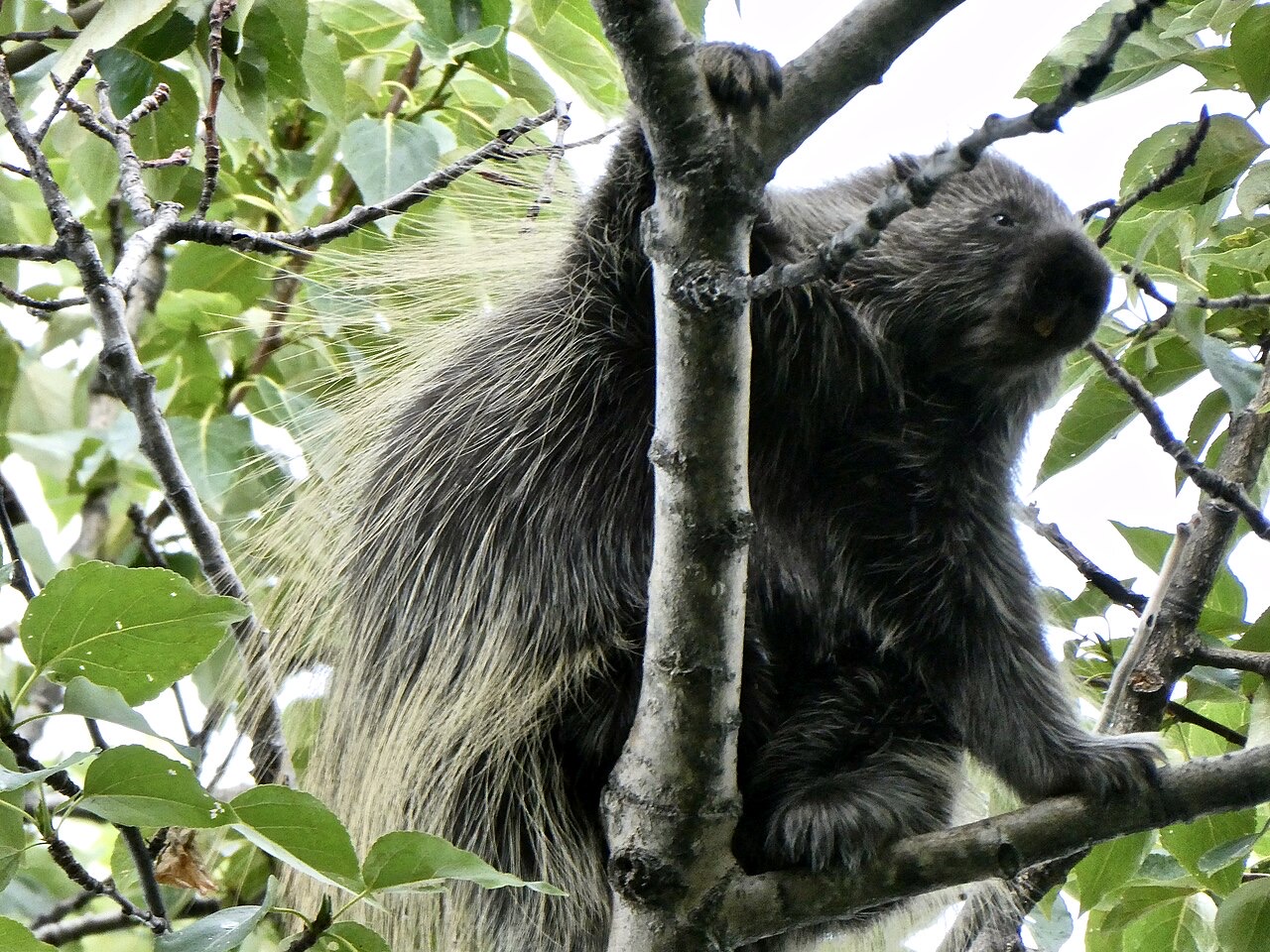
Hunger becomes Brian’s constant companion. Following his instincts and a few memories, he finds and gorges on bright red berries he privately calls ‘gut cherries,’ which give him a painful stomachache, and later the sweeter raspberries — where he startles a bear that, to his amazement, simply ambles away instead of attacking. He scouts the shoreline and settles on a natural shelter: an overhang beneath a rock ridge, which he begins to close off into a rough camp. But the wilderness keeps testing him. In the black of night a porcupine pushes into his shelter; when Brian hurls his hatchet at it in fear and fury, he misses the animal, but the hatchet strikes the stone wall and throws a shower of bright sparks into the dark. Nursing a leg full of painful quills, Brian lies awake turning that image over and over — sparks, from steel on stone — until a life-changing idea takes shape. He has been given, without knowing it, the means to make fire. In these chapters Brian stops merely reacting to the wilderness and begins, for the first time, to work with it, using his mind to turn accident into discovery.

What We Will Learn
SectionWhat you will practice
VocabularyForaging & fire words: forage, edible, overhang, quill, ember
Literary ElementsThe hatchet as symbol, Brian’s spark of epiphany, and man-versus-nature conflict
Cross-CurricularFire-making and the fire triangle: heat, fuel, and oxygen
Chapter Summary
Ch.What happens
Chapters 5–6Berries and a Bear — starving, Brian finds ‘gut cherries’ and raspberries, meets a bear that wanders off, and builds a first shelter under a rock ridge.
Chapter 7Sparks in the Dark — a porcupine attacks in the night; Brian throws his hatchet, it strikes stone and throws sparks, and he realizes he can make fire.
Part 1
Vocabulary
Study 10 key words from Chapters 5–7, then answer each question.
🌿Knowledge Bank · Wild Food and Its Traps
Botany · Edible Plants and Toxic Look-AlikesStarving on the shore, Brian does what every forager must eventually do: he tests the wild for anything edible. It is riskier than it sounds. The northern forest offers real food — blueberries, raspberries, rose hips, cattail roots — but it also grows plants that look almost identical yet can sicken or kill. Brian’s first ‘gut cherries’ teach this lesson painfully: he gorges on unfamiliar berries and spends the night doubled over in cramps. Experienced woodsmen never trust looks alone; they learn a plant completely before eating it, because many safe species have a dangerous twin — edible blueberries beside toxic baneberries, wild carrot beside deadly hemlock. The safest wild foods are the ones with no poisonous look-alike at all, which is why survival guides push cattails, clover, and dandelion. Brian has no guidebook, so he learns by trial, error, and a churning stomach — slowly building the hard-won knowledge that tells a meal from a poison.
foragev.Ch.5
To search widely for food
“Brian had to forage along the shore for anything to eat.”
edibleadj.Ch.5
Safe and fit to be eaten
“He could not always tell which berries were edible.”
gorgev.Ch.5
To eat greedily until stuffed
“Starving, he began to gorge on the red berries.”
overhangn.Ch.6
A rock ledge that juts out above
“He made his camp beneath a stone overhang.”
quilln.Ch.7
A sharp spine of a porcupine
“A quill drove deep into the flesh of his leg.”
embern.Ch.7
A small glowing piece of a fire
“He longed to turn a spark into a living ember.”
tindern.Ch.7
Dry material that catches fire easily
“He would need fine tinder to catch the first spark.”
startlev.Ch.6
To surprise suddenly
“The berries hid a bear that he did not mean to startle.”
scoutv.Ch.6
To explore in order to find something
“He set out to scout the shoreline for shelter.”
resourcefuladj.Ch.7
Clever at solving problems
“Slowly Brian was becoming resourceful.”

ⓘ The vocabulary words in this list are selected to help you understand and complete this workbook. Some may not appear verbatim in the original novel.

1To ‘forage’ is to ___.Ch.5
2Something ‘edible’ is safe to eat.Ch.5
3To ‘gorge’ on food is to ___.Ch.5
4An ‘overhang’ is a deep hole dug into the ground.Ch.6
5Fill in each blank with the correct word.Ch.7
Word choices:quillemberoverhangthrottle- some words will not be used
A sharp stabbed deep into his leg.
He dreamed of nursing a glowing into flame.
6‘Tinder’ is dry material that ___.Ch.7
7To ‘startle’ an animal is to ___.Ch.6
8To ‘scout’ the shore is to ___.Ch.6
9Fill in each blank with the correct word.Ch.5
Word choices:forageedibleresourcefulquill- some words will not be used
He had to for berries to stay alive.
He could not tell which plants were .
10A person who is ‘resourceful’ is clever at solving problems.Ch.7
Part 2
Comprehension
Show you understood what happens in Chapters 5–7.
Knowledge Bank · The Spark That Changes Everything
Science & History · Making FireWhen Brian’s hatchet glances off the stone wall and throws a shower of sparks, he stumbles onto one of humanity’s oldest technologies. Striking hard steel against certain stones shaves off tiny flecks of metal that heat so fast from the friction that they glow — those glowing specks are the sparks. For hundreds of thousands of years people made fire this way, pairing flint with iron or striking the right minerals together, long before matches ever existed. But a spark alone is almost nothing; it lives for a fraction of a second. To become a flame it must land on fine, dry tinder — shredded birch bark, dead grass, seed fluff — that can catch the faint heat and be coaxed, with gentle breath, into a coal and then a blaze. This is why Brian’s discovery does not hand him fire instantly; it hands him a possibility he must patiently learn to feed. Grasping that steel on stone means heat, and heat means life, is the single idea that turns him from a victim into a survivor.
1The first berries Brian eats give him ___.Ch.5
2When Brian startles a bear among the raspberries, the bear ___.Ch.6
3Brian builds his first shelter beneath a rock overhang.Ch.6
4What attacks Brian inside his shelter at night?Ch.7
5Write the numbers 1–5 in the boxes to show the correct order of events. Number 1 = what happens first.Chapters 5–7
  • He finds raspberries and startles a bear that wanders off.
  • A porcupine attacks him in the dark.
  • Starving, Brian gorges on the ‘gut cherry’ berries.
  • He builds a shelter under a rock overhang.
  • He throws the hatchet, sees sparks, and thinks of fire.
6Brian’s hatchet strikes and kills the porcupine.Ch.7
7The hatchet striking the stone wall produces ___.Ch.7
8What idea takes shape in Brian’s mind after the attack?Ch.7
9In these chapters Brian only reacts and never plans.Ch.7
10The biggest change in Brian across Part 3 is that he starts to ___.Ch.7
Part 3
Literary Elements
Understanding HOW and WHY Gary Paulsen tells the story across Chapters 5–7.
🪓Knowledge Bank · The Hatchet as Symbol
Literary Craft · SymbolismA symbol is an object that carries meaning larger than itself, and Paulsen builds his entire novel around one: the hatchet. When the story begins, it is only an awkward, slightly embarrassing gift from Brian’s mother, a reminder of a home that has broken apart. By Part 3 it has begun to change into something else. It is the hatchet that strikes the sparks, the hatchet that will make fire, the hatchet that stands between Brian and death — and so it comes to represent his own transformation from a helpless passenger into a person who can act. Notice that the author names the whole book after this single tool. That is a signal that the object matters far beyond its blade: it holds the story’s central idea that survival comes from using what you have, and that a thing once resented can become the very key to life. Watch how the hatchet’s meaning keeps deepening each time Brian’s fingers close around its handle.
Symbol
The hatchet — once a painful gift — becomes the key to fire and to the survivor Brian is becoming.
Epiphany
Brian’s sudden realization that the sparks mean he can make fire — understanding that changes everything.
Conflict (man vs. nature)
Brian against the wilderness itself — hunger, a bear, and the porcupine that fills his leg with quills.
1The hatchet, which comes to stand for Brian’s new self, works as a ___.Ch.7
2Fill in each blank with the correct literary term.Ch.7
Word choices:epiphanysymbolrhymeindex- some words will not be used
Brian’s sudden fire idea is an .
The hatchet that stands for his change is a .
3An epiphany is a sudden flash of understanding.Ch.7
4Brian’s fight against hunger, the bear, and the porcupine is ___.Ch.6
5The hatchet matters as a symbol partly because it was a gift from Brian’s ___.Ch.7
6A symbol is an object that also stands for a larger idea.Ch.7
7Paulsen shows the fire idea coming from thought, not luck, to make Brian’s epiphany feel ___.Ch.7
8Fill in each blank with the correct literary term.Ch.6
Word choices:conflictepiphanynarratorclimax- some words will not be used
Brian against hunger and the bear is a .
His sudden fire idea is an .
9Man-versus-nature conflict pits a character against the natural world.Ch.6
10The clearest sign the hatchet is becoming a symbol is that it turns from a burden into a ___.Ch.7
Part 4
Think Deeper
Four deeper challenges — no single-word recall. Read, weigh the evidence, and reason it out.
💡Knowledge Bank · Learning the Hard Way
Psychology · Trial, Error, and InsightPart 3 is really a lesson in how people learn when no one is there to teach them. Psychologists call it trial-and-error learning: a person tries something, feels the result, and adjusts — keeping what works and dropping what hurts. Brian’s ‘gut cherries’ are a perfect example. The pain of a night of cramps writes a rule into his memory more firmly than any warning could: test new food slowly. The porcupine that fills his leg with quills teaches another rule about the dark and about caution. What makes Brian a survivor is not that he avoids mistakes — he makes many — but that he refuses to waste them. He turns each failure into information and each injury into a lesson, converting raw pain into practical knowledge. That habit of mind, the willingness to fail, reflect, and try again, is exactly what researchers who study resilience find in people who come through hardship — and it is slowly making Brian resourceful.

Think about how close hope and pain sit together in these chapters. A starving boy crams red berries into his mouth and pays for it with a night of cramps; he stumbles into a bear and lives only because the bear cannot be bothered. He wedges himself under a shelf of rock and calls it home. And then, in the dark, something bristling shoves into his shelter, and he swings the little axe in blind terror — misses — and the blade rings off the stone and throws a fistful of sparks into the black. His leg is on fire with quills, but his mind has caught something brighter than the pain: those sparks are heat, and heat is fire, and fire is life. For the first time, Brian is not just surviving the wilderness. He is starting to outthink it.

Original passage written for Garden Heights — not a quotation from the novel.
1Claim: “Part 3 shows that Brian’s greatest survival tool is his ability to think, not just to endure.” — choose the two details that best prove it.Claim & Evidence
2A danger the wild throws at Brian, or A resource Brian gains? Tap each detail to send it left or right.Sort into two
◄ A danger the wild throws at BrianA resource Brian gains ►
3Match each cause to its result. For each cause, pick its result.Cause & Effect
Brian eats the ‘gut cherry’ berries
Brian startles the bear
The porcupine attacks in the dark
The hatchet strikes the stone wall
4Fill both blanks to complete the reasoning.Build the Argument
Paulsen makes the fire idea come after Brian lies awake reasoning, not from mere luck , which shows that .
Part 5
Standardized Test
Reading passage · Fire and the Fire Triangle · SAT & TOEFL-style practice
🎯 You already have the skills from the sections above — this is just a fun way to meet real SAT & TOEFL-style questions. Read the passage (the highlighted words are tested below), then answer the questions below. Tap an answer to select it, then tap it again to confirm — you can change your choice until you confirm.

When sparks leap from Brian’s hatchet, he is one step from the most valuable tool a lost person can have. Fire gives warmth that holds off the deadly cold of a northern night, and it cooks food and boils water, killing germs that can sicken a hungry person. Its smoke drives away swarming insects, and its light keeps many animals at a distance. A fire can be seen and smelled from far off, so it also signals for rescue. Best of all, on a lonely night a fire is company, a small living thing that pushes back the dark.

Yet wanting a fire is not the same as having one, because fire follows a simple rule called the fire triangle. Every fire needs three things at once: heat to start it, fuel to burn, and oxygen from the air to keep it going. Picture those three as the sides of a triangle; if even one side is missing, there can be no fire. This is why pouring water on a campfire puts it out, cooling it below the heat it needs, and why smothering a flame with dirt also works, by cutting off its oxygen.

Brian’s spark supplies only the first side of the triangle: heat. To turn that spark into flame he must supply the other two sides with care, beginning with fine, dry tinder such as shredded bark or grass that catches from a single spark, then twigs, then larger sticks. He must also feed the young flame oxygen, leaning close and breathing gently on a glowing coal. Too little air and the ember dies; too much, too soon, and one puff can blow it out. Making fire, Brian is about to learn, is not one lucky moment but a patient, careful process.

Original passage written for Garden Heights — not a quotation from the novel.
1What is the passage mainly about?SAT · Central Ideas
2Which is NOT listed as something fire does for a survivor?TOEFL · Negative Factual
3The three sides of the fire triangle are heat, fuel, and ___.TOEFL · Factual Information
4If one side of the triangle is missing, there can be ___.SAT · Detail
5Pouring water on a fire puts it out by removing the ___.SAT · Inference
6Smothering a flame with dirt works by cutting off its ___.TOEFL · Inference
7Brian’s spark supplies which side of the triangle?SAT · Inference
8In the passage, tinder most nearly means ___.SAT · Words in Context
9In the passage, process most nearly means ___.TOEFL · Vocabulary
10How does this passage best help explain Brian’s story?SAT · Text Connections
Part 6 · Optional
Creative Writing
A bonus challenge to practice your English. Take your time and have fun with it.
About This Section

This writing task is optional and is not part of your auto-graded score. The feedback below checks only the basics — length, spelling, and grammar — not whether your ideas are right or wrong. It is meant for classroom discussion and creative practice, so feel free to use your imagination!

Writing Task — Part 3 “Turning an Accident into an Idea”

Brian turns a scary accident — sparks from a thrown hatchet — into a life-changing idea. Write about a time something went wrong for you but led to a discovery or a better idea. What happened, what did you notice, and how did your thinking change? 6–10 sentences. End with what the accident taught you.

You can start with: “It started as a mistake, but then I noticed something...”
0 / 40 words minimum
🗣 Teach It · Just for Fun (optional)

No right or wrong — close the screen and tell someone nearby what happened in this part. Can’t find anyone? Tell yourself out loud. The moment you teach it, you truly understand it.


Garden Heights

Part 3 Complete!

You finished Chapters 5–7 of Hatchet.

Here are your auto-graded results:

-
points out of 100
Your Writing

Your writing was checked automatically for length, spelling, grammar, and whether you included the key parts of the scene. Scroll back to Part 5 anytime to read your feedback and improve your work.

Move on to Part 4 →

Independent study guide by Garden Heights. Not affiliated with or endorsed by Gary Paulsen. Contains original analysis only; no text from the novel is reproduced. Reference text: This workbook follows Gary Paulsen’s classic text (the standard Puffin edition sold worldwide). Revised 2023 UK editions change some wording and may not match the vocabulary studied here.