
Part 8
In her last years alone, Karana meets nature at its most violent and endures her deepest losses. First a great earthquake shakes the island, and behind it comes a towering wave, a tsunami, that crashes over the shore and destroys the canoes she had carefully hidden beneath the cliff for any future escape. She survives the disaster and rebuilds what she can. Then a quieter grief arrives: her beloved dog Rontu, now grown old, dies, and she buries him tenderly on the headland where they had watched so many sunsets together. Rather than let his loss end her ties to the living world, she captures and tames one of the island’s wild dogs — a young one she is sure is Rontu’s own son — and names him Rontu-Aru, so that companionship continues. At last, after so many years, a ship of white men comes to the island. This time Karana does not hide. Dressed in her finest, with Rontu-Aru and her tamed birds, she leaves the Island of the Blue Dolphins forever, carrying with her the strength, the sorrow, and the hard-won peace of a life no one else could have survived.
| Section | What you will practice |
|---|---|
| Vocabulary | Ending words: earthquake, tsunami, bury, rescue, endure… |
| Literary Elements | The story’s resolution, Rontu-Aru as symbol, and the theme of endurance |
| Cross-Curricular | Earthquakes and tsunamis |
| Ch. | What happens |
|---|---|
| Chapter 28 | Earthquake and Wave — a great earthquake and then a tsunami strike the island, destroying the canoes Karana had hidden beneath the cliff. |
| Chapter 29 | Farewell to the Island — old Rontu dies and is buried; Karana tames his son Rontu-Aru; at last a ship comes and she leaves the island forever. |
Four words, and they are one event told four times. An earthquake is a sudden violent shaking of the ground, and one rocks the island. A tremor is a shaking or trembling movement, and the first cracks the cliffs. A tsunami is a giant sea wave caused by an earthquake, and it swallows the shore. A surge is a powerful rush of water forward, and it smashes the canoes Karana had hidden. The canoes were her only way off the island. Read the four in sequence and you have a chain of cause and effect with no villain in it at all. Everything else Karana has lost was taken by people — the hunters, the ship, the dogs. This is the one loss the book gives her that nobody chose to inflict.
ⓘ The vocabulary words in this list are selected to help you understand and complete this workbook. Some may not appear verbatim in the original novel.
The ending can be followed as a climax, a meaningful return, and a final closure rather than as isolated incidents. In her last years alone, Karana meets nature at its most violent and endures her deepest losses. First a great earthquake shakes the island, and behind it comes a towering wave, a tsunami, that crashes over the shore and destroys the canoes she had carefully hidden beneath the cliff for any future escape. She survives the disaster and rebuilds what she can. Then a quieter grief arrives: her beloved dog Rontu, now grown old, dies, and she buries him tenderly on the headland where they had watched so many sunsets together. Rather than let his loss end her ties to the living world, she captures and tames one of the island’s wild dogs — a young one she is sure is Rontu’s own son — and names him Rontu-Aru, so that companionship continues. At the close, “Disaster, Loss, and Farewell” completes the book’s movement toward resolution.
- A tsunami destroys Karana’s hidden canoes.
- A great earthquake shakes the island.
- Karana tames Rontu’s son, Rontu-Aru.
- A ship comes and Karana leaves the island forever.
- Old Rontu dies and Karana buries him.
The closing movement joins resolution, symbolism, and theme, allowing the ending to answer the beginning. When old Rontu dies and Karana tames his son, naming him Rontu-Aru, O’Dell gives us a gentle, powerful piece of symbolism. Rather than let Rontu’s death end her bond with the living world, Karana reaches out and begins again with his son. Rontu-Aru stands for the idea that love and companionship do not end with a single loss — that life continues, and that we can carry a bond forward into a new form. It is the same lesson the whole book has been teaching: after every loss — her people, Ramo, Tutok, and now Rontu — Karana finds a way to keep loving, to keep connecting, to keep living. That authorial design makes “Rontu-Aru and the Circle of Life” a lesson in deliberate payoff.
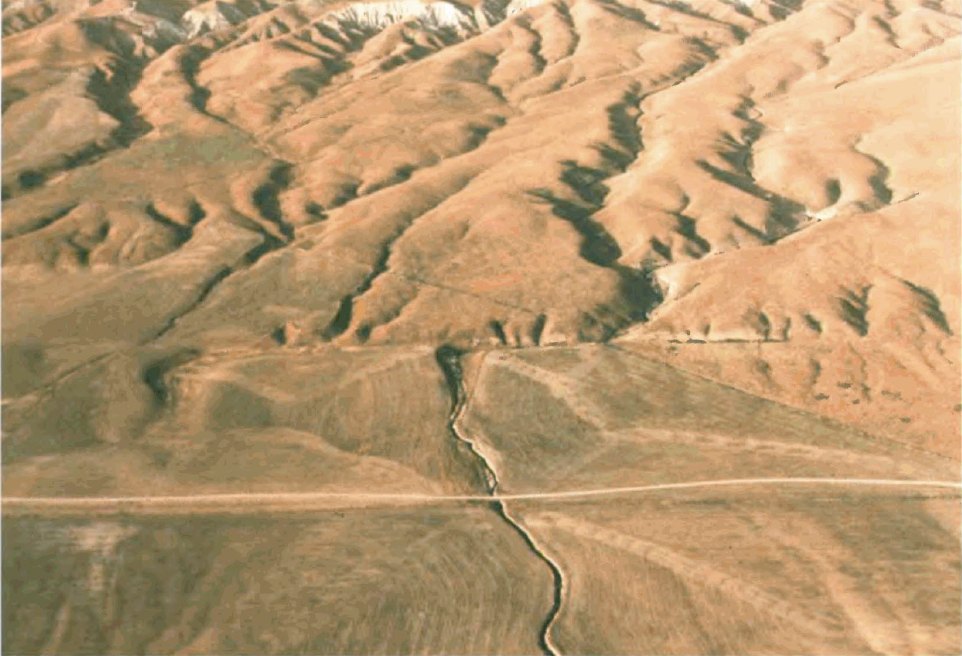
The disaster that strikes Karana’s island is rooted in real science. California and its Channel Islands lie along the edges of great pieces of the Earth’s crust, called plates, which slowly grind past one another. Where they catch and then suddenly slip, the ground shakes: that is an earthquake, and the crack along which it happens is called a fault. When a strong earthquake moves the floor of the sea, it can shove a huge amount of water upward, sending out a giant wave, or tsunami. In deep water a tsunami may pass almost unnoticed, but as it nears shore it rises into a towering wall of water. That science explains the wave and not the timing. O’Dell puts the earthquake in the chapter after Karana finally has canoes, and the sea takes them — which is the book’s last and hardest lesson: the island is not punishing her and never was, and indifference is a different thing from cruelty.
Think back over these final chapters. The ground itself turns against Karana — the island heaves in an earthquake, and a wall of water rushes in and shatters the canoes she had saved for any future escape. She lives through it. Then time takes what the sea could not: old Rontu, her first friend, lies down and does not rise, and she buries him on the headland where they watched the sun go down. But she does not let the loss close her heart. She tames his son, names him Rontu-Aru, and keeps loving. And when, after eighteen long years, a ship finally appears, the girl who once leapt into the sea to stay now steps calmly aboard to leave — dressed in her best, her animals beside her, carrying out of that lonely island a strength few people will ever need, and few could ever match.
The disaster that strikes Karana’s island is rooted in real earth science. California and its Channel Islands lie along the edges of enormous pieces of the Earth’s crust, called plates, which slowly grind past one another. Where the plates catch and then suddenly slip, the ground shakes in a tremor that is called an earthquake, and the crack along which it happens is a fault. Most earthquakes last only seconds, yet in those seconds they can crack cliffs, topple rock, and change a landscape forever.
An earthquake beneath the sea can be even more dangerous, because it may launch a giant wave called a tsunami. When the seafloor suddenly shifts it shoves a huge amount of water upward, and that energy races outward across the ocean. In deep water the wave is low and may pass almost unnoticed, but as it reaches shallow water near the shore it rises into a towering wall. Often the sea first pulls strangely far back, baring the seabed, and then rushes in as a devastating surge, exactly the kind of event that smashes the canoes Karana had hidden beneath the cliff. These are among the most powerful forces on Earth.
“This strange retreat of the water is often the last warning before the wave arrives.”
This writing task is optional and is not part of your auto-graded score. The feedback below checks only the basics — length, spelling, and grammar — not whether your ideas are right or wrong. It is meant for classroom discussion and creative practice, so feel free to use your imagination!
Writing Task — Part 8 “Saying Goodbye”
At last Karana leaves the island that was her whole world. Write about a goodbye in your life — leaving a place, a friend, or a part of your life behind. What were you leaving, and how did it feel? 6–10 sentences. End with what you carried with you.
No right or wrong — tell someone nearby what happened in this part. Can’t find anyone? Tell yourself out loud. The moment you teach it, you truly understand it.


Part 8 Complete — You Finished the Book! 🎉
You finished Chapters 28–29 — the final part of Island of the Blue Dolphins.
Here are your auto-graded results:
The best last step is to teach it. In your own words, explain what happened — retell a favorite scene, teach a character’s big choice, or sum up the main idea for a parent, friend, or classmate. When you can teach it clearly, you truly own it.
Independent study guide by Garden Heights. Not affiliated with or endorsed by Scott O'Dell. Contains original analysis only; no text from the novel is reproduced. Reference text: This workbook follows Scott O'Dell’s classic text (the standard Puffin edition sold worldwide). Revised 2023 UK editions change some wording and may not match the vocabulary studied here.