James and the Giant Peach cover
Garden Heights

James and the Giant Peach

This workbook is for Garden Heights members. Sign in to continue.

Sign in with Google →
New here? Just sign up with Google — your account includes Matilda, our gift book, forever.
James and the Giant Peach · Garden Heights

Part 8

for James and the Giant Peach · Part 8 · Chapters 37–39
8 Parts40 min
What Happens in Part 8

Perched on the spire, the giant insects peer over the edge — and the crowd below shrieks, sure these are terrible monsters. But James climbs out and, in a rousing song, introduces each of his friends and reassures the frightened people that they are gentle and kind. At once the fear melts into wonder, and the whole city is grateful. New York throws a magnificent parade, a celebration like no other, and the hungry children eat the giant peach right down to its stone. That great pit is carried to Central Park and set up as a monument — and as James’s very own house. There the once-lonely boy lives happily ever after, famous and content, while each insect finds a remarkable new career that suits its talents. So many children gather to hear James tell his tale that at last he writes it all down — and that book is the very one you have just read.

What We Will Learn
SectionWhat you will practice
VocabularyWords of the happy ending: introduce, reassure, grateful, parade, famous, content…
Literary ElementsResolution, theme, and the frame story
Cross-CurricularWhere stories come from, and how to match your talents to your work
Chapter Summary
Ch.What happens
37The Monsters — the crowd takes the peering insects for terrible monsters.
38The Welcome — James introduces his friends in a song and calms the city.
39Happily Ever After — a parade, the peach-stone house, new careers, and James’s book.
Part 1
Vocabulary
Study 10 key words from Chapters 37–39, then answer each question.
🧠Knowledge Bank · The Spinner of Threads
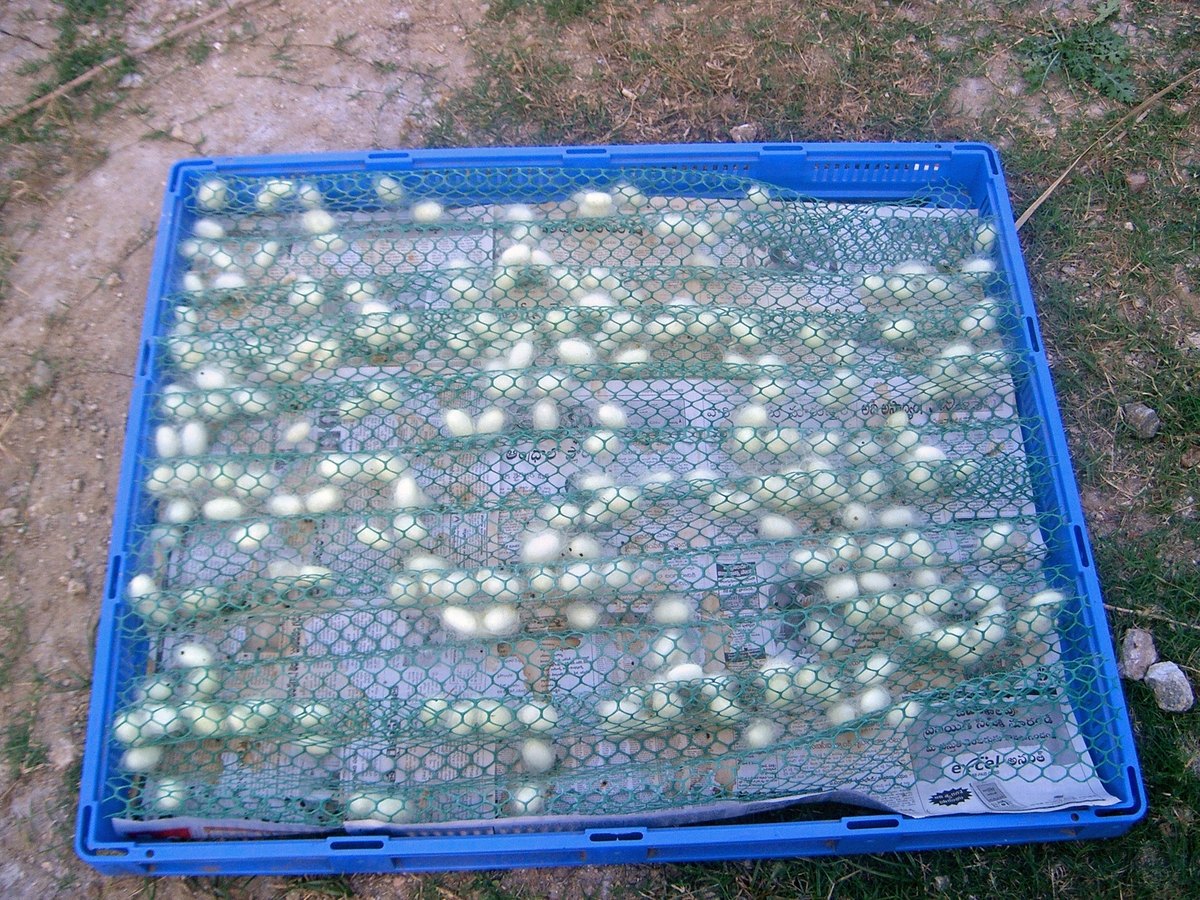
Entomology · Chapters 37–39 At the story’s close the Silkworm and Miss Spider set busily to work spinning, and the Silkworm’s real gift is one of nature’s quiet wonders. A silkworm is actually the caterpillar of a moth, and when it is ready to change it produces a single unbroken thread of silk from a gland near its mouth, winding that thread round and round itself to build a snug case called a cocoon . For thousands of years people have gently unwound these threads to weave into smooth, shining cloth, a craft first perfected long ago in China and carried westward along old trading roads. So when Dahl gives the Silkworm and Miss Spider useful new jobs making rope and thread, he is honouring a genuine talent. Inside that small, soft body lies a factory able to spin a treasure prized across the whole world .
introducev.Ch.38
To present someone to others
“James introduced each of his friends.”
reassurev.Ch.38
To take away someone’s fear
“He reassured the frightened crowd.”
gratefuladj.Ch.38
Thankful
“The city was grateful and glad.”
paraden.Ch.39
A public march of celebration
“New York held a grand parade.”
celebrationn.Ch.39
A joyful event
“It was a celebration like no other.”
famousadj.Ch.39
Known by very many people
“James became famous.”
careern.Ch.39
A person’s chosen work
“Each insect found a fine career.”
contentadj.Ch.39
Happy and satisfied
“At last James was content.”
remarkableadj.Ch.39
Worthy of notice; extraordinary
“They led remarkable new lives.”
gatherv.Ch.39
To come together
“Children gathered to hear his story.”
1To ‘introduce’ someone is to —Ch.38
2To ‘reassure’ someone is to —Ch.38
3Fill in each blank with the correct word.Chs. 38–39
Word choices:gratefulparadereassurefamous- some words will not be used
Once calmed, the whole city was and glad.
New York held a magnificent in their honor.
4To ‘gather’ is to —Ch.39
5Someone ‘content’ is happy and satisfied.Ch.39
6A ‘career’ is —Ch.39
7Fill in each blank with the correct word.Ch.39
Word choices:careerremarkablecontentgather- some words will not be used
Each insect found a fine new to suit its talents.
They all led truly new lives.
8Something ‘remarkable’ is —Ch.39
9Someone ‘famous’ is —Ch.39
10To be ‘grateful’ is to be thankful.Ch.38
Part 2
Comprehension
Show you understood what happens in Chapters 37–39.
🧠Knowledge Bank · Finding the Big Idea
Reading Skill · Chapters 37–39When you finish a book, one of the smartest things a reader can do is summarize — to boil a long story down to its most important events and its deepest meaning. A good summary is not a retelling of every detail; it keeps only what truly matters and leaves the rest behind, like straining a broth to find the richest flavor. Beneath the events lies the theme, the lasting message the whole book has been quietly building toward. In James’s tale, that message shines clearly by the end: a lonely, mistreated boy finds a family, a home, and a place in the world through kindness, courage, and hope. Try telling the entire adventure in three or four sentences, then add one more that names what it all means. If you can do that, you have not merely read the story — you have truly understood its heart.
1When the crowd first sees the giant insects on the spire, they —Ch.37
2How does James calm the frightened crowd?Ch.38
3Fill in each blank with the correct word.Ch.39
Word choices:paradeeatstonefear- some words will not be used
New York holds a huge to celebrate the travelers.
The children the whole peach down to its stone.
4What happens to the giant peach in the end?Ch.39
5The peach stone becomes James’s new house in Central Park.Ch.39
6What new lives do the insect friends find in New York?Ch.39
7Why does James finally write a book?Ch.39
8Write the numbers 1–5 in the boxes to show the correct order of events in Part 8. Number 1 = what happens first.Chs. 37–39
  • James introduces his friends and calms the crowd.
  • New York holds a grand parade of celebration.
  • The peach stone becomes James’s house in the park.
  • The crowd mistakes the insects for monsters.
  • James writes down the whole adventure as a book.
9How does James feel at the end of the story?Ch.39
10At the end, James is still lonely and friendless.Ch.39
Part 3
Literary Elements
Understanding HOW and WHY Roald Dahl tells the story across Chapters 37–39.
🧠Knowledge Bank · A Story Inside a Story
Author’s Craft · Chapters 37–39 The final chapters bring the resolution — the part where a story’s problems are settled and its loose threads are tied off. Then Dahl does something clever: he reveals that the whole book we just read has become a tale James himself tells to the children who gather beneath the great peach stone in the park. A story that contains another story like this is called a frame story , because the outer tale acts like a picture frame around the inner one. This gentle ending suggests that James’s adventure will now live on, passed from listener to listener, exactly the way real stories travel. It reminds us that the boy who once had no one to talk to has become a beloved storyteller surrounded by eager young friends — and that a good tale, once told, never truly ends .
📚 Literary Devices in This Part · definitions & examples
Resolution is where a story’s problems are settled (James wins his happy life). Theme is the big idea of a story (friendship and courage can transform a life). A frame story is a tale told or written by a character inside it (James wrote this book).
1The part where all the story’s problems are settled and James wins his happy life is the —Ch.39
2A theme is the big idea or message of a story.Ch.39
3Fill in each blank with the correct word.Ch.39
Word choices:resolutionthemesettingrhyme- some words will not be used
The final settling of James’s story is its .
The big idea, that kindness and courage are rewarded, is its .
4When we learn James wrote the very book we just read, that clever trick is a —Ch.39
5That James himself is revealed as the author of the book is an example of a frame story.Ch.39
6Fill in the blank with the correct word.Ch.39
Word choices:frame storyhyperboleindex- some words will not be used
A tale that turns out to be written by a character inside it is a .
7Why does Dahl reveal at the end that James wrote this very book?Ch.39
8James’s journey from a lonely, beaten boy to a loved author mainly shows the story’s —Chs. 1–39
9Fill in the blank with the correct word.Ch.39
Word choices:themerhymeplot- some words will not be used
The deeper message a whole story teaches is its .
10The whole book’s arc — misery turned to joy — delivers its central —Chs. 1–39
Part 4
Think Deeper
Four deeper challenges — no single-word recall. Read, weigh the evidence, and reason it through.
🧠Knowledge Bank · From Lonely to Beloved
Critical Thinking · Chapters 37–39 Look back at where James started — an orphan, alone on a bleak hill, treated as a servant by two cruel aunts — and then at where he ends, famous, loved, and surrounded by devoted friends in a bustling new city. That enormous change is the true shape of the whole book: a journey not just across an ocean but from misery to belonging. Dahl is offering children a promise worth holding onto: that a life can be transformed, that today’s loneliness need not become tomorrow’s. It was not magic alone; it was his own kindness, his courage in danger, and his gift for turning frightened strangers into a loyal family. The giant peach was only the vehicle; James’s open heart was the engine. His story leaves every reader with the same quiet, stubborn treasure the aunts could never take from him — the belief that he, too, deserved a real home .
1Claim: “James’s story is one of transformation, from misery to joy.” — choose the two details that best prove it.Claim & Evidence
2The start, or the end? Tap each detail to send it left or right.Sort into two
◄ At the startAt the end ►
3Match each cause to its result. For each cause, pick its result.Cause & Effect
James introduces his friends in song
The city celebrates the travelers
The children eat the whole peach
The peach stone is set up in the park
4Fill both blanks to complete the reasoning.Build the Argument
James’s sad beginning makes his happy ending feel all the sweeter because , which shows that .
Part 5
Standardized Test
Where Stories Come From · SAT & TOEFL-style practice
🎯 You already have the skills from the sections above — this is just a fun way to meet real SAT & TOEFL-style questions. Read the passage (the highlighted words are tested below), then answer the questions below. Tap an answer to select it, then tap it again to confirm — you can change your choice until you confirm.

At the very end, James writes down everything that happened to him — and that story becomes the book you have just read. But where do stories come from? Most begin with a real feeling or experience. Very few arrive complete. They are pieced together slowly, a scrap of memory here and a wild invention there, until the shape of a tale appears. An author takes something they know — loneliness, fear, a longing to escape — and lets their imagination build a whole new world around it, full of characters and adventures that never really happened.

James’s tale grew from a lonely boy’s wish for friends and freedom, stretched into a giant peach, talking insects, and a flight across the sea. Readers recognize that wish even though the events are impossible, and that is what makes an invented story feel true. That is the magic of writing: it turns quiet, ordinary feelings into something enormous and unforgettable. A notebook, a quiet half hour, and one honest memory are enough to begin. And it is why, like James, anyone with a pencil and an idea can become the author of a story all their own.

Original passage written for Garden Heights — not a quotation from the novel.
1According to the passage, what becomes an author at the end of the story?TOEFL · Factual Information
2In the passage, an “author” is —SAT · Words in Context
3According to the passage, where do most stories begin?SAT · Detail
4In the passage, “imagination” is what lets a writer —TOEFL · Vocabulary
5According to the passage, what did James’s tale grow from?TOEFL · Factual Information
6In the passage, an “experience” is —SAT · Words in Context
7According to the passage, what does writing turn ordinary feelings into?SAT · Detail
8What is the passage mainly about?SAT · Central Ideas
9According to the passage, who can become an author?TOEFL · Factual Information
10Insert Text (TOEFL). Look at the four squares [1][4] in the excerpt below. They show where this sentence could be added:
“The best ideas often come from what a writer knows best.”
A blank page can feel frightening to a new writer. [1] Where should a story even begin? [2] Many writers start with something from their own life. [3] A real memory, twisted and stretched, can grow into a whole adventure. [4]
Where would the sentence fit best?
TOEFL · Insert Text
Part 6 · Optional
Creative Writing
A bonus challenge to practice your English. Take your time and have fun with it.
About This Section

This writing task is optional and is not part of your auto-graded score. The feedback below checks only the basics — length, spelling, and grammar — not whether your ideas are right or wrong. It is meant for classroom discussion and creative practice, so feel free to use your imagination!

Writing Task — Part 8 “Your Own Story”

James turns his own adventure into a book. If you wrote a story about your life or your dreams, what would it be about? Describe your story — who is in it, where it happens, and how it ends. Write at least 40 words.

You can start with: “My story would begin with…”
0 / 40 words minimum
đź—Ł Teach It · Just for Fun (optional)

No right or wrong — tell someone nearby what happened in this part. Can’t find anyone? Tell yourself out loud. The moment you teach it, you truly understand it.


Garden Heights

Part 8 Complete — You Finished the Book! 🎉

You finished Chapters 37–39 — the final part of James and the Giant Peach.

Here are your auto-graded results — scroll down for your full Report Card across all parts:

-
points out of 100
Your Writing

Your writing was checked automatically for length, spelling, grammar, and whether you included the key parts of the scene. Scroll back to Part 5 anytime to read your feedback and improve your work.

Explore the next book →

Independent study guide by Garden Heights. Not affiliated with or endorsed by Roald Dahl. Contains original analysis only; no text from the novel is reproduced. Reference text: This workbook follows Roald Dahl’s classic text (the standard Puffin edition sold worldwide). Revised 2023 UK editions change some wording and may not match the vocabulary studied here.