
New here? Just sign up with Google — your account includes Matilda, our gift book, forever.
Judy Moody · Garden Heights Academy
Part 8
for Judy Moody · Part 8 · Chapters 12
a novel by Megan McDonald
30 min5 Parts
This workbook is built on a solid pedagogical foundation, effectively integrating content and language learning based on the CLIL framework (Content and Language Integrated Learning), elevated by our unique 5th C — Connection — and an integrated Standardized Test section that weaves every SAT & TOEFL question type right into the novel, so learners build real test skills easily, naturally, and with fun.
What Happens in Part 8
The big day arrives: Judy presents her finished Me collage to the class. Wearing a doctor coat and brimming with confidence, she shares everything that makes her her — the “I ate a shark” T-shirt, Jaws the Venus flytrap, the Toad Pee Club, her dream of being a doctor like Elizabeth Blackwell, even the fake hand and the purple Virginia. The class loves it, and Dad is proud that Judy turned an accident into something good. The girl who began the book in a terrible bad mood ends it cheerful and proud — in a very good mood at last.
What We Will Learn
Focus
What It Means
Resolution
How the whole story comes together
Theme & Growth
Judy’s journey from bad mood to good mood
Confidence
Sharing who you are with pride
Chapter Summary
Chapter
Key Events
Ch.12
Judy confidently presents her Me collage to the class, sharing all the things that make her unique; the class loves it and Judy ends the book in a good mood
💭 Before You Read · Warm-Up (not scored)
There are no wrong answers here — just think, guess, and talk:
Judy started the book hiding under the covers and ends it standing proudly in front of the class. What helps a shy or grumpy feeling turn into confidence?
Her collage gathers everything that makes her Judy. If you made a collage of your whole year, what three things would have to be on it?
Looking back: which of Judy’s moods did you recognize most in yourself?
Copyright Notice
This is an independent study guide created by Garden Heights Academy to support reading comprehension and literary analysis. It contains original analysis questions and does not reproduce any text from the novel. Judy Moody is a work by Megan McDonald. This guide is not affiliated with, authorized by, or endorsed by Megan McDonald or any associated rights holders. Students should read the original book, available from libraries and booksellers.
Part 1
Vocabulary
Study 10 key words from Chapters 12, then answer each question.
☀Knowledge Bank · How Plants Make Their Food
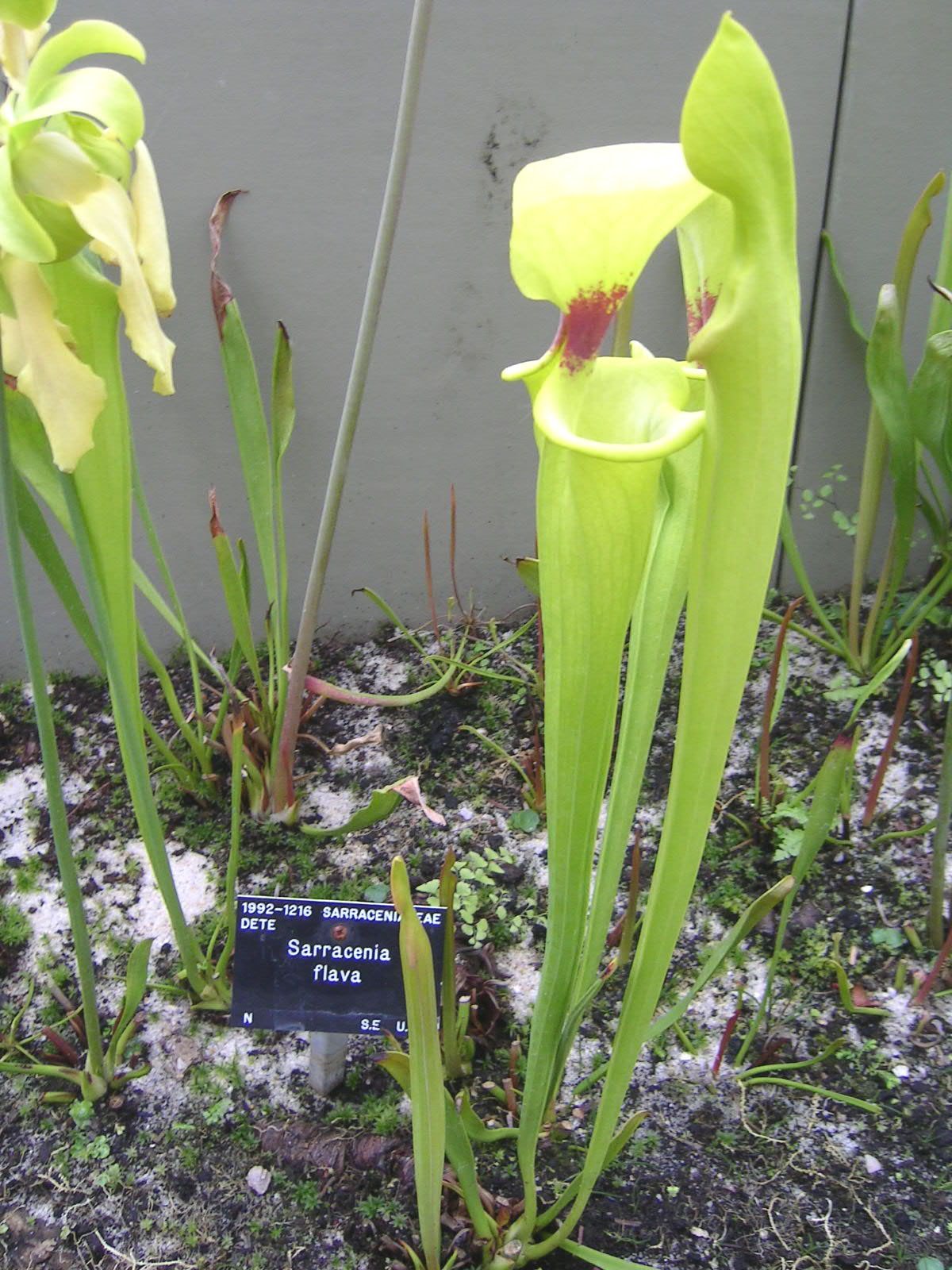
Science · How Plants LiveHere is one of the quiet wonders of science: green plants manufacture their own food. Roots draw water up from the soil while leaves catch sunlight, and inside each leaf light, water, and air are combined into sugar. The process carries a long name, photosynthesis, and it feeds nearly every living thing on Earth. Even a meat-eating flytrap does it. So do its relatives, the pitcher plant with its slippery cup and the sundew with its sticky drops. They add insects only because boggy ground cannot supply enough minerals. Knowing this makes an ordinary windowsill look busy with life.
presentv.Ch.12
To show or explain something to others
“Judy stood up to present her collage.”
confidentadj.Ch.12
Sure of yourself
“Judy felt confident in her doctor coat.”
uniqueadj.Ch.12
One of a kind; unlike any other
“The collage showed how unique Judy is.”
audiencen.Ch.12
The people watching or listening
“Her classmates were the audience.”
proudadj.Ch.12
Pleased about what you have done
“Judy’s dad was proud of her.”
revealv.Ch.12
To show something hidden
“The collage revealed Judy’s true self.”
accomplishv.Ch.12
To finish something successfully
“Judy accomplished her big project.”
expressv.Ch.12
To show your thoughts or feelings
“The collage let Judy express herself.”
cheerfuladj.Ch.12
Happy and in good spirits
“Judy ended the book cheerful.”
transformv.Ch.12
To change completely
“Judy’s mood transformed by the end.”
ⓘ The vocabulary words in this list are selected to help you understand and complete this workbook. Some may not appear verbatim in the original novel.
1To show or explain your work to others is to ___ it.Ch.12
2True or False: Someone who is “confident” is unsure and afraid.Ch.12
3The people watching or listening to a presentation are the ___.Ch.12
4True or False: Something “unique” is one of a kind.Ch.12
5Fill in each blank with the correct word.Ch.12
Word choices:presentconfidentaudiencereveal- some words will not be used
Judy felt as she stood up to her collage to the .
6True or False: To “express” yourself means to show your thoughts and feelings.Ch.12
7To finish something successfully is to ___ it.Ch.12
8True or False: “Cheerful” means happy and in good spirits.Ch.12
9Fill in the blanks with the correct words.Ch.12
Word choices:proudrevealtransformunique- some words will not be used
The collage helped the real Judy, and her dad was .
10By the end, Judy’s bad mood has completely changed, or ___.Ch.12
Part 2
Comprehension
How well do you understand Chapters 12?
📝Knowledge Bank · Telling It in a Nutshell
Reading Skill · SummarizingWhen you reach the end of a book, it helps to summarize it, telling the most important parts in a few sentences. A summary stays short. It drops the tiny details and keeps only what matters: who the story followed, what she wanted, what got in the way, and how everything settled. Try squeezing Judy’s whole school year into four sentences. Not every episode, only the big beats. Summarizing proves you understood a story rather than merely reading the words, and it is a skill you will use in school and far beyond. A good summary is small but mighty.
1What does Judy do in the final chapter?Ch.12
2What is Judy wearing as she presents?Ch.12
3How does Judy feel as she presents her collage?Ch.12
4True or False: Judy’s collage includes things like Jaws, the T.P. Club, and her doctor dream.Ch.12
5Write the numbers 1–5 in the boxes to show the correct order across Part 8. Number 1 = what happens first.Ch.12
Wearing a doctor coat, she stands up in front of the class.
Judy brings her finished Me collage to school.
The class loves Judy’s collage.
Judy ends the book in a good mood at last.
Judy proudly shares the things that make her unique.
6True or False: The class dislikes Judy’s collage.Ch.12
7Why is Judy’s dad proud of her?Ch.12
8What kind of mood is Judy in by the end of the book?Ch.12
9True or False: The book begins with Judy in a bad mood and ends with her in a good mood.Ch.12
10Fill in the blanks to complete the sentence.Ch.12
Word choices:collagegooddoctorbad- some words will not be used
Judy proudly presented her and finally felt in a mood.
Part 3
Literary Elements
Understanding HOW and WHY Megan McDonald creates certain feelings across Chapters 12.
🔁Knowledge Bank · How Stories Come Full Circle
Literary Craft · ResolutionThe closing stretch of a story is called the resolution. It is where the main problem finally settles and loose threads get tied off. The strongest endings often come full circle, echoing the opening in some deliberate way. Think back to how this book began, then look at where it leaves Judy. That echo satisfies us because it measures the distance a character has traveled. A resolution answers the questions a reader has been carrying and lets the book close with a contented sigh. Whenever you finish a novel, glance back at the first page. Seeing the circle reveals a whole story’s shape.
📚 Literary Devices in This Part · definitions & examples
Resolution is how a story’s problems are settled. Judy finishes and proudly shares her collage.A full-circle ending returns to where it began — a bad mood at the start, a good mood at the end.A character arc is how a character changes across a story. Judy’s arc goes from grumpy to proud.
The questions below are mixed — not grouped by device. Decide which device each one is about.
1Judy finishing and sharing her collage settles the story — this is the —Ch.12
2The resolution is how a story’s problems get settled.Ch.12
3Fill in each blank with the correct word.Ch.12
Word choices:resolutionfull-circle endingsymbolsetting- some words will not be used
Judy finishing her collage settles the story — this is the
Starting in a bad mood and ending in a good one is a .
4Starting in a bad mood and ending in a good mood is a —Ch.12
5A full-circle ending returns to where the story began.Ch.12
6Fill in each blank with the correct word.Ch.12
Word choices:full-circle endingresolutionsymbolmood- some words will not be used
Ending where it began, on Judy’s mood, is a
The settling of Judy’s collage problem is the .
7The story’s problems being settled at the end is the —Ch.12
8The book ends on Judy’s mood, just as it began — a —Ch.12
9Fill in each blank with the correct word.Ch.12
Word choices:resolutionfull-circle endingsymbolplot- some words will not be used
The settling of the story’s problem is the
Ending on Judy’s mood as it began is a .
10The story starting and ending on Judy’s mood mainly gives it a satisfying —Ch.12
Part 4
Think Deeper
Four deeper challenges — no single-word recall. Read, weigh the evidence, and reason it through.
🎤Knowledge Bank · Standing Up to Share
Communication · Public SpeakingJudy stands in front of her class and gives a presentation, explaining her work aloud to an audience. Speaking to a group makes almost everyone nervous, and a few tricks help: know your material, look up, slow down, breathe. Rehearsing in front of a mirror or a patient adult builds confidence. What matters most is having something you truly care about to say. Feelings are never fixed either; a finished project, a friend, or one good day can genuinely turn a sour mood around. Judy began this book grumpy, which makes where she ends up a real piece of growth.
1Claim: “Judy’s finished collage shows the class exactly who she is.” — choose the two details that best prove it.Claim & Evidence
2Shows Judy’s confidence and self-expression, or just a detail of the collage? Tap each item to send it left or right.Sort into two
◄ Confidence and self-expressionJust a detail ►
3Match each cause to its result. For each cause, pick its result.Cause & Effect
The collage is finished→
She wears a doctor coat→
She shares all that makes her her→
The project that vexed her is done→
4Fill both blanks to complete the reasoning.Build the Argument
Judy’s proud presentation shows that , which shows the book’s idea that .
Part 5
Standardized Test
Prose Summary & Whole-Passage Reading — SAT & TOEFL-style practice
🎯 You already have the skills from the sections above — this is just a fun way to meet real SAT & TOEFL-style questions. Read the passage (the highlighted words are tested below), then answer the questions below. Tap an answer to select it, then tap it again to confirm — you can change your choice until you confirm.
For hundreds of years, artists have painted pictures of themselves, called self-portraits. At first this was simply practical: a painter always had one model who never grew tired and never asked to be paid — himself. But artists soon discovered something deeper. A self-portrait is a chance to show not just a face, but a whole personality. The Dutch painter Rembrandt painted himself almost a hundred times across his life, and if you line the pictures up, you can watch him grow from a bold young man into a wise old one. A good self-portrait chooses details on purpose: the clothes, the background, the objects a person holds all reveal who they are. A modern ‘me collage,’ made from photos and cut-out shapes instead of paint, works the very same way. Whether it is oil on canvas or glue on paper, the goal is the same — to capture, in one image, the answer to a hard and wonderful question: who am I?
Original passage written for Garden Heights — not a quotation from the novel.
1What is a self-portrait?TOEFL · Factual Information
2At first, why was painting oneself “practical”?TOEFL · Factual Information
3A person’s “personality” is —SAT · Words in Context
4What can you see if you line up Rembrandt’s self-portraits?TOEFL · Factual Information
5The passage suggests an artist chooses each detail —SAT · Inference
6If an object can “reveal” who you are, it can —SAT · Words in Context
7To “capture” a person in one image is to —SAT · Words in Context
8How is a ‘me collage’ like a painted self-portrait?SAT · Inference
9Which TWO ideas together best summarize the passage?SAT · Central Ideas
10Insert Text (TOEFL). Look at the four squares [1]–[4] in the excerpt below. They show where this sentence could be added: “In this way, every self-portrait quietly answers one big question: who am I?”
A self-portrait is a picture an artist makes of themselves. [1] The artist chooses which details to show. [2] A frown, a tool, or a favorite color can each tell a story. [3] Together these choices reveal a whole person. [4]
Where would the sentence fit best?TOEFL · Insert Text
Part 6 · Optional
Creative Writing
A bonus challenge to practice your English. Take your time and have fun with it.
About This Section
This writing task is optional and is not part of your auto-graded score. The feedback below checks only the basics — length, spelling, and grammar — not whether your ideas are right or wrong. It is meant for classroom discussion and creative practice, so feel free to use your imagination!
Writing Task — Part 8 “My Own Me Collage”
Judy’s collage shows everything that makes her unique. Describe what YOU would put on your own “Me collage” — your favorite things, dreams, pets, hobbies, and clubs — and why. Write at least 40 words.
You can start with: “On my own Me collage, I would put…”
0 / 40 words minimum
🗣 Teach It · Just for Fun (optional)
No right or wrong — close the screen and tell someone nearby what happened in this part. Can’t find anyone? Tell yourself out loud. The moment you teach it, you truly understand it.

Part 8 Complete!
You finished Chapters 12 of Judy Moody.
Here are your auto-graded results:
-
points out of 100
Your Writing
Your writing was checked automatically for length, spelling, grammar, and whether you included the key parts of the scene. Scroll back to Part 5 anytime to read your feedback and improve your work.
Independent study guide by Garden Heights Academy. Not affiliated with or endorsed by Megan McDonald. Contains original analysis only; no text from the novel is reproduced.