
Judy Moody Gets Famous! cover
Garden Heights Academy

Judy Moody Gets Famous!

This workbook is for Garden Heights members. Sign in to continue.

Sign in with Google →
New here? Just sign up with Google — your account includes Matilda, our gift book, forever.
What Happens in Part 4

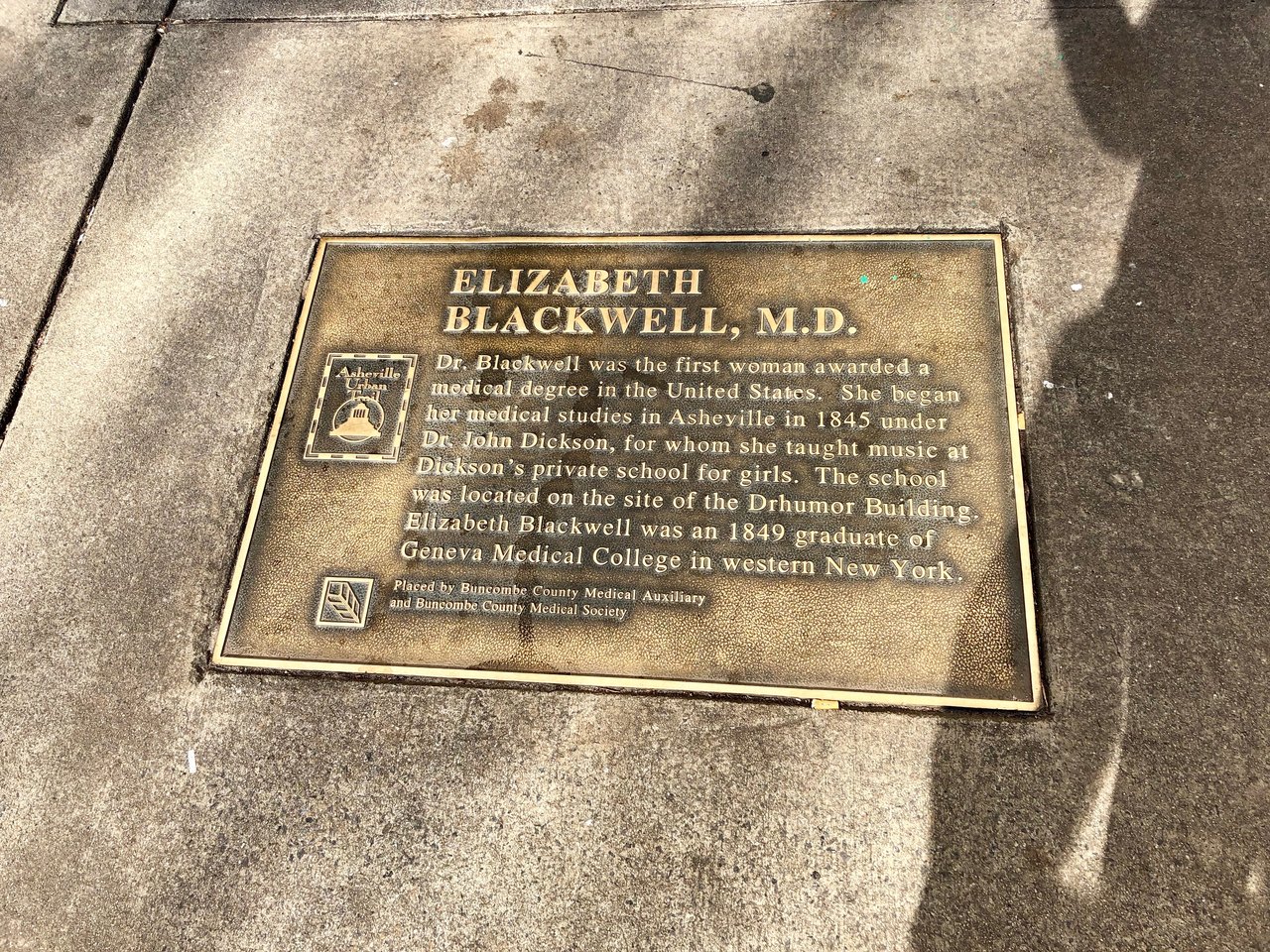
Still hunting for a way to become famous, Judy decides to study how other people got famous — the real ones, in history books. She reads about great pioneers and heroes who are remembered for doing important, brave things. One who especially inspires her is Elizabeth Blackwell, the first woman ever to become a doctor in America — perfect, since Judy dreams of being a doctor herself one day! Fired up by these famous lives, Judy tries fresh schemes to win fame, from grand plans to record-breaking ambitions. She is learning that the people we remember usually became famous not by trying to be famous, but by achieving something real. That idea has not quite sunk in for Judy yet — but the seed of a very important lesson is quietly being planted among all her scheming.

What We Will Learn
FocusWhat It Means
AllusionHow the book refers to real famous people
PerseveranceHeroes who pushed on despite rejection
Theme (Real Fame)Fame follows achievement, not attention-seeking
Chapter Summary
PagesKey Events
pp. 46–60Judy studies how real people became famous, admiring pioneers like Elizabeth Blackwell, the first woman doctor in America; she tries new record-breaking schemes, slowly (and unknowingly) learning that lasting fame follows real achievement
💭 Before You Read · Warm-Up (not scored)

There are no wrong answers here — just think, guess, and talk:

  • Elizabeth Blackwell wanted to HELP people, and fame came later. How is that different from Judy’s plan to chase fame directly?
  • Blackwell was rejected again and again but never gave up. Why is not giving up so important when you are doing something new and hard?
  • Predict: Judy keeps looking for a shortcut to fame. What do you think will finally teach her the real lesson?
Copyright Notice

This is an independent study guide created by Garden Heights Academy to support reading comprehension and literary analysis. It contains original analysis questions and does not reproduce any text from the novel. Judy Moody Gets Famous! is a work by Megan McDonald. This guide is not affiliated with, authorized by, or endorsed by the author or any associated rights holder.
Part 1
Vocabulary
Study 10 key words from pages 46–60, then answer each question.
🧠Knowledge Bank · Words of Greatness
Social Science · Role ModelsA model is a person you look up to and want to grow up like. The best ones are rarely the loudest. Consider Elizabeth Blackwell, born in 1821: college after college refused her, one finally admitted her, and she graduated at the very top of her class in 1849, the first American woman to hold a medical degree. She then spent decades, until her death in 1910, treating poor patients and training other women as physicians. She never set out to be applauded; she set out to be useful. So when you pick someone to admire, ask what that person actually built or healed — that is real greatness.
pioneern.p.47
The first person to do or explore something new
“Elizabeth Blackwell was a pioneer in medicine.”
inspirev.p.48
To fill someone with the urge to do something great
“The famous doctor inspired Judy.”
ambitionn.p.52
A strong desire to achieve something
“Judy had a burning ambition to be famous.”
achievev.p.54
To succeed in doing something through effort
“Famous people usually achieve something real first.”
recordn.p.53
The best or most ever done, that others try to beat
“Judy dreamed of setting a world record.”
heroicadj.p.49
Very brave and admirable
“Standing up to unfair rules was heroic.”
perseverev.p.50
To keep trying despite difficulty
“Blackwell had to persevere against those who refused her.”
admirev.p.48
To respect and look up to someone
“Judy admired the great pioneers she read about.”
legacyn.p.51
What a person leaves behind for the future
“Her legacy opened medicine to women.”
remarkableadj.p.47
Unusual and worth admiring
“These were remarkable people who changed the world.”
1A ‘pioneer’ is —Pages 46–60
2An ‘ambition’ is —Pages 46–60
3Fill in each blank with the correct word.Pages 46–60
Word choices:inspireperseverequitrest- some words will not be used
Blackwell’s story helps ___ Judy
Blackwell had to ___ through many refusals .
4To ‘achieve’ something is to —Pages 46–60
5To be ‘determined’ is to be firmly set on a goal.Pages 46–60
6To set a ‘record’ is to —Pages 46–60
7Fill in each blank with the correct word.Pages 46–60
Word choices:heroicadmiredislikeforget- some words will not be used
Blackwell’s brave, ___ effort
makes people ___ her to this day .
8A ‘legacy’ is —Pages 46–60
9Something ‘remarkable’ is —Pages 46–60
10To ‘quit’ is to keep trying forever.Pages 46–60
Part 2
Comprehension
How well do you understand pages 46–60?
🧠Knowledge Bank · Learning from Real Heroes
Reading Skill · Main IdeaEvery story and every chapter has a main idea — the most important point the author wants you to understand. Around it are smaller details that help explain it. To find the main idea, ask, ‘What is this mostly about?’ In this part, the details about real heroes all point to one big idea: what truly makes a person worth admiring. Do not get lost in every little fact; step back and see the whole picture. Finding the main idea is like seeing the shape of a puzzle after you fit the pieces together.
1How does Judy look for new ways to get famous?Pages 46–60
2Who especially inspires Judy?Pages 46–60
3Why is Blackwell a perfect hero for Judy?Pages 46–60
4Blackwell had to persevere against rejection to become a doctor.Pages 46–60
5Write the numbers 1–5 in the boxes to show the correct order across Part 4. Number 1 = what happens first.Pages 46–60
  • Judy reads about Elizabeth Blackwell and is inspired.
  • Judy searches for a new way to become famous.
  • Blackwell opened her own hospital and helped many people.
  • Judy slowly senses that real fame comes from doing good.
  • Blackwell was rejected but persevered to become a doctor.
6Real famous people usually achieved something that mattered.Pages 46–60
7What did Blackwell have to do to reach her goal?Pages 46–60
8What lesson is quietly forming for Judy?Pages 46–60
9Elizabeth Blackwell became famous mainly by chasing fame.Pages 46–60
10How is Judy’s approach still different from Blackwell’s?Pages 46–60
Part 3
Literary Elements
Understanding HOW and WHY Megan McDonald tells the story across pages 46–60.
🧠Knowledge Bank · McDonald’s Word-Craft: Allusion
Language · Real-World-Reference SpotlightAn allusion is when a story points to a real person, place, or thing from outside the book. When Megan McDonald brings in Elizabeth Blackwell, a real doctor from history, she is using an allusion. It links Judy’s made-up world to our true one and adds deeper meaning. To understand an allusion, it helps to know a little about what is being pointed to. That is why learning real facts makes you a better reader. Each allusion is like a door that opens the story onto the wider, real world.
📚 Literary Devices in This Part · definitions & examples
An allusion is a reference to a real person, place, or event from outside the story — here, the real doctor Elizabeth Blackwell. Allusions connect fiction to the real world and can teach a lesson. This one supports the book’s theme: lasting fame follows genuine achievement, not attention-seeking.
1Naming a real person, Elizabeth Blackwell, in the story is an —Pages 46–60
2An allusion is a nod to a real person, place, or work.Pages 46–60
3Fill in each blank with the correct word.Pages 46–60
Word choices:allusionthememoodsetting- some words will not be used
Mentioning the real Elizabeth Blackwell is an
The big idea that real fame comes from good deeds is a .
4The big idea that lasting fame comes from doing good is the story’s —Pages 46–60
5A theme is a big idea a story explores.Pages 46–60
6Fill in each blank with the correct word.Pages 46–60
Word choices:themeallusionmoodplot- some words will not be used
The nod to the real Blackwell is an
The idea that real fame comes from good is a .
7Referring to a real historical figure in a story is an —Pages 46–60
8That real fame comes from helping, not chasing it, is the book’s —Pages 46–60
9Fill in each blank with the correct word.Pages 46–60
Word choices:allusionthememoodplot- some words will not be used
A nod to a real person is an
The big idea about real fame is the .
10The allusion to Blackwell mainly helps show the theme of —Pages 46–60
Part 4
Think Deeper
Four deeper challenges — no single-word recall. Read, weigh the evidence, and reason it through.
🧠Knowledge Bank · Famous For a Reason
Ethics · Who We AdmireWhy do we admire some people more than others? Fame alone is a poor guide, because a big name says nothing about whether a person is kind or brave. Notice how badly Judy wants a title of her own — the biggest, the fastest, the first at something. That craving is very ordinary; children reach for a special label because it seems to prove they matter. But a genuine first takes patient, unglamorous work, not merely wishing for it. The heroes worth copying earned their place by helping people, with no crowd watching. Choosing carefully who you look up to quietly shapes the person you become.
1Claim: “Judy learns that real fame comes from doing something meaningful.” — choose the two details that best prove it.Claim & Evidence
2Shows Judy’s new understanding of fame, or just a detail of her research? Tap each item to send it left or right.Sort into two
◄ Her new understandingJust a detail ►
3Match each cause to its result. For each cause, pick its result.Cause & Effect
Judy wants real fame
She reads their histories
One hero inspires her
Judy rethinks fame
4Fill both blanks to complete the reasoning.Build the Argument
What Judy learns from the history books shows that , which means that .
Part 5
Standardized Test
Key Details & Inference — SAT & TOEFL-style practice
🎯 You already have the skills from the sections above — this is just a fun way to meet real SAT & TOEFL-style questions. Read the passage (the highlighted words are tested below), then answer the questions below. Tap an answer to select it, then tap it again to confirm — you can change your choice until you confirm.

In the 1840s, a young woman named Elizabeth Blackwell set out to do something no woman in America had ever done: become a doctor. At the time, most people insisted that medicine was no place for a woman, and one medical school after another rejected her application. Blackwell refused to accept that answer. At last one college let her in — partly as a joke, the students thought — but Blackwell had the last laugh: she studied fiercely and graduated at the very top of her class in 1849, becoming the first woman in the country to earn a medical degree. The struggle did not end there. Many hospitals would not hire her, so she opened her own, and she worked to train other women as doctors and nurses. Her real goal was never to be famous; it was to heal people and to open a door that had always been shut. Yet fame came anyway, because she had truly achieved something that mattered. Today she is remembered as a pioneer — proof that the surest path to being remembered is not to chase attention, but to do something genuinely good.

Original passage written for Garden Heights — not a quotation from the novel.
1What did Elizabeth Blackwell set out to become?TOEFL · Factual Information
2When medical schools “rejected” her, they —SAT · Words in Context
3When Blackwell “graduated” at the top of her class, she —SAT · Words in Context
4Because many hospitals would not hire her, Blackwell —TOEFL · Factual Information
5The passage suggests Blackwell earned lasting fame by —SAT · Inference
6What was Blackwell’s real goal?TOEFL · Factual Information
7The passage mainly presents Blackwell as someone remembered for —SAT · Rhetorical Purpose
8Why did fame come to Blackwell even though she did not chase it?SAT · Inference
9A “pioneer” is someone who —SAT · Words in Context
10Insert Text (TOEFL). Look at the four squares [1][4] in the excerpt below. They show where this sentence could be added:
“In the end, she became famous not by seeking fame, but by doing work that mattered.”
Elizabeth Blackwell was turned away by many medical schools. [1] At last, one school let her in, almost as a joke. [2] She graduated at the top of her class. [3] Then she opened a hospital and trained other women doctors. [4]
Where would the sentence fit best?
TOEFL · Insert Text
Part 6 · Optional
Creative Writing
A bonus challenge to practice your English. Take your time and have fun with it.
About This Section

This writing task is optional and is not part of your auto-graded score. The feedback below checks only the basics — length, spelling, and grammar — not whether your ideas are right or wrong. It is meant for classroom discussion and creative practice, so feel free to use your imagination!

Writing Task — Part 4 “A Person I Admire”

Judy is inspired by a real hero, Elizabeth Blackwell. Write about a real person you admire — from history, from the news, or from your own life. What did they do, and why do you look up to them? Write at least 40 words.

You can start with: “A person I really admire is…”
0 / 40 words minimum
🗣 Teach It · Just for Fun (optional)

No right or wrong — close the screen and tell someone nearby about Elizabeth Blackwell and the lesson Judy is starting to learn. Can’t find anyone? Tell yourself out loud. The moment you teach it, you truly understand it.


Garden Heights Academy

Part 4 Complete!

You finished pages 46–60 of Judy Moody Gets Famous!.

Here are your auto-graded results:

-
points out of 100
Your Writing

Your writing was checked automatically for length, spelling, grammar, and whether you included the key parts of the scene. Scroll back to Part 5 anytime to read your feedback and improve your work.

Move on to Part 5 →

Independent study guide by Garden Heights Academy. Not affiliated with or endorsed by the author or any rights holders. Contains original analysis only; no text from the novel is reproduced.