
Part 8
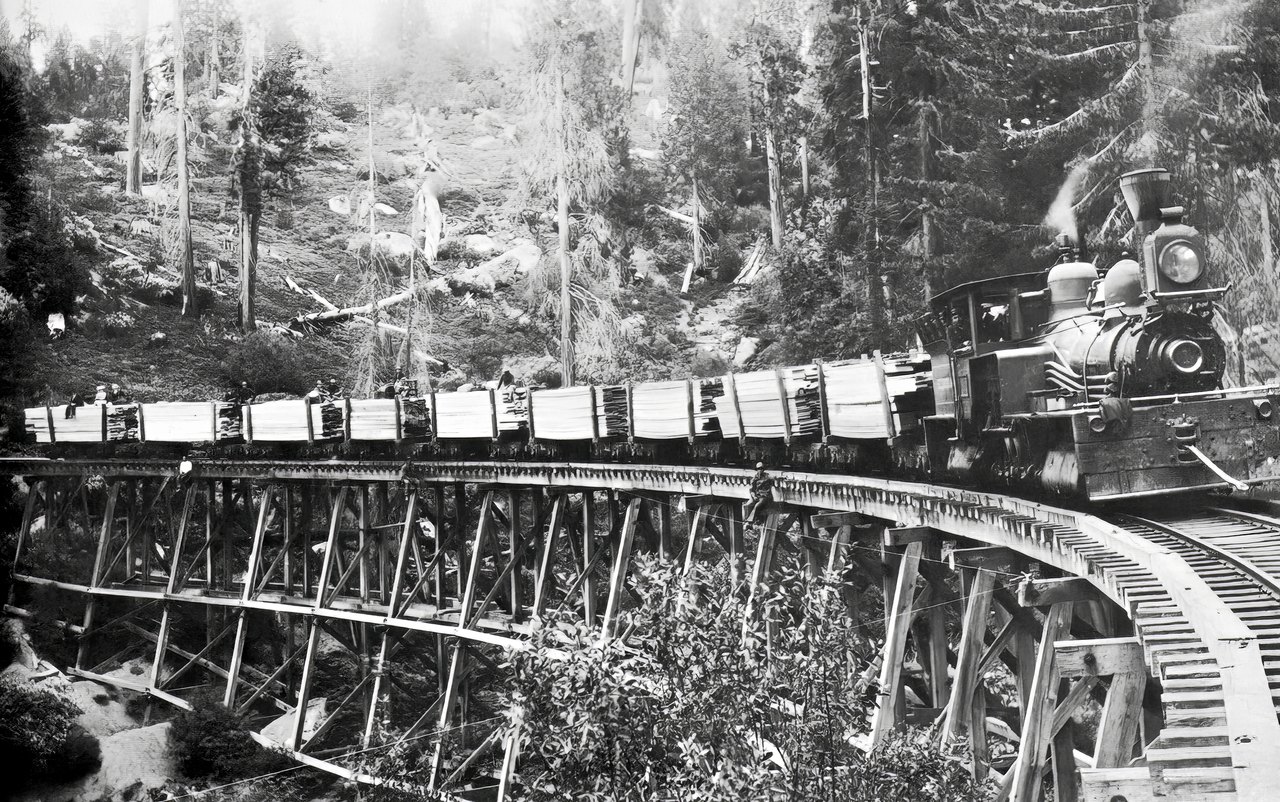
Everything comes together at the end. Maniac’s patient friendship with tough Mars Bar Thompson has slowly grown real, and the two boys begin to bridge the very divide the town treats as unbreakable. Then crisis strikes at the P&W trestle — the high railroad bridge where Maniac’s own parents died. Little Russell McNab, egged into a dare, freezes in terror out on the trestle, and it is MARS BAR, a boy from the East End, who climbs out and brings the terrified West End child safely back. In that single act, a Black boy saving a white one, the town’s color line cracks: the McNabs, who armed a bunker against the East End, cannot pretend the boy who saved their brother is an enemy. The healing Maniac longed for begins, not by his hand alone, but through the friendships he helped make possible. Meanwhile Amanda Beale has had enough of Maniac’s running. She marches to the buffalo pen where he is hiding, furious and loving at once, and refuses to leave without him — insisting, with her worn-out book in hand, that he belongs with the Beales, that he is wanted, that he is not and never was a curse. At last Maniac lets himself believe it. He stops running. He goes home with Amanda to 728 Sycamore Street — to a family, an address, and the belonging he has searched for from the very first page. The legend, at last, has a home.
| Section | What you will practice |
|---|---|
| Vocabulary | Homecoming words: bridge, rescue, reconcile, belong, home… |
| Literary Elements | The climax, the resolution, and the meaning of a modern legend |
| Cross-Curricular | Reading a story as a modern myth |
| Ch. | What happens |
|---|---|
| Chapters 43–44 | The Trestle — Maniac and Mars Bar grow close; when Russell McNab freezes on the high trestle, Mars Bar — a Black boy — rescues the white child, cracking the color line. |
| Chapters 45–46 | Home at Last — Amanda finds Maniac at the buffalo pen, refuses to leave without him, and convinces him he is not cursed; he goes home to the Beales for good. |
All four of the closing words are verbs, and that is the point. To bridge is to connect across a gap or a divide, which is what a friendship does to a color line nobody could argue away. To rescue is to save from danger, and the book gives that act to Mars Bar, not to Maniac, because the boy who has been the legend all along is not the one who needs to prove anything. To reconcile is to make peace after conflict, and Two Mills only begins to do it — slowly, and not because anyone was persuaded. To belong is to have a rightful, welcome place, and it is the last word because it is the only one Maniac ever wanted. Nothing here is a state of being. Every one of them is something somebody has to choose.
ⓘ The vocabulary words in this list are selected to help you understand and complete this workbook. Some may not appear verbatim in the original novel.
The ending can be followed as a climax, a meaningful return, and a final closure rather than as isolated incidents. Everything comes together at the end. Maniac’s patient friendship with tough Mars Bar Thompson has slowly grown real, and the two boys begin to bridge the very divide the town treats as unbreakable. Then crisis strikes at the P&W trestle — the high railroad bridge where Maniac’s own parents died. Little Russell McNab, egged into a dare, freezes in terror out on the trestle, and it is MARS BAR, a boy from the East End, who climbs out and brings the terrified West End child safely back. In that single act, a Black boy saving a white one, the town’s color line cracks: the McNabs, who armed a bunker against the East End, cannot pretend the boy who saved their brother is an enemy. At the close, “The Legend Comes Home” completes the book’s movement toward resolution.
- Amanda finds Maniac and refuses to leave without him.
- Russell McNab freezes in fear on the trestle.
- Maniac goes home to the Beales for good.
- Mars Bar rescues the terrified boy.
- Maniac and Mars Bar become real friends.
The closing movement joins climax, resolution, and structure, allowing the ending to answer the beginning. The rescue on the trestle is the book’s climax — the moment of highest tension where the central conflict turns. And notice how carefully Spinelli builds it. The conflict has been the color line; the turning point is a Black boy from the East End risking himself to save a white child from the very West End family that armed a bunker against his people. Nothing could crack prejudice more powerfully: the McNabs cannot keep hating ‘those people’ when one of ‘those people’ just saved their brother’s life. And it is fitting that Maniac himself does not perform this rescue. The whole book has argued that healing a divided town is not one hero’s job; here Mars Bar, whom Maniac patiently befriended, becomes the hero, showing that Maniac’s real gift was making such friendships possible. That authorial design makes “Mars Bar’s Rescue” a lesson in deliberate payoff.
The ending completes the design Spinelli set up on page one, and reveals the whole book as a modern legend. A legend is not just an exaggerated tale; at its best it is a story a community tells because it carries a hope the community needs. Maniac Magee is exactly that. Beneath the tall-tale feats, the book is a myth about healing a divided town — and its ending delivers the myth’s promise: the color line, treated as unbreakable, is bridged, not by a hero’s magic but by human acts of friendship and courage (Mars Bar’s rescue, Maniac’s patient bridge-building, Amanda’s stubborn love). Notice how carefully Spinelli limits that promise. The town is not cured. One boy gets an address, two boys become friends, and the East and West Ends still stand where they stood. A myth does not have to fix a thing to be worth telling; it only has to show a community what it would look like if the thing could be fixed.
Think back over the ending. The tough kid who once tried to scare Maniac off is now his friend, and the two of them, one from each side of the line, have begun to stitch the town together. On the high trestle where a trolley once carried Maniac’s parents to their deaths, a small boy freezes in terror — and it is a boy from the East End who climbs out to bring him home, so that the family who built a bunker against ‘those people’ owes their brother’s life to one. And at the buffalo pen, a girl with a battered book plants her feet and refuses to let Maniac run one more time, telling him the truth he could never believe: he is wanted, he is not a curse, he has a home. And at last, the legend stops running, and walks home.
The ending of Maniac Magee completes the design Spinelli began on page one, and invites us to read the book as a modern myth. We often use legend or myth to mean an exaggerated, untrue story. But at their most powerful, myths are richer: stories a community tells because they carry a hope or truth it needs. Beneath its tall-tale feats and its humor, Maniac Magee is a myth about a divided town and the dream of healing it. The color line, treated all book long as unbreakable, is finally bridged, not by a hero’s magic but by human acts of friendship and courage, and two ends of one town begin to reconcile.
Watch how the finish rhymes with the beginning — the surest sign of myth. The book opened with the legend and the deadly trestle where Maniac’s parents died; it closes at that trestle, with the legend finding a real address and a home. That circular shape turns scattered adventures into a meaningful whole. Notice what Spinelli refuses to do: he does not let Maniac single-handedly save everyone; the crucial rescue belongs to Mars Bar, and the love that brings Maniac home belongs to Amanda. Readers who accept the almost-too-perfect happy ending as a report will miss the point. It is really an argument: a picture of what a town, and a country, might become.
“A legend, after all, is a community’s dream told out loud.”
This writing task is optional and is not part of your auto-graded score. The feedback below checks only the basics — length, spelling, and grammar — not whether your ideas are right or wrong. It is meant for classroom discussion and creative practice, so feel free to use your imagination!
Writing Task — Part 8 “Coming Home”
After a whole book of running and searching, Maniac finally accepts a home and belongs. Write about what ‘home’ truly means to you — is it a place, people, a feeling? Describe a time you felt you truly belonged somewhere, or what belonging would look like for you. 6–10 sentences. End with what makes a place a real home.
No right or wrong — tell someone nearby what happened in this part. Can’t find anyone? Tell yourself out loud. The moment you teach it, you truly understand it.

Part 8 Complete — You Finished the Book! 🎉
You finished Chapters 43–46 — the final part of Maniac Magee.
Here are your auto-graded results:
The best last step is to teach it. In your own words, explain what happened — retell a favorite scene, teach a character’s big choice, or sum up the main idea for a parent, friend, or classmate. When you can teach it clearly, you truly own it.
Independent study guide by Garden Heights. Not affiliated with or endorsed by Jerry Spinelli. Contains original analysis only; no text from the novel is reproduced. Reference text: This workbook follows Jerry Spinelli’s classic text (the standard Puffin edition sold worldwide). Revised 2023 UK editions change some wording and may not match the vocabulary studied here.