New here? Just sign up with Google — your account includes Matilda, our gift book, forever.
📚
Garden Heights Academy
Members sign in to continue.
Matilda · Garden Heights Academy
Part 6
for Matilda · Part 6 · Chapters 16–17
a novel by Roald Dahl (author)
40 min6 Parts
This workbook is built on a solid pedagogical foundation, effectively integrating content and language learning based on the CLIL framework (Content and Language Integrated Learning), elevated by our unique 5th C — Connection — and an integrated Standardized Test section that weaves every SAT & TOEFL question type right into the novel, so learners build real test skills easily, naturally, and with fun.
💭 Before You Read · Just for Fun
No right or wrong answers — just think or chat about it: What would you keep if you could own only ten things? Has anyone ever trusted you with something precious — and what did that trust feel like? And why do you think some people stay kind even after being treated unfairly for years?
What Happens in Part 6
Matilda visits Miss Honey's bare cottage and learns the Trunchbull is her aunt.
The cottageIn Chapter 16, Matilda accepts Miss Honey's invitation to visit her at home. What she finds shocks her: Miss Honey lives in a tiny, bare cottage with almost no furniture, almost no food, and nothing comfortable at all. How can a teacher live like this?
Miss Honey's storyIn Chapter 17, Miss Honey finally explains. She tells Matilda a story she has never told anyone: how her mother died when she was just two, how her father's sister took her in but treated her as a servant, and how everything her father left was taken.
The worst revelationThen comes the worst revelation: that aunt is Miss Trunchbull. The woman who terrorizes Crunchem Hall is the very woman who has spent years slowly destroying Miss Honey's life.
What We Will Study
Chapter
Title & Key Events
Ch.16
Miss Honey’s Cottage — Matilda visits Miss Honey’s home and is shocked by how little she has; Matilda begins to ask why
Ch.17
Miss Honey’s Story — Miss Honey reveals her past: her mother’s death, her father Magnus, her cruel aunt, and the theft of her inheritance — the aunt is revealed to be Miss Trunchbull
Copyright Notice
This is an independent study guide created by Garden Heights Academy. It contains original analysis questions and does not reproduce any text from the novel. Matilda is a work by Roald Dahl (author). Not affiliated with or endorsed by Roald Dahl or the Roald Dahl Story Company. Students should read the original book. Reference text: This workbook follows Roald Dahl’s classic text (the standard Puffin edition sold worldwide). Revised 2023 UK editions change some wording and may not match the vocabulary studied here.
Part 1
Vocabulary
Study 10 key words from Chapters 16–17, then answer each question.
🧠Knowledge Bank · Adversity, Memory & Resilience
Psychology · ResilienceMiss Honey survived a childhood of loss and cruelty, yet grew into a gentle, hopeful woman, and psychologists study exactly this puzzle: resilience, the ability to recover from hardship rather than be crushed by it. Long, severe stress in childhood — called adversity — can flood a young brain with the stress chemical cortisol and shape how memory and emotion develop for years. But research shows children are not simply doomed by hard beginnings. The single strongest protection is a caring, dependable adult, someone who offers safety and belief. That is why Miss Honey’s late father, and later Matilda, matter so much to her. Warmth, routine, and a sense of being valued can help a hurt mind mend and even grow stronger. Dahl’s sad backstory is fiction, yet it echoes a real and hopeful science: with the right support, a wounded child can still reach remarkable strength.
Visual AidHard years, and what protects a child
Flow diagram, simplified. Long stress in childhood can flood a young brain with cortisol and shape memory and feelings for years; the Knowledge Bank’s point is the panel underneath — one caring, dependable adult is the strongest protection researchers have found. Real brains are more complicated than three boxes, and Miss Honey is invented.
Toxic stress and the buffering effect of a stable adult, as summarized by Harvard’s Center on the Developing Child. Drawn for Garden Heights Academy.
ⓘ The vocabulary words in this list are selected to help you understand and complete this workbook. Some may not appear verbatim in the original novel.
spartanadj.Ch.16
Bare and simple, with no comforts or luxuries; deliberately plain
“The cottage was spartan to an extreme: no carpet, no curtains, just bare walls and a cold stone floor.”
povertyn.Ch.16
The state of having very little money or very few possessions; being extremely poor
“Matilda had never seen this kind of poverty up close — real poverty, with nothing left over and nothing put by.”
meagreadj.Ch.16
Very small in quantity; not enough to be satisfying or adequate
“Miss Honey’s meal was meagre — a small piece of bread and a scraping of margarine, nothing more.”
revelationn.Ch.17
A surprising fact that is made known after being hidden; a sudden dramatic disclosure
“The greatest revelation of all was the last: Miss Honey’s aunt, the woman who had ruined her life, was none other than Miss Trunchbull.”
inheritancen.Ch.17
Money, property, or possessions received from a person who has died, usually a parent or relative
“Miss Honey had received nothing of her father’s inheritance — the house, the money, everything had been taken by her aunt.”
guardiann.Ch.17
A person who is legally responsible for the care of a child whose parents cannot look after them
“After her father died, Miss Honey’s aunt became her legal guardian — and used that power to control and exploit her.”
tyrannyn.Ch.17
Cruel and unfair use of power or authority over others; the rule of a tyrant
“What the Trunchbull had done to Miss Honey was a form of domestic tyranny — controlling her life through fear and the abuse of authority.”
manipulatev.Ch.17
To control or influence someone in a clever or unfair way, often using deception or fear
“The Trunchbull had learned to manipulate everyone around her: using threats where fear worked and authority where threats did not.”
orphann.Ch.17
A child whose parents have both died and who has no one to care for them
“After her father’s death, Miss Honey was effectively an orphan — alone in the world with only a cruel aunt for company.”
destituteadj.Ch.16
Extremely poor; without the basic things needed to live comfortably
“Miss Honey had been left destitute by her aunt’s greed — she could barely afford food, let alone any small comfort.”
🧠Knowledge Bank question
1According to the Knowledge Bank, an orphan like the young Miss Honey is not simply doomed by adversity, because the single strongest protection is ___.Ch.16
2True or False: “Poverty” means having more than enough money and living in great comfort and ease.Ch.16
3Miss Honey’s meal was just a small piece of bread with barely any spread — not nearly enough. Which word means very small in quantity; not enough to be adequate?Ch.16
4True or False: A “guardian” is a person legally responsible for caring for a child whose parents cannot look after them.Ch.17
5Fill in each blank with the correct word.Ch.16–17
Word choices:povertyinheritancespartanorphanmeagre— some words will not be used
Matilda could not believe that Miss Honey lived in such : no proper bed, no heating, barely any food.
Miss Honey had never received the left by her father — the aunt had taken everything that should have been hers.
6True or False: “Tyranny” means fair and equal treatment for everyone under an authority.Ch.17
7The Trunchbull used fear and her position of authority to keep Miss Honey under her control. Which word means to influence or control someone in a clever or unfair way?Ch.17
8True or False: An “orphan” is a child whose parents have both died and who has no one to care for them.Ch.17
9Fill in the blanks with the correct words.Ch.17
Word choices:tyrannydestituterevelationguardianmanipulate— some words will not be used
What the Trunchbull had done to Miss Honey was a form of : using power and fear to rob and control someone who could not fight back.
Miss Honey had been left by her aunt’s greed — she owned almost nothing and could barely afford to eat.
10The biggest shock in Chapter 17 is the identity of Miss Honey’s cruel aunt. This kind of sudden, dramatic disclosure of a hidden fact is called a __________.Ch.17
Part 2
Comprehension
How well do you understand Chapters 16–17?
🧠Knowledge Bank · Following a Character’s Past
Reading Skill · BackstorySometimes a story pauses to reveal the past, and readers must follow carefully. This background information is called exposition or backstory, and Chapters 16–17 are full of it as Miss Honey finally explains her childhood. To understand it, you must track a chain of events across many years: a father who died strangely, an aunt who moved in, an inheritance that vanished. Skilled readers keep the sequence straight, asking what happened first, next, and because of what. Notice how the past suddenly explains the present — why Miss Honey is poor, why she fears the Trunchbull, why she never fought back. When an author reaches into the past, do not rush; a puzzle laid out here often solves a mystery the story raised long ago. Following the order of a backstory turns scattered facts into one clear, connected history.
Visual AidMiss Honey’s past, in the order she tells it
Sequence diagram of the backstory the Knowledge Bank asks you to keep straight, in the order it lists: her father dies strangely, her aunt moves in, the inheritance vanishes, and today she is a poor teacher who never fought back. No dates are drawn because the chapters give none exactly; the line only says that many years pass.
Sequence as listed in the Knowledge Bank, from Matilda, Chapter 17. Drawn for Garden Heights Academy.
🧠Knowledge Bank question
1The Knowledge Bank explains that when an author reaches into the past, a reader should not rush because ___.Ch.16
2True or False: Miss Honey lives in poverty by choice — she simply prefers a simple life with few possessions.Ch.17
3Who is revealed in Chapter 17 to be Miss Honey’s aunt?Ch.17
4True or False: In Chapter 17, we learn that Miss Honey’s father Magnus died when she was young.Ch.17
5Write the numbers 1–4 to show the correct order of events in Miss Honey’s backstory. Number 1 = what happened first.Ch.17
Miss Honey’s father Magnus dies, and the aunt takes control of the house and the money.
Miss Honey escapes from the house but receives nothing of her inheritance; she ends up in a tiny rented cottage.
Miss Honey’s mother dies when Miss Honey is just two years old.
Miss Honey’s aunt (the Trunchbull) comes to take care of her but treats her harshly, like a servant.
6True or False: Miss Honey was able to take her aunt to court and reclaim her father’s house and money through legal action.Ch.17
7Why does Miss Honey pay rent for her tiny cottage, even though she earns a teacher’s salary?Ch.17
8What is the most important thing Chapter 17 reveals about Miss Trunchbull?Ch.17
9True or False: Miss Honey reveals that the cruel headmistress, Miss Trunchbull, is her own aunt.Ch.17
10Why does Miss Honey live in such poverty?Ch.17
Part 3
Literary Elements
Understanding HOW and WHY Dahl (author) creates certain effects across Chapters 16–17.
🧠Knowledge Bank · Pathos, Exposition & Villain
Literary Craft · PathosDahl (author), usually so funny, turns serious here, and his tools change. Pathos is writing that stirs pity or sorrow; Miss Honey’s story of a lonely, robbed childhood is meant to ache, giving the comic novel a sudden, tender depth. Exposition is the delivery of background the reader needs, woven into her quiet confession rather than dumped all at once. And notice how this chapter reshapes the villain: the Trunchbull is no longer just an absurd monster but a real thief who stole a child’s home and inheritance, which makes her far more chilling. Dahl (author) darkens his tone on purpose, so that Matilda’s coming triumph will feel earned rather than silly. When a playful book suddenly slows and saddens, pay attention, because the author is raising the stakes and asking you to care far more deeply about who wins and who must finally answer.
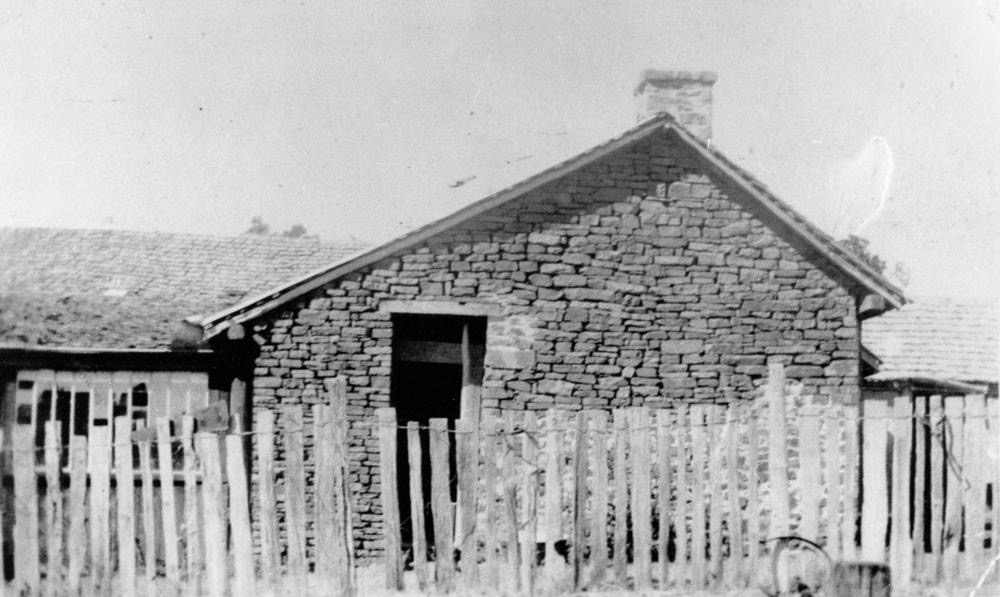
Visual AidThe kind of cottage Dahl describes
Photograph, taken in 1891, of a farm worker’s cottage in the Cotswolds, England: stone walls, a thatched roof, tiny windows. The Knowledge Bank says Miss Honey’s story of a lonely, robbed childhood is written to ache; the bare cottage she rents is part of that. This is a cottage of the same kind and country, not hers — Dahl never says where the village is.
📚 Literary Devices in This Part · definitions & examples
Pathos is the quality in writing that makes the reader feel deep pity or sadness for a character. When Matilda sees Miss Honey’s tiny, bare cottage and her supper of a single crust of bread, Dahl (author) fills the scene with pathos.Exposition is background information about characters and events. In Chapter 17, Miss Honey tells Matilda the full story of her past — how the Trunchbull, her aunt, took over her home and treated her cruelly. Exposition can come later in a story, not only at the start.Villain is the character who opposes the hero and causes harm. Before Chapter 17 the Trunchbull seems like a comic monster — frightening but exaggerated. Once we learn she robbed and tormented her own niece, she becomes a genuinely sinister, three-dimensional villain.
The questions below are mixed — not grouped by device. Decide which device each one is about.
🧠Knowledge Bank question
1According to the Knowledge Bank, why does Roald Dahl (author) darken his tone in these chapters?Ch.16
2True or False: Exposition can appear later in a story, not only at the very beginning.Ch.17
3Fill in the blanks with the correct words.Ch.17
Word choices:villainauntrhymepathosmotif- some words will not be used
The character who opposes the hero and causes harm is the . We learn the Trunchbull is Miss Honey’s cruel , which deepens her menace.
4Chapter 17, in which Miss Honey reveals the full story of her past, mainly provides —Ch.17
5True or False: Learning the Trunchbull’s history makes her a more frightening, three-dimensional villain rather than just a comic one.Ch.17
6Fill in the blanks with the correct words.Ch.16
Word choices:pathoscottagerhymevillain- some words will not be used
Writing that fills the reader with pity or sadness has . We feel it as Matilda sees Miss Honey’s tiny, bare .
7How does the Trunchbull change as a villain after Miss Honey’s story in Chapter 17?Ch.17
8True or False: Pathos is the quality in writing that makes the reader feel deep pity or sadness for a character.Ch.16
9Fill in the blanks with the correct words.Ch.17
Word choices:expositionpastrhymepathos- some words will not be used
Background information about characters and events is called . In Chapter 17 Miss Honey reveals the painful story of her .
10Dahl (author) shows us the bare cottage in Chapter 16 BEFORE Miss Honey explains it in Chapter 17. What does seeing-before-knowing accomplish?Ch.16–17
Part 4
Think Deeper
Four deeper challenges — no single-word recall. Read, weigh the evidence, and reason it through.
🧠Knowledge Bank · Power Without Accountability
Ethics · AccountabilityMiss Honey’s story exposes a frightening idea: power with no one to check it. The Trunchbull controlled a child, a house, and a fortune, and because no adult stopped her, she simply took whatever she wanted. When a powerful person answers to nobody — no law, no witness, no honest authority — cruelty can grow unchecked, and that lack of accountability is what let the theft succeed for years. Dahl (author) wants young readers to notice how easily the strong can rob the weak when the world looks away. Notice, too, that Miss Honey was only a child when it happened, with no power to resist or even be believed. The story quietly argues that fairness needs guardians — people willing to question the powerful and defend those who cannot defend themselves. As you read, ask who should have protected the young Miss Honey, and why silence so often lets injustice win.
1Claim: “Miss Trunchbull has wronged Miss Honey for years.” — choose the two details that best prove it.Claim & Evidence
2Who does each detail describe? Tap each item to sort it — tap again to switch sides. You can keep tapping to change your answer.Sort into two
◄ Magnus (the father)The Trunchbull (the aunt) ►
3Match each cause to its result. For each cause, pick its result.Cause & Effect
Miss Honey earns almost nothing→
Magnus died suddenly→
The Trunchbull seized the house and money→
Jenny is terrified of her aunt→
🧠Knowledge Bank question
4Fill both blanks to complete the reasoning.Build the Argument
The Knowledge Bank argues that the Trunchbull’s theft succeeded for years because , which shows that .
Part 5
Standardized Test · Reference & Sentence Simplification
Part 6 introduces two TOEFL specialties — Reference (what a pronoun points back to) and Sentence Simplification (keeping a long sentence’s core meaning) — alongside Vocabulary in Context, Factual Detail and Inference, in the styles the SAT and TOEFL use. Read the passage (the highlighted words are tested below), then choose the answer best supported by the text.
Read the passage — the highlighted words are tested — then answer. Tap an answer, then tap it again to confirm.
SATWords in Context — a word's meaning in this passage
SATInference — a conclusion the passage implies
TOEFLFactual Information — a fact stated in the passage
TOEFLReference — what a pronoun refers to
TOEFLSentence Simplification — the shorter sentence that keeps the meaning
TOEFLVocabulary — a tested word's meaning here
TOEFLInference — what the passage implies
TOEFLProse Summary — the three sentences that sum it up
A Child's Inheritance and Its Guardian
When a person dies, what happens to their house and savings? The answer begins with a will, a signed document in which a person states who should receive their property after death. Those who receive it are called heirs, and a child is usually entitled to inherit a parent’s home and savings: the law regards an inheritance not as a gift, but as the child’s right. But a young child cannot manage a house or bank account. When a child is left an orphan — both parents dead — a court appoints a guardian, an adult with two duties: to care for the child, and to manage the inheritance until the child grows up.
The guardian controls the money only in trust; it still belongs to the child. The law calls such children vulnerable because they must trust completely, before they can check what is done in their name. Protections exist — records, courts, signatures — but they depend on paper and honesty. Documents can be lost, and a dishonest guardian, living inside the family where no one is watching, can deceive everyone outside it. A child whose papers had vanished and whose only relative was dishonest could grow to adulthood with no way of proving that the house she walked past each day had once been her own — she would be destitute, with no money and no home. That is why the law’s oldest advice stands: someone independent must always watch a child’s inheritance.
Original passage written for Garden Heights — not a quotation from the novel.
1As used in the passage, the word “entitled” most nearly means —SAT · Words in Context
2The passage most strongly suggests that a lone child’s inheritance needs an independent watcher because otherwise —SAT · Inference
3According to the passage, what is a will?TOEFL · Factual Information
4In paragraph 2, the word “it” in “it still belongs to the child” refers to —TOEFL · Reference
5In the passage, orphan most nearly means ___.SAT · Words in Context
6According to the passage, what are the guardian’s two duties?TOEFL · Factual Information
7Which sentence best keeps the meaning of: “A child whose papers had vanished and whose only relative was dishonest could grow to adulthood with no way of proving that the house she walked past each day had once been her own”?TOEFL · Sentence Simplification
8In the passage, destitute most nearly means ___.TOEFL · Vocabulary
9The passage most strongly suggests that a dishonest guardian is especially dangerous because —TOEFL · Inference
10Prose Summary (TOEFL).The passage explains how the law protects a child’s inheritance — and where that protection can fail. This TOEFL task lists six sentences; choose the THREE that best capture the passage’s main ideas. The other three do not belong — they state minor details or ideas the passage does not present.TOEFL · Prose Summary
Part 6 · Optional
Creative Writing
A bonus challenge to practice your English. Take your time and have fun with it.
About This Section
This writing task is optional and is not part of your auto-graded score. The feedback below checks only the basics — length, spelling, and grammar — not whether your ideas are right or wrong. It is meant for classroom discussion and creative practice.
Writing Task — Part 5 “Miss Honey’s Story”
Imagine you are Miss Honey, telling Matilda your story for the very first time. How does it feel to finally say these things out loud? What do you hope Matilda will understand? Write at least 40 words.
You can start with: “I have never told anyone this before. But I think you, of all people, will understand…”
0 / 40 words minimum
🗣 Teach It · Just for Fun (optional)
No right or wrong — close the screen and tell someone nearby what happened in this part. Can’t find anyone? Tell yourself out loud. The moment you teach it, you truly understand it.
Part 6 Complete!
You finished Chapters 16–17 of Matilda.
Here are your auto-graded results:
-
points out of 100
Teach it to someone
The best last step is to teach it. In your own words, explain what happened — retell a favorite scene, teach a character’s big choice, or sum up the main idea for a parent, friend, or classmate. When you can teach it clearly, you truly own it.
SAT® is a registered trademark of College Board, which is not affiliated with, and does not endorse, these materials. TOEFL® is a registered trademark of ETS. These materials are not endorsed or approved by ETS. Garden Heights is an independent provider of test-style reading practice.