New here? Just sign up with Google — your account includes Matilda, our gift book, forever.
From the Mixed-Up Files of Mrs. Basil E. Frankweiler · Garden Heights
Part 6
for From the Mixed-Up Files of Mrs. Basil E. Frankweiler · Part 6 · Chapter 7
8 Parts40 min
What Happens in Part 6
Chapter 7 turns the children’s clue into a careful communication plan. At Grand Central, Jamie spends $4.50 to rent a post-office box under an alias, giving the museum a reply address that does not reveal the museum as their home. They carry the formal, anonymous letter prepared earlier, which directs the museum to the mark beneath the Angel. Back in the Egyptian galleries, they shelter near a mastaba and recognize the voices of Jamie’s actual third-grade class from Greenwich. The coincidence is dangerous, but it also supplies believable cover. Jamie carries the letter to the museum office as though a teacher has sent him on an ordinary errand. He delivers it without being recognized, rejoins Claudia, and the two step into the crowds of Fifth Avenue. The chapter ends with the message safely delivered; whether the museum will believe it remains unknown.
What We Will Learn
Section
What you will practice
Vocabulary
Words of secret mail and museum cover: anonymous, alias, mastaba, rent, deliver, reply…
Literary Elements
Dramatic irony, diction, and pacing
Cross-Curricular
How a post-office box keeps a sender secret, and what Grand Central Station is
Chapter Summary
Ch.
What happens
7a
The Box — Jamie pays $4.50 and rents a Grand Central box under an alias.
7b
The Plan — they decide a school-group child can carry the already-written letter to the office.
7c
The Class — near the Egyptian mastaba, the children discover Jamie’s real Greenwich classmates.
7d
The Delivery — Jamie uses the class as cover, completes the errand, and rejoins Claudia on Fifth Avenue.
Part 1
Vocabulary
Study 10 key words from Chapter 7, then answer each question.
🔌Knowledge Bank · How a P.O. Box Protects an Address
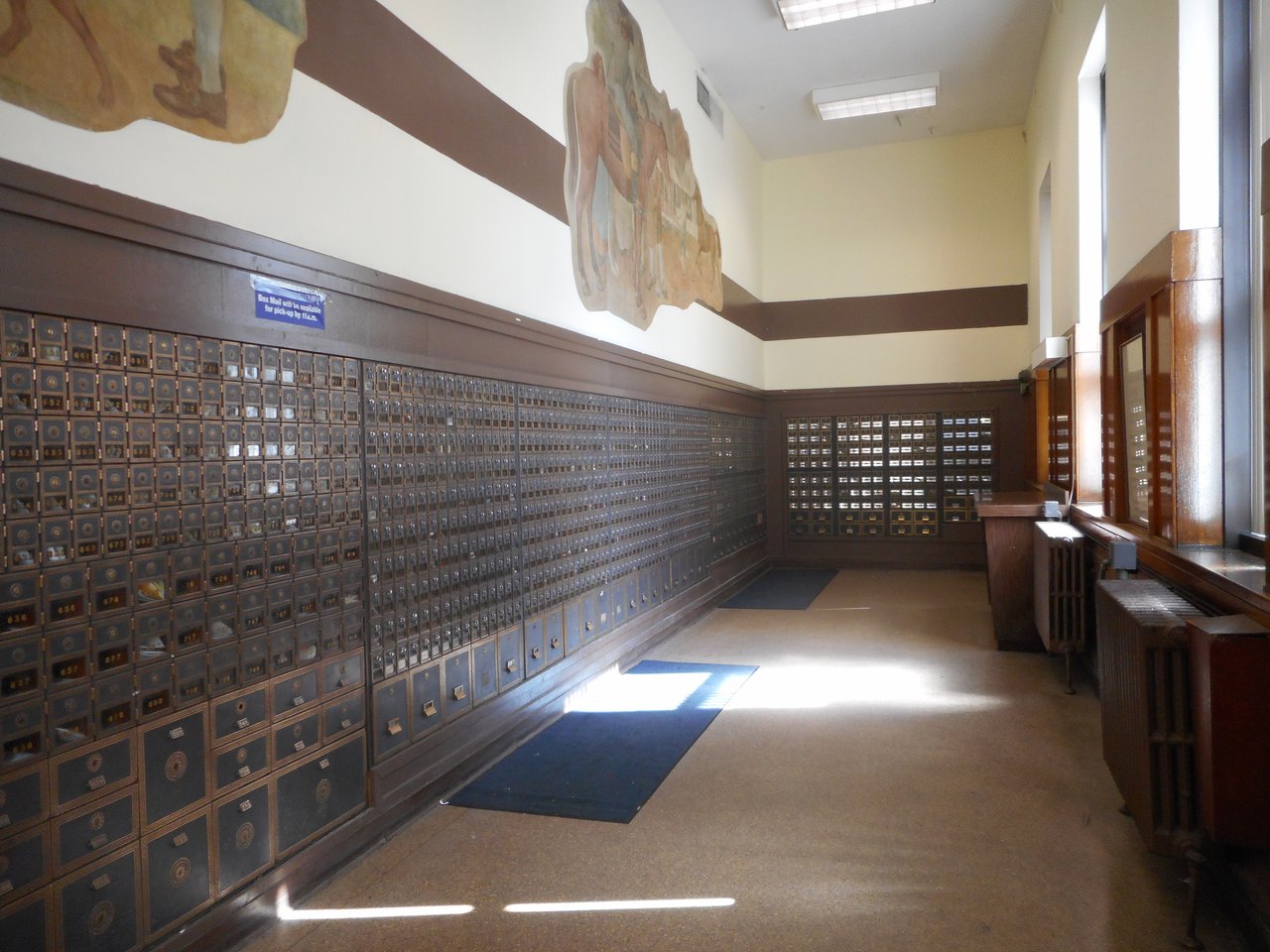
Postal Systems · Privacy and ReplyA Post Office box is a numbered, locked container inside a postal facility. Mail is addressed to the box rather than delivered to a home, and the renter collects it with a key or combination. This can provide privacy because correspondents do not need a residential location. Modern USPS rental procedures, however, require identity verification and current forms; the novel’s fictional 1960s transaction should not be copied as today’s lawful procedure. In Chapter 7, Jamie spends $4.50, signs an alias, and obtains the return point needed for the museum’s answer. That episode teaches the story’s communication mechanism, not a present-day instruction. The box separates a public mailing address from a private sleeping place while leaving postal staff able to route mail. Privacy is therefore different from invisibility: outsiders learn less, but the regulated system retains accountability. A rented box is controlled access and a reply channel.
Visual AidAn address that is not a home
A wall of rented mailboxes in the lobby of the New Rochelle post office. The Knowledge Bank explains that a Post Office box is a numbered, locked container inside a postal building: mail is addressed to that number rather than to a house, and the renter opens it with a key. Count how many doors fit on one wall. That is the whole idea — a public address anyone may write to, sitting a long way from wherever the renter sleeps. In Chapter 7 that distance is exactly what Jamie buys, though the novel’s 1960s counter transaction is not how a box is rented today.
Post office boxes at the New Rochelle post office, New York; photograph by DanTD. Source: Wikimedia Commons, public domain.
anonymousadj.Ch.7
Given without revealing a name
“The letter was carefully anonymous.”
mastaban.Ch.7
An ancient Egyptian tomb with a flat roof
“They take cover near the Egyptian mastaba.”
rentv.Ch.7
To pay to use something for a time
“They rent a box at Grand Central.”
deliverv.Ch.7
To bring something to the right place
“Jamie would deliver the letter himself.”
replyn.Ch.7
An answer to a message
“Any reply could go to the box.”
posev.Ch.7
To pretend to be someone you are not
“Jamie poses as part of the school group.”
aliasn.Ch.7
A different name used instead of one’s own
“Jamie rents the box under an alias.”
errandn.Ch.7
A short trip to do a task
“The delivery was Jamie’s errand.”
formaladj.Ch.7
Serious and proper in style
“The letter’s tone was strictly formal.”
cluen.Ch.7
A hint that helps solve a mystery
“The letter described their velvet clue.”
ⓘ The vocabulary words in this list are selected to help you understand and complete this workbook. Some may not appear verbatim in the original novel.
🧠Knowledge Bank question
1According to the Knowledge Bank, a post-office box protects ___.Ch.7
2A ‘mastaba’ is a modern machine used to sort mail.Ch.7
3To pay to use something for a time is to ___ it.Ch.7
4An ‘alias’ is a different name used instead of one’s real name.Ch.7
5Fill in each blank with the correct word.Ch.7
Word choices:deliverreplyerrandclue- some words will not be used
Jamie wouldthe letter himself.
Anycould be sent to the numbered box.
6To pretend to be someone you are not is to ___.Ch.7
7A ‘formal’ letter is casual, slangy, and full of jokes.Ch.7
8A short trip made to complete a task is an ___.Ch.7
9Fill in the blanks with the correct words.Ch.7
Word choices:anonymousaliasposemastaba- some words will not be used
They take cover near the Egyptian.
Jamie gives aninstead of his real name.
10A hint that helps solve a mystery is a ___.Ch.7
Part 2
Comprehension
Show you understood what happens in Chapter 7.
📩Knowledge Bank · A Message Needs a Complete Route
Communication Systems · Sequence and RoutingA communication system works only when every stage connects. A sender first encodes an idea in words or symbols; a channel then carries the message to a recipient, who interprets it and may respond. Chapter 7 begins after the children have written their letter. Their remaining route has four linked tasks: rent a reply box, choose inconspicuous delivery cover, place the already-written message in the correct museum office, and leave without exposing themselves. Each step depends on the one before it. A strong letter cannot help if it reaches the wrong office, and an answer cannot return without an address. Engineers call a broken link a point of failure. The Egyptian-gallery encounter unexpectedly supplies a carrier story, but Jamie’s real classmates also increase the danger. Reaching Fifth Avenue confirms successful transmission, not successful belief. The museum now possesses the clue; whether it accepts the claim remains a question of persuasion.
Visual AidA message needs every link
Diagram for the Knowledge Bank on communication routes. The four numbered links are the tasks left after the letter is already written: rent a reply address, cover the delivery, reach the right office, and leave unseen. Card 5 is the warning — break any one link and no answer can come back. The Knowledge Bank calls a broken link a point of failure. Notice that the letter itself is not one of the four steps. It was finished before the chapter began, and a good letter at the wrong desk is still lost.
The four links in the children's reply route, as described in the Knowledge Bank. Drawn for Garden Heights Academy.
🧠Knowledge Bank question
1The Knowledge Bank says a message needs ___.Ch.7
2Why do the children want a post-office box at all?Ch.7
3The letter tells the museum to look again at the statue’s base for the mason’s mark.Ch.7
4What is the letter like in style?Ch.7
5Write the numbers 1–5 in the boxes to show the correct order of events in Chapter 7. Number 1 = what happens first.Ch.7
Jamie rejoins Claudia in the Fifth Avenue crowd.
They recognize Jamie’s class near the Egyptian mastaba.
Jamie rents the Grand Central box under an alias.
Jamie delivers the letter as though sent by a teacher.
They plan how to deliver the already-written letter safely.
6The school group Jamie joins comes, of all places, from Greenwich.Ch.7
7What makes Jamie’s delivery so risky?Ch.7
8What does Jamie do after delivering the letter?Ch.7
9Jamie rents the post-office box under his real name and home address.Ch.7
10Why is the mastaba scene especially dangerous for Jamie?Ch.7
Part 3
Literary Elements
Understanding HOW and WHY E.L. Konigsburg tells the story across Chapter 7.
🧠Knowledge Bank · Formal Words, Dangerous Delivery
Literary Craft · Diction, Irony, and SuspenseDiction is a writer’s or speaker’s choice of words. A formal letter uses precise nouns, complete sentences, and a respectful register, the level of language suited to its audience. The letter is already written when Chapter 7 begins; this chapter reveals why its adult-sounding language matters when Jamie delivers it to museum professionals. Konigsburg then shifts suspense from wording to movement. Near the Egyptian mastaba, readers know Jamie is a runaway while his real classmates do not recognize him. That unequal knowledge creates irony: the crowd that offers the best cover also poses the greatest danger. Jamie’s claim that a teacher sent him makes the errand look ordinary, but one familiar voice could expose him. Hiding, entering the office, handing over the letter, and reaching Fifth Avenue tighten the pacing. Formal wording gives the message credibility; risky delivery gives the scene suspense.
Dramatic Irony
The reader knows what characters nearby do not — one classmate’s hello could sink Jamie, and only we feel it.
Diction
An author’s (or letter-writer’s) word choice — the children’s formal phrasing dresses them as adults.
Pacing
The speed at which a story unfolds — quick moves from mastaba to office to Fifth Avenue tighten the risky errand.
🧠Knowledge Bank question
1According to the Knowledge Bank, the letter’s formal words sit against ___.Ch.7
2Fill in the blank with the correct literary term.Ch.7
Word choices:dictionpacingsettingmoral- some words will not be used
A writer’s choice of words is called.
The speed at which the story unfolds is its.
3The letter’s formal diction mainly makes its sender seem ___.Ch.7
4Placing Jamie’s actual classmates beside the delivery plan increases the scene’s suspense.Ch.7
5Sending Jamie into a group from his own town, rather than any other school, is Konigsburg’s way of ___.Ch.7
6Using the Egyptian mastaba as a hiding place creates a contrast between ___.Ch.7
7‘Diction’ means the physical speed at which characters speak.Ch.7
8Fill in the blank with the correct literary term.Ch.7
Word choices:dramatic ironydictionclimaximagery- some words will not be used
When readers know a danger the characters cannot see, that is.
9Claudia planning the message while Jamie performs the delivery shows the siblings’ ___.Ch.7
Four deeper challenges — no single-word recall. Read, weigh the evidence, and reason it out.
💡Knowledge Bank · Moving Unnoticed Through a Watched Space
Behavioral Science · Situational Awareness and Baseline BehaviorSituational awareness begins by noticing a setting’s baseline: the ordinary pace, routes, and roles people expect there. In a public space, behavior attracts less attention when it matches that pattern. Security specialists call a sudden mismatch an anomaly, such as someone moving against a crowd or lingering without a clear purpose. Low-profile movement is not invisibility; it means reducing unnecessary exposure while staying alert to exits, obstacles, and changing conditions. Effective improvisation also uses real features already present instead of inventing a complicated story that is hard to maintain. In Chapter 7, a familiar school group creates recognition risk, yet it also supplies Jamie with a believable role and destination. He adjusts quickly, makes the office errand look ordinary, avoids lingering, and returns to normal pedestrian flow. His success depends less on a perfect script than on reading the environment and changing his behavior without panic. That combination of observation, plausible action, and flexible response is adaptability.
Think back over the delivery. Near an Egyptian mastaba, familiar voices warn Jamie that his real class is close enough to recognize him. He and Claudia pause rather than rushing into view. Jamie then turns the unexpected group into a believable school-errand role, carries the letter to the museum office, and avoids unnecessary conversation. Once the handoff is complete, he does not linger to watch what happens. He rejoins Claudia and moves into the ordinary flow of Fifth Avenue.
Original passage written for Garden Heights — not a quotation from the novel.
1Claim: “Jamie handles an unexpected danger by adapting to cues already present.” — choose the two details that best prove it.Claim & Evidence
2Situational cue, or Adaptive response? Tap each detail to sort it — tap again to switch sides. You can keep tapping to change your answer.Sort into two
◄ Situational cueAdaptive response ►
3Match each cause to its result. For each cause, pick its result.Cause & Effect
Jamie recognizes familiar voices near the mastaba→
The school group supplies a familiar public role→
The school-errand explanation appears ordinary→
The letter is safely inside the museum office→
🧠Knowledge Bank question
4Fill both blanks to complete the reasoning.Build the Argument
The Knowledge Bank says moving unnoticed through a watched space depends on , which is why the children rely on .
Part 5
Standardized Test
Inside an Egyptian Mastaba · Reference & Inference · SAT & TOEFL-style practice
Read the passage — the highlighted words are tested — then answer. Tap an answer, then tap it again to confirm.
SATWords in Context — a word's meaning in this passage
SATInference — a conclusion the passage implies
SATText Structure & Purpose — how the passage is built, and why
SATCentral Ideas — the passage's main point
TOEFLFactual Information — a fact stated in the passage
TOEFLReference — what a pronoun refers to
TOEFLVocabulary — a tested word's meaning here
TOEFLSentence Simplification — the shorter sentence that keeps the meaning
TOEFLProse Summary — the three sentences that sum it up
Inside an Egyptian Mastaba Tomb
To an ancient Egyptian visitor a mastaba was more than a stone monument. The Arabic name means bench, a clue to the tomb’s low rectangular outline; beneath that solid superstructure a shaft descended to a burial chamber cut into bedrock. Above ground, however, family members could enter a chapel and present food, drink, or prayers for the deceased. A carved false door did not open with hinges, yet it marked the symbolic place where the dead could meet the living. The architecture therefore separated two functions: the sealed burial protected remains, while the accessible chapel supported ongoing remembrance.
Reliefs inside these chapels formed a visual record as well as a sacred setting. Artists arranged farming, fishing, food preparation, music, and offering scenes in horizontal registers, using repeated figures and inscriptions to show social roles and ritual actions. Modern archaeologists study those images carefully, but they do not treat every detail as a literal snapshot, since an idealized abundance could express what a tomb owner hoped to receive forever. Museums face a second challenge when displaying a chapel far from its original cemetery: lighting, labels, and room arrangement must supply context once provided by landscape and ritual. The museum’s example is thus both an ancient designed space and a modern exhibit.
Original passage written for Garden Heights — not a quotation from the novel.
1In the passage, a mastaba is ___.SAT · Words in Context
2Which paired functions did mastaba architecture separate?TOEFL · Factual Information
3In paragraph 2, the phrase “those images” refers to ___.TOEFL · Reference
4As used in paragraph 2, “registers” most nearly means ___.TOEFL · Vocabulary
5What was the main purpose of a false door?TOEFL · Factual Information
6Which choice best expresses the passage’s point about the mastaba’s two-part design?TOEFL · Sentence Simplification
7Why does the author warn against treating every relief detail as a literal snapshot?SAT · Inference
8What is the main purpose of paragraph 2?SAT · Text Structure & Purpose
9How does the passage deepen a reader’s understanding of the mastaba in Chapter 7?SAT · Central Ideas
10Prose Summary (TOEFL).The passage explains how a mastaba’s design and decoration supported remembrance, and why modern display requires interpretation. This TOEFL task lists six sentences; choose the THREE that best capture the passage’s main ideas. The other three do not belong — they state minor details or ideas the passage does not present.TOEFL · Prose Summary
Part 6 · Optional
Creative Writing
A bonus challenge to practice your English. Take your time and have fun with it.
About This Section
This writing task is optional and is not part of your auto-graded score. The feedback below checks only the basics — length, spelling, and grammar — not whether your ideas are right or wrong. It is meant for classroom discussion and creative practice, so feel free to use your imagination!
Writing Task — Part 6 “Reading the Room”
Imagine you must deliver an important object or message in a busy public place, but your original plan suddenly becomes unsafe. Write a scene that explains what your character notices, how those cues change the plan, and how the character completes the task without harming or misleading anyone. Make the cause-and-effect chain clear. Write at least 40 words.
You can start with: “The moment I heard the familiar voice, I noticed…”
0 / 40 words minimum
🗣 Teach It · Just for Fun (optional)
No right or wrong — close the screen and tell someone nearby what happened in this part. Can’t find anyone? Tell yourself out loud. The moment you teach it, you truly understand it.
Part 6 Complete!
You finished Chapter 7 of From the Mixed-Up Files of Mrs. Basil E. Frankweiler.
Here are your auto-graded results:
-
points out of 100
Teach it to someone
The best last step is to teach it. In your own words, explain what happened — retell a favorite scene, teach a character’s big choice, or sum up the main idea for a parent, friend, or classmate. When you can teach it clearly, you truly own it.
Independent study guide by Garden Heights. Not affiliated with or endorsed by E.L. Konigsburg. Contains original analysis only; no text from the novel is reproduced. Reference text: This workbook follows E.L. Konigsburg’s classic text (the standard Puffin edition sold worldwide). Revised 2023 UK editions change some wording and may not match the vocabulary studied here.
SAT® is a registered trademark of College Board, which is not affiliated with, and does not endorse, these materials. TOEFL® is a registered trademark of ETS. These materials are not endorsed or approved by ETS. Garden Heights is an independent provider of test-style reading practice.