The Mouse and the Motorcycle cover
Garden Heights

The Mouse and the Motorcycle

This workbook is for Garden Heights members. Sign in to continue.

Sign in with Google →
New here? Just sign up with Google — your account includes Matilda, our gift book, forever.
The Mouse and the Motorcycle · Garden Heights

Part 1

for The Mouse and the Motorcycle · Part 1 · Chapters 1–2
8 Parts40 min
What Happens in Part 1

After five long days on the road, the Gridley family — halfway through a three-week drive from Ohio to California — checks into the Mountain View Inn, an old hotel in the hills, and young Keith is thrilled to get Room 215 all to himself. He unpacks his treasures: a row of miniature cars and one small, perfect red motorcycle. What Keith does not know is that he is being observed. From a knothole in the wall watches Ralph, a young mouse with big appetites and bigger dreams, who eyes the apple core (thrown away, alas, by Keith’s mother) and then sees the motorcycle — and is lost. That night Ralph creeps out, climbs aboard, and grips the handlebars… just as the telephone rings. The startled mouse and the motorcycle tumble off the table together — straight into the metal wastebasket below.

What We Will Learn
SectionWhat you will practice
VocabularyWords of travel and watching: inn, lobby, luggage, observe, miniature, tempted…
Literary ElementsAnthropomorphism, point of view, and setting
Cross-CurricularScale models and the great American family road trip
Chapter Summary
Ch.What happens
1The New Guests — day five of a cross-country trip; the Gridleys check into the Mountain View Inn and Keith gets Room 215 to himself.
2aThe Watcher in the Wall — Ralph the mouse studies the new guest, mourns the lost apple core, and spots the row of toy vehicles.
2bThe Motorcycle — unable to resist, Ralph climbs on; the telephone shrieks; mouse and machine crash into the wastebasket.
Part 1
Vocabulary
Study 10 key words from Chapters 1–2, then answer each question.
🧠Knowledge Bank · How a Mouse Reads the Dark
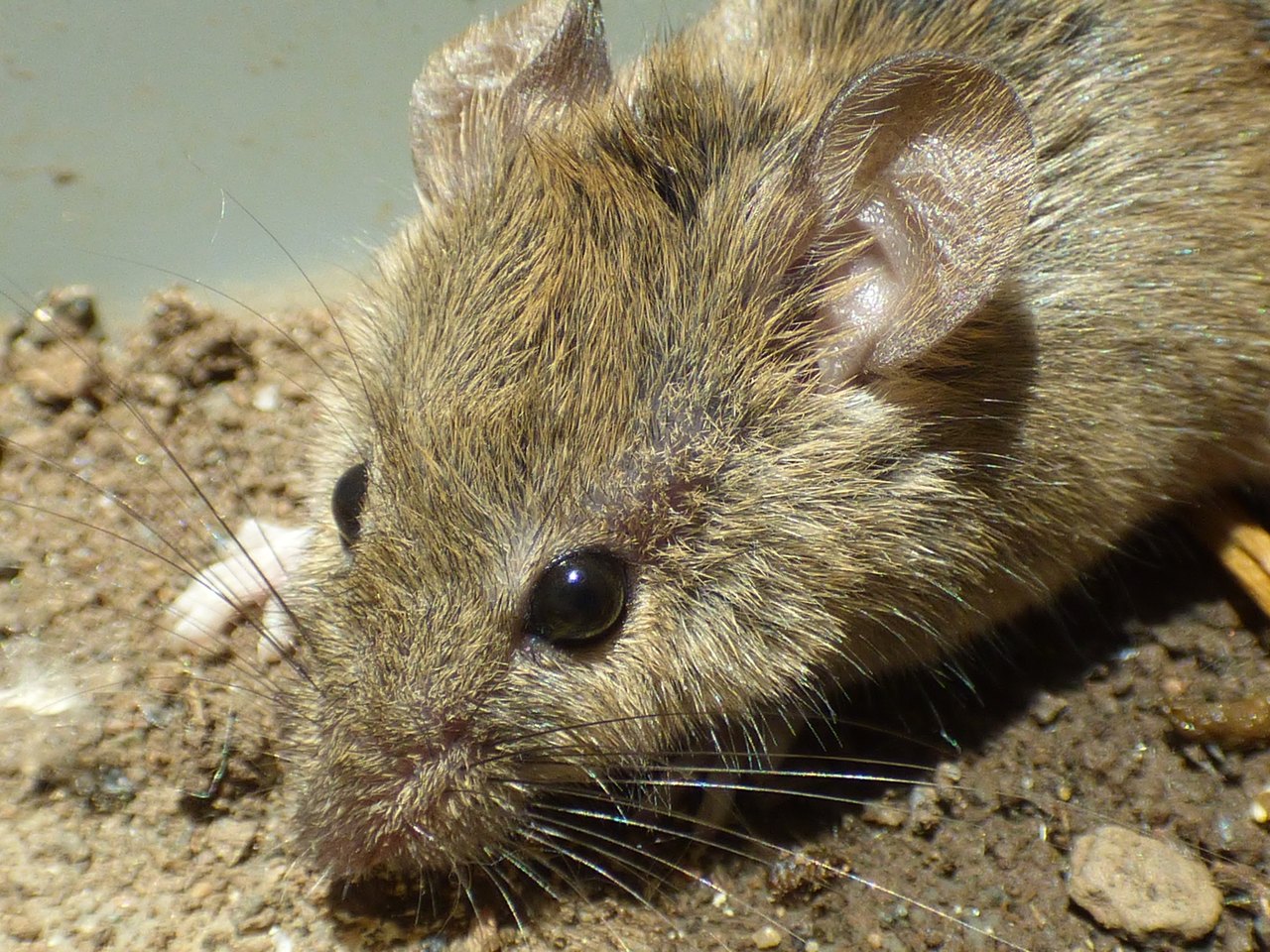
Biology · Animal Senses · Mouse Reads the DarkA mouse like Ralph does most of its living at night, so it cannot depend on its eyes the way we do. Instead it reads the world with its whiskers, stiff hairs called vibrissae that fan out from the snout and brush against walls, floors, and furniture. Because each whisker is wired to sensitive nerves, a light touch tells the mouse how wide a gap is or how close a wall stands — long before the eyes could ever catch up in the gloom. That is why Ralph can dart along a baseboard and vanish into a knothole without slowing down. His small size and twitching whiskers are not a weakness; they are exactly the tools that let a creature this tiny survive in a giant human world of danger and shadow.
innn.Ch.1
A small hotel, often old
“The Mountain View Inn stood among the hills.”
lobbyn.Ch.1
The entrance hall of a hotel
“The family crossed the quiet lobby.”
luggagen.Ch.1
Bags and suitcases for travel
“Their luggage had crossed five states.”
observev.Ch.1–2
To watch closely and carefully
“Ralph liked to observe the guests.”
miniatureadj.Ch.1
Very small; a tiny copy
“Keith lined up his miniature cars.”
knotholen.Ch.2
A round hole in wood where a knot fell out
“Two eyes gleamed in the knothole.”
temptedadj.Ch.2
Strongly drawn to do something
“Ralph was tempted beyond all resisting.”
gleamv.Ch.2
To shine with a soft light
“The little motorcycle gleamed red.”
startlev.Ch.2
To frighten with a sudden surprise
“The ringing phone startled Ralph.”
tumblev.Ch.2
To fall suddenly, rolling over
“Mouse and motorcycle tumbled into the basket.”

ⓘ The vocabulary words in this list are selected to help you understand and complete this workbook. Some may not appear verbatim in the original novel.

1A small hotel, often an old one, is called an ___.Ch.1
2The ‘lobby’ is the entrance hall where hotel guests arrive.Ch.1
3Something very small, made as a tiny copy, is ___.Ch.1
4To ‘observe’ something means to ignore it completely.Ch.1–2
5Fill in each blank with the correct word.Ch.1–2
Word choices:knotholeluggagegleamlobby- some words will not be used
Ralph watched through the in the wall.
The family’s had crossed five states.
6To shine with a soft light is to ___.Ch.2
7Someone ‘tempted’ feels strongly drawn to do something.Ch.2
8To frighten someone with a sudden surprise is to ___ them.Ch.2
9Fill in the blanks with the correct words.Ch.2
Word choices:tumbletemptedobserveminiature- some words will not be used
Ralph was beyond all resisting.
Mouse and machine into the wastebasket.
10Bags and suitcases used for travel are called ___.Ch.1
Part 2
Comprehension
Show you understood what happens in Chapters 1–2.
🧠Knowledge Bank · Two Watchers, One Room
Reading Science · Viewpoint · Two Watchers, One RoomGood readers notice that Chapters 1 and 2 show the same hotel room through two very different sets of eyes. Keith sees an ordinary bedroom with his toys spread out; Ralph, hidden in the wall, sees a landscape of giants, dangers, and one gleaming treasure. When two characters look at one place and notice different things, an author is inviting you to make an inference — to figure out what each one wants without being told. Because Keith barely glances at the little motorcycle while Ralph cannot stop staring at it, we can infer that the machine matters far more to the mouse than to the boy. Reading side by side like this, comparing what each watcher notices, is how you uncover the hidden desires that will shape the entire plot.
1Where are the Gridleys traveling from, and where has their trip brought them?Ch.1
2Where does the family check in?Ch.1
3Keith is delighted to get Room 215 all to himself.Ch.1
4What does Keith line up in his room?Ch.1
5Write the numbers 1–5 in the boxes to show the correct order of events in Chapters 1–2. Number 1 = what happens first.Ch.1–2
  • Keith unpacks his toy cars and motorcycle.
  • The Gridleys check into the Mountain View Inn.
  • The telephone rings; mouse and machine fall into the wastebasket.
  • Ralph watches the new guest through the knothole.
  • Ralph creeps out and climbs onto the motorcycle.
6Ralph gets to enjoy the apple core Keith was eating.Ch.2
7Which toy excites Ralph most of all?Ch.2
8What startles Ralph as he sits on the motorcycle?Ch.2
9Ralph and the motorcycle land safely on the carpet.Ch.2
10Who watches Keith without being seen in these chapters?Ch.1–2
Part 3
Literary Elements
Understanding HOW and WHY Beverly Cleary tells the story across Chapters 1–2.
🧠Knowledge Bank · A Mouse Who Wants Things
Literary Craft · Character Motivation · A Mouse Who Wants ThingsEvery strong character is built around a want, and Beverly Cleary makes Ralph’s want almost impossible to miss. From the moment he spies the toy motorcycle, he does not merely admire it — he aches to ride it. This clear desire is what writers call motivation, the engine that pushes a character to act and take risks. Because Ralph wants the motorcycle so badly, he does the dangerous thing a careful mouse should never do: he leaves the safety of his knothole and climbs into the open. Notice how his motivation and his risk are tied tightly together — the bigger the longing, the bigger the gamble. When you can name exactly what a character wants, you can almost always predict the trouble their longing will drive them to chase.
Anthropomorphism
Giving animals human thoughts and speech — Ralph dreams, schemes, and longs like any boy.
Point of View
Whose eyes we see through — the same room looks different from the bed and from the knothole.
Setting
Time and place shaping the story — an aging hotel with walls thick enough to hide a mouse civilization.
1A mouse who dreams of riding motorcycles is an example of ___.Ch.2
2Fill in the blank with the correct literary term.Ch.1–2
Word choices:point of viewsettingrhymemoral- some words will not be used
Whose eyes we see the story through is its .
The aging hotel where two worlds overlap is the .
3Showing the same room from Keith’s eyes and then from Ralph’s knothole lets Cleary ___.Ch.1–2
4The old, quiet inn is a setting that makes the mouse world believable.Ch.1
5Ralph mourning the thrown-away apple core is funny because it treats crumbs like ___.Ch.2
6Ending Part 1 with the crash into the wastebasket makes the reader feel ___.Ch.2
7‘Anthropomorphism’ means describing machines as if they were weather.Ch.2
8Fill in the blank with the correct literary term.Ch.2
Word choices:anthropomorphismsettingsuspensedialogue- some words will not be used
Giving a mouse human dreams and speech is .
9The telephone — an ordinary object — causing the disaster shows Cleary’s world is one where ___.Ch.2
10Cleary makes us meet Ralph as a watcher — hungry, longing, hidden — before he ever speaks, so that readers will ___.Ch.2
Part 4
Think Deeper
Four deeper challenges — no single-word recall. Read, weigh the evidence, and reason it out.
🧠Knowledge Bank · Wishes at Two Scales
Psychology · Scale and Desire · Wishes at Two ScalesIt is worth pausing to think about how a wish can look tiny to one person and enormous to another. To Keith, the red motorcycle is one small toy among many; to Ralph, it is the most thrilling thing he has ever seen. The very same object carries two completely different weights because the boy and the mouse live at two different scales. This is the quiet beginning of an unlikely friendship: two creatures who could not be more different are about to discover they want some of the same things. When you learn to measure how much something means to another being — not how much it would mean to you — you are practicing exactly the skill that turns strangers into friends, the gift of imagination we call empathy.

Think back over the arrival. A tired family spreads out into two hotel rooms; a boy arranges a tiny traffic jam on a bedside table. Behind the wall, a young mouse inventories it all — the lost apple core, the impossible red machine. By midnight the boy is asleep, the mouse is on the handlebars, and one telephone ring drops them both — rider and ride — into a steel canyon with no way out.

Original passage written for Garden Heights — not a quotation from the novel.
1Claim: “Ralph is a dreamer, not just a hungry mouse.” — choose the two details that best prove it.Claim & Evidence
2Keith’s world, or Ralph’s world? Tap each detail to send it left or right.Sort into two
◄ Keith’s worldRalph’s world ►
3Match each cause to its result. For each cause, pick its result.Cause & Effect
A long trip needs a night’s rest
Keith unpacks his treasured vehicles
The gleaming machine tempts Ralph
The telephone rings at the wrong moment
4Fill both blanks to complete the reasoning.Build the Argument
Cleary lets an ordinary telephone — not a cat or a trap — cause the first disaster because , which shows that .
Part 5
Standardized Test
Little Machines, Perfect Copies · SAT & TOEFL-style practice
🎯 You already have the skills from the sections above — this is just a fun way to meet real SAT & TOEFL-style questions. Read the passage (the highlighted words are tested below), then answer the questions below. Tap an answer to select it, then tap it again to confirm — you can change your choice until you confirm.

A toy car that looks exactly right is no accident. Model-makers build to scale: they measure every part of the real machine and shrink each one by the same number. In a 1:24 scale model, the wheels, the seat, and the handlebars are all exactly twenty-four times smaller than the real thing, so the proportions — the sizes of the parts compared with each other — stay true. That is why a good model looks real in a photograph: nothing about its shape has changed except how big it is. Scale is also why the right toy can seem person-sized to the right animal. A model motorcycle built at mouse height has a seat a mouse can sit on and handlebars a mouse can grip — to the mouse, it is simply a motorcycle. Engineers use the same idea in reverse: they build small prototypes of bridges and planes to test in workshops before building the giant originals. Big or small, a faithful copy obeys the same rules as the real thing.

Original passage written for Garden Heights — not a quotation from the novel.
1According to the passage, building ‘to scale’ means ___.SAT · Words in Context
2In a 1:24 scale model, each part is ___.TOEFL · Factual Information
3In the passage, “proportions” are ___.TOEFL · Vocabulary
4Why does a good model look real in a photograph?SAT · Detail
5Why can the right toy seem person-sized to the right animal?TOEFL · Inference
6In the passage, “prototypes” are ___.SAT · Words in Context
7Why do engineers build small prototypes of bridges and planes?TOEFL · Factual Information
8What is the passage mainly about?SAT · Central Ideas
9How does the passage connect to Chapters 1–2?SAT · Text Connections
10The passage is organized by ___.SAT · Text Structure & Purpose
Part 6 · Optional
Creative Writing
A bonus challenge to practice your English. Take your time and have fun with it.
About This Section

This writing task is optional and is not part of your auto-graded score. The feedback below checks only the basics — length, spelling, and grammar — not whether your ideas are right or wrong. It is meant for classroom discussion and creative practice, so feel free to use your imagination!

Writing Task — Part 1 “The Visitor in the Wall”

Somewhere in your room, imagine a small watcher like Ralph — a mouse, a spider, a bird at the window. Describe one evening of your life as that watcher sees it: what puzzles them, what tempts them, and what they think of you. Write at least 40 words.

You can start with: “From my hole in the wall, I watched the giant come home…”
0 / 40 words minimum
🗣 Teach It · Just for Fun (optional)

No right or wrong — close the screen and tell someone nearby what happened in this part. Can’t find anyone? Tell yourself out loud. The moment you teach it, you truly understand it.


Garden Heights

Part 1 Complete!

You finished Chapters 1–2 of The Mouse and the Motorcycle.

Here are your auto-graded results:

-
points out of 100
Your Writing

Your writing was checked automatically for length, spelling, grammar, and whether you included the key parts of the scene. Scroll back to Part 5 anytime to read your feedback and improve your work.

Move on to Part 2 →

Independent study guide by Garden Heights. Not affiliated with or endorsed by Beverly Cleary. Contains original analysis only; no text from the novel is reproduced. Reference text: This workbook follows Beverly Cleary’s classic text (the standard Puffin edition sold worldwide). Revised 2023 UK editions change some wording and may not match the vocabulary studied here.