
Part 5
Word of Keith’s room service spreads through the walls, and Ralph’s mother declares a family reunion: with food so plentiful, every relative in the Mountain View Inn gathers to feast on the boy’s generosity. Aunts, uncles, and cousins gnaw and nibble and celebrate — while in the middle of the party sits one glum young mouse with no appetite at all. Ralph carries a burden the others cannot see: the beautiful motorcycle, the treasure a trusting boy parked under the bed for him, is gone — lost in the laundry through his own carelessness. At last Ralph does the hard thing twice over: he confesses the loss to his family, and then — far harder — to Keith himself. Nobody shouts. The disappointment in their faces is worse than shouting, and Ralph, ashamed, learns exactly how heavy a broken promise weighs.
| Section | What you will practice |
|---|---|
| Vocabulary | Words of feasts and guilt: reunion, relative, plentiful, confess, ashamed, burden… |
| Literary Elements | Internal conflict, contrast, and the theme of owning mistakes |
| Cross-Curricular | How real mouse families live, and why confessing beats being found out |
| Ch. | What happens |
|---|---|
| 8a | The Feast — Keith’s food is plentiful enough for a full family reunion inside the walls. |
| 8b | The Glum Guest — amid the celebration, Ralph has no appetite; the lost motorcycle sits heavy on him. |
| 8c | Two Confessions — Ralph admits the loss to his family, then to Keith; their quiet disappointment is worse than anger. |
ⓘ The vocabulary words in this list are selected to help you understand and complete this workbook. Some may not appear verbatim in the original novel.
- Ralph sits glum, unable to eat or celebrate.
- Mother wakes Ralph to share Keith’s plentiful food.
- Ralph confesses the loss to his family.
- Ralph tells Keith himself — and faces his disappointment.
- Relatives gather from all over the inn to feast.
Think back over the feast. The walls of the old inn hum with the best news in mouse memory: food, plentiful and daily, from a friendly giant. Cousins dance; uncles toast the boy in Room 215. And the one mouse who made it all happen sits silent at the edge, rehearsing a sentence he does not want to say — first to his mother, then, worst of all, to the friend whose treasure he lost.
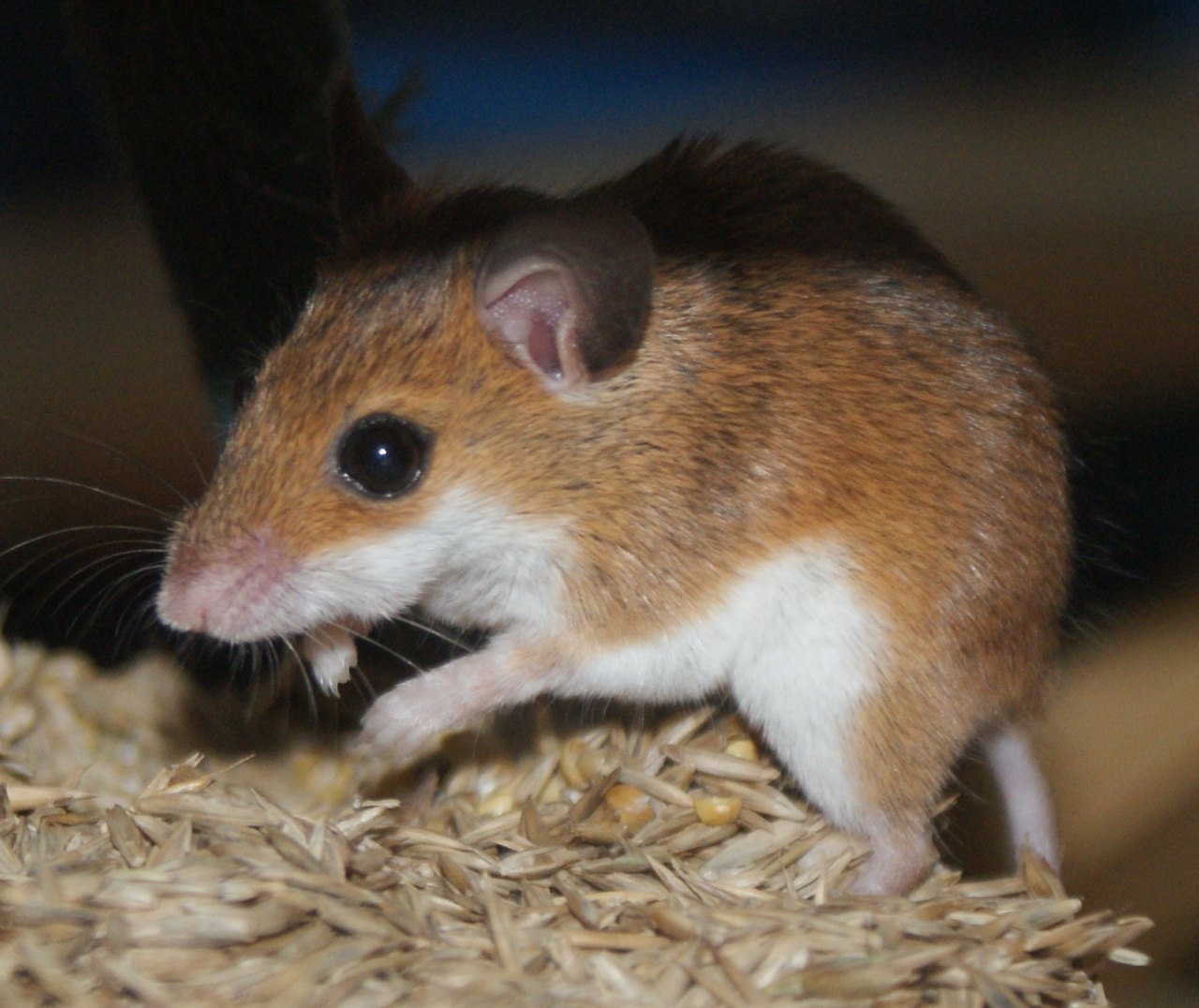
A single house mouse is never really single. Mice live in family colonies, and they multiply quickly: a mother mouse can raise several litters a year — five or six pups in each — so a quiet building can hold relatives by the dozen: aunts, uncles, and cousins. The colony shares runways behind the walls, remembers every knothole, and posts its young where food is likeliest. When one mouse finds a feast, the whole family soon knows. Two tools make this hidden life possible. Mouse front teeth — the incisors — never stop growing, so mice can gnaw endlessly through wood and walls without wearing out. And mice are expert foragers: rather than hunting, they gather — crumbs, crusts, spilled grain — a few grams a day, with extra carried home to hidden stores. A dependable human who drops food daily is, to a mouse colony, better than a bakery: it is a future.
This writing task is optional and is not part of your auto-graded score. The feedback below checks only the basics — length, spelling, and grammar — not whether your ideas are right or wrong. It is meant for classroom discussion and creative practice, so feel free to use your imagination!
Writing Task — Part 5 “The Words I Practiced Saying”
Ralph rehearses his confession before he says it. Write about a time — real or imagined — when you had to admit something hard. What did you practice saying, how did it come out, and what happened after? Write at least 40 words.
No right or wrong — close the screen and tell someone nearby what happened in this part. Can’t find anyone? Tell yourself out loud. The moment you teach it, you truly understand it.


Part 5 Complete!
You finished Chapter 8 of The Mouse and the Motorcycle.
Here are your auto-graded results:
The best last step is to teach it. In your own words, explain what happened — retell a favorite scene, teach a character’s big choice, or sum up the main idea for a parent, friend, or classmate. When you can teach it clearly, you truly own it.
Independent study guide by Garden Heights. Not affiliated with or endorsed by Beverly Cleary. Contains original analysis only; no text from the novel is reproduced. Reference text: This workbook follows Beverly Cleary’s classic text (the standard Puffin edition sold worldwide). Revised 2023 UK editions change some wording and may not match the vocabulary studied here.