New here? Just sign up with Google — your account includes Matilda, our gift book, forever.
My Father's Dragon · Garden Heights Academy
Part 8
for My Father's Dragon · Part 8 · Chapters 10
a novel by Ruth Stiles Gannett
25 min5 Parts
This workbook is built on a solid pedagogical foundation, effectively integrating content and language learning based on the CLIL framework (Content and Language Integrated Learning), elevated by our unique 5th C — Connection — and an integrated Standardized Test section that weaves every SAT & TOEFL question type right into the novel, so learners build real test skills easily, naturally, and with fun.
What Happens in Part 8
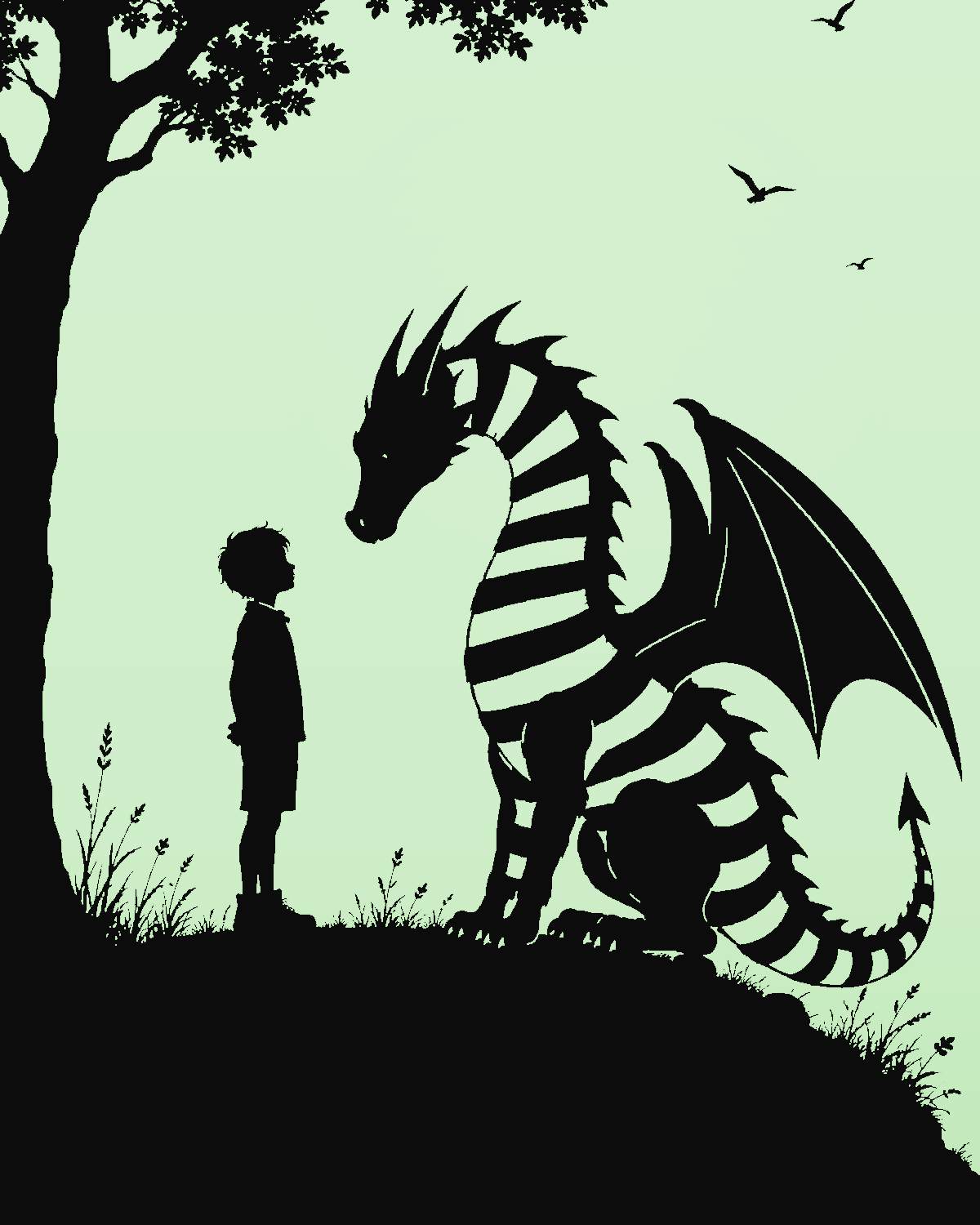
On the far bank, Elmer finally finds the baby dragon — a beautiful creature with a blue-and-yellow striped body, golden horns, and gold-and-crimson wings — tied to a tree, tired and frightened from being forced to ferry the animals all day. Working quickly with his sharp jackknife, Elmer cuts the ropes and sets the dragon free. Just as the furious wild animals come charging to stop them, the grateful dragon spreads its wings, lifts Elmer onto its back, and soars up into the sky. Elmer’s kindness and cleverness have won the day — and won him a loyal new friend who can finally fly.
What We Will Learn
Focus
What It Means
Resolution
How the brave rescue is completed
Folklore (Dragons)
Dragons in stories around the world
Theme
Kindness, courage, and freedom
Chapter Summary
Chapter
Key Events
Ch.10
Elmer finds the baby dragon tied up, frees it with his jackknife, and they fly away together to safety
💭 Before You Read · Warm-Up (not scored)
There are no wrong answers here — just think, guess, and talk:
The fearsome ‘dragon’ turns out to be a frightened, friendly baby. Why is a gentle creature where you expected a monster such a satisfying surprise?
Elmer’s reward for all his kindness is a loyal new friend who can fly. Do you think friendship is a better reward than gold? Why?
Looking back over the whole book: which of Elmer’s clever escapes was your favorite — and what did it show about him?
Copyright Notice
This is an independent study guide created by Garden Heights Academy to support reading comprehension and literary analysis. It contains original analysis questions and does not reproduce any text from the novel. My Father's Dragon is a work by Ruth Stiles Gannett. This guide is not affiliated with, authorized by, or endorsed by the author or any associated rights holders. Students should read the original book, available from libraries and booksellers.
Part 1
Vocabulary
Study 10 key words from Chapters 10, then answer each question.
🐉Knowledge Bank · Dragons Around the World
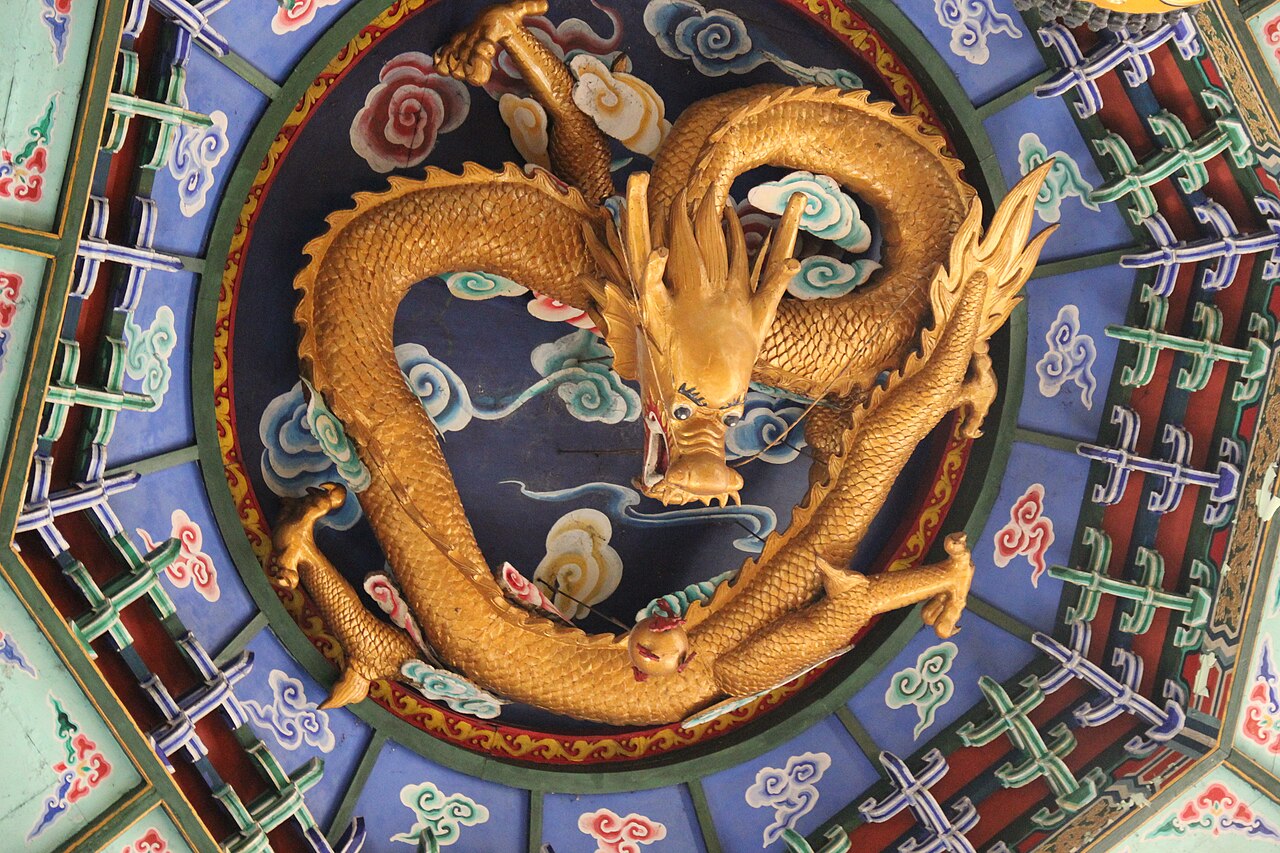
Folklore · DragonsAlmost every country tells old stories about dragons, yet no two countries agree on what a dragon is. Across much of Europe, dragons breathe fire, hoard treasure, and wait for a knight to kill them. In China, Korea, and Japan, dragons are wise and lucky, long as rivers, and are asked politely to send the rain that farmers need. Some scholars think the whole idea began when people dug up huge fossil bones and imagined the beast they must belong to. Gannett’s little dragon, blue-striped and gold-winged, clearly belongs to the gentler eastern tradition of rain and good luck.
rescuev.Ch.10
To save someone from danger
“Elmer finally rescued the dragon.”
gratefuladj.Ch.10
Feeling thankful
“The grateful dragon thanked Elmer.”
soarv.Ch.10
To fly high in the air
“They soared up into the sky.”
loyaladj.Ch.10
Faithful and true
“Elmer won a loyal new friend.”
furiousadj.Ch.10
Very angry
“The furious animals charged at them.”
freedomn.Ch.10
The state of being free
“The dragon longed for freedom.”
wearyadj.Ch.10
Very tired
“The captive dragon was weary.”
triumphantadj.Ch.10
Feeling like a winner
“Elmer felt triumphant as they flew.”
releasev.Ch.10
To set something free
“Elmer cut the ropes to release the dragon.”
magnificentadj.Ch.10
Wonderful and grand
“The dragon’s wings were magnificent.”
ⓘ The vocabulary words in this list are selected to help you understand and complete this workbook. Some may not appear verbatim in the original novel.
1To save someone from danger is to ___ them.Ch.10
2True or False: Someone “grateful” feels thankful.Ch.10
3To fly high in the air is to ___.Ch.10
4True or False: A “loyal” friend is faithful and true.Ch.10
5Fill in each blank with the correct word.Ch.10
Word choices:rescuegratefulsoarfurious- some words will not be used
Elmer set out to the dragon, and the creature helped him away.
6True or False: “Furious” means calm and pleased.Ch.10
7The state of being free is called ___.Ch.10
8True or False: To “release” something is to set it free.Ch.10
9Fill in the blanks with the correct words.Ch.10
Word choices:wearytriumphantmagnificentfurious- some words will not be used
The dragon spread its wings and flew.
10Feeling like a winner means feeling ___.Ch.10
Part 2
Comprehension
How well do you understand Chapters 10?
🦅Knowledge Bank · How Wings Lift
Science · Wings and FlightAnything that flies has to beat gravity, and it does so with wings. As a wing sweeps forward it pushes air downward; the air shoves back, and that upward shove is called lift. Wide wings on a light body help most, which is why birds carry hollow bones and feathers that weigh next to nothing. An albatross hardly flaps at all, riding rising air for hours the way a glider does. Scientists point out that weight climbs much faster than wing area, so a creature the size of a horse could never truly leave the ground — one reason a flying dragon stays pure imagination.
1What does the baby dragon look like?Ch.10
2How is the dragon being kept?Ch.10
3What does Elmer use to free the dragon?Ch.10
4True or False: The dragon is tired from being forced to ferry the animals.Ch.10
5Write the numbers 1–5 in the boxes to show the correct order across Part 8. Number 1 = what happens first.Ch.10
Elmer cuts the ropes with his jackknife to free the dragon.
The furious wild animals come charging to stop them.
The grateful dragon lifts Elmer onto its back.
The dragon soars up into the sky, carrying Elmer to safety.
Elmer finds the baby dragon tied to a tree.
6True or False: The wild animals are happy to let the dragon go.Ch.10
7How do Elmer and the dragon escape?Ch.10
8How does the dragon feel toward Elmer?Ch.10
9True or False: Elmer’s kindness and cleverness win him a new friend.Ch.10
10Fill in the blanks to complete the sentence.Ch.10
Word choices:jackknifedragonropeswings- some words will not be used
Elmer used his to free the and they flew away.
Part 3
Literary Elements
Understanding HOW and WHY Ruth Stiles Gannett creates certain feelings across Chapters 10.
📖Knowledge Bank · Endings and What Comes After
Literary Craft · Resolution and SequelsThe final stretch of a story is its resolution, where the big question is answered and the tension unwinds. A satisfying resolution gathers up whatever the earlier chapters set going, leaving nothing important dangling. An author may still leave one small door open, hinting that more journeys wait beyond the last page. Editors call that a sequel hook, and Gannett used one; this dragon’s adventures continue in two later books. Notice the balance every good ending needs: complete enough to feel finished, and open enough to leave a reader still wondering.
📚 Literary Devices in This Part · definitions & examples
The resolution completes the quest: the dragon is freed and the pair fly to safety.Theme: kindness, courage, and cleverness are rewarded with freedom and friendship.Gannett subverts expectations: the dragon is gentle and friendly, not a fearsome beast.
The questions below are mixed — not grouped by device. Decide which device each one is about.
1The part where the dragon is freed and the two fly to safety is the story’s —Ch.10
2The resolution is where the story’s main problem is finally settled.Ch.10
3Fill in each blank with the correct word.Ch.10
Word choices:resolutionthemesubvertingsetting- some words will not be used
Freeing the dragon and flying away is the
The idea that kindness and wit are rewarded is the .
4The lesson that kindness, courage, and cleverness are rewarded is the story’s —Ch.10
5A theme is only the list of characters in a story.Ch.10
6Fill in each blank with the correct word.Ch.10
Word choices:subvertingresolutionthememood- some words will not be used
By making the dragon gentle, Gannett is
The freed dragon and safe flight bring the .
7The dragon turns out gentle and friendly, not fearsome. This flip of what we expect is —Ch.10
8How does the resolution reward Elmer?Ch.10
9Fill in each blank with the correct word.Ch.10
Word choices:subvertingthemeresolutionplot- some words will not be used
The gentle dragon is Gannett
The story’s big message is its .
10Why does the author make the dragon gentle, not fearsome?Ch.10
Part 4
Think Deeper
Four deeper challenges — no single-word recall. Read, weigh the evidence, and reason it through.
👀Knowledge Bank · Looking Past Appearances
Ethics · Judging by AppearanceThe word dragon promises something terrible, and the creature turns out to be small and sweet. Storytellers arrange that on purpose, subverting an expectation the reader brought along without noticing. The lesson reaches well past this book. Real animals fall into the same trap: bats, spiders, and snakes are dreaded far more than they deserve, though most of them help people by eating pests all night. Deciding what something is from how it looks is a shortcut our minds adore and frequently get wrong. The honest question is not what a creature resembles but how it behaves, and behavior is learned only by watching.
1Claim: “Elmer’s kindness and cleverness are rewarded when he frees the dragon.” — choose the two details that best prove it.Claim & Evidence
2Shows the rescue and its reward, or just a detail of the scene? Tap each item to send it left or right.Sort into two
◄ The rescue and its rewardJust a detail ►
3Match each cause to its result. For each cause, pick its result.Cause & Effect
Elmer reaches the captive dragon→
The animals realize what has happened→
The dragon is grateful→
Kindness and cleverness win→
4Fill both blanks to complete the reasoning.Build the Argument
The rescue succeeds because , which shows the book’s idea that .
Part 5
Standardized Test
Prose Summary & Whole-Passage Reading — SAT & TOEFL-style practice
🎯 You already have the skills from the sections above — this is just a fun way to meet real SAT & TOEFL-style questions. Read the passage (the highlighted words are tested below), then answer the questions below. Tap an answer to select it, then tap it again to confirm — you can change your choice until you confirm.
Some of the most memorable stories work by breaking a rule you did not know you were expecting. For centuries, dragons in tales were fierce monsters to be slain, giants were cruel, and wolves were always the villain. Because readers grow up on these patterns, a storyteller can create a delightful surprise simply by turning one upside down. When a dragon turns out to be gentle, or a giant kind, we feel a jolt of pleasure, because the story has defied what we assumed. Writers call this ‘subverting expectations,’ and it does more than surprise us. A gentle dragon quietly asks a real question: why did we assume it was dangerous in the first place? In this way, a flipped story can teach us to look past labels and judge things for ourselves. The lesson reaches beyond books. In real life, too, the person or creature we were warned about sometimes turns out to be the very friend we needed. The best surprises, it seems, change not just the story but the reader.
Original passage written for Garden Heights — not a quotation from the novel.
1For centuries, how were dragons usually shown in tales?TOEFL · Factual Information
2A “villain” is —SAT · Words in Context
3How can a storyteller create a “delightful surprise”?TOEFL · Factual Information
4When a story has “defied” what we assumed, it has —SAT · Words in Context
5What real “question” does a gentle dragon quietly raise?TOEFL · Factual Information
6A story that makes us “look past labels” teaches us to —SAT · Inference
7Something you “needed” is something that was —SAT · Words in Context
8Insert Text (TOEFL). Look at the four squares [1]–[4] in the excerpt below. They show where this sentence could be added: “The feared ogre, it turned out, only wanted someone to share his lonely mountain.”
Many tales flip what we expect. [1] A monster we were taught to fear may prove gentle and kind. [2] Such a twist makes us stop and question our first assumptions. [3] It quietly teaches us to look past labels and judge for ourselves. [4]
Where would the sentence fit best?TOEFL · Insert Text
9Why does the author mention real life at the end?TOEFL · Rhetorical Purpose
10Which sentence best states the main idea of the passage?SAT · Central Ideas
Part 6 · Optional
Creative Writing
A bonus challenge to practice your English. Take your time and have fun with it.
About This Section
This writing task is optional and is not part of your auto-graded score. The feedback below checks only the basics — length, spelling, and grammar — not whether your ideas are right or wrong. It is meant for classroom discussion and creative practice, so feel free to use your imagination!
Writing Task — Part 8 “My Own Dragon”
Elmer frees a friendly baby dragon and flies away on its back. Imagine you had your own friendly dragon. What would it look like, and where would you fly together? Write at least 40 words.
You can start with: “My very own dragon would look like… and together we would fly to…”
0 / 40 words minimum
🗣 Teach It · Just for Fun (optional)
No right or wrong — close the screen and tell someone nearby what happened in this part. Can’t find anyone? Tell yourself out loud. The moment you teach it, you truly understand it.

Part 8 Complete!
You finished Chapters 10 of My Father's Dragon.
Here are your auto-graded results:
-
points out of 100
Your Writing
Your writing was checked automatically for length, spelling, grammar, and whether you included the key parts of the scene. Scroll back to Part 5 anytime to read your feedback and improve your work.
Independent study guide by Garden Heights Academy. Not affiliated with or endorsed by the author or any rights holders. Contains original analysis only; no text from the novel is reproduced.