New here? Just sign up with Google — your account includes Matilda, our gift book, forever.
My Side of the Mountain · Garden Heights
Part 8
for My Side of the Mountain · Part 8 · Chapters 21–22
8 Parts40 min
What Happens in Part 8
The book’s ending brings Sam’s two worlds together. First his father arrives, having followed the newspaper stories up the mountain. Rather than being angry, he is amazed and deeply proud of all his son has built and become — the tree home, the falcon, the deerskins, the boy who truly did live off the land. But the visit carries news Sam half-dreads: his father announces that the whole family is coming. His mother, brothers, and sisters — the crowded household Sam fled in the first place — are going to move up to the old Gribley farm and settle there together. And so they do, arriving to build a house and make a home on the mountain. For Sam, this is the great, complicated ending of his adventure. His dream of perfect, solitary independence is over: he will not spend the rest of his life alone in a tree. Yet the ending is not a defeat. Sam has proved, beyond any doubt, that he COULD survive alone — and, after the lonely winter, part of him is genuinely glad to have his family near. The wild mountain he loves and the people he loves will now share the same place. Sam does not have to choose between the wilderness and the world after all; the ending gives him, in its bittersweet way, a version of both.
The resolution, the theme answered, and a bittersweet ending
Cross-Curricular
Wildness and society — the pull between them
Chapter Summary
Ch.
What happens
Chapter 21
Father on the Mountain — Sam’s father follows the stories up the mountain, is amazed and proud of all Sam built, and brings news that the whole family is coming.
Chapter 22
The Family Arrives — the Gribleys move to the mountain to build a home; Sam’s solitary dream ends, but he keeps his skills, his falcon, and now his family — a bittersweet, balanced close.
Part 1
Vocabulary
Study 10 key words from Chapters 21–22, then answer each question.
🧠Knowledge Bank · Finding the Way Home
Wilderness Skills · Navigation
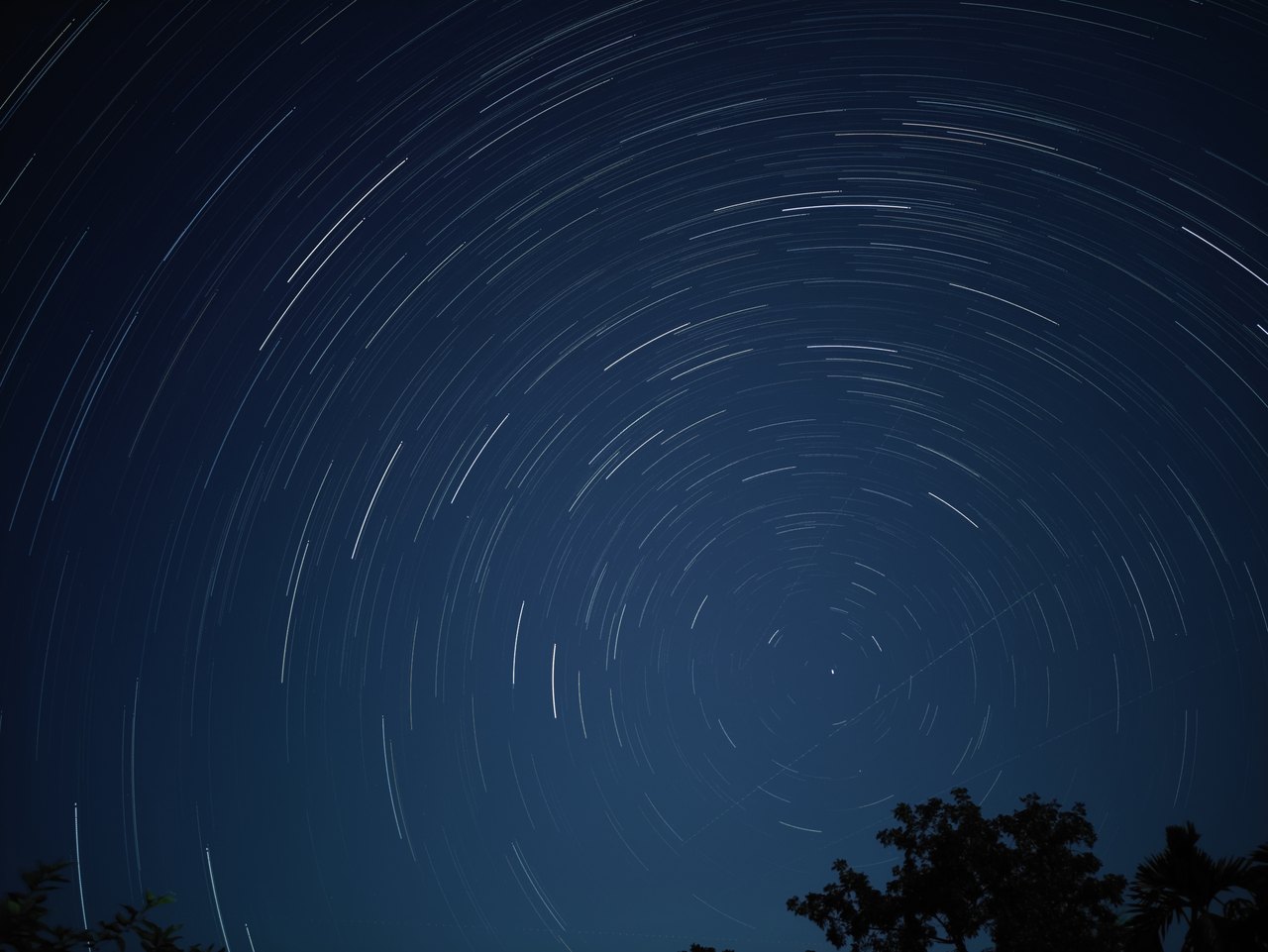
Finding your way without a map relies on a few reliable facts. In the northern hemisphere the sun is due south at local noon, and shadows are shortest then; at night, the two stars at the end of the Big Dipper’s bowl point toward Polaris, which sits almost exactly over the North Pole and therefore barely moves. A compass points to magnetic north rather than true north, and the difference, called declination, can be several degrees and must be corrected in some regions. Landform navigation is often more useful than either: following water downhill, or aiming deliberately to one side of a target so you know which way to turn when you hit a road or river. Search-and-rescue teams call that last trick aiming off, and it works because a small deliberate error removes a much larger uncertainty.
Visual AidThe one star that stays put
A long exposure of the night sky, every star drawing an arc except one. The Knowledge Bank explains that the two stars at the end of the Big Dipper’s bowl point toward Polaris, which sits almost exactly over the North Pole and therefore barely moves. Find the center that the circles turn around. The camera did not hold still on purpose; the Earth turned under it for hours, and the near-motionless point at the middle is the direction a person walking at night can steer by.
Star trails around the celestial pole, long exposure. Source: Wikimedia Commons, CC0.
reunitev.Ch.21
To bring back together
“Sam would reunite with his family.”
compromisen.Ch.22
A settlement that gives each side something
“The ending is a kind of compromise.”
bittersweetadj.Ch.22
Both happy and sad at once
“The ending was bittersweet.”
belongv.Ch.22
To have a rightful place
“Now Sam could belong in both worlds.”
balancen.Ch.22
A steady mix of two things
“He found a balance of wild and family.”
proudadj.Ch.21
Pleased by an achievement
“His father was proud of all Sam built.”
transformv.Ch.22
To change greatly
“The year had transformed Sam.”
reclaimv.Ch.22
To take back
“The human world reclaimed him gently.”
cherishv.Ch.22
To hold dear
“He would cherish what the mountain taught.”
settlev.Ch.22
To make a permanent home
“The family would settle on the farm.”
ⓘ The vocabulary words in this list are selected to help you understand and complete this workbook. Some may not appear verbatim in the original novel.
🧠Knowledge Bank question
1According to the Knowledge Bank, how do the Big Dipper's two end stars help at night?Ch.21
2A ‘compromise’ gives each side something.Ch.22
3‘Bittersweet’ means both happy and ___.Ch.22
4‘Balance’ here means a steady mix of two things.Ch.22
5Fill in each blank with the correct word.Ch.22
Word choices:bittersweetbalancereunitesneer- some words will not be used
The ending felt — happy and sad.
Sam found a of wild and family.
6Sam’s father was ‘proud,’ meaning ___ by what Sam built.Ch.21
7To ‘transform’ is to change greatly.Ch.22
8To ‘reclaim’ someone is to ___ them.Ch.22
9Fill in each blank with the correct word.Ch.22
Word choices:settlecherishproudbelong- some words will not be used
The family would on the mountain farm.
Sam would what the mountain taught him.
10To ‘belong’ is to have a rightful ___.Ch.22
Part 2
Comprehension
Show you understood what happens in Chapters 21–22.
🧠Knowledge Bank · Returning After a Long Absence
Social History · Coming Home
People who return from long isolation describe the difficulty running the opposite way from what outsiders expect. Studies of polar crews, sailors and long-duration astronauts find the outward journey easier than the homecoming, and psychologists call the problem reentry: the returning person has changed, home has changed slightly, and neither side can see the other’s change directly. Ordinary social pace feels fast, small talk feels difficult, and the returnee often finds that the experience which dominated their year cannot be conveyed in the few minutes anyone has to listen. Anthropologists studying migrants report the same pattern under the name reverse culture shock. What helps is consistently unglamorous: a gradual transition rather than an abrupt one, contact with others who have been through it, and accepting that returning is a second journey rather than the simple end of the first.
Visual AidWhy coming back is the hard part
Diagram for the Knowledge Bank on returning. Card 1 is going out, one clear decision taken once; card 2 is coming back, which the Knowledge Bank says is harder. Cards 3 and 4 are the two changes that make it so, and card 5 is why neither side can simply talk its way through. Notice that nobody in this picture has done anything wrong. The difficulty is structural, and studies of polar crews, sailors and astronauts find the same pattern every time.
Why the homecoming is harder than the leaving, as described in the Knowledge Bank. Drawn for Garden Heights Academy.
🧠Knowledge Bank question
1The Knowledge Bank explains that people returning from long isolation usually find ___.Ch.21
2The father brings news that ___.Ch.21
3Sam’s family moves to the mountain to settle there.Ch.22
4For Sam, the family’s arrival means his dream of ___ is over.Ch.22
5Write the numbers 1–5 in the boxes to show the correct order of events. Number 1 = what happens first.Chapters 21–22
He announces the whole family is coming.
Sam’s father follows the stories up the mountain.
Sam’s solitude ends, but he keeps the wild and gains his family.
The Gribleys move up to settle on the mountain.
He is amazed and proud of all Sam built.
6The ending is a pure defeat, with Sam dragged home in disgrace.Ch.22
7Importantly, the family comes to ___.Ch.22
8Sam keeps his ___ even as his solitude ends.Ch.22
9Sam must choose between the wilderness and the world.Ch.22
10By the end, Sam has proved he COULD live alone — and learned that he ___.Ch.22
Part 3
Literary Elements
Understanding HOW and WHY Jean Craighead George tells the story across Chapters 21–22.
🧠Knowledge Bank · Finishing Where You Started
Literary Craft · The Circular Ending
A story that ends where it began uses a shape critics call circular or ring composition, and it is one of the oldest structures in literature. The technique returns to an opening image, place or phrase so the reader can measure the distance traveled, since the setting has not changed and therefore the character must have. Poets use a smaller version when a final stanza repeats the first with one word altered, and the altered word carries the whole meaning. The danger is neatness: an ending that returns too tidily can suggest nothing was really at stake. Writers avoid it by making the return incomplete, so something is missing or added the second time. Ask what is different about the closing scene, because a circular ending is not a statement that nothing changed — it is an invitation to notice exactly what did.
Resolution
The family settles on Sam’s mountain — the wild and the human world share one place.
Bittersweet tone
The ending is both happy (family reunited) and sad (solitary dream over).
Theme
Wildness and society — a good life balances the pull of both, not one or the other.
🧠Knowledge Bank question
1According to the Knowledge Bank, a book that finishes where it started is using ___.Ch.22
2Fill in each blank with the correct literary term.Ch.22
Word choices:resolutionbittersweet tonesettingrhyme- some words will not be used
The family settling on the mountain is the .
The mix of glad and sad is a .
3A bittersweet tone mixes happiness and sadness together.Ch.22
4The book answers its theme not by choosing solitude or society but by finding a ___.Ch.22
5That the family comes to HIS mountain shows Sam’s year was a ___ carried forward.Ch.22
6A resolution ties up a story’s threads at the end.Ch.22
7George avoids both pure triumph and pure defeat to tell the truth about ___.Ch.22
8Fill in each blank with the correct literary term.Ch.22
Word choices:themeresolutionnarratorrhyme- some words will not be used
That a good life balances wild and society is the book’s .
The family settling on the mountain is the .
9Sam returns to society as the same helpless boy who left.Ch.22
10The book’s deepest answer is that a person can go to the wild AND ___.Ch.22
Part 4
Think Deeper
Four deeper challenges — no single-word recall. Read, weigh the evidence, and reason it out.
🧠Knowledge Bank · Two Things Everyone Wants at Once
Philosophy · Freedom and Belonging
Philosophers distinguish two kinds of freedom. Negative liberty is the absence of interference — nobody stopping you — while positive liberty is the actual capacity to do things, which usually requires resources, education and other people. Isaiah Berlin argued the two can pull against each other, and the tension explains a familiar experience: a life with no obligations is maximally free in the first sense and often impoverished in the second. Psychologists arrive at a similar place from different evidence, finding that wellbeing depends on both autonomy and relatedness rather than a trade between them. That is why stories about escaping to the wilderness so rarely end with the escape. Having removed every constraint, the character discovers that some of what was constraining them was also what made their choices worth making.
Think back over the ending. A father climbs a mountain to find the son who ran away and, instead of anger, feels wonder: the boy really did it — the tree, the falcon, the deerskins, a whole life built by a pair of once-helpless hands. And then the news that turns the story: the family is coming, all of them, up to the old farm, to stay. The perfect, private, solitary world Sam made is ending — and yet he does not weep for it, not entirely, because after the long lonely winter, the sight of his family climbing his mountain is also, unmistakably, a joy. The wild he loves and the people he loves will share one place now. He does not have to choose. He gets, in the end, a hard and beautiful version of both.
Original passage written for Garden Heights — not a quotation from the novel.
1Claim: “Part 8 answers the book’s question by balancing solitude and society rather than choosing one.” — choose the two details that best prove it.Claim & Evidence
2A one-sided ending (rejected), or George’s balanced ending? Tap each detail to sort it — tap again to switch sides. You can keep tapping to change your answer.Sort into two
◄ A one-sided ending (rejected)George’s balanced ending ►
3Match each cause to its result. For each cause, pick its result.Cause & Effect
Sam’s father arrives proud→
The family will settle here→
They come to Sam’s mountain→
Sam keeps his skills and falcon→
🧠Knowledge Bank question
4Fill both blanks to complete the reasoning.Build the Argument
The Knowledge Bank argues that Sam's ending is a balance rather than a defeat because , which shows that .
Part 5
Standardized Test
Reading passage · Wildness and Society: The Pull Between · SAT & TOEFL-style practice
Read the passage — the highlighted words are tested — then answer. Tap an answer, then tap it again to confirm.
SATCentral Ideas — the passage's main point
SATDetail — a fact stated in the passage
SATWords in Context — a word's meaning in this passage
TOEFLFactual Information — a fact stated in the passage
TOEFLInsert Text — where a sentence best fits
Balancing Solitude and Community
The ending of My Side of the Mountain answers a question the whole book has quietly asked: should a person live for the wild, alone, or live with other people? Sam’s adventure belongs to a long American conversation about exactly this pull. On one side is the dream of solitary self-reliance in nature — the tradition of Thoreau alone at Walden Pond, of pioneers and lone frontiersmen who tested themselves against the wilderness. On the other side is the equally deep human need for family, friendship, and community. Both longings are real, and neither is wrong.
What makes the book wise is that it refuses to declare a simple winner: Sam has spent a year proving that he COULD live alone, and he succeeds. But he also discovers that succeeding is not the same as being happy, so George gives him a bittersweet, balanced ending built on a compromise. Sam does not stay a hermit; his loving family reaches up the mountain and reclaims him — yet he is not dragged home in defeat. The family comes to HIS mountain, to the life he built, keeping everything the wild taught him even as he rejoins the people he loves. Its mature message is that a good life is rarely solitude OR society, but a balance of the two: a person can answer the call of the wild AND still belong with others. Sam returns not as the helpless boy who fled, but transformed.
Original passage written for Garden Heights — not a quotation from the novel.
1What question does the ending mainly answer?SAT · Central Ideas
2One side of the pull is the dream of solitary ___ in nature.TOEFL · Factual Information
3The other side is the human need for family and ___.SAT · Detail
4The book refuses to declare a simple ___.TOEFL · Factual Information
5Sam proves he COULD live alone, but discovers he does not ___ to.SAT · Detail
6The ending is described as ___.TOEFL · Factual Information
7The family comes to ___, so Sam keeps the wild.SAT · Detail
8In the passage, a good life is a balance of ___.SAT · Central Ideas
9In the passage, compromise most nearly means ___.SAT · Words in Context
10Insert Text (TOEFL). Look at the four squares [1]–[4] in the passage excerpt below. They show where the following sentence could be added: “The wild had made him ready, at last, to come home.”
The book refuses to declare a simple winner, and it gives Sam a balanced ending instead. [1] He has proved that he could live entirely alone, yet he learns in the long winter that he does not truly want to. [2] Sam returns to the human world not as the helpless boy who fled it, but transformed, and forever richer for having gone. [3] A good life, the book says, is rarely solitude or society, but a balance of the two. [4]
Where would the sentence fit best?TOEFL · Insert Text
Part 6 · Optional
Creative Writing
A bonus challenge to practice your English. Take your time and have fun with it.
About This Section
This writing task is optional and is not part of your auto-graded score. The feedback below checks only the basics — length, spelling, and grammar — not whether your ideas are right or wrong. It is meant for classroom discussion and creative practice, so feel free to use your imagination!
Writing Task — Part 8 “Both Worlds”
Sam’s ending is bittersweet: he loses his perfect solitude but gains his family, and keeps the wild he loves. Write about a time you had to balance two things you cared about — independence and belonging, an old life and a new one, or something else. How did you find a balance, and what did you keep from both? 6–10 sentences. End with what you learned about not having to choose just one.
You can start with: “I thought I had to pick one or the other, but in the end...”
0 / 40 words minimum
🗣 Teach It · Just for Fun (optional)
No right or wrong — tell someone nearby what happened in this part. Can’t find anyone? Tell yourself out loud. The moment you teach it, you truly understand it.
Part 8 Complete — You Finished the Book! 🎉
You finished Chapters 21–22 — the final part of My Side of the Mountain.
Here are your auto-graded results:
-
points out of 100
Teach it to someone
The best last step is to teach it. In your own words, explain what happened — retell a favorite scene, teach a character’s big choice, or sum up the main idea for a parent, friend, or classmate. When you can teach it clearly, you truly own it.
Independent study guide by Garden Heights. Not affiliated with or endorsed by Jean Craighead George. Contains original analysis only; no text from the novel is reproduced. Reference text: This workbook follows Jean Craighead George’s classic text (the standard Puffin edition sold worldwide). Revised 2023 UK editions change some wording and may not match the vocabulary studied here.
SAT® is a registered trademark of College Board, which is not affiliated with, and does not endorse, these materials. TOEFL® is a registered trademark of ETS. These materials are not endorsed or approved by ETS. Garden Heights is an independent provider of test-style reading practice.