New here? Just sign up with Google — your account includes Matilda, our gift book, forever.
Number the Stars · Garden Heights
Part 8
for Number the Stars · Part 8 · Chapters 16–17 & Afterword
8 Parts40 min
What Happens in Part 8
The boat returns on the evening tide, and Henrik — milking Blossom while Annemarie leans against the stall — keeps his promise to tell her just a little. The Rosens crossed hidden in a secret compartment beneath the Ingeborg’s deck. And the handkerchief: the work of Resistance scientists — a mixture of rabbit’s blood, to draw the patrol dogs’ noses, and cocaine, to numb them — so that when the dogs came aboard, they could smell nothing at all. Without her run, Henrik says plainly, everything would have been lost. Then the story leaps: May 1945 — church bells, flags, the war over. But victory carries its bill. Peter Neilsen, captured, was executed by the Germans in the public square — a Resistance fighter to the end. And the family finally speaks the truth about Lise: she was never simply ill; she was in the Resistance too, run down by a German military car as she fled a raid. Annemarie retrieves Ellen’s Star of David necklace from its hiding place and asks Papa to mend the clasp: she will wear it herself until the Rosens come home. In the Afterword, Lowry opens her workshop: Annemarie is invented, but nearly everything else — the rescue, the handkerchief chemistry, the king, and the brave young man behind Peter — is documented fact.
The Truths, Told at Last — Henrik explains the hidden compartment and the handkerchief’s dog-defeating chemistry; the war ends in bells and flags; Peter’s execution and Lise’s Resistance death are finally spoken; Annemarie mends and wears Ellen’s star until her friend returns; the Afterword sorts the story’s facts from its fiction.
Part 1
Vocabulary
Study 10 key words from Chapters 16–17 & Afterword, then answer each question.
🌟Knowledge Bank · Liberation and Its Vocabulary
History & Civics · Denmark in May 1945Liberation means release from foreign occupation or oppressive control. At 8:35 p.m. on May 4, 1945, a BBC broadcast announced that German forces in Denmark, the Netherlands, and northwestern Germany had surrendered; the surrender took effect the next morning. Across most of Denmark, people removed blackout curtains, lit windows, raised the red-and-white Dannebrog flag, and filled the streets. Yet words of victory existed beside words of loss. Resistance members had been imprisoned or executed, many Jewish refugees who crossed in October 1943 had then spent about nineteen months in Sweden, and homes or relationships could not simply return to their prewar state. To mend is to repair damage, not to erase that it occurred. The chapters’ vocabulary moves from compartments and numbness toward bells, return, and repair because endings after war contain both celebration and grief. Freedom arrives on a date, but recovery requires longer acts of restoration.
compartmentn.Ch.16–17
A separate enclosed space
“The Rosens crossed in a hidden compartment.”
numbv.Ch.16–17
To take away all feeling
“The mixture could numb a dog’s keen nose.”
anestheticn.Ch.16–17
A substance that deadens feeling
“The drug had once served as an anesthetic.”
executev.Ch.16–17
To put to death as punishment
“The Germans executed Peter in the public square.”
liberationn.Ch.16–17
The freeing of a place or people
“Church bells rang out at the liberation.”
mendv.Ch.16–17
To repair something broken
“Papa promised to mend the necklace’s clasp.”
sacrificen.Ch.16–17
Giving up something precious for others
“Lise’s sacrifice was finally spoken aloud.”
afterwordn.Ch.16–17
An author’s note after the story
“The afterword sorts the facts from the fiction.”
documentv.Ch.16–17
To record with reliable evidence
“Historians document the handkerchief’s strange chemistry.”
homecomingn.Ch.16–17
A return to one’s home
“The star would wait for Ellen’s homecoming.”
ⓘ The vocabulary words in this list are selected to help you understand and complete this workbook. Some may not appear verbatim in the original novel.
🧠Knowledge Bank question
1According to the Knowledge Bank, to 'mend' after the war means to ___.Ch.16–17
2To ‘numb’ something is to take away its feeling.Ch.16–17
3A substance that deadens feeling is an ___.Ch.16–17
4‘Liberation’ means the freeing of a place or people.Ch.16–17
5Fill in each blank with the correct word.Ch.16–17
Word choices:mendafterwordsacrificenumb- some words will not be used
Papa promised to the necklace’s clasp.
Lise’s was finally spoken aloud.
6To put to death as punishment is to ___.Ch.16–17
7An ‘afterword’ comes before a story begins.Ch.16–17
8To record with reliable evidence is to ___.Ch.16–17
9Fill in the blanks with the correct words.Ch.16–17
Word choices:compartmentliberationhomecomingexecute- some words will not be used
The Rosens crossed in a hidden .
The star would wait for Ellen’s .
10Giving up something precious for others is a ___.Ch.16–17
Part 2
Comprehension
Show you understood what happens in Chapters 16–17 & Afterword.
📋Knowledge Bank · What Happened After the Crossing
History · Refuge, Deportation, and ReturnSweden granted asylum to the Danish refugees, allowing families to remain safely until the occupation ended. Children attended school, adults found work, and Danish organizations helped support the displaced community. After Germany’s surrender in May 1945, many returned home. The rescue had protected most of Denmark’s Jewish population, but not everyone escaped. German authorities deported about 470 Danish Jews to the Theresienstadt ghetto. Danish officials and the Red Cross continued asking about them and sending supplies; all but 51 survived. These numbers require careful language. Saying the rescue saved “everyone” erases those captured and those who died, while describing only the losses hides an extraordinary survival effort. The final chapters join personal explanations to this national outcome: hidden passengers reached Sweden, resistance work continued, and liberation eventually opened a route home. Full comprehension holds success and loss together as one historical reckoning.
Visual AidThe rescue in numbers
Chart for the Knowledge Bank on refuge, deportation and return. Both bars are drawn on one scale, in people, so that the 7,200 who reached Sweden and the 470 who were deported can be seen together; a second bar breaks the 470 into the 51 who died and the rest who survived. Every figure is the Knowledge Bank’s approximate count. Notice how thin the red bar is beside the long one — and that the Knowledge Bank still refuses to let it disappear.
Counts as given in the Knowledge Bank (approximate). Drawn for Garden Heights Academy.
🧠Knowledge Bank question
1The Knowledge Bank warns that saying the rescue saved 'everyone' ___.Ch.16–17
2What was in the handkerchief’s mixture?Ch.16–17
3Henrik says the escape would have succeeded even without Annemarie’s run.Ch.16–17
4When does the war end in Denmark?Ch.16–17
5Write the numbers 1–5 in the boxes to show the correct order of events in Chapters 16–17 & Afterword. Number 1 = what happens first.Ch.16–17
The truths about Peter and Lise are spoken.
Annemarie asks Papa to mend the star necklace.
The Afterword sorts the facts from the fiction.
The story leaps to the liberation of May 1945.
Henrik explains the compartment and the handkerchief.
6Peter Neilsen survives the war and returns to the family.Ch.16–17
7What is the long-withheld truth about Lise?Ch.16–17
8What does Annemarie do with Ellen’s necklace?Ch.16–17
9The Afterword says the handkerchief’s chemistry was invented for the novel.Ch.16–17
10Who was the real model for Peter?Ch.16–17
Part 3
Literary Elements
Understanding HOW and WHY Lois Lowry tells the story across Chapters 16–17 & Afterword.
🧠Knowledge Bank · When Fiction Shows Its Sources
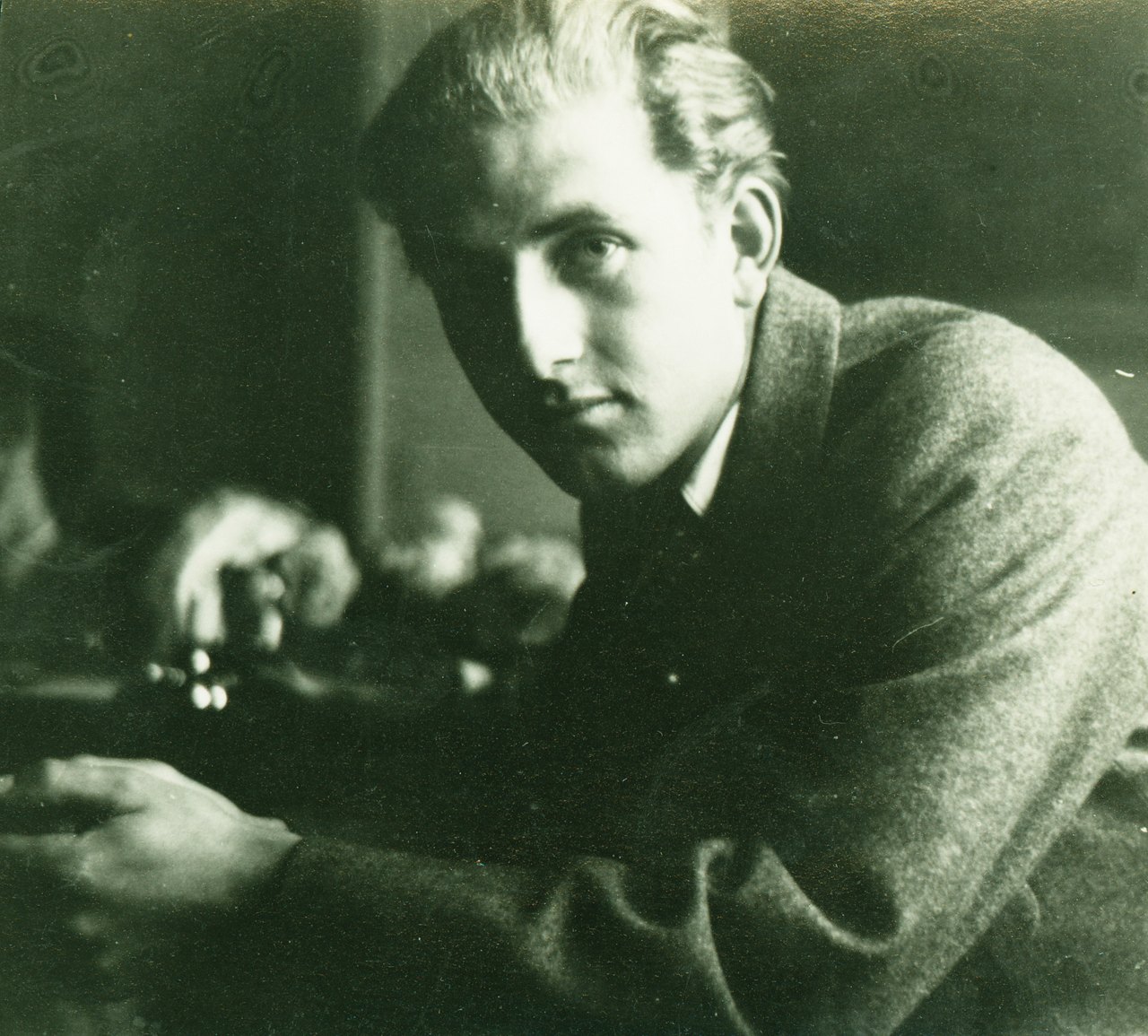
Literary Craft & History · The AfterwordAn afterword is a form of paratext—material placed beside the main story that helps readers understand how the book was made. Lowry uses hers to separate invented characters from documented history. The Johansen and Rosen families are fictional, but the 1943 rescue, the sea routes, and the scent-confusing handkerchief draw on real accounts. Peter was shaped partly by Kim Malthe-Bruun, a young Danish resistance sailor executed in 1945. This method is central to responsible historical fiction: an author may create dialogue, scenes, and composite characters while remaining clear about which events evidence supports. The afterword also changes the ending’s effect. Readers leave Annemarie’s limited viewpoint and enter the historian’s wider frame, where dates, sources, and real people become visible. That shift does not cancel the novel’s emotion; it asks readers to connect emotion with verifiable fact. Source transparency turns imagination into a doorway toward further inquiry.
Visual AidThe real man behind Peter
Photograph of Kim Malthe-Bruun (1923–1945), the Danish sailor and resistance member the Knowledge Bank names as one source for the character of Peter. The Knowledge Bank explains that Lowry’s afterword separates invented people from documented ones, and he is on the documented side: a real young man, photographed in the 1940s, executed in April 1945. The picture shows him only; the novel’s Peter is a composite, not a portrait. Notice how young he looks, and remember that the letter Lowry quotes was written the night before he died.
Kim Malthe-Bruun, Danish sailor and resistance member, 1940s photograph. Source: Wikimedia Commons, public domain.
Paid-out secrets
Every withheld truth delivered exactly when knowing becomes safe — need-to-know, practiced on the reader.
Dual ending
Bells and graves in one chapter — liberation refuses to erase its costs.
The worn star
Fist (P3) to throat (P8): the guarded symbol worn openly until it can be returned.
🧠Knowledge Bank question
1According to the Knowledge Bank, an afterword is a form of 'paratext' because it ___.Ch.16–17
2Fill in the blank with the correct literary term.Ch.16–17
Word choices:dualsingleopensurprise- some words will not be used
Bells and graves share the book’s ending.
3Placing Peter’s execution beside the liberation shows Lowry’s commitment to ___.Ch.16–17
4The truth about Lise confirms the war was tangled in her death from the start.Ch.16–17
5The necklace moving from fist to throat completes ___.Ch.16–17
6The Afterword’s fact-sorting performs the book’s belief that ___.Ch.16–17
7Henrik finally tells Annemarie everything, with no limits left.Ch.16–17
8Fill in the blank with the correct literary term.Ch.16–17
Word choices:symbolsettingnarratorgenre- some words will not be used
The mended star is the book’s central .
9Basing Peter on a documented letter-writer gives the character ___.Ch.16–17
10Across the whole novel, Annemarie’s arc runs from ___.Ch.16–17
Part 4
Think Deeper
Four deeper challenges — no single-word recall. Read, weigh the evidence, and reason it out.
💡Knowledge Bank · Reading Memory Through Sources
History & Ethics · Evidence and RemembranceHistorical memory begins by asking how a claim is known. Lowry’s Afterword invites readers to separate invented scenes from documented events, then follow the evidence. Different sources offer different strengths. An official record can establish dates and numbers but may omit fear; survivor testimony preserves lived experience but reflects one person’s viewpoint; a boat, letter, or photograph is an artifact that needs context. Historians look for corroboration—independent sources that support or complicate one another. In recounting the Danish rescue, this method keeps Jewish people visible as active participants who assessed warnings, chose routes, protected relatives, and endured the crossing, alongside the many helpers and Sweden’s admission of refugees. It also keeps the captured and dead within the record. The necklace belongs to the novel’s symbolic ending; archives and testimony establish the wider history. Careful source evaluation does not weaken remembrance. It protects people from being flattened into a comforting story and turns memory into responsible witness.
Think back over these chapters. A stable at evening: milk hissing into a pail while an uncle explains, at last, what a handkerchief did to the noses of dogs — and what a small girl’s run was truly worth. Then bells — every bell in Denmark, it seems — and flags from windows that spent five years shuttered. But in the square there is a place where a brave young man was made to stand; and in the family’s silence there is a sister whose bicycle never crashed at all. On a quiet evening after the flags come down, a girl opens her hand: a small gold star, its chain broken from an old, urgent night — and asks her father to make it whole.
Original passage written for Garden Heights — not a quotation from the novel.
1Claim: “The ending argues that truth, fully told, honors courage better than comfort could.” — choose the two details that best prove it.Claim & Evidence
2What the war took, or What the family keeps? Tap each detail to sort it — tap again to switch sides. You can keep tapping to change your answer.Sort into two
◄ What the war tookWhat the family keeps ►
3Match each cause to its result. For each cause, pick its result.Cause & Effect
Henrik keeps his promise in the barn→
Bells and flags fill May 1945→
The family speaks of Lise truthfully→
Papa mends the broken clasp→
🧠Knowledge Bank question
4Fill both blanks to complete the reasoning.Build the Argument
The Knowledge Bank argues that historians look for corroboration because , which shows that .
Part 5
Standardized Test
Reading passage · Fiction Built on Fact · Central Ideas & Text Structure · SAT & TOEFL-style practice
Read the passage — the highlighted words are tested — then answer. Tap an answer, then tap it again to confirm.
SATCentral Ideas — the passage's main point
SATWords in Context — a word's meaning in this passage
SATText Structure & Purpose — how the passage is built, and why
TOEFLFactual Information — a fact stated in the passage
TOEFLVocabulary — a tested word's meaning here
TOEFLInsert Text — where a sentence best fits
Lowry's True Story Behind the Novel
Historical fiction makes a double promise: the people may be invented, but the world must be true. In her Afterword, Lois Lowry shows young readers exactly how that promise is kept. Annemarie and her family are fictional, but nearly everything around them is documented: the occupation and the king’s defiant rides, the leaked warning and the rabbi’s announcement, the fishing-boat rescue of October 1943, and even the strange handkerchief chemistry of rabbit’s blood and cocaine, developed by scientists to defeat the patrol dogs’ noses. Lowry drew, too, on living memory: her close friend Annelise Platt, who spent the war years as a child in Copenhagen, supplied the texture of occupied life — the shortages, the soldiers on corners, the fear — that no archive alone could provide.
The novel’s bravest borrowing is its most personal. Peter Neilsen is modeled on Kim Malthe-Bruun, a real 21-year-old Resistance sailor executed by the Germans in April 1945, weeks before Denmark’s liberation; on his final night, facing his sacrifice calmly, he wrote his mother a letter — still widely quoted — urging her past bitterness toward the dream of a decent, human world. Lowry ends her Afterword with his words, closing a made-up story with a real voice. The method matters as much as the facts: by sorting invention from record, the Afterword teaches readers to ask history’s first question — how do we know? — and makes them witnesses at one remove: people who, having heard a true account, now carry a small responsibility for its keeping.
Original passage written for Garden Heights — not a quotation from the novel.
1What is the main idea of the passage?SAT · Central Ideas
2In the passage, Denmark's liberation was ___.SAT · Words in Context
3Which of these does the passage list as documented fact?TOEFL · Factual Information
4Who was Annelise Platt?TOEFL · Factual Information
5In the passage, Malthe-Bruun's sacrifice was ___.TOEFL · Vocabulary
6Who was Kim Malthe-Bruun?TOEFL · Factual Information
7What did Malthe-Bruun’s last letter urge his mother toward?TOEFL · Factual Information
8Why does the author emphasize that Lowry closes her Afterword with Malthe-Bruun’s real words?SAT · Text Structure & Purpose
9In the passage, readers who become witnesses ‘at one remove’ are people who ___.TOEFL · Vocabulary
10Insert Text (TOEFL). Look at the four squares [1]–[4] in the excerpt below. They show where this sentence could be added: “Readers can trust the fear on the streets of the novel because someone who felt it as a child described it to the author firsthand.”
Historical fiction makes a double promise: the people may be invented, but the world must be true. [1] In her Afterword, Lois Lowry shows young readers exactly how that promise is kept. [2] Annemarie and her family are fictional — imagined for the story — but nearly everything around them is documented: the occupation and the king’s defiant rides, the leaked warning and the rabbi’s announcement, the fishing-boat rescue of October 1943, and even the strange handkerchief chemistry of rabbit’s blood and cocaine, developed by scientists to defeat the patrol dogs’ noses. [3] Lowry drew, too, on living memory: her close friend Annelise Platt, who spent the war years as a child in Copenhagen, supplied the texture of occupied life — the shortages, the soldiers on corners, the fear — that no archive of official records alone could provide. [4]
Where would the sentence fit best?TOEFL · Insert Text
Part 6 · Optional
Creative Writing
A bonus challenge to practice your English. Take your time and have fun with it.
About This Section
This writing task is optional and is not part of your auto-graded score. The feedback below checks only the basics — length, spelling, and grammar — not whether your ideas are right or wrong. It is meant for classroom discussion and creative practice, so feel free to use your imagination!
Writing Task — Part 8 “Until You Come Home”
The novel ends with a promise: the mended star, worn until Ellen returns. Write the letter Annemarie might send to Ellen in Sweden after the liberation — what she can finally explain, what she chooses not to say yet, and the promise about the necklace. 6–10 sentences. End with the sentence she writes last, just before signing her name.
You can start with: “Dear Ellen — the bells here rang for a whole day, and I thought of you the entire time...”
0 / 40 words minimum
🗣 Teach It · Just for Fun (optional)
No right or wrong — tell someone nearby what happened in this part. Can’t find anyone? Tell yourself out loud. The moment you teach it, you truly understand it.
Part 8 Complete — You Finished the Book! 🎉
You finished Chapters 16–17 & Afterword — the final part of Number the Stars.
Here are your auto-graded results:
-
points out of 100
Teach it to someone
The best last step is to teach it. In your own words, explain what happened — retell a favorite scene, teach a character’s big choice, or sum up the main idea for a parent, friend, or classmate. When you can teach it clearly, you truly own it.
Independent study guide by Garden Heights. Not affiliated with or endorsed by Lois Lowry. Contains original analysis only; no text from the novel is reproduced. Reference text: This workbook follows Lois Lowry’s classic text (the standard Puffin edition sold worldwide). Revised 2023 UK editions change some wording and may not match the vocabulary studied here.
SAT® is a registered trademark of College Board, which is not affiliated with, and does not endorse, these materials. TOEFL® is a registered trademark of ETS. These materials are not endorsed or approved by ETS. Garden Heights is an independent provider of test-style reading practice.