New here? Just sign up with Google — your account includes Matilda, our gift book, forever.
Stargirl · Garden Heights
Part 2
for Stargirl · Part 2 · Chapters 5–8
8 Parts40 min
What Happens in Part 2
Cheerleader Stargirl cheers for both teams, splitting Mica High between fascination and hostility while Leo is drawn deeper in.
Cheering both teamsStargirl joins the school cheerleading squad and immediately does the unthinkable: she cheers wildly for both teams, leaping up to celebrate a good play no matter which side makes it. To Mica's fans, loyalty means rooting only for your own team; her open-hearted delight in everyone's success baffles and irritates them even as it draws their eyes.
Television goldWatching from behind the camera of his student show 'Hot Seat,' Leo finds himself more and more captivated — unable to look away, half-afraid of how much he wants to understand her. His fascinated co-host Kevin begins pushing to book Stargirl as a guest, sensing she would be television gold.
Enemies and idolsNot everyone is charmed. Hillari Kimble, a sharp-tongued popular girl, despises Stargirl on sight and loudly declares her a phony putting on an act; Wayne Parr, the effortlessly cool boy the school quietly admires, drifts through supremely indifferent. As Stargirl keeps being exactly herself — cheering, singing, caring — the school splits between fascination and hostility, and Leo is pulled deeper into her strange orbit.
Hillari as a foil, the ukulele as symbol, and person-versus-society conflict
Cross-Curricular
Peer pressure — how the group bends the way we act and even see
Chapter Summary
Ch.
What happens
Chapters 5–6
Cheering for Everyone — Stargirl joins the squad and cheers for both teams, baffling Mica’s fans; Leo, watching, grows more and more captivated by her.
Chapters 7–8
Fans and Foes — Kevin pushes to book Stargirl on ‘Hot Seat’; Hillari Kimble loudly calls her a phony, while cool Wayne Parr looks on with indifference.
Part 1
Vocabulary
Study 10 key words from Chapters 5–8, then answer each question.
🧠Knowledge Bank · Words of Fascination and Spite
Lexical Semantics · Words of Fascination and Spite
Five words, and they run from warm to cold in a straight line. To fascinate is to attract and hold someone’s interest, which is what Stargirl does to Leo before he has decided whether he even likes her. To captivate is to charm and hold attention completely — the whole gym, not one boy. Hostile means unfriendly and full of dislike, and Hillari is that from the first day, on no evidence at all. To loathe is to feel strong hatred for, which is where Hillari ends up. A spectator is a person who watches an event, and that word matters because Stargirl refuses to be one: she cheers for both teams. Read the five in order and you have the book’s real subject. Everyone at Mica is watching everyone else, and she is the only person in the building who is not watching.
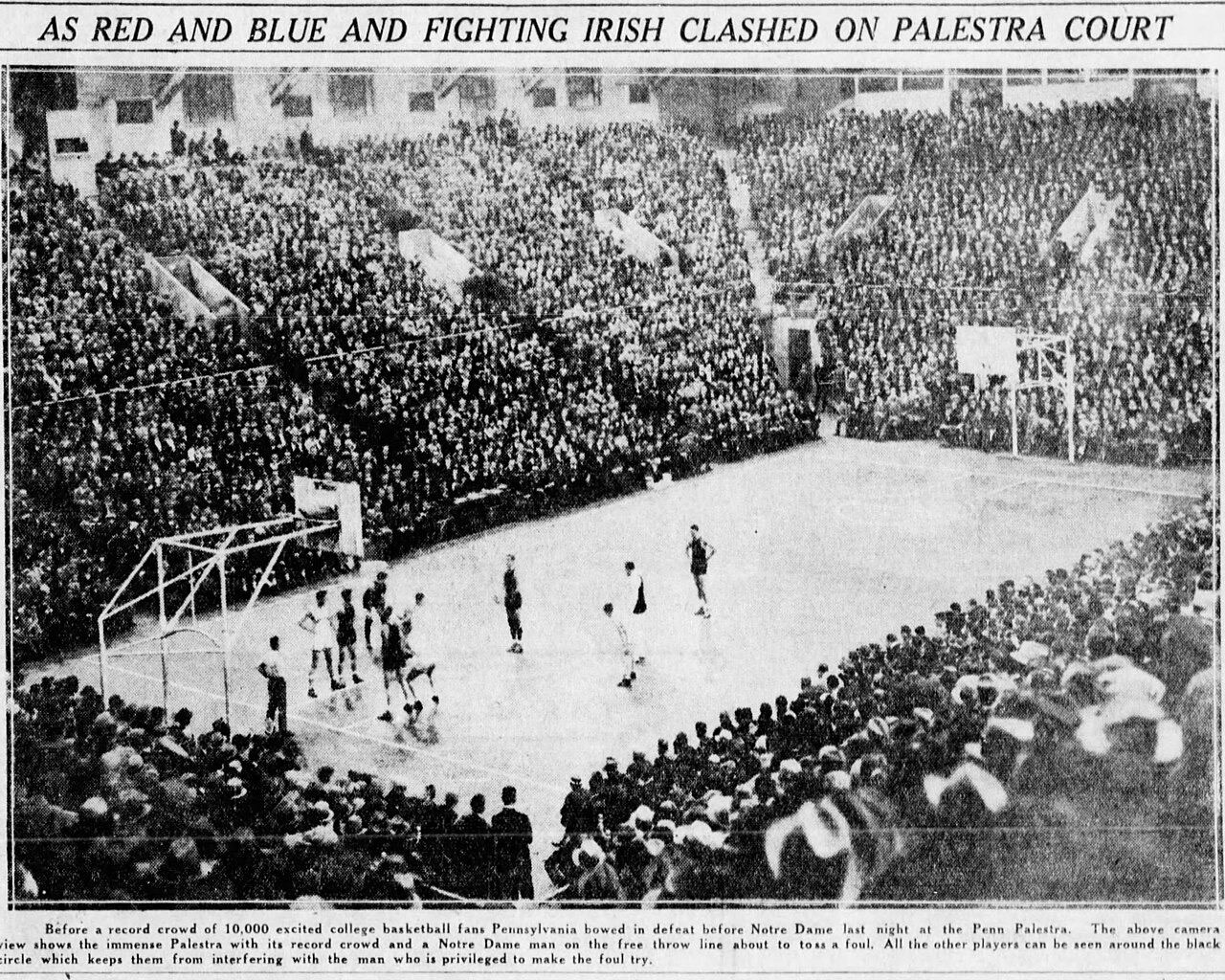
Visual AidTen thousand spectators, one direction
Halftone newspaper photograph of the Palestra in Philadelphia on January 19, 1929, printed in The Philadelphia Inquirer the next morning: a record crowd of about 10,000 college basketball fans watching Penn play Notre Dame at a free throw. The grain belongs to the newsprint, not the scene. Every face is turned the same way, doing the one job the Knowledge Bank’s word list pins with spectator — the word Stargirl alone refuses, cheering for whichever side does something beautiful. Nothing here is Mica High; the picture only shows what a building full of watchers looks like.
Penn vs. Notre Dame before a record crowd at the Palestra, Philadelphia; The Philadelphia Inquirer, January 20, 1929. Source: Wikimedia Commons, File:Penn vs Notre Dame before a record crowd at Palestra, Jan. 19, 1929.jpg, public domain.
fascinatev.Ch.5
To attract and hold someone’s interest
“Stargirl’s strangeness began to fascinate Leo.”
captivatev.Ch.6
To charm and hold attention completely
“Her open joy captivated the whole gym.”
hostileadj.Ch.6
Unfriendly and full of dislike
“Hillari grew hostile the moment she arrived.”
loathev.Ch.6
To feel strong hatred for
“Hillari came to loathe the cheerful newcomer.”
spectatorn.Ch.5
A person who watches an event
“Every spectator noticed her cheering for both teams.”
defyv.Ch.7
To boldly resist or disobey
“She seemed to defy every unwritten rule.”
mesmerizev.Ch.7
To hold someone spellbound
“Her fearless calm could mesmerize a crowd.”
ridiculen.Ch.8
Unkind mockery meant to shame
“She met their ridicule without flinching.”
scrutinyn.Ch.8
Close, critical watching
“Stargirl lived under constant scrutiny.”
indifferentadj.Ch.8
Not interested; not caring either way
“Wayne Parr stayed coolly indifferent to it all.”
ⓘ The vocabulary words in this list are selected to help you understand and complete this workbook. Some may not appear verbatim in the original novel.
🧠Knowledge Bank question
1According to the Knowledge Bank, why does the word spectator matter in this part of the novel?Ch.5
2Someone who is ‘hostile’ is warm and friendly.Ch.6
3To ‘loathe’ something is to ___ it.Ch.6
4‘Scrutiny’ means close, critical watching.Ch.8
5Fill in each blank with the correct word.Ch.7
Word choices:defymesmerizeloathecafeteria- some words will not be used
She seemed to every unwritten rule.
Her fearless calm could a crowd.
6To ‘defy’ the rules is to boldly ___ them.Ch.7
7A ‘spectator’ is a person who watches an event.Ch.5
8‘Ridicule’ is unkind ___ meant to shame someone.Ch.8
9Fill in each blank with the correct word.Ch.8
Word choices:scrutinyindifferentcaptivatehostile- some words will not be used
Stargirl lived under constant .
Cool Wayne Parr stayed to it all.
10Someone who is ‘indifferent’ ___.Ch.8
Part 2
Comprehension
Show you understood what happens in Chapters 5–8.
🧠Knowledge Bank · Cheering for the Other Side
Narrative Causality · Cheering for the Other Side
The events of Chapters 5–8 become clearer when readers separate a character’s motive from the obstacle encountered and the response that follows. Stargirl joins the school cheerleading squad, and immediately does the unthinkable: she cheers wildly for BOTH teams, leaping up to celebrate a good play no matter which side makes it. To Mica’s fans, loyalty means rooting only for your own team, and her open-hearted delight in everyone’s success baffles and irritates them even as it draws their eyes. Leo, watching from behind the camera of his student show ‘Hot Seat,’ finds himself more and more captivated by her — unable to look away, half-afraid of how much he wants to understand her. His friend and co-host Kevin is fascinated too, and begins pushing to book Stargirl as a guest on the show, sensing she would be television gold. Following motive through response reveals why “Cheering for the Other Side” forms a consequential sequence.
🧠Knowledge Bank question
1The Knowledge Bank explains that Mica's fans are baffled by Stargirl's cheering because to them loyalty means ___.Ch.5
2To Mica’s fans, loyalty means ___.Ch.5
3Leo finds himself more and more captivated by Stargirl.Ch.6
4Kevin pushes to put Stargirl ___.Ch.7
5Write the numbers 1–5 in the boxes to show the correct order of events. Number 1 = what happens first.Chapters 5–8
She cheers for both teams, baffling the fans.
Stargirl joins the Mica High cheerleading squad.
Hillari Kimble loudly declares her a phony.
Leo grows more and more captivated by her.
Kevin pushes to book her on ‘Hot Seat.’
6Hillari Kimble quickly becomes one of Stargirl’s closest friends.Ch.6
7Hillari Kimble accuses Stargirl of being ___.Ch.6
8Wayne Parr, whom the school admires, reacts to Stargirl with ___.Ch.8
9The whole school reacts to Stargirl in exactly the same way.Ch.8
10By the end of Part 2, Leo is being pulled ___.Ch.8
Part 3
Literary Elements
Understanding HOW and WHY Jerry Spinelli (author) tells the story across Chapters 5–8.
🧠Knowledge Bank · Hillari Kimble, the Opposite
Narrative Technique · Hillari Kimble, the Opposite
The craft of Part 2 works through foil, symbol, and society, each shaping how readers judge the new conflict. Hillari Kimble is built to be Stargirl’s foil — a character whose sharp contrast throws the other into relief. Where Stargirl gives without keeping score, Hillari calculates; where Stargirl delights in strangers, Hillari guards her status and stokes suspicion; where Stargirl seems free of the crowd’s pull, Hillari lives by it, ruling and being ruled by what is popular. Her instant hatred is telling. Stargirl has done nothing to Hillari, yet Hillari loathes her, because a person who does not need the crowd’s approval quietly exposes how much Hillari does. Watch how Spinelli uses this contrast to measure both girls at once: Hillari’s cruelty makes Stargirl’s kindness shine brighter, and Stargirl’s freedom makes Hillari’s need for control look small and frightened. That authorial design makes “Hillari Kimble, the Opposite” a lesson in deliberate suspense.
Foil
Hillari Kimble against Stargirl — her calculating spite measures Stargirl’s open, unbought kindness.
Symbol
The ukulele — small, cheerful, unashamed — stands for Stargirl’s freedom to be openly herself.
Conflict (person vs. society)
One free spirit against a whole school that punishes anyone who steps out of the crowd.
🧠Knowledge Bank question
1According to the Knowledge Bank, Hillari Kimble works as a foil, meaning a character whose ___.Ch.6
2Fill in each blank with the correct literary term.Ch.6
Word choices:foilsymbolsettingrhyme- some words will not be used
Hillari, who contrasts with Stargirl, is a .
The ukulele Stargirl carries is a .
3A foil is a character whose contrast highlights another character.Ch.6
4The ukulele mainly stands for Stargirl’s ___.Ch.5
5One free spirit against a whole conformist school is a conflict of ___.Ch.7
6In a person-versus-society conflict, a character struggles against the rules or values of a group.Ch.7
7Hillari’s instant hatred mostly reveals her own ___.Ch.6
8Fill in each blank with the correct literary term.Ch.7
Word choices:conflictfoilnarratorclimax- some words will not be used
Stargirl against the whole school is a person-versus-society .
Hillari, her sharp opposite, is a .
9The ukulele is embarrassing to the crowd because it refuses to be embarrassed.Ch.5
10The clearest sign of the person-versus-society conflict is that ___.Ch.7
Part 4
Think Deeper
Four deeper challenges — no single-word recall. Read, weigh the evidence, and reason it out.
🧠Knowledge Bank · The Power of Peer Pressure
Peer Pressure · The Power of Peer Pressure
Stargirl cheering for the other team is a small act that lands like a scandal, and the reason lies in peer pressure — the force a group exerts to make its members think and act alike. Peer pressure is not usually a loud command; more often it is a quiet, invisible current. We watch what the people around us do, and we adjust — laughing when they laugh, booing when they boo, wanting what they want — frequently without noticing we are doing it. In a famous set of experiments, the psychologist Solomon Asch showed volunteers lines of obviously different lengths and asked which matched. When actors in the room deliberately gave the same wrong answer aloud, many real volunteers went along and gave the wrong answer too — not because they could not see the truth, but because it felt unbearable to be the lone person who disagreed. Notice what Asch’s volunteers were not: stupid, or weak, or cruel. They were ordinary people in a room, and so is everyone in the Mica High bleachers.
Visual AidThe Asch line test: seeing right, saying wrong
Structure diagram of the experiment the Knowledge Bank on peer pressure describes: Solomon Asch’s line-judgment test of the 1950s. One card holds the standard line; the other holds three comparison lines with the match plain to see. Planted actors answer wrongly aloud, the real volunteer answers last, and across the trials about one answer in three copied the confident majority. The cards are redrawn, not photographed, and their proportions are illustrative; what is not simplified is the finding — the volunteers could see the right answer and agreed with the wrong one anyway.
The line-judgment experiments of Solomon Asch (1951–1955), as described in the Knowledge Bank. Drawn for Garden Heights Academy.
Picture a packed gym, everyone leaning the same way, cheering when their side scores and groaning when it does not, all of them moving together like a single body. Then a girl in the middle of it leaps up to celebrate a beautiful play made by the OTHER team — not to provoke anyone, but because it was beautiful, and joy, to her, does not check which jersey you are wearing. The cheering falters. Faces turn. You can feel the crowd deciding, all at once, that something is wrong with her, though no one can quite say what. Leo feels it too, and feels something else underneath it: a pull toward this girl who seems to have never learned the rule that everyone else obeys without thinking.
Original passage written for Garden Heights — not a quotation from the novel.
1Claim: “Part 2 shows that Stargirl unsettles Mica because she refuses to follow the crowd’s unwritten rules.” — choose the two details that best prove it.Claim & Evidence
2Reacts to Stargirl with warmth, or Reacts to Stargirl with coldness? Tap each detail to sort it — tap again to switch sides. You can keep tapping to change your answer.Sort into two
◄ Reacts to Stargirl with warmthReacts to Stargirl with coldness ►
3Match each cause to its result. For each cause, pick its result.Cause & Effect
Stargirl cheers for the other team→
Leo watches her from behind his camera→
Hillari sees a girl who needs no approval→
Kevin senses she is fascinating→
🧠Knowledge Bank question
4Fill both blanks to complete the reasoning.Build the Argument
The Knowledge Bank argues that peer pressure is a quiet, invisible current because , which shows that .
Part 5
Standardized Test
Reading passage · Conformity and Peer Pressure · SAT & TOEFL-style practice
Read the passage — the highlighted words are tested — then answer. Tap an answer, then tap it again to confirm.
SATCentral Ideas — the passage's main point
SATDetail — a fact stated in the passage
SATInference — a conclusion the passage implies
SATWords in Context — a word's meaning in this passage
SATText Connections — how two parts of the text relate
TOEFLFactual Information — a fact stated in the passage
TOEFLVocabulary — a tested word's meaning here
TOEFLProse Summary — the three sentences that sum it up
The Asch Experiment on Conformity
When Stargirl cheers for the other team, she breaks an unwritten rule, and the crowd’s reaction reveals a deep human urge: to go along with the group. Psychologists call this conformity, and the most famous study was run in the 1950s by Solomon Asch. His experiment was simple: he gathered volunteers, showed them a line, and asked which of three other lines matched it in length. The answer was obvious — a child could see it.
The trick was that only one person in each room was a real volunteer; the others were actors following a plan. On certain rounds, every actor gave the same clearly wrong answer out loud, one after another, before the volunteer’s turn. Under the scrutiny of the whole room — every gaze weighing his answer — the volunteer faced a strange pressure: trust his own eyes, or agree with the group. About a third of the time, volunteers denied what they could plainly see and gave the same wrong answer as the group. Many later admitted they had known the true answer but could not bear to be the only one who disagreed; the fear of standing alone outweighed the evidence before them.
Asch’s findings help explain the world of Mica High. Most students there are not cruel or foolish; they are simply caught in the same current the volunteers felt. Going along with the crowd feels safe, while breaking away feels dangerous, even when the crowd is wrong. This is why Stargirl’s behavior is so disturbing to them: she does not seem to feel the pressure. By cheerfully ignoring a rule everyone else obeys, she seems to defy the crowd without even trying — living proof that the current can be resisted, a freedom that unsettles conformists by showing them a choice they had forgotten.
Original passage written for Garden Heights — not a quotation from the novel.
1What is the passage mainly about?SAT · Central Ideas
2Who carried out the famous conformity experiment described?TOEFL · Factual Information
3In the experiment, volunteers were asked to judge the length of ___.SAT · Detail
4Most people in the room were actually ___.TOEFL · Factual Information
5About how often did real volunteers give the group’s wrong answer?SAT · Detail
6In the passage, scrutiny most nearly means ___.TOEFL · Vocabulary
7The study suggests most Mica students are ___.SAT · Inference
8Prose Summary (TOEFL).This passage explains conformity and what Asch’s experiment revealed about peer pressure. This TOEFL task lists six sentences; choose the THREE that best capture the passage’s main ideas. The other three do not belong — they state minor details or ideas the passage does not present.TOEFL · Prose Summary
9In the passage, defy most nearly means ___.SAT · Words in Context
10How does this passage best help explain Part 2?SAT · Text Connections
Part 6 · Optional
Creative Writing
A bonus challenge to practice your English. Take your time and have fun with it.
About This Section
This writing task is optional and is not part of your auto-graded score. The feedback below checks only the basics — length, spelling, and grammar — not whether your ideas are right or wrong. It is meant for classroom discussion and creative practice, so feel free to use your imagination!
Writing Task — Part 2 “Going Along With the Group”
Asch’s volunteers denied what they could see rather than stand alone. Write about a time you felt pressure to go along with a group — or a time you chose to disagree. What did the group want, what did you do, and why? 6–10 sentences. End with what the moment taught you about following the crowd.
You can start with: “Everyone else seemed sure, and I could feel myself starting to doubt what I knew...”
0 / 40 words minimum
🗣 Teach It · Just for Fun (optional)
No right or wrong — close the screen and tell someone nearby what happened in this part. Can’t find anyone? Tell yourself out loud. The moment you teach it, you truly understand it.
Part 2 Complete!
You finished Chapters 5–8 of Stargirl.
Here are your auto-graded results:
-
points out of 100
Teach it to someone
The best last step is to teach it. In your own words, explain what happened — retell a favorite scene, teach a character’s big choice, or sum up the main idea for a parent, friend, or classmate. When you can teach it clearly, you truly own it.
Independent study guide by Garden Heights. Not affiliated with or endorsed by Jerry Spinelli. Contains original analysis only; no text from the novel is reproduced. Reference text: This workbook follows Jerry Spinelli’s classic text (the standard Puffin edition sold worldwide). Revised 2023 UK editions change some wording and may not match the vocabulary studied here.
SAT® is a registered trademark of College Board, which is not affiliated with, and does not endorse, these materials. TOEFL® is a registered trademark of ETS. These materials are not endorsed or approved by ETS. Garden Heights is an independent provider of test-style reading practice.