New here? Just sign up with Google — your account includes Matilda, our gift book, forever.
What Happens in Part 4
Then Willy sees it: a poster for the National Dogsled Race, held right there in town — and the prize is five hundred dollars, the exact amount he needs. It feels like fate. Willy knows Searchlight is fast, and he knows the countryside better than anyone, so he pays the entry fee with his savings and signs up to race. But there is one enormous obstacle. Among the racers is Stone Fox, a tall, powerful, dignified man of the Shoshone people, who has entered many races and has never once lost. Stone Fox does not speak to white people, and he races for a serious reason of his own: he uses his winnings to buy back land that once belonged to his people. Willy’s hope has a shape now — and so does the mountain he must climb to reach it.
What We Will Learn
Focus
What It Means
Characterization by Reputation
How Stone Fox becomes a legend before we meet him
Suspense
A boy and one dog against an undefeated champion
Motivation
Both racers fight for a cause bigger than themselves
Chapter Summary
Chapter
Key Events
Ch.5
Willy finds a poster for the National Dogsled Race with a $500 prize — exactly what he needs — and enters with Searchlight; he learns his greatest rival is Stone Fox, an undefeated Shoshone racer who competes to buy back land for his people
💭 Before You Read · Warm-Up (not scored)
There are no wrong answers here — just think, guess, and talk:
Both Willy and Stone Fox race for a cause bigger than winning. How does fighting for someone else change a person’s determination?
Stone Fox has ‘never lost.’ Why can a rival’s reputation feel scarier than the rival himself?
Predict: a boy with one dog against an undefeated champion. What might give Willy any chance at all?
Copyright Notice
This is an independent study guide created by Garden Heights Academy to support reading comprehension and literary analysis. It contains original analysis questions and does not reproduce any text from the novel. Stone Fox is a work by John Reynolds Gardiner. This guide is not affiliated with, authorized by, or endorsed by the author or any associated rights holder.
Part 1
Vocabulary
Study 10 key words from Chapter 5, then answer each question.
🧠Knowledge Bank · The Shoshone and Their Land
History · The Shoshone NationStone Fox belongs to the Shoshone (shoh-SHOH-nee), one of many Native nations of the American West. Shoshone people have lived in and around these mountains for countless generations, and they knew its rivers, seasons, and animals intimately. As settlers pushed west, treaties were broken and most of that land passed out of Native hands. Buying it back acre by acre, with money won in races, is a hard and honorable aim. A reader owes this character respect rather than fear. Shoshone families, language, and ceremonies are not history; they continue today.
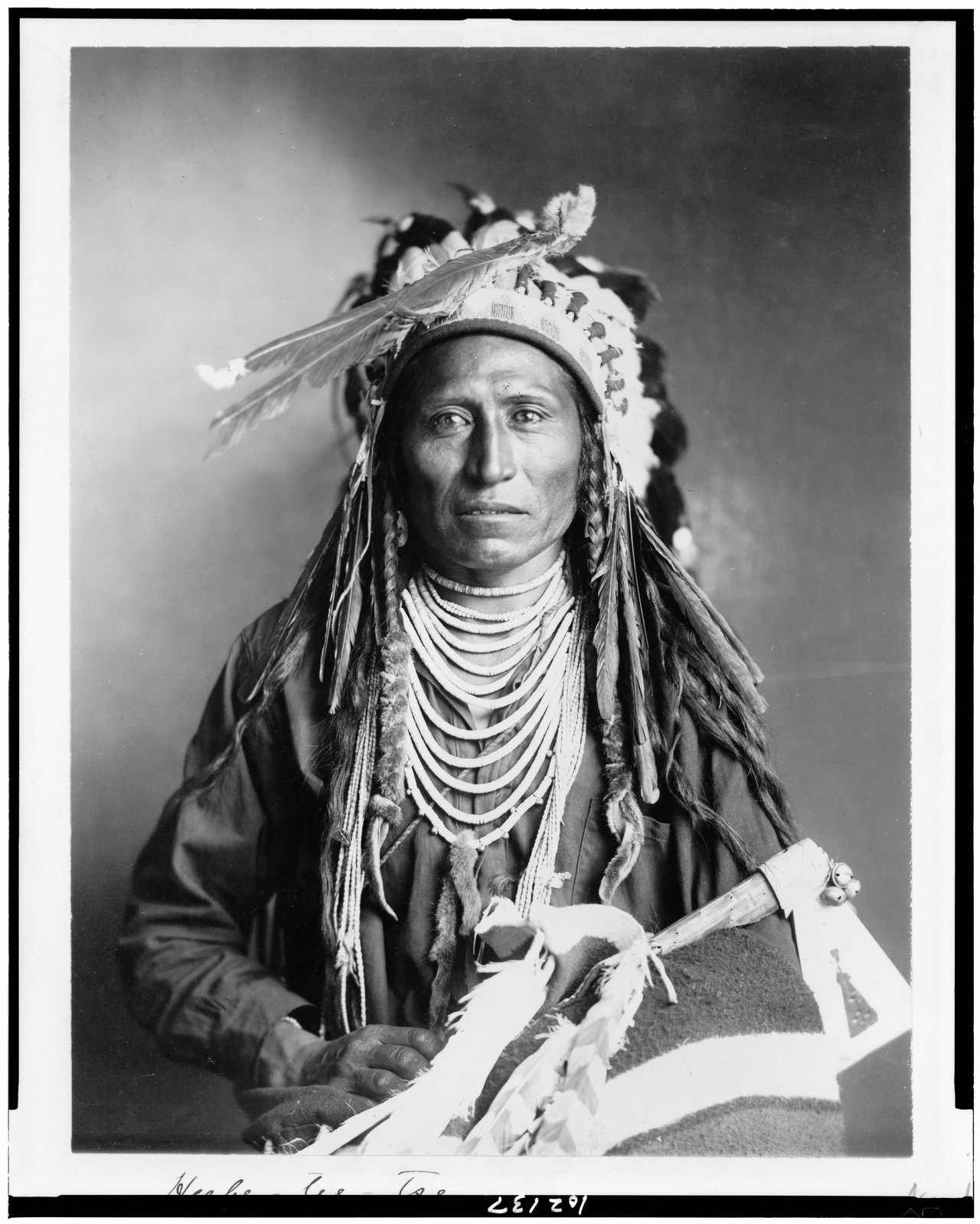
Visual AidA Shoshone man, photographed in 1899
Studio portrait of Heebe-tee-tse, a Shoshone man, taken in 1899 by the photographers Rose and Hopkins. The Knowledge Bank explains that Stone Fox belongs to the Shoshone, one of many Native nations of the American West, that Shoshone people have lived in and around these mountains for countless generations, and that as settlers pushed west treaties were broken and most of that land passed out of Native hands. This is a real person who sat for a photographer, not a character from the book. Notice that this is a portrait made in the same years the story is set, and that Shoshone families, language and ceremonies continue today.
Heebe-tee-tse, Shoshone Indian, half-length portrait, 1899; photograph by Rose & Hopkins, Library of Congress LCCN 90716415. Source: Wikimedia Commons, public domain.
postern.Ch.5
A large printed notice put up for people to see
“A poster on the wall announced the big race.”
entryn.Ch.5
The act of joining a contest; the fee to join
“Willy paid the entry fee with his savings.”
prizen.Ch.5
A reward given to the winner
“The prize for the race was five hundred dollars.”
competev.Ch.5
To take part in a contest against others
“Willy would compete against grown, skilled racers.”
rivaln.Ch.5
A person you compete against
“Stone Fox was the rival everyone feared.”
legendn.Ch.5
A famous story, or a person people tell stories about
“Stone Fox had become a legend on the racing trail.”
reputationn.Ch.5
What people generally believe about someone
“His reputation was that he had never lost a race.”
undefeatedadj.Ch.5
Never having been beaten
“The undefeated champion had won every race.”
registerv.Ch.5
To sign up officially for something
“Willy went to register for the race.”
dignifiedadj.Ch.5
Calm, serious, and worthy of respect
“Stone Fox was a tall, dignified man.”
🧠Knowledge Bank question
1According to the Knowledge Bank, Stone Fox is racing to buy back land that ___.Ch.5
2An “entry” fee is the money you pay to ___.Ch.5
3Fill in each blank with the correct word.Ch.5
Word choices:prizeundefeatedposterentry- some words will not be used
The winner of the big race takes home a five-hundred-dollar .
Stone Fox has never lost — he is .
4To “compete” is to ___.Ch.5
5A “rival” is ___.Ch.5
6True or False: A “legend” can mean a person people tell famous stories about.Ch.5
7Fill in each blank with the correct word.Ch.5
Word choices:reputationlegendrivalregister- some words will not be used
A racer’s is what people generally believe about him.
Stories of races never lost have made Stone Fox a living .
8Someone “undefeated” has ___.Ch.5
9To “register” for the race is to ___.Ch.5
10True or False: A “dignified” person is calm, serious, and worthy of respect.Ch.5
Part 2
Comprehension
How well do you understand Chapter 5?
🧠Knowledge Bank · Meeting a Character Through Reputation
Reading Skill · InferenceBefore Willy ever meets Stone Fox, he hears stories about him: a great racer who has never lost. From these stories, Willy builds a picture in his mind. This is called inference — using clues to figure out something the book does not say straight out. We meet many people in life the same way, through their reputation, or what others say about them. But a good reader stays careful. Reputation is only a hint, not the whole truth. As you read, gather clues about Stone Fox, yet stay ready to learn more. The real person may be deeper than the rumors.
🧠Knowledge Bank question
1The Knowledge Bank warns that a reputation is ___.Ch.5
2Why is the $500 prize perfect for Willy?Ch.5
3Willy pays the race entry fee out of his own savings.Ch.5
4What are Willy’s two advantages?Ch.5
5Put these events from Part 4 in the correct order. Write 1–5 (1 = first).Ch.5
Willy comes face to face with the silent giant and his five Samoyeds.
In town, Willy spots a poster for the big dogsled race.
He learns the winner’s prize is exactly five hundred dollars.
People warn Willy that Stone Fox has never lost a race.
Willy pays the entry fee out of his own savings.
6Why does Stone Fox race?Ch.5
7What is unusual about how Stone Fox behaves toward others?Ch.5
8How does Stone Fox’s record make Willy’s task look?Ch.5
9True or False: Stone Fox races only for his own selfish glory.Ch.5
10What do Willy and Stone Fox surprisingly have in common?Ch.5
Part 3
Literary Elements
Understanding HOW and WHY John Reynolds Gardiner tells the story across Chapter 5.
🧠Knowledge Bank · Building a Legend
Literary Craft · Building a LegendAn author can make a character loom over a book long before that character walks into it. Gardiner does exactly this with Stone Fox. First we are given a name, then a fact that sounds impossible, then a rumor, then another one. By the time the man finally appears, our imagination has already built him into a legend. Storytellers have used the technique for centuries; the shark in a sea tale and the outlaw in a Western both arrive this way. Notice how little it costs the writer — a few sentences of town talk turn an entrance into a moment.
📚 Literary Devices in This Part · definitions & examples
Characterization by reputation is when we learn about a character from what others say about them before we see them ourselves — Stone Fox is ‘the one who never loses.’ Suspense is the anxious excitement of not knowing what will happen; a boy with one dog against an undefeated champion fills the story with it. Both racers also have a strong motivation — the reason that drives them.
🧠Knowledge Bank question
1According to the Knowledge Bank, Gardiner turns Stone Fox into a legend before he appears by ___.Ch.5
2Fill in each blank with the correct literary term.Ch.5
Word choices:suspensemotivationrhymesetting- some words will not be used
The anxious not-knowing that keeps us turning pages is .
Whatever drives a character to act — love, duty, land — is their .
3Fill in each blank with the correct literary term.Ch.5
Word choices:stakescontrastnarratortitle- some words will not be used
The higher the , the more the outcome matters to everyone.
Two characters set side by side to show their differences form a .
4True or False: Making a rival seem powerful can make readers root harder for the hero.Ch.5
5How does the author build Stone Fox into a legend?Ch.5
6Giving Stone Fox a noble motivation (his people’s land) makes him ___.Ch.5
7The $500 prize matching the debt exactly is an example of ___.Ch.5
8True or False: A good rival can share something important with the hero.Ch.5
9Why introduce the rival right after Willy finds hope?Ch.5
10True or False: Suspense is the anxious not-knowing that makes us read on — will Willy really beat the undefeated Stone Fox?Ch.5
Part 4
Think Deeper
Four deeper challenges — no single-word recall. Read, weigh the evidence, and reason it through.
🧠Knowledge Bank · When Both Sides Are Right
Social-Emotional · EmpathyThe purse is five hundred dollars, large enough to draw seasoned racers in from hundreds of miles away, and two of the people chasing it are desperate for every dollar of it. Willy needs the money to keep his grandfather’s farm. Stone Fox needs it to buy back ground taken from his people. Neither aim is selfish, and both cannot be satisfied, because a race pays only one winner. A reader who quietly weighs a rival’s need against his own favorite’s is doing the hardest work that stories ask of us, which is empathy.
Visual AidTwo good reasons, one purse
Diagram for the Knowledge Bank on empathy. The gold card at the top is the single prize, and the two numbered cards hanging from the beam are the two reasons the Knowledge Bank gives for wanting it: Willy’s farm and the ground taken from Stone Fox’s people. The beam is drawn level because the Knowledge Bank says neither aim is selfish. It does not decide who should win. Notice that both cards hang from one beam — only one of them can be satisfied.
The two competing needs weighed in the Knowledge Bank. Drawn for Garden Heights Academy.
1Claim: “The race gives Willy a real chance to save the farm.” — choose the two details that best prove it.Claim & Evidence
2A reason the race gives Willy hope, or just a fact about the race? Tap each item to sort it — tap again to switch sides. You can keep tapping to change your answer.Sort into two
◄ A reason for hopeJust a fact about the race ►
3Match each cause to its result. For each cause, pick its result.Cause & Effect
Willy sees the race poster→
The prize matches his need→
Willy trusts Searchlight’s speed→
The entry costs money→
🧠Knowledge Bank question
4Fill both blanks to complete the reasoning.Build the Argument
The Knowledge Bank says the hardest work this story asks of a reader is to , because .
Part 5
Standardized Test
Key Details & Inference — SAT & TOEFL-style practice
Read the passage — the highlighted words are tested — then answer. Tap an answer, then tap it again to confirm.
SATWords in Context — a word's meaning in this passage
SATInference — a conclusion the passage implies
SATCentral Ideas — the passage's main point
TOEFLFactual Information — a fact stated in the passage
TOEFLInsert Text — where a sentence best fits
TOEFLRhetorical Purpose — why the author included a detail
The Trust Behind a Dogsled Race
Across the frozen north, one of the oldest and most thrilling contests is the dogsled race, where teams compete over miles of snow for a purse that can change a family’s year. A team of strong dogs is hitched to a light sled, and a driver called a musher stands on the back, steering not with a wheel but with the voice — calling commands the dogs have learned to obey. To win, far more than raw speed is needed. A great musher must pace the team wisely, so the dogs do not burn out too early, and must choose the smartest path across the snow, sometimes cutting over a frozen lake to save precious time. Above all, a winning team runs on trust: the dogs must believe in their driver, and the driver must know each dog’s limit. Weather makes every race a gamble, for a sudden storm can hide the trail. A rival who has beaten everyone for years is still only one storm from losing. In the end the prize goes not to one runner but to whichever partnership of driver and dogs proves strongest.
Original passage written for Garden Heights — not a quotation from the novel.
1In the passage, to compete is to ___.SAT · Words in Context
2In the passage, a rival is ___.SAT · Words in Context
3Why might a smart musher cut across a frozen lake?TOEFL · Factual Information
4In the passage, the prize is ___.SAT · Words in Context
5What does the passage say a winning team runs on above all?TOEFL · Factual Information
6The passage says sled dogs are bred for “endurance” and heart; this matters because a race —TOEFL · Factual Information
7Why does the passage call each side a “team” rather than a single racer?SAT · Inference
8Insert Text (TOEFL). Look at the four squares [1]–[4] in the passage excerpt below. They show where the following sentence could be added: “Choosing when to speed up and when to hold back can decide the whole race.”
To win, far more than raw speed is needed. [1] A great musher must pace the team wisely, so the dogs do not burn out too early, and must choose the smartest path across the snow. [2] Above all, a winning team runs on trust: the dogs must believe in their driver, and the driver must know each dog’s limit. [3] Weather makes every race a gamble, for a sudden storm can hide the trail or turn the snow to treacherous ice. [4]
Where would the sentence fit best?TOEFL · Insert Text
9Which sentence best states the main idea?SAT · Central Ideas
10This passage helps us understand Chapter 5 because Willy —TOEFL · Rhetorical Purpose
Part 6 · Optional
Creative Writing
A bonus challenge to practice your English. Take your time and have fun with it.
About This Section
This writing task is optional and is not part of your auto-graded score. The feedback below checks only the basics — length, spelling, and grammar — not whether your ideas are right or wrong. It is meant for classroom discussion and creative practice, so feel free to use your imagination!
Writing Task — Part 4 “Facing Someone Stronger”
Willy dares to enter a race against a champion who has never lost. Write about a time you faced someone or something that seemed much stronger or better than you — a tough opponent, a hard test, a big challenge. How did you feel, and what did you do? Write at least 40 words.
You can start with: “Once I had to face something much bigger than me…”
0 / 40 words minimum
🗣 Teach It · Just for Fun (optional)
No right or wrong — close the screen and tell someone nearby about the race Willy enters and who Stone Fox is. Can’t find anyone? Tell yourself out loud. The moment you teach it, you truly understand it.
Part 4 Complete!
You finished Chapter 5 of Stone Fox.
Here are your auto-graded results:
-
points out of 100
Teach it to someone
The best last step is to teach it. In your own words, explain what happened — retell a favorite scene, teach a character’s big choice, or sum up the main idea for a parent, friend, or classmate. When you can teach it clearly, you truly own it.
Independent study guide by Garden Heights Academy. Not affiliated with or endorsed by the author or any rights holders. Contains original analysis only; no text from the novel is reproduced.
SAT® is a registered trademark of College Board, which is not affiliated with, and does not endorse, these materials. TOEFL® is a registered trademark of ETS. These materials are not endorsed or approved by ETS. Garden Heights is an independent provider of test-style reading practice.