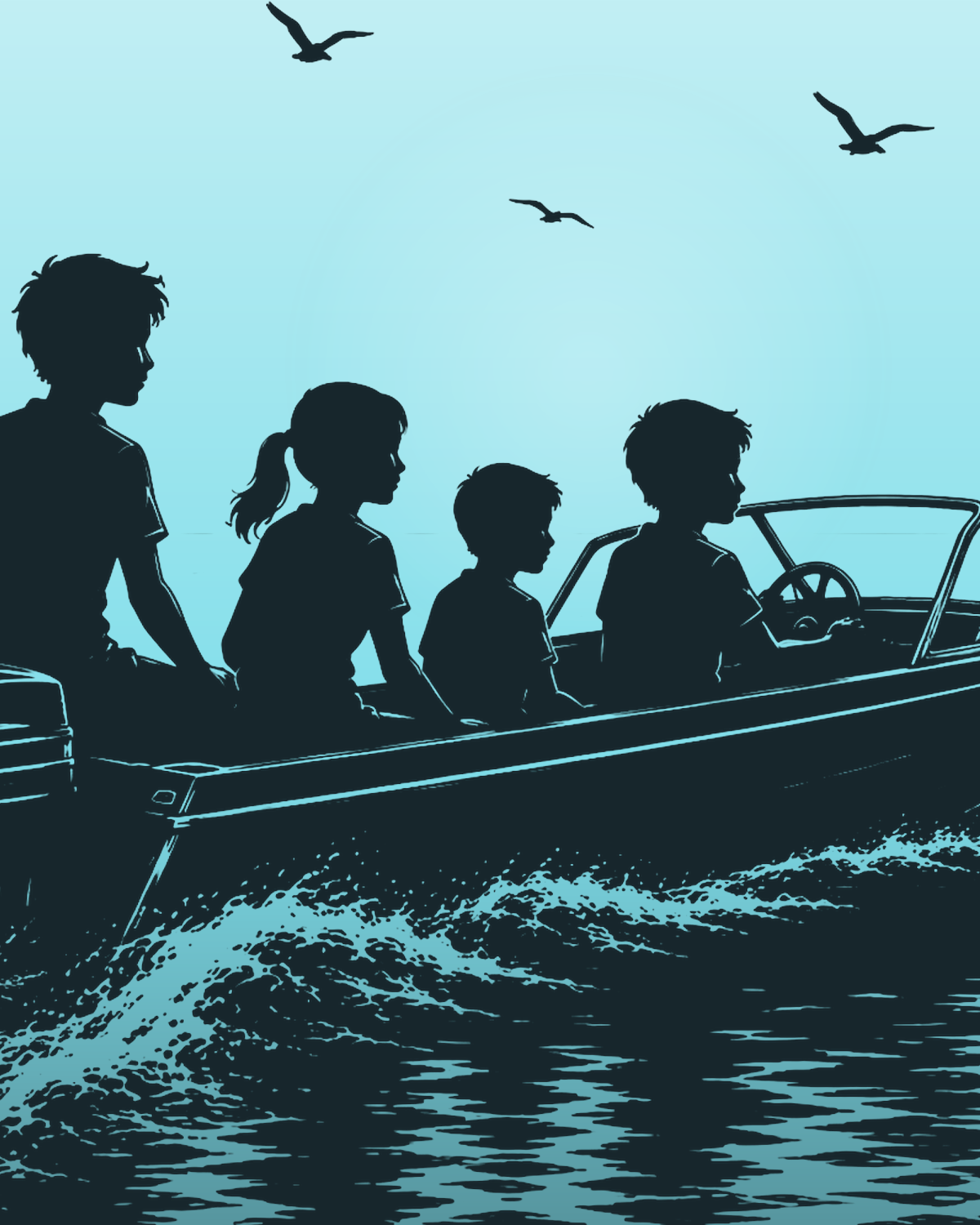
Surprise Island cover
Garden Heights Academy

Surprise Island

This workbook is for Garden Heights members. Sign in to continue.

Sign in with Google →
New here? Just sign up with Google — your account includes Matilda, our gift book, forever.
What Happens in Part 4

The children hit upon a wonderful summer plan: they will collect the most interesting things they can find on the island and study them. Soon they are gathering treasures everywhere — smooth stones, pretty shells, bits of driftwood, sea creatures in the tide pools — each one a little specimen to examine and wonder about. And whenever they cannot identify something, there is Joe, who always seems to know exactly what it is, where it came from, and how it lives. He knows the names of the shells, the habits of the crabs, the story of the rocks. It is more knowledge than any ordinary handyman could be expected to have — and the sharp-eyed reader collects a different kind of treasure: clues. Little by little, the mystery of who Joe really is grows deeper and more intriguing.

What We Will Learn
FocusWhat It Means
Clues & ForeshadowingHow the mystery of Joe grows from small hints
Curiosity & DiscoveryThe joy of collecting and learning
Marine ScienceHow seashells and sea creatures work
Chapter Summary
PagesKey Events
pp. 58–76The children make a plan to collect and study the island’s interesting things — shells, stones, sea creatures — and Joe always knows exactly what each one is; his surprising expertise quietly piles up clues about who he really is
💭 Before You Read · Warm-Up (not scored)

There are no wrong answers here — just think, guess, and talk:

  • Joe knows far more than a handyman usually would. What clues make YOU suspect there is more to someone than they first appear?
  • The children love collecting and learning about the natural world. What do you most like to collect, learn about, or wonder about?
  • Predict: Joe knows the names of shells, crabs, and rocks. What sort of job or training might give a person all that knowledge?
Copyright Notice

This is an independent study guide created by Garden Heights Academy to support reading comprehension and literary analysis. It contains original analysis questions and does not reproduce any text from the novel. Surprise Island is a work by Gertrude Chandler Warner. This guide is not affiliated with, authorized by, or endorsed by the author or any associated rights holder.
Part 1
Vocabulary
Study 10 key words from pages 58–76, then answer each question.
🧠Knowledge Bank · Inside a Seashell
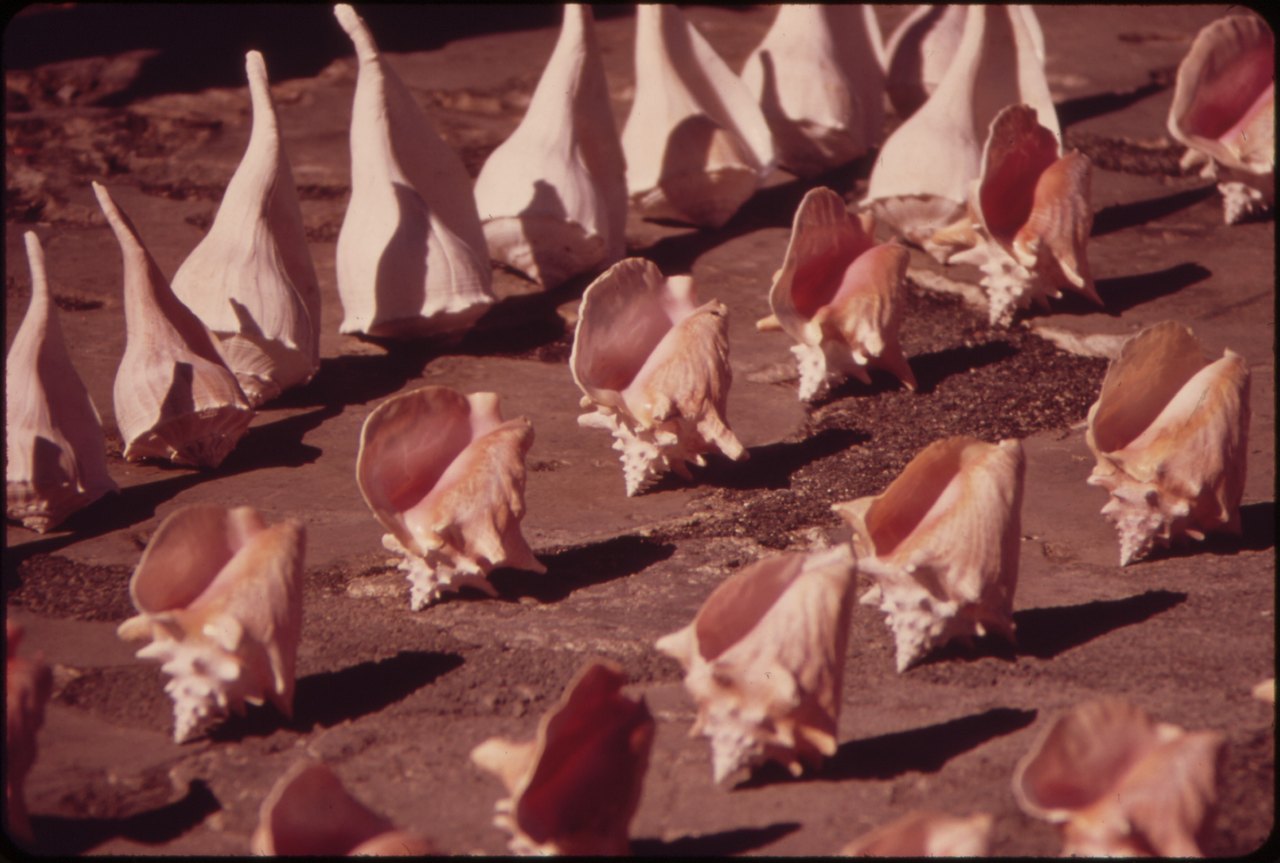
Marine Biology · MollusksNearly every shell on a beach was built by a mollusk — a soft, boneless animal such as a clam, snail, mussel, or oyster. The animal makes the shell itself, drawing calcium carbonate out of the seawater, the very mineral that makes chalk and limestone. It adds fresh material at the rim as it grows, which is why so many shells widen into a spiral and carry faint growth lines, a little like the rings inside a tree. A hermit crab breaks the pattern: it builds nothing and borrows an empty shell instead, moving to a roomier one as it fattens. So an empty shell in your hand is the finished, abandoned house of an animal, and a beach is a long shelf of small, patient architecture.
collectv.p.58
To gather things of one kind together
“They set out to collect island treasures.”
specimenn.p.60
A single example of something, kept for study
“Each shell was a specimen to examine.”
identifyv.p.63
To recognize and name what something is
“Joe could identify every shell and creature.”
curiousadj.p.59
Eager to know or learn something
“The children were curious about everything.”
treasuren.p.58
Something valued and prized
“Each find was a small treasure to them.”
displayv.p.65
To arrange things so they can be seen
“They planned to display their finds.”
unusualadj.p.67
Not common; out of the ordinary
“Joe had an unusual amount of knowledge.”
discoverv.p.62
To find or learn something for the first time
“They loved to discover new creatures in the pools.”
expertn.p.70
A person who knows a great deal about something
“Joe seemed to be an expert on nature.”
cluen.p.72
A hint that helps solve a mystery
“Joe’s knowledge was a clue about who he was.”
1To ‘collect’ is to —p.58
2A ‘specimen’ is —p.60
3Fill in each blank with the correct word.pp. 58–76
Word choices:identifydisplaydiscovercollect- some words will not be used
Joe can every shell and creature by name.
The children plan to their finds where all can see.
4Someone ‘curious’ is —p.59
5Something ‘unusual’ is common and ordinary.p.67
6To ‘display’ things is to —p.65
7Fill in each blank with the correct word.pp. 58–76
Word choices:expertcluetreasurespecimen- some words will not be used
Joe seems to be a real on nature.
His deep knowledge is a about who he really is.
8To ‘discover’ is to —p.62
9An ‘expert’ is a person who —p.70
10A ‘clue’ is a hint that helps solve a mystery.p.72
Part 2
Comprehension
How well do you understand pages 58–76?
🧠Knowledge Bank · The Beachcomber’s Habit
Culture · BeachcombingBeachcombing is an old seaside habit with rules of thumb of its own. The best hunting runs along the strandline, the wavy row of weed and shell that the last high tide left behind, and the best days follow a storm or an unusually low tide. What turns up is stranger than most people expect: driftwood rubbed smooth, sea glass frosted by years of sand, the coiled egg cases of whelks, the empty molts crabs leave behind when they outgrow their shells, and the leathery pouches called mermaid’s purses, each of which once held a skate’s egg. Careful collectors take only what is empty, turn stones back the way they found them, and leave living animals lying exactly where they lie. That last one is the beachcomber’s first rule.
1What is the children’s summer plan?p.58
2What sorts of things do they collect?p.60
3Who helps identify their finds?p.63
4What does Joe seem to know a great deal about?p.63
5Write the numbers 1–5 in the boxes to show the correct order across Part 4. Number 1 = what happens first.pp. 58–76
  • They gather shells, rocks, and creatures.
  • Joe names and identifies each find.
  • The mystery of who Joe is grows deeper.
  • Curious, the children set out to collect.
  • The reader notices Joe knows too much.
6What ‘treasure’ does the sharp-eyed reader collect?p.72
7What drives the children to collect and study?p.59
8What happens to the mystery of Joe in this chapter?p.72
9Joe struggles to name any of the shells or creatures.p.63
10Joe’s deep nature knowledge hints he may be a scientist or scholar of some kind.p.70
Part 3
Literary Elements
Understanding HOW and WHY Gertrude Chandler Warner tells the story across pages 58–76.
🧠Knowledge Bank · Clues Planted on Purpose
Literary Craft · ForeshadowingA mystery is seldom built out of one big shock. It is stacked up quietly, a hint at a time, and the technique has a name: foreshadowing. Each small oddity — a handyman who can name any shell, explain any rock, and predict what a crab will do next — is a clue laid deliberately in the reader’s path. No single one gives anything away, but together they build a pressure of expectation, a sense that something is waiting to be understood. Because a reader gathers the hints alongside the characters, the eventual answer feels earned rather than dropped from nowhere. Watch for details an author lingers over for no obvious reason. In a well-made mystery, an early clue is the writer’s quiet promise.
📚 Literary Devices in This Part · definitions & examples
A clue is a hint that helps solve a mystery; Joe’s expertise is a clue about his identity. Foreshadowing is the planting of small hints that point toward a later reveal. Together they build the mystery — the central question (who is Joe?) that keeps the reader guessing and turning pages.
1A hint that helps solve a mystery is a —p.72
2A mystery can be built from many small clues rather than one big shock.p.72
3Fill in each blank with the correct word.pp. 58–76
Word choices:foreshadowingmysteryrhymesetting- some words will not be used
Planting small hints that point ahead is
The unanswered question ‘who is Joe?’ is the .
4Planting small hints that point toward a later reveal is —p.72
5Clues make a final reveal more satisfying because the reader helped assemble the puzzle.p.72
6Fill in each blank with the correct word.pp. 58–76
Word choices:cluemysteryrhymeindex- some words will not be used
Each sign of Joe’s surprising knowledge is another
All the hints together build the story’s .
7The central question ‘who is Joe?’ is the story’s —p.72
8Gathering clues turns the reader into a —p.72
9Fill in each blank with the correct word.pp. 58–76
Word choices:mysterycluerhymeplot- some words will not be used
A hint that helps solve the puzzle is a
The whole unsolved puzzle of Joe is the .
10The mood of this chapter is best described as —p.59
Part 4
Think Deeper
Four deeper challenges — no single-word recall. Read, weigh the evidence, and reason it through.
🧠Knowledge Bank · Why Wondering Feels Good
Psychology · CuriosityCuriosity is not merely a mood; it behaves like an appetite. Psychologists describe it as an information gap — the itchy space between what you know and what you have just realized you do not know — and closing that gap gives the brain a small jolt of reward. That is why one answer so often produces another question instead of contentment. Naturalists learned long ago to feed the habit with a notebook: write down what you found, where, and on what day, sketch it badly, and the puzzles multiply by themselves. The trick works anywhere. Most dull afternoons are simply afternoons in which nobody looked closely, and a plain stretch of shore becomes a riddle the moment it gets your full attention.
1Claim: “The children turn their curiosity into a real study of the island.” — choose the two details that best prove it.Claim & Evidence
2Shows the children studying nature, or just a detail of the scene? Tap each item to send it left or right.Sort into two
◄ Studying natureJust a detail ►
3Match each cause to its result. For each cause, pick its result.Cause & Effect
The children are curious
They search the whole island
They find sea creatures
Their collection grows
4Fill both blanks to complete the reasoning.Build the Argument
The children’s collecting plan shows that , which means that .
Part 5
Standardized Test
Key Details & Inference — SAT & TOEFL-style practice
🎯 You already have the skills from the sections above — this is just a fun way to meet real SAT & TOEFL-style questions. Read the passage (the highlighted words are tested below), then answer the questions below. Tap an answer to select it, then tap it again to confirm — you can change your choice until you confirm.

Walk any beach and you may pocket a treasure without realizing it is a tiny miracle of nature: a seashell. Every shell was once the home of a soft-bodied sea animal called a mollusc — a snail, a clam, an oyster, and their many cousins. What makes a shell remarkable is that the animal builds it itself. Drawing minerals from the sea water, the mollusc lays down its shell in thin layers, adding to the outer edge as it grows, so the shell enlarges right along with its owner. This is why so many shells curl outward in a widening spiral: each is a record of an animal’s whole life of growth. The mineral the mollusc uses is the very same one found in chalk and limestone, which is why shells feel stony and hard. When at last the animal dies, its empty home may tumble in the waves and wash up on the sand, where a sharp-eyed collector can find it. So the next time you spot a shell, remember: you are holding a house that a living creature designed and built, grain by grain, entirely on its own.

Original passage written for Garden Heights — not a quotation from the novel.
1A seashell was once the home of a —TOEFL · Factual Information
2What is remarkable about how a shell is made?TOEFL · Factual Information
3The shell “grows” along with the animal, meaning it —SAT · Words in Context
4Many shells curl into a widening “spiral,” meaning a —SAT · Words in Context
5Why do so many shells form a widening spiral?TOEFL · Factual Information
6Why do seashells feel stony and hard?TOEFL · Factual Information
7What happens to a shell after the animal dies?TOEFL · Factual Information
8A “collector” who finds a shell is someone who —SAT · Words in Context
9What can the reader infer about each seashell?SAT · Inference
10Insert Text (TOEFL). Look at the four squares [1][4] in the excerpt below. They show where this sentence could be added:
“Because the shell enlarges as the animal grows, it becomes a lasting record of that creature’s whole life.”
A seashell is more than a pretty object. [1] Every shell was once the home of a soft-bodied animal called a mollusc. [2] The animal builds its shell itself, adding new layers at the outer edge. [3] Those layers curl outward in a widening spiral. [4]
Where would the sentence fit best?
TOEFL · Insert Text
Part 6 · Optional
Creative Writing
A bonus challenge to practice your English. Take your time and have fun with it.
About This Section

This writing task is optional and is not part of your auto-graded score. The feedback below checks only the basics — length, spelling, and grammar — not whether your ideas are right or wrong. It is meant for classroom discussion and creative practice, so feel free to use your imagination!

Writing Task — Part 4 “My Collection”

The children collect treasures from the island. Write about something you collect or would love to collect — shells, rocks, cards, stickers, facts, anything! Why do you like it, and what is your favorite piece? Write at least 40 words.

You can start with: “Something I collect (or would love to collect) is…”
0 / 40 words minimum
🗣 Teach It · Just for Fun (optional)

No right or wrong — close the screen and tell someone nearby what the children collect and why Joe’s knowledge is a clue. Can’t find anyone? Tell yourself out loud. The moment you teach it, you truly understand it.

Garden Heights Academy

Part 4 Complete!

You finished pages 58–76 of Surprise Island.

Here are your auto-graded results:

-
points out of 100
Your Writing

Your writing was checked automatically for length, spelling, grammar, and whether you included the key parts of the scene. Scroll back to Part 5 anytime to read your feedback and improve your work.

Move on to Part 5 →

Independent study guide by Garden Heights Academy. Not affiliated with or endorsed by the author or any rights holders. Contains original analysis only; no text from the novel is reproduced.