New here? Just sign up with Google — your account includes Matilda, our gift book, forever.
What Happens in Part 6
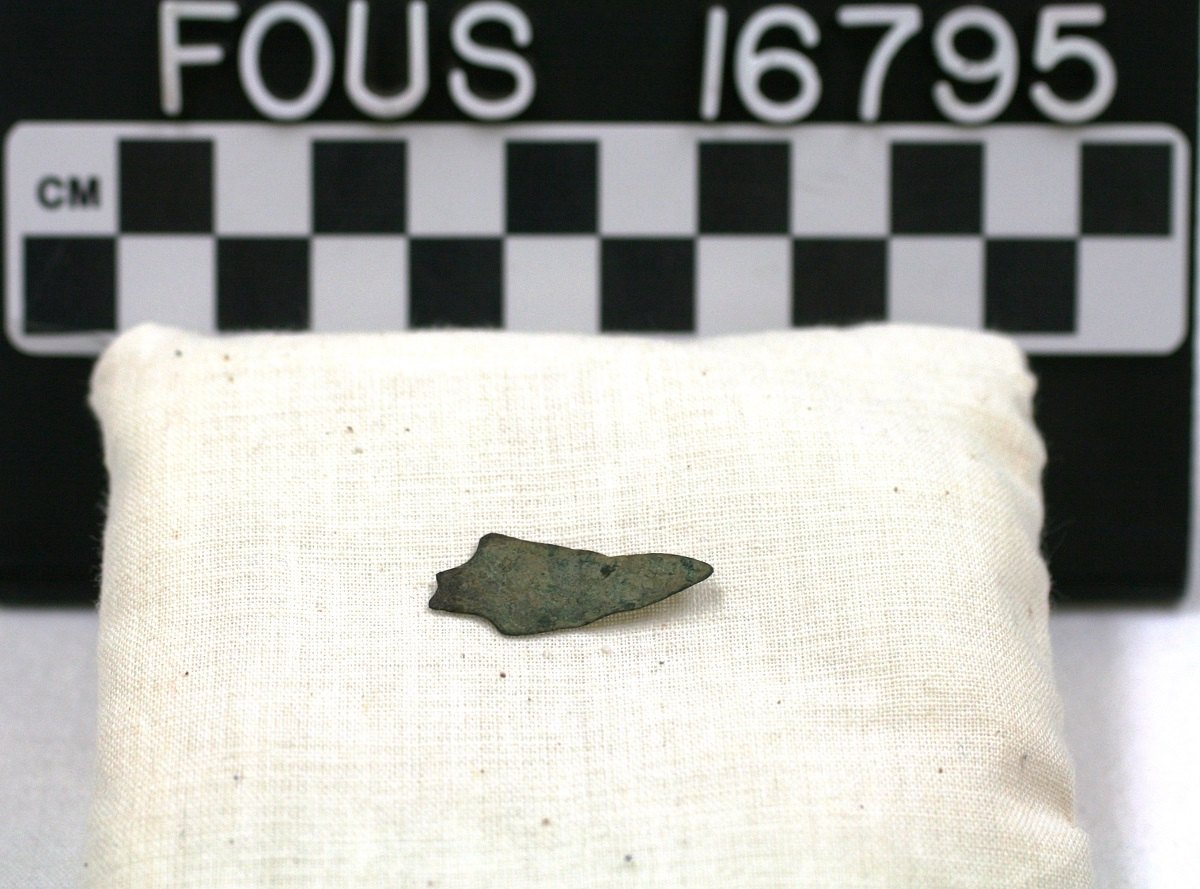
The children set off to explore the far corners of the island, and their exploring leads to an exciting discovery. In the sandy soil of one point of land, they begin to find artifacts — a stone arrowhead, bits of old pottery, simple tools — objects left behind long ago by the Native American people who lived on this land centuries before. It is a thrilling window into the past. And here, Joe’s knowledge blazes brighter than ever: he can tell them what each object was for, how it was made, and what it reveals about the people who once dwelled here. He handles the finds with the care and understanding of a true expert. For the reader, this is almost the whole answer to the mystery: a handyman who knows this much about archaeology and history must, surely, be something much more than a handyman.
What We Will Learn
Focus
What It Means
Discovery & History
Uncovering the island’s ancient past
The Mystery Peaks
Joe’s expertise nearly reveals his secret
Respect for the Past
Honoring the people who lived here long ago
Chapter Summary
Pages
Key Events
pp. 96–114
Exploring the island, the children uncover artifacts — an arrowhead, pottery, tools — left by the Native American people who lived there centuries ago; Joe’s deep knowledge of archaeology all but reveals that he is far more than a handyman
💭 Before You Read · Warm-Up (not scored)
There are no wrong answers here — just think, guess, and talk:
The children find objects left by people who lived on the island long ago. How can an everyday object become a precious window into the past?
These artifacts belonged to real people and deserve respect. Why is it important to treat the belongings and history of others with care?
Predict: Joe knows so much about archaeology and history. What do you now think Joe’s real job might be?
Copyright Notice
This is an independent study guide created by Garden Heights Academy to support reading comprehension and literary analysis. It contains original analysis questions and does not reproduce any text from the novel. Surprise Island is a work by Gertrude Chandler Warner. This guide is not affiliated with, authorized by, or endorsed by the author or any associated rights holder.
Part 1
Vocabulary
Study 10 key words from pages 96–114, then answer each question.
🧠Knowledge Bank · Reading the Ground
Archaeology · Artifacts and ContextAn artifact is anything people made, used, or shaped — a chipped stone point, the rim of a clay pot, the ring of ash from a hearth. Archaeology is the study of the past through such leavings, and its central idea surprises most beginners: where an object lay matters as much as the object itself. That position, together with the soil layers around it, is called context. Deeper usually means older, and a point found beside a hearth tells a story the same point in a pocket cannot. Ground and weather decide what lasts. Open damp soil rots wood, bone, cloth, and basketry within a few generations, while a dry sheltered place such as a cave may keep them for centuries, which is why shelters hold the richest record.
explorev.p.96
To travel through a place to discover it
“They set out to explore the whole island.”
artifactn.p.100
An object made by people, left from long ago
“Each artifact was a clue to the past.”
arrowheadn.p.101
The sharp stone tip of an arrow
“They found a stone arrowhead in the sand.”
ancientadj.p.103
Very old; from long ago
“The tools were ancient, made centuries ago.”
archaeologyn.p.108
The study of the past through things people left behind
“Joe seemed to know all about archaeology.”
evidencen.p.106
Facts or objects that show what is true
“The artifacts were evidence of an older way of life.”
dwellv.p.104
To live in a place
“Native American people once dwelled on the island.”
uncoverv.p.100
To find something hidden, often by digging
“They uncovered treasures in the soil.”
heritagen.p.110
The history and traditions passed down over time
“The finds were part of the land’s heritage.”
respectn.p.107
Honor and careful regard
“They handled the old objects with respect.”
1To ‘explore’ is to —p.96
2An ‘artifact’ is —p.100
3Fill in each blank with the correct word.pp. 96–114
Word choices:arrowheadarchaeologydwelluncover- some words will not be used
They dig into the soil and ancient treasures.
The study of the past through such finds is .
4Something ‘ancient’ is —p.103
5To ‘dwell’ in a place is to live there.p.104
6‘Evidence’ is —p.106
7Fill in each blank with the correct word.pp. 96–114
Word choices:heritagerespectevidenceexplore- some words will not be used
The finds are part of the land’s long
The children handle the old objects with .
8An ‘arrowhead’ is —p.101
9To ‘uncover’ something is to —p.100
10To treat something with ‘respect’ is to handle it carelessly.p.107
Part 2
Comprehension
How well do you understand pages 96–114?
🧠Knowledge Bank · The First People of This Coast
History · Native Peoples of New EnglandLong before any of this shoreline was somebody’s summer property, Native nations lived along the New England coast, among them the Narragansett, the Wampanoag, and the Pequot. They farmed, fished, hunted, and dug quahogs — the English word itself comes from the Narragansett name for that clam. From the deep purple rim of a quahog shell they cut small beads called wampum, strung and woven into belts that carried messages, sealed agreements, and held histories in a form people could read and remember. Shell beads more than four thousand years old have been found in the Northeast. Stone points were shaped by skilled hands because stone, bone, and shell were the materials at hand. These are living nations with descendants today, not vanished history.
1What do the children do in this chapter?p.96
2What do they begin to find in the soil?p.100
3Who left these objects long ago?p.104
4An artifact like an arrowhead is best described as a clue to the past.p.100
5Write the numbers 1–5 in the boxes to show the correct order across Part 6. Number 1 = what happens first.pp. 96–114
They uncover an arrowhead and old tools.
The reader nearly guesses Joe’s secret.
Joe reveals he knows all about archaeology.
The children explore the island’s far corners.
They handle the finds with care and respect.
6What does Joe reveal he knows all about here?p.108
7How does Joe handle the ancient objects?p.108
8How should the artifacts be treated?p.107
9The island had no people living on it before Grandfather owned it.p.104
10What does the reader now strongly suspect about Joe?p.108
Part 3
Literary Elements
Understanding HOW and WHY Gertrude Chandler Warner tells the story across pages 96–114.
🧠Knowledge Bank · When an Object Stands for More
Literary Craft · SymbolOne small chipped stone can carry far more than its own weight, and that is the idea behind the symbol. A symbol is an ordinary object a writer lets stand for something much larger — a way of life, a loss, a promise. An arrowhead in a child’s palm is a rock; it is also a whole vanished world of people who worked, ate, and raised families on this same ground. Writers reach for symbols because a physical thing can be held and pictured while an abstract idea cannot, so the object carries the big idea into a reader’s hands. Look for whatever a story returns to, or describes with unusual care. Its size on the page is never the measure of its meaning.
📚 Literary Devices in This Part · definitions & examples
An artifact can work as a symbol — a small object standing for a much larger idea, here a whole way of life from long ago. This scene brings the mystery to its peak: Joe’s archaeology expertise is the biggest clue yet about his true identity, nearly revealing the answer.
1A small arrowhead standing for a whole vanished way of life works as a —p.100
2A single object can carry a large meaning or history, like a symbol.p.100
3Fill in each blank with the correct word.pp. 96–114
Word choices:symbolcluerhymesetting- some words will not be used
A small object standing for a big idea is a
Joe’s archaeology knowledge is the biggest yet.
4Joe’s archaeology knowledge is the story’s biggest — yet.p.108
5By this point, the reader can nearly guess Joe’s secret.p.108
6Fill in each blank with the correct word.pp. 96–114
Word choices:mysterysymbolrhymeindex- some words will not be used
This discovery brings the story’s to its peak.
The humble arrowhead works as a of a whole past way of life.
7Using artifacts as symbols mainly makes the deep past feel —p.100
8The chapter also teaches — for the people of the past.p.107
9Fill in each blank with the correct word.pp. 96–114
Word choices:cluemysteryrhymeplot- some words will not be used
Joe reading the artifacts like a scholar is the biggest
The whole question of who Joe is is the story’s .
10The mood of this chapter is best described as —p.96
Part 4
Think Deeper
Four deeper challenges — no single-word recall. Read, weigh the evidence, and reason it through.
🧠Knowledge Bank · Leaving the Past in Place
Ethics · Caring for Old SitesFinding something ancient raises a question about what to do next, and the answer is not the one most people guess. Archaeologists say the worst move is to pull an object out and drop it in a pocket, because the instant it leaves its spot the information locked in its position is gone and can never be recovered. The careful practice is to leave the thing lying, photograph it, note the place, and tell a landowner, a museum, or a state archaeologist. Many countries and most American states protect such sites by law, and burial places are protected everywhere. Underneath the rules sits something simpler: these belongings had owners whose descendants are still here, which is why a find is handled with respect.
1Claim: “The children’s discovery connects them to people who lived on the island long ago.” — choose the two details that best prove it.Claim & Evidence
2Shows the link to the island’s past, or just a detail of the scene? Tap each item to send it left or right.Sort into two
◄ The link to the pastJust a detail ►
3Match each cause to its result. For each cause, pick its result.Cause & Effect
The children explore new ground→
They uncover an arrowhead and pottery→
The objects are ancient→
The past comes alive→
4Fill both blanks to complete the reasoning.Build the Argument
The buried artifacts show that , which means that .
Part 5
Standardized Test
History & Inference — SAT & TOEFL-style practice
🎯 You already have the skills from the sections above — this is just a fun way to meet real SAT & TOEFL-style questions. Read the passage (the highlighted words are tested below), then answer the questions below. Tap an answer to select it, then tap it again to confirm — you can change your choice until you confirm.
How can we know what people’s lives were like hundreds or thousands of years ago, long before anyone wrote things down? The answer is a science called archaeology, the study of the past through the things people left behind. Those things are called artifacts — tools, pots, beads, weapons, even the ashes of old fires. Each artifact is a silent clue. A stone arrowhead, for example, tells us its makers hunted for food; a clay pot shows they cooked and stored things; a fishhook of bone means they fished the nearby waters. Archaeologists work slowly and carefully, often digging a little at a time and recording exactly where each object is found, because the location is part of the story. From these patient clues, they can reconstruct how ancient people ate, worked, traded, and lived. This work must always be done with great respect, for artifacts are the real belongings of real people and, for many communities, a treasured link to their own ancestors. In this way, a handful of humble objects can let the long-silent past speak again.
Original passage written for Garden Heights — not a quotation from the novel.
1“Archaeology” is the study of the past through —TOEFL · Factual Information
2According to the passage, an “artifact” is —TOEFL · Factual Information
3A stone arrowhead tells us its makers “hunted,” meaning they —SAT · Words in Context
4A bone fishhook means the people “fished,” meaning they —SAT · Words in Context
5Why do archaeologists record exactly where each object is found?TOEFL · Factual Information
6How do archaeologists usually work?TOEFL · Factual Information
7From these clues, archaeologists can —SAT · Inference
8Why must this work be done with great “respect”?SAT · Words in Context
9This TOEFL task lists six sentences; choose the THREE that best capture the passage’s main ideas. The other three do not belong — they state minor details or ideas the passage does not present.TOEFL · Prose Summary
10This passage connects to the chapter because the children —TOEFL · Rhetorical Purpose
Part 6 · Optional
Creative Writing
A bonus challenge to practice your English. Take your time and have fun with it.
About This Section
This writing task is optional and is not part of your auto-graded score. The feedback below checks only the basics — length, spelling, and grammar — not whether your ideas are right or wrong. It is meant for classroom discussion and creative practice, so feel free to use your imagination!
Writing Task — Part 6 “A Window to the Past”
The children find objects left by people long ago. Imagine you dug up an object from a hundred years ago. What might it be, and what would it tell you about the person who owned it? Or write about a real old object your family treasures. Write at least 40 words.
You can start with: “If I dug up an object from long ago, I think it would be…”
0 / 40 words minimum
🗣 Teach It · Just for Fun (optional)
No right or wrong — close the screen and tell someone nearby what the children discover on the island and why it is such a big clue about Joe. Can’t find anyone? Tell yourself out loud. The moment you teach it, you truly understand it.

Part 6 Complete!
You finished pages 96–114 of Surprise Island.
Here are your auto-graded results:
-
points out of 100
Your Writing
Your writing was checked automatically for length, spelling, grammar, and whether you included the key parts of the scene. Scroll back to Part 5 anytime to read your feedback and improve your work.
Independent study guide by Garden Heights Academy. Not affiliated with or endorsed by the author or any rights holders. Contains original analysis only; no text from the novel is reproduced.