New here? Just sign up with Google — your account includes Matilda, our gift book, forever.
What Happens in Part 4
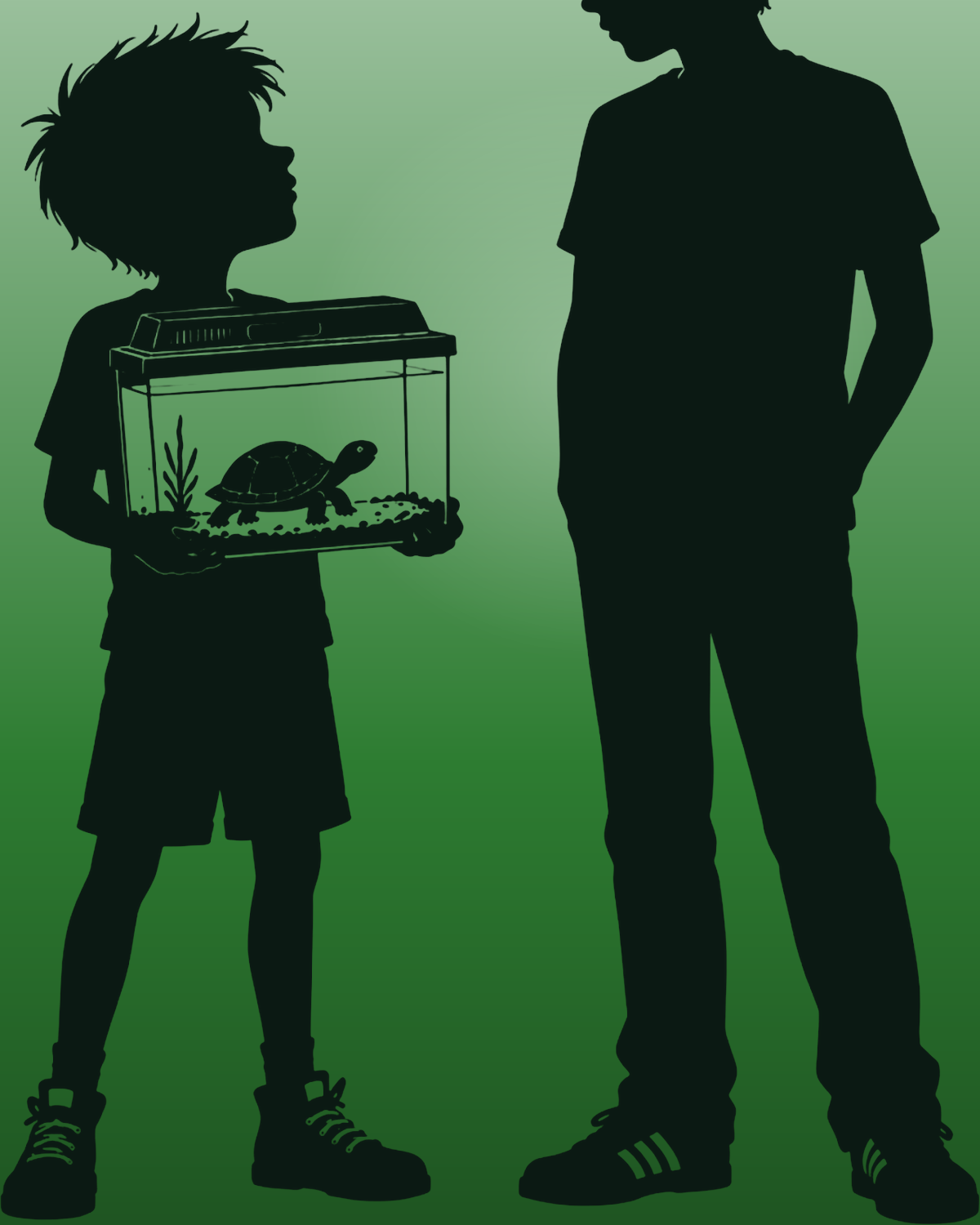
Fudge’s newest craze is birds. He becomes convinced that he, too, can fly, and he goes around flapping his arms and imitating a bird. It would be funny — except that one day at the playground, Fudge climbs to the top of the jungle gym, spreads his ‘wings,’ and actually leaps off, certain he will soar into the sky. Of course, he does not fly. He crashes down and knocks out his two front teeth! There is blood, there is panic, and there is a hurried trip to the dentist. Happily, Fudge is not badly hurt — the lost teeth were only his baby teeth, which he would have lost anyway. But Peter cannot believe it: even a disaster like this somehow turns into one more chance for everyone to fuss over Fudge, while Peter, as usual, is left feeling like a fourth-grade nobody.
What We Will Learn
Focus
What It Means
Cause & Effect
A reckless leap and its painful result
Slapstick Comedy
Physical humor with real consequences
Peter’s Feelings
Overlooked, even when Fudge causes a crisis
Chapter Summary
Pages
Key Events
pp. 46–60
Convinced he can fly, Fudge leaps off the top of the playground jungle gym and knocks out his two front teeth; after blood, panic, and a dentist trip, he is fine (they were baby teeth) — but once again everyone fusses over Fudge
💭 Before You Read · Warm-Up (not scored)
There are no wrong answers here — just think, guess, and talk:
Fudge truly believed he could fly. Why do very young children sometimes try things that are clearly impossible?
Even when Fudge causes the trouble, everyone fusses over him. Why might that make Peter feel like a ‘nobody’?
Predict: Fudge’s wild stunts keep getting more dangerous. What do you think he might do next — and will Dribble the turtle stay safe?
Copyright Notice
This is an independent study guide created by Garden Heights Academy to support reading comprehension and literary analysis. It contains original analysis questions and does not reproduce any text from the novel. Tales of a Fourth Grade Nothing is a work by Judy Blume. This guide is not affiliated with, authorized by, or endorsed by the author or any associated rights holder.
Part 1
Vocabulary
Study 10 key words from pages 46–60, then answer each question.
🧠Knowledge Bank · Two Sets of Teeth
Human Biology · DentitionHuman beings grow teeth twice, which is why a knocked-out tooth in a small child alarms adults much less than you would expect. The first set, about twenty little milk teeth, pushes through the gums during a child’s earliest years. Beginning around age six those teeth loosen and drop out one at a time, and a second, larger set of thirty-two permanent teeth rises to replace them. The replacements are already waiting inside the jaw, where a dentist can see them on an X-ray years before they appear. A permanent tooth, once lost, never returns, and that is the entire reason brushing matters so much. So a preschooler who loses a front tooth on a hard playground surface has really only hurried along a change that was coming.
imitatev.p.46
To copy the way something looks or acts
“Fudge liked to imitate a bird.”
playgroundn.p.50
An outdoor area with equipment for children to play
“They went to the playground.”
leapv.p.52
To jump a long way through the air
“Fudge leaped off the top of the jungle gym.”
injurev.p.53
To hurt or harm the body
“He could have badly injured himself.”
dentistn.p.56
A doctor who cares for teeth
“They rushed Fudge to the dentist.”
permanentadj.p.57
Meant to last forever; not temporary
“Baby teeth are replaced by permanent teeth.”
panicn.p.54
A sudden feeling of great fear
“There was panic when Fudge fell.”
recklessadj.p.52
Careless about danger
“The leap was a reckless thing to do.”
gapn.p.58
An empty space where something is missing
“Fudge now had a gap where his teeth were.”
dramaticadj.p.54
Full of excitement or strong feeling
“It was a dramatic moment at the playground.”
1A ‘playground’ is —Pages 46–60
2To ‘leap’ is to —Pages 46–60
3Fill in each blank with the correct word.Pages 46–60
Word choices:recklesspaniccarefulcalm- some words will not be used
Jumping off with no thought for danger is
When Fudge falls and bleeds, the family feels a wave of .
4To ‘injure’ yourself is to —Pages 46–60
5To be ‘brave’ is to face fear with courage.Pages 46–60
6A ‘dentist’ is —Pages 46–60
7Fill in each blank with the correct word.Pages 46–60
Word choices:permanentdramaticgentlebrief- some words will not be used
Grown-up teeth are meant to be
Fudge makes his fall as loud and ___ as he can .
8A ‘gap’ is —Pages 46–60
9To ‘imitate’ someone is to —Pages 46–60
10Someone ‘clumsy’ moves with perfect grace.Pages 46–60
Part 2
Comprehension
How well do you understand pages 46–60?
🧠Knowledge Bank · Chains of Cause and Effect
Reading Strategy · Causal ChainsPlots are held together by causes. A cause is the reason something happens; an effect is the result; and in a well-built story each effect turns immediately into the cause of whatever comes next. Climbing too high leads to a slip, a slip leads to a fall, a fall leads to a lost tooth, a lost tooth leads to a household in an uproar. Readers who trace those links can explain not only what happened but why, and they seldom lose the thread of a chapter. A useful test is to remove one link and ask whether the rest still stands; if it does not, that link was truly causal and not merely next in line. Ask of every event the question strong readers never stop asking: what made this happen?
1What is Fudge’s new craze?Pages 46–60
2What does Fudge do at the playground?Pages 46–60
3What happens when Fudge jumps?Pages 46–60
4Fudge knocks out his two front teeth.Pages 46–60
5Write the numbers 1–5 in the boxes to show the correct order across Part 4. Number 1 = what happens first.Pages 46–60
The dentist checks Fudge and the family calms down.
Fudge leaps off, trying to fly like a bird.
Fudge becomes crazy about being a bird.
He crashes down and knocks out his two front teeth.
At the playground, Fudge climbs the jungle gym.
6The grown-ups stay fairly calm because the teeth were baby teeth.Pages 46–60
7Why aren’t the grown-ups too worried?Pages 46–60
8Why can’t Fudge really fly?Pages 46–60
9How does Peter feel about himself, as usual?Pages 46–60
10What makes the fall both funny and a little serious?Pages 46–60
Part 3
Literary Elements
Understanding HOW and WHY Judy Blume tells the story across pages 46–60.
🧠Knowledge Bank · The Craft of Slapstick
Comic Craft · Physical ComedySlapstick is the oldest physical comedy there is, named for a hinged wooden stick that clacked loudly when one performer swatted another on stage. Its rule is that the body takes the joke: trips, collisions, tumbles. Two conditions make such a scene funny instead of frightening. The audience has to see the crash approaching, which is why writers build the setup link by careful link, and the victim has to end up unhurt in any lasting way, which is why damage in these stories is always repairable. Break either condition and the laughter dies on the spot. Notice how quickly a comic novel reassures you after a spill, and notice the preparation that let you predict it. Careful preparation plus harmless consequence is what turns a nasty accident into a gag.
📚 Literary Devices in This Part · definitions & examples
Cause and effect is the chain by which one event makes the next happen — Fudge’s belief and leap cause his fall and lost teeth. Slapstick is comedy from physical mishaps (a tumble, a crash). Peter’s first-person reaction — feeling like a ‘nobody’ — deepens the book’s theme.
1The reckless leap (cause) leads to lost teeth (effect) — this link is —Pages 46–60
2Cause and effect links an action to the result it produces.Pages 46–60
3Fill in each blank with the correct word.Pages 46–60
Word choices:cause and effectslapstickcharacterizationsetting- some words will not be used
The reckless leap leading to lost teeth is
Fudge crashing down in a wild, physical way is .
4Fudge’s big physical crash played for laughs is —Pages 46–60
5Slapstick is broad physical comedy, like falls and crashes.Pages 46–60
6Fill in each blank with the correct word.Pages 46–60
Word choices:slapstickcause and effectcharacterizationmood- some words will not be used
Fudge’s wild crash played for laughs is
The leap causing lost teeth is .
7The leap causes the lost teeth — this is an example of —Pages 46–60
8Fudge’s crashing, tumbling fall is a kind of —Pages 46–60
9Fill in each blank with the correct word.Pages 46–60
Word choices:cause and effectslapstickcharacterizationplot- some words will not be used
One action leading to a result is
Broad, physical fall-down comedy is .
10The slapstick fall mainly makes a painful moment feel —Pages 46–60
Part 4
Think Deeper
Four deeper challenges — no single-word recall. Read, weigh the evidence, and reason it through.
🧠Knowledge Bank · The Overshadowed Sibling
Social Psychology · AttentionAttention inside a family behaves like a limited resource, and an emergency concentrates all of it in one place. When a child is bleeding, every adult in the room turns, and the other child stands there suddenly weightless, present but unregistered. Older siblings learn early that complaining at such a moment looks selfish, so the hurt goes underground and gets carried in silence. Psychologists who interview grown adults about their childhoods hear this account constantly, and they note that the pain is rarely about the injured brother at all. It is about discovering that your own needs can be outranked without anybody intending harm. The practical lesson is aimed at the watching adults rather than the child. Find the quiet one at the edge of the crisis, and say his name aloud.
1Claim: “Fudge’s belief that he can fly leads to real danger.” — choose the two details that best prove it.Claim & Evidence
2Shows the danger of Fudge’s stunt, or just a detail of the scene? Tap each item to send it left or right.Sort into two
◄ The danger of the stuntJust a detail ►
3Match each cause to its result. For each cause, pick its result.Cause & Effect
Fudge becomes obsessed with birds→
He flaps his arms everywhere→
He climbs the jungle gym and jumps→
The stunt goes wrong→
4Fill both blanks to complete the reasoning.Build the Argument
Fudge’s flying stunt shows that , which means that .
Part 5
Standardized Test
Key Details & Inference — SAT & TOEFL-style practice
🎯 You already have the skills from the sections above — this is just a fun way to meet real SAT & TOEFL-style questions. Read the passage (the highlighted words are tested below), then answer the questions below. Tap an answer to select it, then tap it again to confirm — you can change your choice until you confirm.
Losing a tooth can feel dramatic, but for a child it is usually a perfectly normal part of growing up, because people grow two complete sets of teeth in a lifetime. The first set — about twenty small baby teeth, also called milk teeth — appears when we are toddlers, pushing through the gums so little children can begin to chew. These teeth are only temporary. Starting at around age six, they begin to loosen and fall out, one at a time, over several years. As each baby tooth drops away, a larger, stronger permanent tooth grows up from underneath to replace it. This second set is meant to last a whole lifetime, which is why looking after them matters so much. The difference is important: if a young child knocks out a baby tooth, a new one is already on the way, so there is little to fear. But if an adult loses a permanent tooth, it will not grow back on its own. This is exactly why we brush every day, avoid too many sweets, and visit a dentist — the tooth doctor — to keep our grown-up teeth strong and healthy for the rest of our lives.
Original passage written for Garden Heights — not a quotation from the novel.
1How many sets of teeth do people grow in a lifetime?TOEFL · Factual Information
2Baby teeth let little children begin to “chew,” meaning to —SAT · Words in Context
3When do baby teeth begin to loosen and fall out?TOEFL · Factual Information
4A permanent tooth grows up to “replace” a baby tooth, meaning to —SAT · Words in Context
5Why is there “little to fear” if a young child loses a baby tooth?TOEFL · Factual Information
6The passage suggests a lost baby tooth is nothing to —SAT · Inference
7What happens if an ADULT loses a permanent tooth?TOEFL · Factual Information
8Why do we “brush” every day and visit a dentist?SAT · Inference
9Keeping teeth “healthy” means keeping them —SAT · Words in Context
10Insert Text (TOEFL). Look at the four squares [1]–[4] in the excerpt below. They show where this sentence could be added: “A lost baby tooth, then, is simply making room for the stronger tooth to come.”
Children grow two sets of teeth in a lifetime. [1] The first set, the baby teeth, falls out over several years. [2] Underneath, permanent teeth are already waiting. [3] These grown-up teeth must last the rest of your life. [4]
Where would the sentence fit best?TOEFL · Insert Text
Part 6 · Optional
Creative Writing
A bonus challenge to practice your English. Take your time and have fun with it.
About This Section
This writing task is optional and is not part of your auto-graded score. The feedback below checks only the basics — length, spelling, and grammar — not whether your ideas are right or wrong. It is meant for classroom discussion and creative practice, so feel free to use your imagination!
Writing Task — Part 4 “A Time I Got Hurt (or Scared)”
Fudge takes a big tumble and loses his teeth. Write about a time you (or someone you know) got a bump, a scrape, or a scare — and how it turned out. Or write about losing a tooth! What happened, and how did you feel? Write at least 40 words.
You can start with: “One time I got a bump or a scare, and…”
0 / 40 words minimum
🗣 Teach It · Just for Fun (optional)
No right or wrong — close the screen and tell someone nearby what Fudge does at the playground and what happens. Can’t find anyone? Tell yourself out loud. The moment you teach it, you truly understand it.

Part 4 Complete!
You finished pages 46–60 of Tales of a Fourth Grade Nothing.
Here are your auto-graded results:
-
points out of 100
Your Writing
Your writing was checked automatically for length, spelling, grammar, and whether you included the key parts of the scene. Scroll back to Part 5 anytime to read your feedback and improve your work.
Independent study guide by Garden Heights Academy. Not affiliated with or endorsed by the author or any rights holders. Contains original analysis only; no text from the novel is reproduced.