New here? Just sign up with Google — your account includes Matilda, our gift book, forever.
What Happens in Part 7
The Fudge trouble spills out in public now. On a family trip to buy shoes, Fudge pitches a colossal tantrum in the shoe store — kicking, howling, and hurling shoes — while horrified shoppers stare. Once again, everything revolves around Fudge, and Peter is left feeling small, embarrassed, and utterly overlooked. This is the heart of the whole book, and the meaning of its title. Peter has a rich life of his own — a best friend named Jimmy Fargo, a favorite rock in the park, his beloved turtle Dribble — yet at home he feels like “a fourth-grade nothing,” a boy nobody truly notices because wild little Fudge soaks up every ounce of the family’s attention. Peter loves his family, but he aches, quietly, to be seen and to matter as much as his impossible little brother does.
What We Will Learn
Focus
What It Means
Theme & the Title
What ‘a fourth-grade nothing’ really means
Peter’s Inner Life
A boy with his own friends and worth
Feeling Overlooked
The quiet ache of being unseen
Chapter Summary
Pages
Key Events
pp. 91–105
Fudge throws a huge public tantrum at the shoe store, and once again everything centers on him; Peter, with his own friends and life, feels like ‘a fourth-grade nothing’ — overlooked at home while Fudge soaks up all the attention
💭 Before You Read · Warm-Up (not scored)
There are no wrong answers here — just think, guess, and talk:
Peter feels like ‘a nothing’ because Fudge gets all the attention. Have you ever felt overlooked, even by people who love you?
Peter actually has a full, good life — friends, a pet, favorite places. Why can a person still feel unseen even when their life is full?
Predict: Peter is aching to be noticed. What kind of event do you think might finally make his parents really see him?
Copyright Notice
This is an independent study guide created by Garden Heights Academy to support reading comprehension and literary analysis. It contains original analysis questions and does not reproduce any text from the novel. Tales of a Fourth Grade Nothing is a work by Judy Blume. This guide is not affiliated with, authorized by, or endorsed by the author or any associated rights holder.
Part 1
Vocabulary
Study 10 key words from pages 91–105, then answer each question.
🧠Knowledge Bank · Errands in a 1970s City
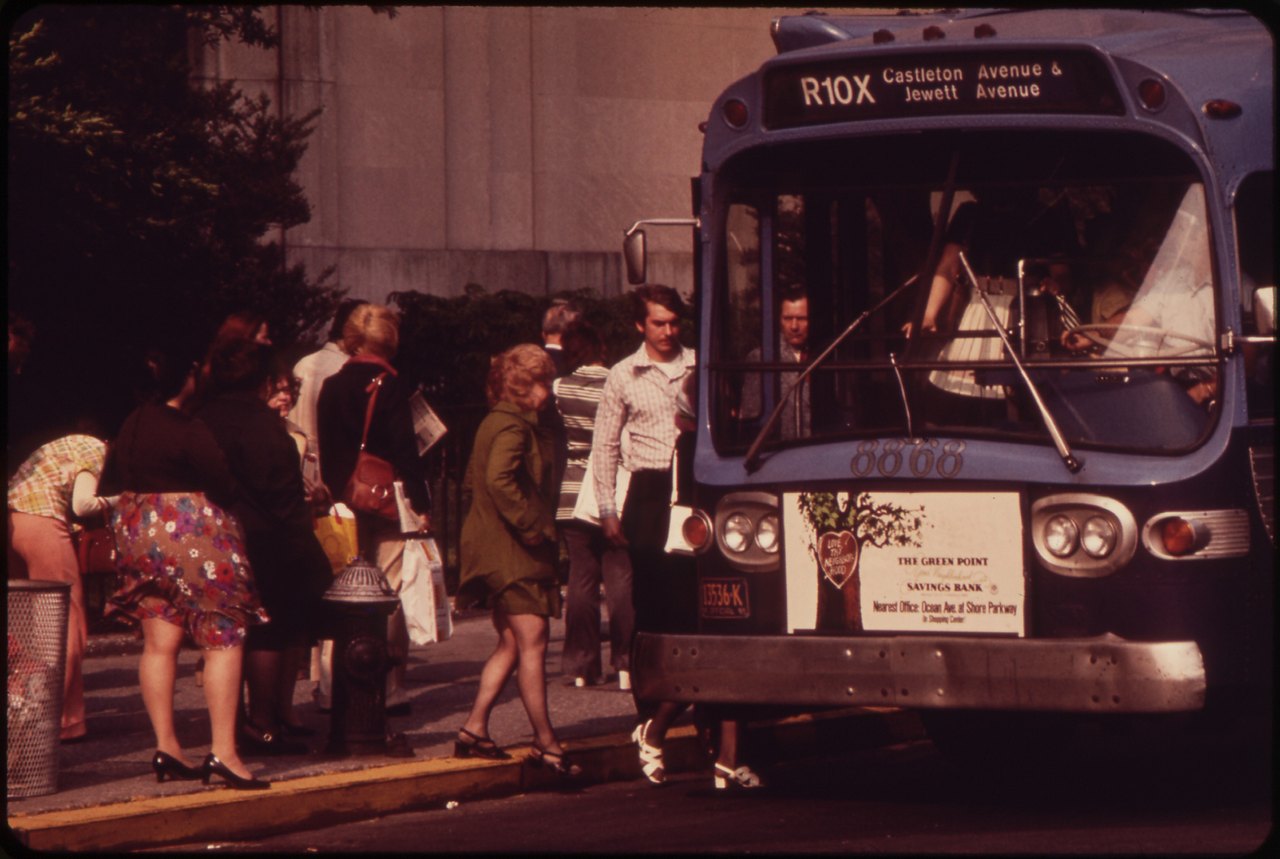
Urban Geography · City ChildhoodGrowing up in a Manhattan apartment building meant a childhood spent largely in public. Families lived stacked in small flats, rode elevators past dozens of neighbors, and passed a doorman who knew everybody’s business on the way out to the street. There were no backyards and usually no car, so ordinary errands were done on foot in the neighborhood: the grocer, the barber, the shoe shop along the avenue. A children’s shoe store of that era measured a foot on a metal sizing plate, then fetched boxes from a back room while the family waited in a row of chairs. Everything happened in front of strangers. That is exactly why a public tantrum in such a place stings so badly, because a crowded city leaves nowhere at all to be unseen.
tantrumn.p.92
A loud fit of bad temper
“Fudge threw a huge tantrum in the store.”
overlookedadj.p.96
Not noticed or given attention
“Peter felt completely overlooked.”
attentionn.p.97
Notice and care given to someone
“Fudge soaked up all the attention.”
noticev.p.98
To become aware of; to pay attention to
“Nobody seemed to notice Peter.”
matterv.p.100
To be important; to count
“Peter wanted to matter, too.”
embarrassedadj.p.93
Feeling awkward or ashamed
“Peter was embarrassed by the scene.”
deservev.p.99
To be worthy of something
“Peter felt he deserved some notice.”
matureadj.p.99
Grown-up and sensible for one’s age
“Peter was more mature than Fudge.”
invisibleadj.p.96
Unable to be seen; unnoticed
“At home Peter felt almost invisible.”
worthn.p.100
The value or importance of someone
“Peter’s real worth was easy to overlook.”
1A ‘tantrum’ is —Pages 91–105
2‘Attention’ is —Pages 91–105
3Fill in each blank with the correct word.Pages 91–105
Word choices:overlookedinvisiblenoticedfamous- some words will not be used
The quiet older child feels ignored and
At home, Peter feels almost .
4To ‘notice’ something is to —Pages 91–105
5Someone ‘capable’ is able to do things well.Pages 91–105
6To feel ‘embarrassed’ is to feel —Pages 91–105
7Fill in each blank with the correct word.Pages 91–105
Word choices:deservematurechildishrandom- some words will not be used
Peter feels he too should ___ some attention
Handling the toddlers shows Peter can be quite .
8Something of ‘worth’ is —Pages 91–105
9To ‘matter’ is to —Pages 91–105
10Something ‘worthless’ has great value.Pages 91–105
Part 2
Comprehension
How well do you understand pages 91–105?
🧠Knowledge Bank · Feeling Against Evidence
Reading Strategy · Weighing EvidenceOne of the most grown-up reading skills is holding two things at once: what a character feels, and what the text actually shows. Feelings in a first-person story are always real, but they are not automatically accurate. A narrator may report that nobody notices him while the very same pages record parents who worry, a friend who seeks him out, and a home that is safe. Neither side cancels the other. The feeling is honest testimony about his inner life, the surrounding details are evidence about his outer one, and the space between them is where the interesting thinking happens. When you find such a gap, resist the urge to declare the character simply wrong. Ask instead what would have to change for feeling and fact to agree.
1Where does Fudge throw a huge tantrum?Pages 91–105
2What does Fudge do during the tantrum?Pages 91–105
3How does Peter feel during the shoe-store scene?Pages 91–105
4Peter feels overlooked at home because Fudge gets the attention.Pages 91–105
5Write the numbers 1–5 in the boxes to show the correct order across Part 7. Number 1 = what happens first.Pages 91–105
Peter quietly aches to be noticed too.
The family goes to the shoe store.
An embarrassed Peter wishes he could disappear.
At home, Peter feels overlooked while Fudge gets the attention.
Fudge throws a huge, screaming tantrum.
6The title ‘a fourth-grade nothing’ names Peter’s feeling of being overlooked.Pages 91–105
7What does the book’s title mean?Pages 91–105
8Who is Peter’s best friend?Pages 91–105
9What does Peter ache for, quietly?Pages 91–105
10Why do younger children like Fudge get so much attention?Pages 91–105
Part 3
Literary Elements
Understanding HOW and WHY Judy Blume tells the story across pages 91–105.
🧠Knowledge Bank · What a Title Promises
Literary Craft · Titles and ThemeA theme is the idea a story keeps circling, and a title is often the shortest possible statement of it. Titles do several jobs together: they label a book on a shelf, they set a tone, and the best of them hide a second meaning that opens only once you have read far enough. Watch especially for a title spoken in a character’s own voice, because then the words carry his judgment rather than the author’s. A phrase that sounds like a shrug on the cover can turn out to be a boy’s private verdict on himself, and it stings only when you reach the chapter that earns it. Pause on any title and ask two questions: who is saying this, and do they mean it? The answers usually hand you the book’s central claim.
📚 Literary Devices in This Part · definitions & examples
A theme is a story’s big idea; here it is the ache of an overlooked older sibling who longs to be seen. The title — ‘a fourth-grade nothing’ — captures that theme in a few words, with quiet irony, because Peter is truly a ‘something.’ His feeling and the truth are not the same.
1The book’s title, ‘a fourth-grade nothing,’ names Peter’s feeling — this reveals the —Pages 91–105
2A theme is a big idea a whole book explores.Pages 91–105
3Fill in each blank with the correct word.Pages 91–105
Word choices:themetitle-revealironysetting- some words will not be used
Feeling like a ‘nothing’ while Fudge shines is the book’s
Fudge, the troublemaker, getting all the notice is .
4That the badly behaved Fudge gets all the attention is —Pages 91–105
5Irony is a gap between what is fair and what actually happens.Pages 91–105
6Fill in each blank with the correct word.Pages 91–105
Word choices:ironythemetitle-revealmood- some words will not be used
The unfair gap of Fudge getting all the notice is
Peter feeling overlooked is the book’s .
7When the title finally fits Peter’s feeling, that is a —Pages 91–105
8Peter’s feeling of being overlooked is the book’s main —Pages 91–105
9Fill in each blank with the correct word.Pages 91–105
Word choices:themeironytitle-revealplot- some words will not be used
Peter’s ache to be noticed is the book’s
Fudge rewarded for being naughty is .
10The title ‘a fourth-grade nothing’ mainly captures Peter’s feeling of being —Pages 91–105
Part 4
Think Deeper
Four deeper challenges — no single-word recall. Read, weigh the evidence, and reason it through.
🧠Knowledge Bank · Fair Is Not Always Equal
Parenting Science · FairnessParents of a toddler and an older child cannot treat them identically, and the reason is practical. A two-year-old cannot dress himself, feed himself, or judge whether a street is safe, so adult eyes stay on him almost constantly, while a capable nine-year-old is trusted to manage. Loud distress also demands a response in a way that steady good behavior never does. From the inside, an older child reads that arithmetic as favoritism, and the feeling is genuine even where the conclusion is mistaken. Family researchers draw a careful line between equal treatment, meaning the same thing for everyone, and fair treatment, meaning whatever each person actually needs. The line only helps if grown-ups explain it aloud, because a child never told why the rules differ will quietly assume he counts for less.
1Claim: “Fudge’s tantrum in the shoe store embarrasses the whole family in public.” — choose the two details that best prove it.Claim & Evidence
2Shows the public embarrassment, or just a detail of the scene? Tap each item to send it left or right.Sort into two
◄ The public embarrassmentJust a detail ►
3Match each cause to its result. For each cause, pick its result.Cause & Effect
The family goes to buy shoes→
Fudge does not get his way→
He kicks, howls, and throws shoes→
The scene is mortifying→
4Fill both blanks to complete the reasoning.Build the Argument
Fudge’s shoe-store tantrum shows that , which means that .
Part 5
Standardized Test
Theme & Inference — SAT & TOEFL-style practice
🎯 You already have the skills from the sections above — this is just a fun way to meet real SAT & TOEFL-style questions. Read the passage (the highlighted words are tested below), then answer the questions below. Tap an answer to select it, then tap it again to confirm — you can change your choice until you confirm.
If you are the oldest child in a family, you may know a certain frustrating feeling: that your younger brother or sister seems to get all the attention. It is a very common complaint — and it turns out there are real reasons behind it. The first is simple need. A baby or toddler cannot feed, dress, wash, or protect itself, so grown-ups must watch a small child almost every moment, while an older child can do much of this alone. The second reason is noise. A toddler’s loud cries and dramatic tantrums demand notice, while an older child’s calm, capable behavior quietly asks for nothing. The unfair result is that the well-behaved older sibling can start to feel invisible, even though they are just as loved. But here is the important truth: needing less attention is not the same as deserving less. Older children are often more responsible, more grown-up, and carry real strengths their parents treasure — strengths that are easy to take for granted precisely because they cause no trouble. The best cure is for the grown-ups to notice out loud: to tell the quiet, capable child, clearly and often, how much they matter.
Original passage written for Garden Heights — not a quotation from the novel.
1What common feeling do many oldest children have?TOEFL · Factual Information
2What is the first real reason the youngest gets more care?TOEFL · Factual Information
3Grown-ups must watch a small child almost every “moment,” meaning —SAT · Words in Context
4The passage suggests a calm older child often asks for —SAT · Inference
5The well-behaved older sibling can start to feel “invisible,” meaning —SAT · Words in Context
6What is the ‘important truth’ the passage states?TOEFL · Factual Information
7The passage mainly argues the quiet older child is —SAT · Rhetorical Purpose
8Why are an older child’s strengths easy to take for granted?SAT · Inference
9The passage says the best cure is for grown-ups to tell the quiet child how much they “matter,” meaning how much they —SAT · Words in Context
10This passage explains Peter because he —TOEFL · Rhetorical Purpose
Part 6 · Optional
Creative Writing
A bonus challenge to practice your English. Take your time and have fun with it.
About This Section
This writing task is optional and is not part of your auto-graded score. The feedback below checks only the basics — length, spelling, and grammar — not whether your ideas are right or wrong. It is meant for classroom discussion and creative practice, so feel free to use your imagination!
Writing Task — Part 7 “A Time I Felt Overlooked”
Peter feels like ‘a nothing’ when Fudge gets all the attention. Write about a time you felt overlooked or unnoticed — and what you wished someone had said or done. Or write about a way you could help someone else feel noticed and valued. Write at least 40 words.
You can start with: “One time I wished someone would really notice me was…”
0 / 40 words minimum
🗣 Teach It · Just for Fun (optional)
No right or wrong — close the screen and tell someone nearby what ‘a fourth-grade nothing’ means and why Peter feels that way. Can’t find anyone? Tell yourself out loud. The moment you teach it, you truly understand it.

Part 7 Complete!
You finished pages 91–105 of Tales of a Fourth Grade Nothing.
Here are your auto-graded results:
-
points out of 100
Your Writing
Your writing was checked automatically for length, spelling, grammar, and whether you included the key parts of the scene. Scroll back to Part 5 anytime to read your feedback and improve your work.
Independent study guide by Garden Heights Academy. Not affiliated with or endorsed by the author or any rights holders. Contains original analysis only; no text from the novel is reproduced.