New here? Just sign up with Google — your account includes Matilda, our gift book, forever.
Bridge to Terabithia · Garden Heights Academy
Part 1
for Bridge to Terabithia · Part 1 · Chapters 1–2
a novel by Katherine Paterson
35 min5 Parts
This workbook is built on a solid pedagogical foundation, effectively integrating content and language learning based on the CLIL framework (Content and Language Integrated Learning), elevated by our unique 5th C — Connection — and an integrated Standardized Test section that weaves every SAT & TOEFL question type right into the novel, so learners build real test skills easily, naturally, and with fun.
What Happens in Part 1
Ten-year-old Jess Aarons lives on a small, struggling farm in rural Virginia, the only boy among four sisters. All summer he has trained in secret, determined to become the fastest runner in the fifth grade. Jess loves to draw, but his hard-working father and tired mother rarely seem to notice him. Then a new family moves into the old Perkins place next door, and Jess meets Leslie Burke — a clever, fearless girl who wears whatever she likes, has no television, and is about to change Jess’s lonely life completely.
What We Will Learn
Focus
What It Means
Character
Jess Aarons, his family, and the new girl Leslie
Setting
A poor farm in rural Virginia
Theme
Loneliness and the wish to belong
Chapter Summary
Chapter
Key Events
Ch.1
Jess trains all summer to be the fastest runner in fifth grade; we meet his family and his love of drawing
Ch.2
A new neighbor, Leslie Burke, moves in next door — clever, confident, and unlike anyone Jess knows
💭 Before You Read · Warm-Up (not scored)
There are no wrong answers here — just think, guess, and talk:
Have you ever practiced something in secret — a sport, a song, a skill? Why in secret?
A new student arrives who is different from everyone. Honestly: what do kids notice first, and how do they react?
The title promises a bridge. Predict: what two things might this bridge connect?
Copyright Notice
This is an independent study guide created by Garden Heights Academy to support reading comprehension and literary analysis. It contains original analysis questions and does not reproduce any text from the novel. Bridge to Terabithia is a work by Katherine Paterson. This guide is not affiliated with, authorized by, or endorsed by the author or any associated rights holders. Students should read the original book, available from libraries and booksellers.
Part 1
Vocabulary
Study 10 key words from Chapters 1–2, then answer each question.
🧠Knowledge Bank · Art as Escape and Expression
Lexicology · Art as Escape and Expression
Jess loves to draw fantastical animals, but he hides it because his father thinks drawing is ‘not for boys.’ For many people, art is a way to express feelings they cannot put into words and to escape a hard life for a while. Jess’s secret talent is a key part of who he is — and a gift Leslie will help him finally believe in. Jess runs to be noticed and draws because he cannot help it. Art educators find that drawing lets children work through feelings they have no words for yet — exactly what Jess’s secret sketchbook does for a boy who feels unseen in a crowded, struggling family. Character study centers on Jess Aarons, his family, and the new girl Leslie. Notice that nobody in that house ever asks to see the sketchbook; Jess guards it because it holds the one part of himself the family has no room for, which is what makes showing it to Leslie an act of trust.
determinedadj.Ch.1
Firmly decided to do something
“Jess was determined to win the race.”
choren.Ch.1
A regular task or duty
“He milked the cow as his morning chore.”
scrawnyadj.Ch.1
Thin and bony
“Jess was small and scrawny.”
admirev.Ch.2
To respect and look up to
“The boys would admire the fastest runner.”
confidentadj.Ch.2
Sure of oneself
“Leslie was calm and confident.”
self-consciousadj.Ch.1
Uneasily aware of yourself; shy
“Jess felt self-conscious about his drawing.”
obstinateadj.Ch.1
Stubborn; unwilling to change
“His little sister could be obstinate.”
sketchv.Ch.1
To draw
“Jess loved to sketch strange creatures.”
envyn.Ch.2
Wanting what another person has
“Jess felt a flash of envy.”
reputationn.Ch.1
What people generally think of you
“He wanted a reputation as the fastest.”
ⓘ The vocabulary words in this list are selected to help you understand and complete this workbook. Some may not appear verbatim in the original novel.
🧠Knowledge Bank question
1According to the Knowledge Bank, Jess guards his sketchbook because ___.Ch.1
2True or False: A “chore” is a fun game you play after school.Ch.1
3Thin and bony in build means ___.Ch.1
4True or False: To “admire” someone is to look down on them.Ch.2
5Fill in each blank with the correct word.Ch.1
Word choices:determinedchorescrawnysketch- some words will not be used
Each morning Jess did his ; he was to win and loved to .
6True or False: A “confident” person is sure of themselves.Ch.2
7Stubborn and unwilling to change means ___.Ch.1
8True or False: To be “self-conscious” is to feel uneasily aware of yourself.Ch.1
9Fill in the blanks with the correct words.Ch.1–2
Word choices:admireenvyreputationconfident- some words will not be used
Jess wanted a as the fastest runner, something the other boys would .
10Wanting what someone else has is ___.Ch.2
Part 2
Comprehension
How well do you understand Chapters 1–2?
🧠Knowledge Bank · Two Lonely Kids
Narrative Logic · Two Lonely Kids
These chapters set up the friendship at the heart of the book. The narrative reveals how Jess longs to be noticed and how Leslie does not fit the mold of Lark Creek. The episode emphasizes the small details — Jess’s secret running and drawing, Leslie’s lack of a TV — that show why these two outsiders might find each other. Chapter 1 covers Jess trains all summer to be the fastest runner in fifth grade; we meet his family and his love of drawing. Chapter 2 covers A new neighbor, Leslie Burke, moves in next door — clever, confident, and unlike anyone Jess knows. Ten-year-old Jess Aarons lives on a small, struggling farm in rural Virginia, the only boy among four sisters. All summer he has trained in secret, determined to become the fastest runner in the fifth grade.
🧠Knowledge Bank question
1The Knowledge Bank explains that small details like Jess's secret running and Leslie's lack of a TV matter because they ___.Ch.1
2What does Jess secretly love to do?Ch.1
3What is Jess’s family like?Ch.1
4True or False: Jess’s parents often praise his drawing.Ch.1
5Write the numbers 1–5 in the boxes to show the correct order of events in Part 1.Ch.1–2
Jess meets Leslie Burke, the new girl next door.
A new family moves into the old Perkins place.
He notices how different and confident Leslie is.
Jess trains all summer to become the fastest runner.
He does farm chores and secretly loves to draw.
6True or False: Leslie’s family has just moved in next door.Ch.2
7How is Leslie different from the other children?Ch.2
8Where does the story take place?Ch.1
9True or False: Jess feels a bit lonely and unnoticed at the start.Ch.1
10Fill in the blanks.Ch.1–2
Word choices:Leslierunnerqueenteacher- some words will not be used
Jess wants to be the fastest , and then meets his new neighbor, .
Part 3
Literary Elements
Understanding HOW and WHY Katherine Paterson creates certain feelings across Chapters 1–2.
🧠Knowledge Bank · Showing Character
Literary Technique · Showing Character
Paterson rarely just tells us ‘Jess is sensitive’ or ‘Leslie is brave.’ Instead she shows us through their actions and choices — Jess running in secret, Leslie arriving with no television and her own style. This is called indirectcharacterization, and it lets readers get to know people the way we do in real life. Geography — 1970s rural Virginia: the Aarons scrape by on a small Virginia farm where money is short and chores come before dreams. Sport — running for respect: Jess trains all summer to be the fastest boy in fifth grade, hoping a win might finally earn him notice — play and sport really are how many children seek status. Jess loves to draw, but his hard-working father and tired mother rarely seem to notice him. Paterson never states that Jess is lonely. She shows a boy running at dawn for a title nobody at home will mention, and leaves the reader to draw the conclusion, which is the whole difference between telling and showing.
Visual AidThe same fact, two ways to deliver it
Diagram for the Knowledge Bank on showing character. It puts the sentence a writer could have written beside what Paterson writes instead — a boy running at dawn for a title nobody at home will mention — and marks where the conclusion is drawn in each case. It does not claim one method is always better. Notice that only the right-hand path passes through the reader; that is what indirect characterization asks of you.
Telling versus showing as described in the Knowledge Bank. Drawn for Garden Heights Academy.
📚 Literary Devices in This Part · definitions & examples
We learn about Jess and Leslie through their actions, not direct labels.Jess is the protagonist — the main character we follow.The setting is a poor farming area in rural Virginia.
The questions below are mixed — not grouped by device. Decide which device each one is about.
🧠Knowledge Bank question
1According to the Knowledge Bank, Paterson shows that Jess is lonely by ___.Ch.1–2
2The protagonist is the main character the story follows.Ch.1–2
3Fill in each blank with the correct word.Ch.1–2
Word choices:characterizationprotagonistsettingplot- some words will not be used
Learning about Jess through what he does is
Jess, the main character we follow, is the .
4Jess, the main character we follow, is the story’s —Ch.1–2
5The setting is the time and place where a story happens.Ch.1–2
6Fill in each blank with the correct word.Ch.1–2
Word choices:settingprotagonistcharacterizationmood- some words will not be used
The poor rural farming area is the story’s
Jess, whom we root for, is the .
7The poor farming area in rural Virginia is the story’s —Ch.1–2
8Showing Leslie’s boldness through what she does is —Ch.1–2
9Fill in each blank with the correct word.Ch.1–2
Word choices:protagonistsettingcharacterizationplot- some words will not be used
The rural farm world is the story’s
Revealing character through action is .
10Paterson revealing character through action rather than labels mainly makes them feel —Ch.1–2
Part 4
Think Deeper
Four deeper challenges — no single-word recall. Read, weigh the evidence, and reason it through.
🧠Knowledge Bank · What Makes Someone an Outsider
Ethical Reasoning · What Makes Someone an Outsider
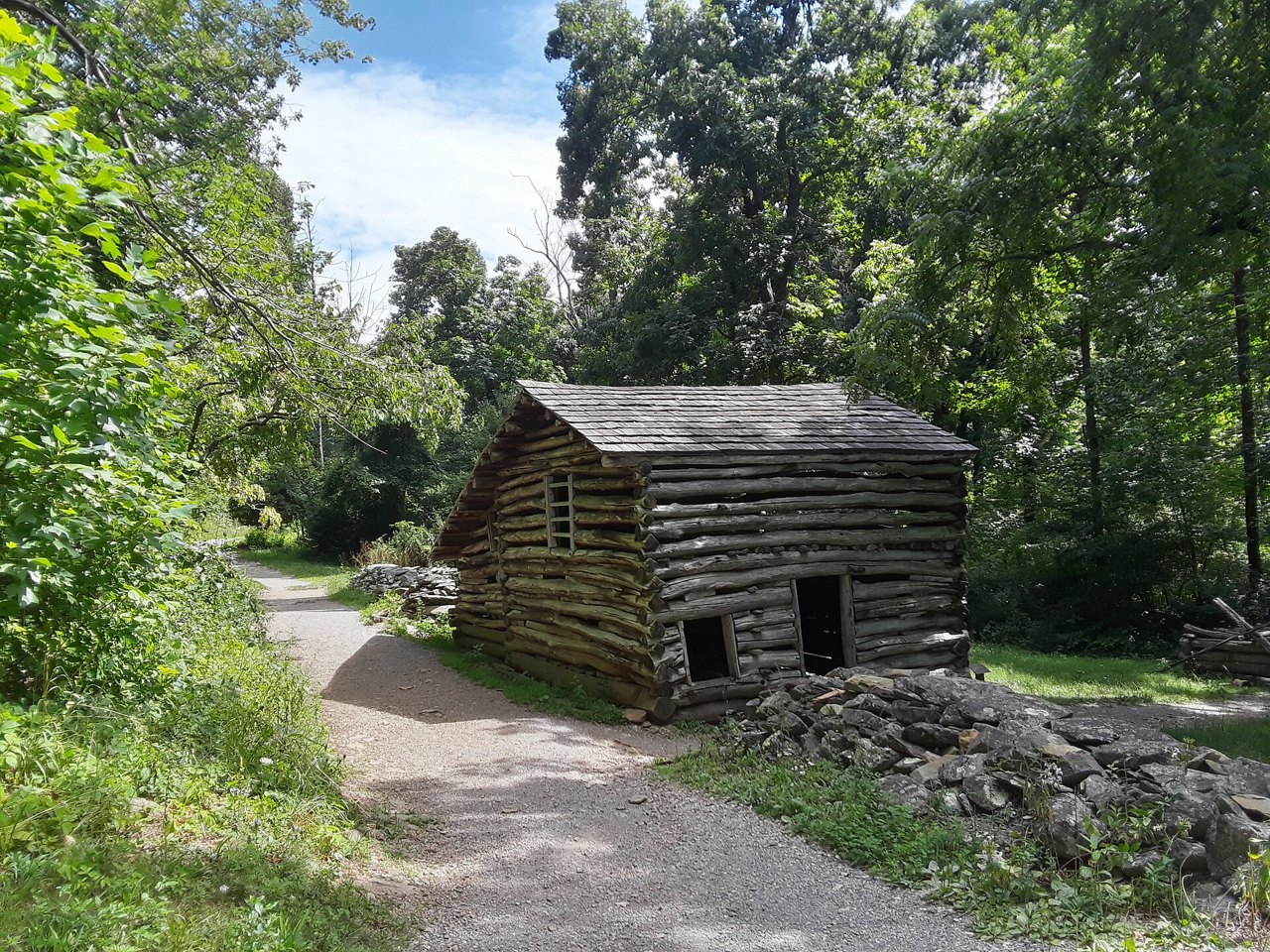
Both Jess (a sensitive boy who loves to draw) and Leslie (a girl who does not act like the others) are outsiders who do not quite fit in. The central issue is what makes a person an outsider, and how it feels to be different. Understanding this will show you why their friendship matters so much. Jess’s family scrape a living from a small farm in rural Virginia in the 1970s. Money is tight, so the children do daily chores like milking the cow before school, and new clothes or treats are rare. As the only boy among sisters, Jess is expected to work hard and ‘act like a man.’ Knowing this hard, plain world helps us see why Jess feels lonely — and why Leslie seems so wonderfully different. Poverty here is never a moral lesson, only the weather Jess happens to live inside.
Visual AidA hard, plain world
Photograph of an old log farm building preserved at the Humpback Rocks farm museum on the Blue Ridge Parkway in Virginia. The Knowledge Bank explains that Jess’s family scrape a living from a small farm in rural Virginia, where chores come before school and new clothes are rare. This building is far older than the 1970s and belongs to a museum, not to the Aarons; it shows the kind of country the novel is set in, not the novel’s farm. Notice how much of it was made by hand from what stood nearby — the same make-do the Knowledge Bank calls plain, not shameful.
Log farm building, Humpback Rocks Visitor Center, Blue Ridge Parkway, Virginia. Source: Wikimedia Commons, CC0.
1Claim: “Jess feels overlooked at home and longs to stand out.” — choose the two details that best prove it.Claim & Evidence
2Shows Jess’s inner hopes, or just a fact of his life? Tap each item to sort it — tap again to switch sides. You can keep tapping to change your answer.Sort into two
◄ Jess’s inner hopesJust a fact ►
3Match each cause to its result. For each cause, pick its result.Cause & Effect
Jess loves to draw but hides it→
Jess wants to be seen as special→
Jess feels lost among his sisters→
A new family moves in next door→
🧠Knowledge Bank question
4Fill both blanks to complete the reasoning.Build the Argument
The Knowledge Bank says poverty in this book is only the weather Jess happens to live inside because , which shows that .
Part 5
Standardized Test
Vocabulary in Context & Main Idea — SAT & TOEFL-style practice
Read the passage — the highlighted words are tested — then answer. Tap an answer, then tap it again to confirm.
SATInference — a conclusion the passage implies
SATWords in Context — a word's meaning in this passage
SATRhetorical Purpose — why the author put a sentence there
SATCentral Ideas — the passage's main point
TOEFLFactual Information — a fact stated in the passage
The Science of Endurance Running
A cheetah’s reputation is deserved: no animal on Earth can beat it in a sprint — least of all a human. But stretch the race to many kilometers, and something surprising happens: the human catches up. Our species is built for endurance: long legs, springy tendons, and — our secret weapon — sweat. Most animals cool themselves by panting, and they must stop running to do it. Humans sweat as they move, shedding heat at a run. So the four-legged sprinter overheats and slows, while the two-legged runner keeps a steady pace, kilometer after kilometer, long after the race was supposed to be lost.
Scientists believe our ancestors used this advantage long before bows or nets were invented: they simply followed animals through the midday heat, patiently, until the animals had to stop. The method is called persistence hunting, and it was still practiced within living memory in the Kalahari Desert. Modern runners inherit that ancient gift, and training does the rest. Every steady run teaches the heart to pump more blood and the legs to waste less energy — which is why a determined beginner, even a scrawny one training quietly all summer, can astonish everyone by autumn.
Original passage written for Garden Heights — not a quotation from the novel.
1According to the passage, in a short sprint a human —TOEFL · Factual Information
2The passage suggests that, over a long chase, humans beat animals mainly through —SAT · Inference
3“Endurance” means —SAT · Words in Context
4What is the human “secret weapon” for staying cool?TOEFL · Factual Information
5In the passage, a cheetah's reputation is ___.SAT · Words in Context
6According to the passage, what is persistence hunting?TOEFL · Factual Information
7The passage mainly presents human bodies as built for —SAT · Rhetorical Purpose
8In the passage, a scrawny beginner is one who is ___.SAT · Words in Context
9Why must a four-legged sprinter slow down in a long, hot chase?SAT · Inference
10Which sentence best states the main idea of the passage?SAT · Central Ideas
Part 6 · Optional
Creative Writing
A bonus challenge to practice your English. Take your time and have fun with it.
About This Section
This writing task is optional and is not part of your auto-graded score. The feedback below checks only the basics — length, spelling, and grammar — not whether your ideas are right or wrong. It is meant for classroom discussion and creative practice, so feel free to use your imagination!
Writing Task — Part 1 “The New Kid”
Jess’s life changes when a very different new kid moves in next door. Write about meeting someone new who was different from everyone you knew, or imagine a new neighbor arriving. What made them different, and how did it change things? Write at least 40 words.
You can start with: “When someone completely different came into my life…”
0 / 40 words minimum
🗣 Teach It · Just for Fun (optional)
No right or wrong — close the screen and tell someone nearby what happened in this part. Can’t find anyone? Tell yourself out loud. The moment you teach it, you truly understand it.
Part 1 Complete!
You finished Chapters 1–2 of Bridge to Terabithia.
Here are your auto-graded results:
-
points out of 100
Teach it to someone
The best last step is to teach it. In your own words, explain what happened — retell a favorite scene, teach a character’s big choice, or sum up the main idea for a parent, friend, or classmate. When you can teach it clearly, you truly own it.
Independent study guide by Garden Heights Academy. Not affiliated with or endorsed by the author or any rights holders. Contains original analysis only; no text from the novel is reproduced.
SAT® is a registered trademark of College Board, which is not affiliated with, and does not endorse, these materials. TOEFL® is a registered trademark of ETS. These materials are not endorsed or approved by ETS. Garden Heights is an independent provider of test-style reading practice.