New here? Just sign up with Google — your account includes Matilda, our gift book, forever.
What Happens in Part 8
Before the winter holiday, a letter arrives for Room 13. It is from Wanda. She wishes the class a Merry Christmas and says they may keep her drawings — she wants Peggy to have one and Maddie to have another. The two girls take their drawings home. And then Maddie sees it: the girl in her drawing has her own face. Wanda had drawn Peggy’s face into another. All along, the girl they teased had been drawing them — not to mock, but because she liked them and wished to be their friend. The kindness of it takes Maddie’s breath away. Wanda, who owed them nothing, has given them a gift and, in her quiet way, forgiven them. Maddie hangs the drawing where she can see it every day, and she makes her promise firm and final: she will never again be a silent bystander. From now on, she will be the one who stands up and speaks.
What We Will Learn
Focus
What It Means
Resolution
The ending that ties the story’s threads together
Motif
An image that returns through the book — the hundred dresses
Theme
The whole book’s message — kindness, courage, and forgiveness
Chapter Summary
Chapter
Key Events
Ch. 7 — The Letter to Room 13
Wanda writes to the class, wishing them a Merry Christmas and giving her drawings to Peggy and Maddie. The girls discover the faces in the drawings are their own — Wanda drew them because she liked them. Moved by her kindness and forgiveness, Maddie vows for good to be an upstander, never again a silent bystander.
💭 Before You Read · Warm-Up (not scored)
There are no wrong answers here — just think, guess, and talk:
Why might it be even more powerful that Wanda gives a gift instead of getting revenge?
Maddie decides to become someone who always speaks up. What is the difference between a bystander and an upstander?
Looking back at the whole story, what do you think is the most important thing it wants us to learn?
Copyright Notice
This is an independent study guide created by Garden Heights Academy to support reading comprehension and literary analysis. It contains original analysis questions and does not reproduce any text from the novel. The Hundred Dresses is a work by Eleanor Estes. This guide is not affiliated with, authorized by, or endorsed by the author or any associated rights holder.
Part 1
Vocabulary
Study 10 key words from Chapter 7, then answer each question.
🧠Knowledge Bank · From Bystander to Upstander
Psychology · The UpstanderAnti-bullying programs built over the last thirty years put their effort in an unexpected place: not the child causing harm and not the target, but everybody else. Their word for an onlooker who acts is upstander, and the training is deliberately unheroic. Standing beside the person, refusing to laugh, saying that something is not funny, telling an adult afterward, inviting someone to sit down — those are the moves, and evaluations find that classrooms taught them report measurably less cruelty. The reason is arithmetic. Onlookers outnumber everyone, so whichever way they lean sets a room’s standard.
forgivev.Ch.7
To stop being angry at someone for a wrong
“Wanda seemed to forgive the girls.”
generousadj.Ch.7
Glad to give and to share
“It was a generous, kind gift.”
treasurev.Ch.7
To value something greatly
“Maddie would treasure the drawing.”
gratefuladj.Ch.7
Thankful
“She felt grateful and ashamed at once.”
giftn.Ch.7
Something given freely, with love
“The drawings were a gift.”
weepv.Ch.7
To cry
“Maddie almost wept at the kindness.”
kindnessn.Ch.7
The quality of being kind
“Wanda answered cruelty with kindness.”
cherishv.Ch.7
To hold something dear and care for it
“She would cherish it always.”
gesturen.Ch.7
An act that shows a feeling
“The gift was a loving gesture.”
preciousadj.Ch.7
Very valuable and dear
“The drawing became precious to her.”
1To ‘forgive’ someone is to —Ch.7
2A ‘generous’ person is one who is —Ch.7
3Fill in each blank with the correct word.Ch. 7
Word choices:treasuregratefulgiftweep- some words will not be used
To value something greatly is to it.
To feel thankful is to feel .
4A ‘gift’ is —Ch.7
5‘Kindness’ is the quality of being kind.Ch.7
6To ‘cherish’ something is to —Ch.7
7Fill in each blank with the correct word.Ch. 7
Word choices:forgivepreciousgestureweep- some words will not be used
An act that shows a feeling is a .
Something very valuable and dear is .
8To ‘weep’ is to —Ch.7
9To be ‘grateful’ is to be —Ch.7
10Something ‘precious’ is worthless and easy to throw away.Ch.7
Part 2
Comprehension
How well do you understand Chapter 7?
📚Knowledge Bank · Reading an Ending
Reading Skill · How Endings WorkAn ending has a job beyond stopping. It answers the questions a book has been asking and shows what the events finally made of the people inside them. A useful practice on the last pages is to set the opening beside the close and list what differs: the same classroom, the same desk, a wholly different reader. Ask which promises the author kept and which she deliberately left open, since a good ending may withhold complete closure and leave an ache. Ask what a character has chosen to carry forward, because that is the piece handed to you. Then name, in one plain sentence, what the story wants you to remember.
1Who sends a letter to Room 13?Ch.7
2What does Wanda wish the class in her letter?Ch.7
3What does Wanda give to Peggy and Maddie?Ch.7
4What surprising thing do the girls notice in their drawings?Ch.7
5Write the numbers 1–5 in the boxes to show the order of events in Chapter 7. Number 1 = what happens first.Ch. 7
She wishes the whole class a Merry Christmas.
She gives her drawings to Peggy and Maddie.
The girls see their own faces in the drawings.
A letter from Wanda arrives at Room 13.
Maddie vows for good to be an upstander.
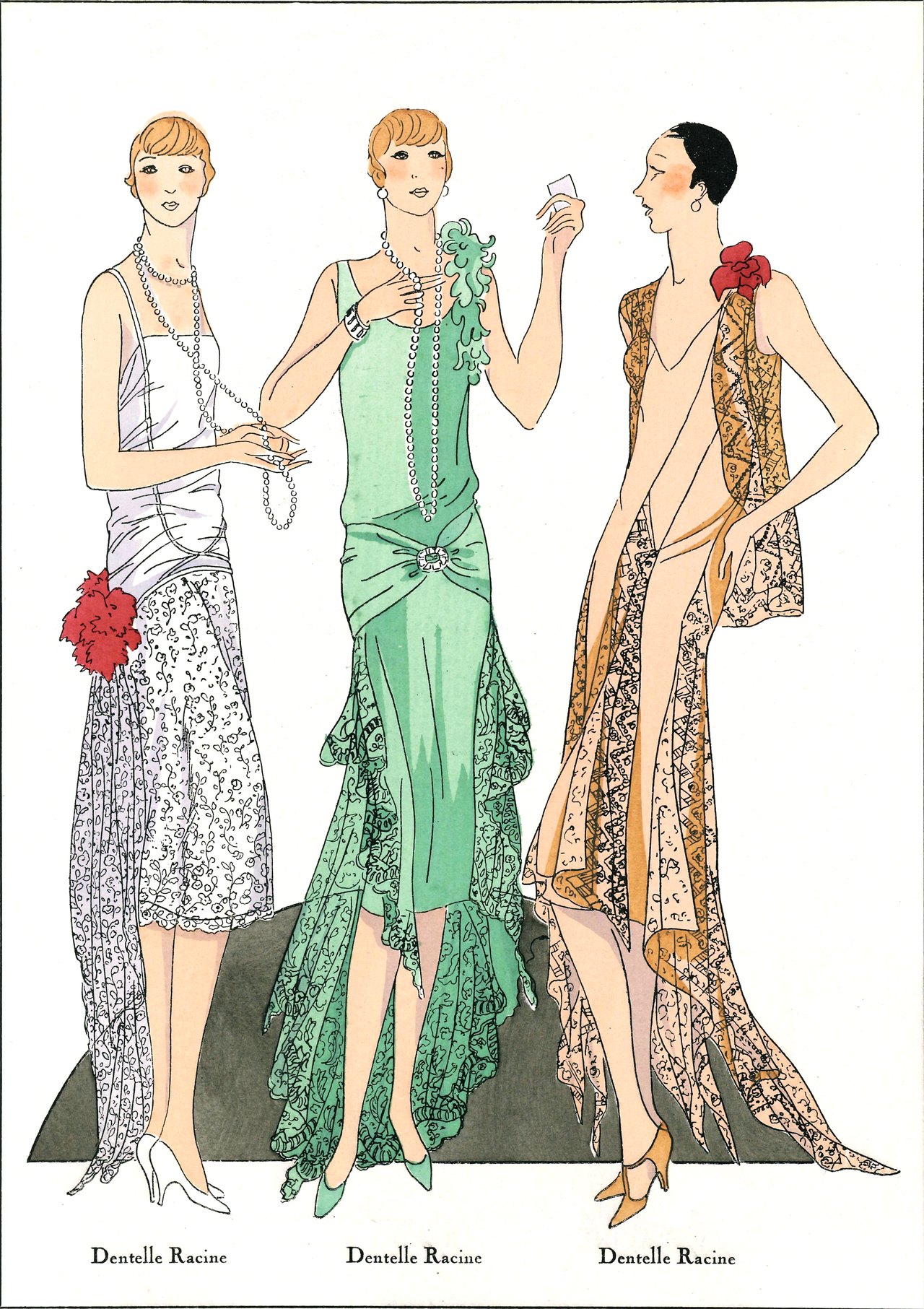
6Why did Wanda draw Peggy and Maddie into her dresses?Ch.7
7How does Maddie feel about Wanda’s gift?Ch.7
8What does Maddie do with her drawing?Ch.7
9Wanda takes revenge on the girls for teasing her.Ch.7
10By the end, Maddie promises to always speak up against unkindness.Ch.7
Part 3
Literary Elements
Understanding HOW and WHY Eleanor Estes ends the story in Chapter 7.
🎭Knowledge Bank · A Motif Comes Back Changed
Literary Craft · Motif and ResolutionA motif is an image an author sends through a book on purpose, letting it collect meaning on every return. The dresses are exactly that: first a boast, then a taunt, then a daily ritual, and at last something none of those earlier appearances could have predicted. Repetition is what makes a final appearance land, because a reader compares it against every earlier one without noticing the comparison. The resolution, meanwhile, ties loose threads and shows what the changes cost and gave. When closing pages turn a recurring image inside out, a whole story clicks into one clear meaning.
📚 Literary Devices in This Part · definitions & examples
Resolution is the ending where the story’s loose threads are tied up (Wanda’s letter, the gift, Maddie’s vow). A motif is an image or idea that returns through a story to build meaning (the ‘hundred dresses,’ first a taunt, at last a gift). Theme is the deep message the whole book leaves us (be kind, be brave, forgive).
1The ending, where Wanda’s letter ties the story’s threads together, is the —Ch.7
2A motif is an image or idea that returns again and again through a story.Ch.7
3Fill in each blank with the correct word.Ch. 7
Word choices:resolutionmotifrhymeindex- some words will not be used
The ending that ties up the story’s threads is the .
The ‘hundred dresses,’ returning through the book, is a .
4The deep message the whole book leaves us — be kind, be brave, forgive — is its —Ch.7
5A resolution leaves every question wide open and ties up nothing at all.Ch.7
6Fill in the blank with the correct word.Ch. 7
Word choices:motifrhymesetting- some words will not be used
The dresses that appear again and again, gathering meaning, are a .
7How does the ‘hundred dresses’ motif change by the end?Ch.7
8Ending with a gift and a vow rather than a punishment mainly shapes the book’s —Ch.7
9Fill in the blank with the correct word.Ch. 7
Word choices:resolutionrhymeplot- some words will not be used
The final part, where the story settles and closes, is the .
10The best statement of the book’s theme is —Ch.7
Part 4
Think Deeper
Four deeper challenges — no single-word recall. Read, weigh the evidence, and reason it through.
💭Knowledge Bank · Forgiveness as an Action
Ethics · Forgiveness and GraceForgiveness is often described as a feeling that eventually shows up. Philosophers and counselors describe it instead as a decision: giving up a claim you are entitled to press. Nobody is owed it, which is why such a gift is sometimes called grace — good returned for harm by someone under no obligation whatever. Research on people who forgive finds the release travels both directions, easing the giver at least as much as the receiver. Notice too that mercy asks more of a person than punishment does, since being let off the hook leaves you free to become better and no longer able to pretend.
1Claim: “Wanda’s forgiving letter changes how Maddie will act forever.” — choose the two details that best prove it.Claim & Evidence
2Shows the grace of the ending and Maddie’s change, or just a detail? Tap each item to send it left or right.Sort into two
◄ Grace and Maddie’s changeJust a detail ►
3Match each cause to its result. For each cause, pick its result.Cause & Effect
Wanda writes to Room 13→
She gives away her drawings→
Her kindness humbles Maddie→
Maddie is changed→
4Fill both blanks to complete the reasoning.Build the Argument
Wanda giving the girls her drawings shows the book’s idea that , which means that .
Part 5
Standardized Test
From Bystander to Upstander — SAT & TOEFL-style practice
🎯 You already have the skills from the sections above — this is just a fun way to meet real SAT & TOEFL-style questions. Read the passage (the highlighted words are tested below), then answer the questions below. Tap an answer to select it, then tap it again to confirm — you can change your choice until you confirm.
In any unkind moment, the people watching hold a quiet power. A bystander stays silent and lets the harm go on; an upstander chooses to speak or step in. The difference between them is not courage alone — both may feel afraid — but the decision to act. What often turns a bystander into an upstander is empathy: once you truly feel another person’s hurt, silence grows harder to bear. Kindness, it turns out, can be even more powerful than revenge. Meeting cruelty with generosity can disarm it and change hearts on both sides. And guilt, that heavy feeling, need not be wasted; it can be transformed into a promise to do better. The bravest people are not those who never feel fear or never make mistakes, but those who turn what they have learned into kinder action.
Original passage written for Garden Heights — not a quotation from the novel.
1According to the passage, what does an ‘upstander’ do?TOEFL · Factual Information
2An “upstander” is best described as someone who —SAT · Words in Context
3What most often turns a bystander into an upstander?TOEFL · Factual Information
4What can meeting cruelty with “generosity” do?TOEFL · Factual Information
5“Generosity” in the passage means being —SAT · Words in Context
6What does the passage say can happen to guilt?TOEFL · Factual Information
7To be “transformed” means to be —SAT · Words in Context
8Who does the passage call the bravest people?TOEFL · Factual Information
9What is the passage mainly about?TOEFL · Rhetorical Purpose
10Insert Text (TOEFL). Look at the four squares [1]–[4] in the excerpt below. They show where this sentence could be added: “In that moment Maddie stopped being a bystander and quietly became an upstander — one who acts.”
It is not enough only to feel sorry for a wrong. [1] Real change shows itself in what a person chooses to do next. [2] Maddie could not undo the hurt done to Wanda, but she could decide never to allow such cruelty again. [3] She promised to speak up from now on, even when it was hard and even when it cost her. [4]
Where would the sentence fit best?TOEFL · Insert Text
Part 6 · Optional
Creative Writing
A bonus challenge to practice your English. Take your time and have fun with it.
About This Section
This writing task is optional and is not part of your auto-graded score. The feedback below checks only the basics — length, spelling, and grammar — not whether your ideas are right or wrong. It is meant for classroom discussion and creative practice, so feel free to use your imagination!
Writing Task — Part 8 “A Letter Back to Wanda”
The book ends with a letter from Wanda. Now write a letter back to her, as Maddie or as yourself. Thank her for her gift, say what you have learned, and tell her what you promise to do differently from now on. Write at least 40 words.
You can start with: “Dear Wanda, thank you for the drawing. I want you to know…”
0 / 40 words minimum
🗣 Teach It · Just for Fun (optional)
No right or wrong — close the screen and tell someone nearby how the book ends, and what it means to be an ‘upstander’ instead of a bystander. Can’t find anyone? Tell yourself out loud. The moment you teach it, you truly understand it.

The Hundred Dresses — Complete!
You finished Chapter 7 and the whole book of The Hundred Dresses.
Here are your auto-graded results:
-
points out of 100
Your Writing
Your writing was checked automatically for length, spelling, and grammar. Scroll back to Part 6 anytime to read your feedback and improve your work.
Independent study guide by Garden Heights Academy. Not affiliated with or endorsed by the author or any rights holders. Contains original analysis only; no text from the novel is reproduced.