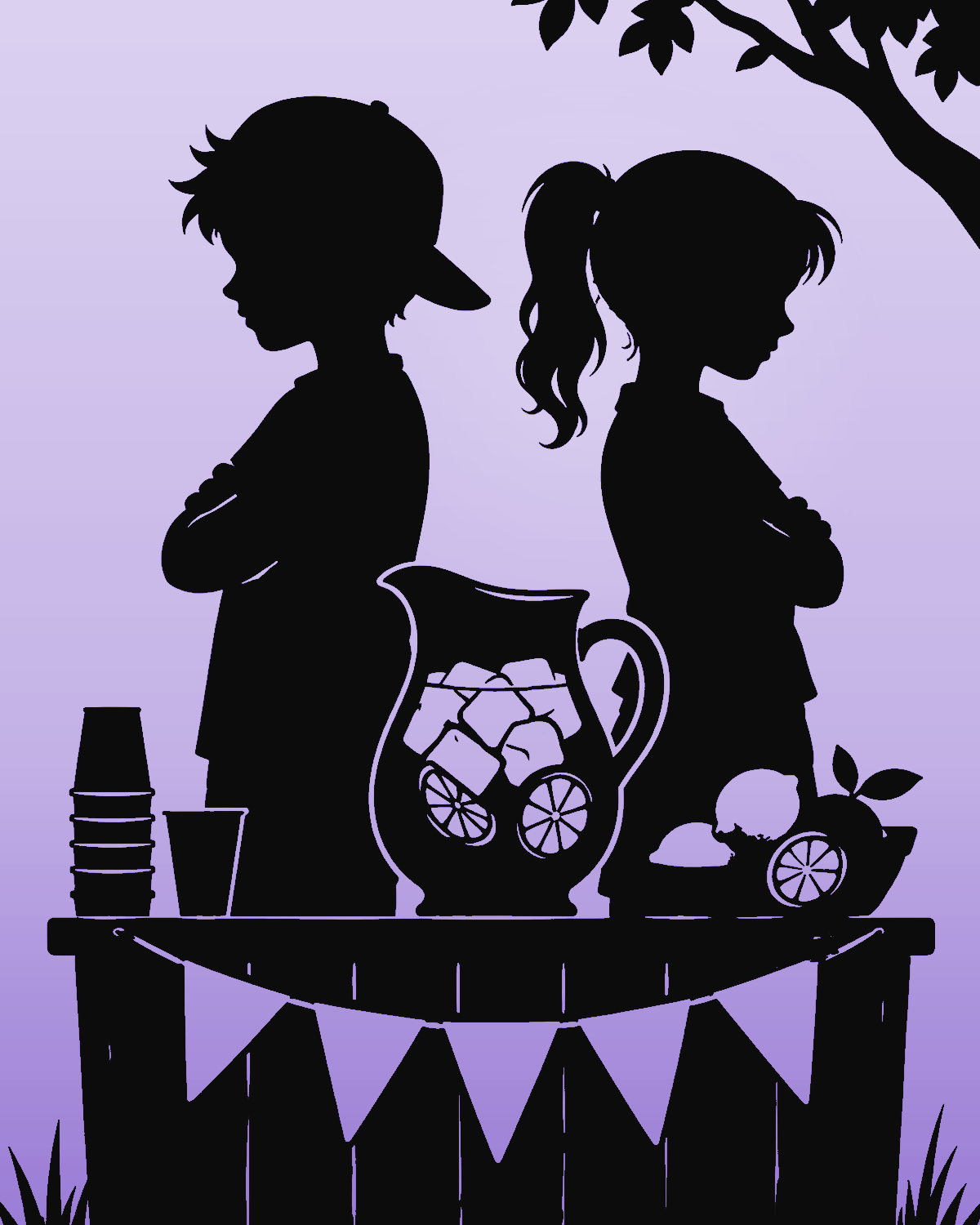
The Lemonade War cover
Garden Heights Academy

The Lemonade War

This workbook is for Garden Heights members. Sign in to continue.

Sign in with Google →
New here? Just sign up with Google — your account includes Matilda, our gift book, forever.
What Happens in Part 5

For a moment, peace seems possible. Evan calls up the stairs to Jessie and offers to negotiate — to just call the whole war off. But when he senses how far ahead Jessie’s clever tricks have put her, his pride flares, and he declares the war back on. The chance to make peace slips away. Then the story takes its darkest turn. Jessie sneaks into Evan’s room to spy on his earnings, and when she sees that he is winning, she does something she never would have done before: she sabotages his lemonade, dropping bugs and dirt into it to spoil his sales. This is malicious mischief — deliberately harming a rival’s business. The war has now turned even careful, honest Jessie into someone who cheats. Winning has begun to cost the children far more than money.

What We Will Learn
FocusWhat It Means
MoodThe feeling of a scene — here, the fun darkens into something tense
ForeshadowingAn early hint of trouble to come — the sabotage warns of a fall
Dramatic IronyWe see the war hurting them in ways they cannot yet see
Chapter Summary
ChapterKey Events
Ch. 9 — NegotiationEvan offers to call the war off, but when he feels threatened by Jessie’s lead, his pride wins and he restarts it. The chance for peace is lost.
Ch. 10 — Malicious MischiefJessie spies on Evan’s earnings, sees he is winning, and sabotages his lemonade with bugs and dirt. Even careful Jessie has been pushed into cheating.
💭 Before You Read · Warm-Up (not scored)

There are no wrong answers here — just think, guess, and talk:

  • Evan almost ends the war, then changes his mind. Why is it sometimes so hard to make peace first?
  • Jessie usually follows the rules. What could push a careful person to cheat?
  • Predict: after the sabotage, do you think the war can end well — or is worse trouble coming?
Copyright Notice

This is an independent study guide created by Garden Heights Academy to support reading comprehension and literary analysis. It contains original analysis questions and does not reproduce any text from the novel. The Lemonade War is a work by Jacqueline Davies. This guide is not affiliated with, authorized by, or endorsed by the author or any associated rights holder.
Part 1
Vocabulary
Study 10 key words from Chapters 9–10, then answer each question.
🧠Knowledge Bank · Words of the Turning Point
Business Ethics · Deals & TrustThis part sets two opposite ways of settling a business fight against each other. The grown-up, honest path is negotiation: the two sides sit down and talk until they reach an agreement both can live with. Good negotiators do not try to crush each other; they hunt for a deal where everyone walks away with something they need, because a bargain that ruins one side rarely lasts. The dark path is sabotage — secretly damaging a rival’s goods to make them fail. It can buy a quick win, but real businesses learn a costly rule: cheating destroys trust, and a seller’s good name, once broken, can take years to rebuild. Customers who feel tricked never come back. As the war reaches its ugliest moment, watch which path each child chooses, and remember that in money as in life, the fastest win is seldom the one worth keeping.
negotiatev.Ch.9–10
To talk in order to reach a deal
“Evan tried to negotiate a truce.”
agreementn.Ch.9–10
A deal that both sides accept
“They could not reach an agreement.”
sabotagev.Ch.9–10
To secretly damage or spoil something
“Jessie chose to sabotage his stand.”
mischiefn.Ch.9–10
Trouble-making, playful or harmful
“Her mischief ruined his lemonade.”
temptv.Ch.9–10
To make someone want to do something wrong
“Winning tempted her to cheat.”
threatenv.Ch.9–10
To make or feel a danger
“Jessie’s lead threatened Evan.”
advantagen.Ch.9–10
Something that helps you win
“Her tricks gave her an advantage.”
sneakv.Ch.9–10
To move secretly and quietly
“Jessie sneaked into his room.”
ruinv.Ch.9–10
To spoil completely
“The bugs would ruin his sales.”
guiltn.Ch.9–10
The bad feeling of having done wrong
“A wave of guilt followed.”
1To ‘negotiate’ is to —Ch.9
2An ‘agreement’ is —Ch.9
3Fill in each blank with the correct word.Ch. 9–10
Word choices:sabotagesneakadvantageruin- some words will not be used
To secretly damage a rival’s goods is to them.
To move secretly and quietly is to .
4To ‘tempt’ someone is to —Ch.10
5‘Mischief’ means trouble-making, whether playful or harmful.Ch.10
6To ‘ruin’ something is to —Ch.10
7Fill in each blank with the correct word.Ch. 9–10
Word choices:threatenguilttemptagreement- some words will not be used
The bad feeling of having done wrong is .
Jessie’s lead began to Evan’s chances.
8An ‘advantage’ is —Ch.9
9To ‘sabotage’ is to —Ch.10
10To ‘negotiate’ means to spy on your rival and wreck their goods.Ch.9
Part 2
Comprehension
How well do you understand Chapters 9–10?
🧠Knowledge Bank · A Choice at Every Turn
Reading Skill · Character MotivationBy now the story runs less on money than on choices, and the reading skill this part demands is watching character motivation closely. At every turn a sibling stands at a fork: Evan chooses whether to offer peace or press the attack; Jessie chooses whether to play fair or cross a line she has never crossed before. Ask, each time, why — what fear or hurt or hope is steering the hand? Notice that their decisions are no longer driven mainly by cents and customers, but by wounded feelings: the need to win, the sting of being shut out, the dread of looking foolish. Following those inner reasons, and not the outward events, is how you understand why careful Jessie would do something she knows is wrong. A character’s truest self shows not in calm moments but in the hard choices they make when winning and goodness pull in opposite directions.
1What does Evan first offer to do in Chapter 9?Ch.9
2Why does Evan change his mind and restart the war?Ch.9
3What does Jessie do at the start of Chapter 10?Ch.10
4What does Jessie discover there?Ch.10
5Write the numbers 1–5 in the boxes to show the order of events in Part 5. Number 1 = what happens first.Ch. 9–10
  • Feeling threatened, he restarts the war.
  • She sees that Evan is winning.
  • Jessie sneaks in to spy on his earnings.
  • She sabotages his lemonade with bugs and dirt.
  • Evan offers to call the whole war off.
6How does Jessie sabotage Evan’s business?Ch.10
7What is ‘malicious mischief’?Ch.10
8What is surprising about Jessie being the one to cheat?Ch.10
9Evan and Jessie reach a peaceful agreement in Chapter 9.Ch.9
10By the end of Part 5, the war has pushed even Jessie into cheating.Ch.10
Part 3
Literary Elements
Understanding HOW and WHY Jacqueline Davies tells the story in Chapters 9–10.
🧠Knowledge Bank · Mood, Foreshadowing & Dramatic Irony
Literary Craft · Dramatic IronyThree literary tools darken this turning point, and naming them sharpens your reading. Mood is the feeling an author builds into a scene — and here the book’s summery brightness curdles into something tense and uneasy, the air itself seeming to sour as the children cross lines they cannot uncross. Foreshadowing is an early hint of trouble ahead; Davies plants small warnings that the war is about to cost far more than money. Most powerful is dramatic irony, which happens when the reader knows something a character does not. We often see the danger or the hurt coming while Evan or Jessie rush blindly on, and that gap between our knowledge and theirs squeezes the heart. When an author lets you watch a fall the characters cannot yet see, every page hums with a dread that is almost unbearable to witness.
📚 Literary Devices in This Part · definitions & examples
Mood is the feeling a scene gives the reader (the tense, uneasy air as the war turns cruel). Foreshadowing is an early hint of what is coming (the sabotage warns of a bigger fall). Dramatic irony is when the reader knows something a character does not (we see the war destroying their bond, though they cannot).
1The tense, uneasy feeling as the war turns cruel is the story’s —Ch.10
2Foreshadowing is an early hint of trouble that is still to come.Ch.10
3Fill in each blank with the correct word.Ch. 9–10
Word choices:moodforeshadowingrhymeindex- some words will not be used
The dark, tense feeling of these chapters is the .
The sabotage hinting at worse trouble is .
4When the reader sees the war hurting the siblings, though they cannot, that is —Ch.10
5Dramatic irony means the characters know far more than the reader does.Ch.10
6Fill in the blank with the correct word.Ch. 9–10
Word choices:moodrhymesetting- some words will not be used
The heavy, uneasy feeling that hangs over the sabotage scene is its .
7How does the mood change in these chapters?Ch.10
8Jessie’s cheating warns us that a worse fall may be near. This hint is —Ch.10
9Fill in the blank with the correct word.Ch. 9–10
Word choices:ironyrhymeplot- some words will not be used
The reader seeing the true cost of the war, which the children miss, is dramatic .
10What is the deepest dramatic irony of this part?Ch.10
Part 4
Think Deeper
Four deeper challenges — no single-word recall. Read, weigh the evidence, and reason it through.
🧠Knowledge Bank · When the Wish to Win Goes Too Far
Social-Emotional · Fairness & EthicsThis part asks the hardest question in the book: what is a win actually worth if you have to lie, spy, or cheat to get it? The shock is not that some villain does wrong, but that careful, rule-following Jessie — the good sister — is the one who drops bugs in her brother’s lemonade. Davies is telling a difficult truth: a fierce enough competition can push even decent people into choices they would normally never make. Neither child is a monster; they are two hurt kids who let a game swell bigger than their love for each other. Ask yourself why Evan could not make peace, and why the pressure to win overpowered Jessie’s conscience. Fairness is easy when nothing is at stake; its real test comes when winning is close and honesty would cost you the prize. Real character is measured in exactly that moment.
1Claim: “Evan’s pride keeps him from making peace with Jessie.” — choose the two details that best prove it.Claim & Evidence
2Shows how pride blocks peace, or just a detail? Tap each item to send it left or right.Sort into two
◄ How pride blocks peaceJust a detail ►
3Match each cause to its result. For each cause, pick its result.Cause & Effect
Evan is tired of fighting
He senses Jessie is far ahead
He can’t bear to lose
Pride wins out
4Fill both blanks to complete the reasoning.Build the Argument
Evan calling off the peace shows that , which means that .
Part 5
Standardized Test
Playing Fair in Business — SAT & TOEFL-style practice
🎯 You already have the skills from the sections above — this is just a fun way to meet real SAT & TOEFL-style questions. Read the passage (the highlighted words are tested below), then answer the questions below. Tap an answer to select it, then tap it again to confirm — you can change your choice until you confirm.

When two sides in business disagree, the wisest path is often to negotiate — to talk calmly until they reach an agreement both can accept. Good negotiation is not about crushing the other side; it looks for a deal in which each gets something they need. The opposite path is to cheat — to lie, to break a promise, or to secretly harm a rival’s goods. Cheating may bring a quick win, but it carries a hidden cost: it destroys trust. Skilled negotiators listen first, trying to understand what the other side truly wants before they say a word about their own hopes. A calm question often wins more than a loud demand.

Once customers or partners learn that a seller plays dirty, they take their business elsewhere, and a bad reputation can follow a person for years. That is why honest sellers guard their good name carefully. In the long run, a fair deal and a kept promise are worth far more than any prize won by a trick. News of dishonest dealing spreads quickly among neighbors and travels far faster than any advertisement.

Original passage written for Garden Heights — not a quotation from the novel.
1According to the passage, what is the wisest path when two sides disagree?TOEFL · Factual Information
2To “negotiate” means to —SAT · Words in Context
3Good negotiation looks for a deal in which —TOEFL · Factual Information
4What hidden cost does cheating carry?TOEFL · Factual Information
5A bad “reputation” is a —SAT · Words in Context
6What do customers do once they learn a seller plays dirty?TOEFL · Factual Information
7Why do honest sellers guard their good name?TOEFL · Factual Information
8In the long run, what is worth far more than a prize won by a trick?TOEFL · Factual Information
9What is the passage mainly about?TOEFL · Rhetorical Purpose
10This passage connects to Part 5 because Jessie —TOEFL · Rhetorical Purpose
Part 6 · Optional
Creative Writing
A bonus challenge to practice your English. Take your time and have fun with it.
About This Section

This writing task is optional and is not part of your auto-graded score. The feedback below checks only the basics — length, spelling, and grammar — not whether your ideas are right or wrong. It is meant for classroom discussion and creative practice, so feel free to use your imagination!

Writing Task — Part 5 “The Better Choice”

Jessie chose to cheat instead of playing fair. Rewrite that moment. Imagine you are Jessie, standing over Evan’s lemonade with the bugs in your hand. What could you do instead? Write what a fairer, kinder choice would be — and why it is the braver one. Write at least 40 words.

You can start with: “Instead of ruining his lemonade, I decided to…”
0 / 40 words minimum
🗣 Teach It · Just for Fun (optional)

No right or wrong — close the screen and tell someone nearby what ‘negotiation’ means, and why cheating in business can cost a seller their good name. Can’t find anyone? Tell yourself out loud. The moment you teach it, you truly understand it.


Garden Heights Academy

Part 5 Complete!

You finished Chapters 9–10 of The Lemonade War.

Here are your auto-graded results:

-
points out of 100
Your Writing

Your writing was checked automatically for length, spelling, and grammar. Scroll back to Part 6 anytime to read your feedback and improve your work.

Move on to Part 6 →

Independent study guide by Garden Heights Academy. Not affiliated with or endorsed by the author or any rights holders. Contains original analysis only; no text from the novel is reproduced.