New here? Just sign up with Google — your account includes Matilda, our gift book, forever.
The Trumpet of the Swan · Garden Heights
Part 4
for The Trumpet of the Swan · Part 4 · Chapters 10–12
8 Parts40 min
What Happens in Part 4
The trumpet is glorious — and heavy with its unpaid price. Louis resolves the only honorable thing: he will earn money and repay the music store, restoring his father’s name. Opportunity arrives through Sam, who is spending the summer at Camp Kookooskoos, a boys’ camp in the north woods: the camp needs a bugler, and Sam knows a candidate with feathers. Hired at a salary of one hundred dollars, Louis becomes the camp’s alarm clock and evening bell — but first the trumpet must actually be played, and here the book delivers its boldest practical stroke: to work the three valves, Louis needs fingers, so Sam carefully slits the webbing of the swan’s right foot, freeing three ‘toes’ to dance on the keys. It hurts, it is strange, and it works. Louis practices until reveille rings true across the lake. Then comes the summer’s defining moment: a boastful camper named Applegate Skinner capsizes and starts to drown, and it is Louis — fast, fearless, built for water — who reaches him and brings him in. The camp awards its hero a lifesaving medal, which joins the slate and trumpet on his increasingly crowded neck. The debt has begun, dollar by dollar, to shrink.
What We Will Learn
Section
What you will practice
Vocabulary
Working words: salary, bugler, reveille, capsize, medal…
Literary Elements
Honor as plot, and a hero’s body as his instrument
Cross-Curricular
Summer camp — an American invention
Chapter Summary
Ch.
What happens
10–12
The camp bugler — determined to repay the stolen trumpet, Louis takes a $100 job as bugler at Camp Kookooskoos; Sam slits the webbing of his foot so three toes can work the valves; and when boastful Applegate Skinner capsizes, Louis’s rescue earns the camp’s lifesaving medal.
Part 1
Vocabulary
Study 10 key words from Chapters 10–12, then answer each question.
🧠Knowledge Bank · Why a Bugle Plays So Few Notes
Lexicology · Why a Bugle Plays So Few Notes
At camp Louis blows the calls that shape a camper’s day, and the science behind them is fascinating. Because of this, it can sound only a handful of notes, the ones that belong to what scientists call the harmonicseries: the natural steps a column of air divides itself into as the player tightens the lips and blows harder. That is why famous calls like reveille, the bright wake-up in the morning, and taps, the gentle goodnight, are built from so few pitches. The limitation is really a kind of gift: with only a few clear notes, a bugle call carries far across a camp or field and is easy to recognize. Louis, who must earn every sound he makes, learns that even a small handful of notes can speak with real authority.
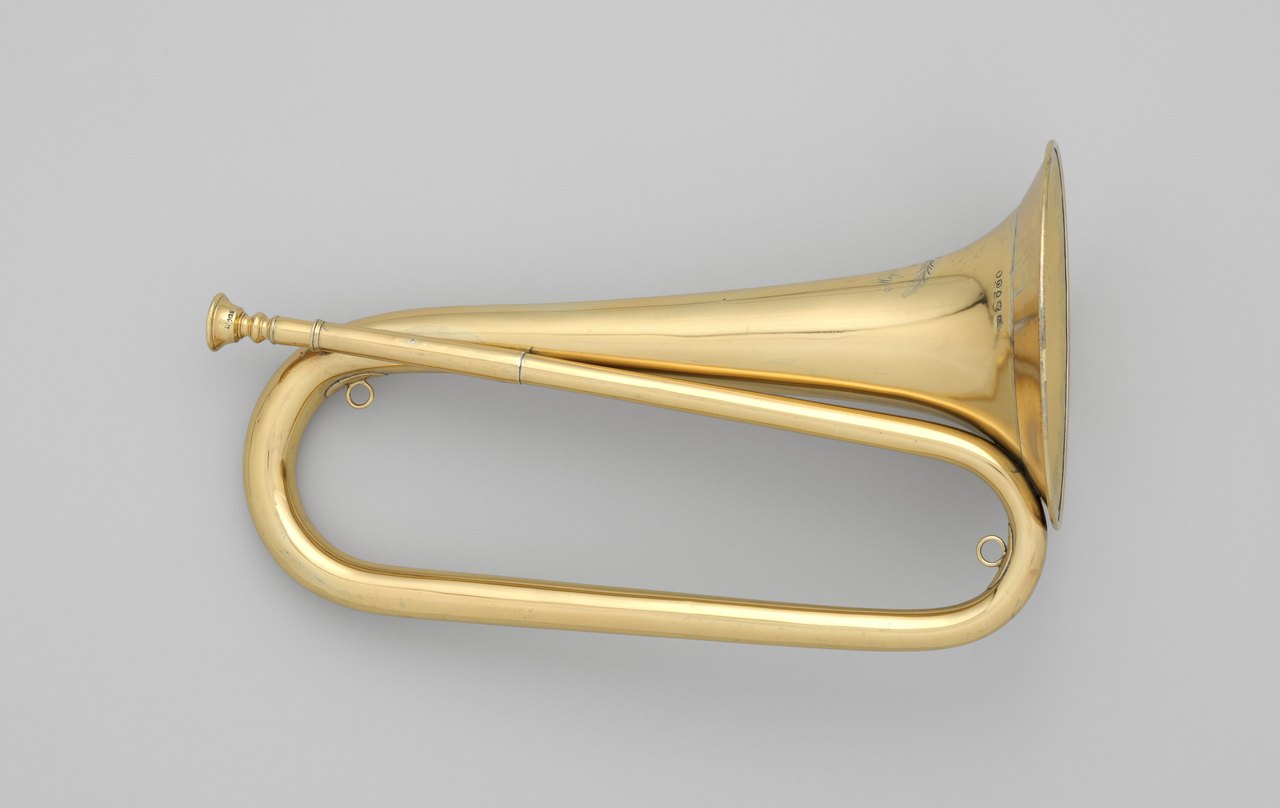
Visual AidA horn with no valves at all
Photograph of a brass bugle from a museum collection. The Knowledge Bank explains that a bugle can sound only a handful of notes, the ones belonging to what scientists call the harmonic series, the natural steps a column of air divides itself into as the player tightens the lips and blows harder, which is why calls like reveille and taps are built from so few pitches. Look for the valves. There are none, and that absence is the whole reason.
Brass bugle in C, Metropolitan Museum of Art, released under CC0. Source: Wikimedia Commons, CC0.
salaryn.Ch.10–12
Money paid regularly for work
“The camp offered a salary of one hundred dollars.”
buglern.Ch.10–12
One who plays the camp’s horn calls
“Camp Kookooskoos needed a bugler.”
reveillen.Ch.10–12
The morning wake-up call
“Reveille rang true across the lake.”
webbingn.Ch.10–12
The skin between a waterbird’s toes
“Sam slit the webbing so three toes could move.”
valven.Ch.10–12
A key that changes a trumpet’s pitch
“Three toes learned to dance on three valves.”
boastfuladj.Ch.10–12
Fond of bragging
“Applegate Skinner was a boastful camper.”
capsizev.Ch.10–12
To overturn in the water
“The canoe began to capsize far from shore.”
drownv.Ch.10–12
To die from being underwater
“A boy who cannot swim can quickly drown.”
medaln.Ch.10–12
An award worn for a brave or great deed
“The lifesaving medal joined the slate and trumpet.”
repayv.Ch.10–12
To pay back what is owed
“Every dollar earned would help repay the store.”
ⓘ The vocabulary words in this list are selected to help you understand and complete this workbook. Some may not appear verbatim in the original novel.
🧠Knowledge Bank question
1According to the Knowledge Bank, a bugle can sound only the notes of ___.Ch.10–12
2‘Reveille’ is the slow melody played at lights-out.Ch.10–12
3To overturn in the water is to ___.Ch.10–12
4‘Webbing’ is the skin between a waterbird’s toes.Ch.10–12
5Fill in each blank with the correct word.Ch.10–12
Word choices:buglermedalboastfulrepay- some words will not be used
The camp needed a .
Every dollar would help the store.
6Fond of bragging is ___.Ch.10–12
7A ‘valve’ is a key that changes a trumpet’s pitch.Ch.10–12
8An award worn for a brave deed is a ___.Ch.10–12
9Fill in the blanks with the correct words.Ch.10–12
Word choices:salarycapsizereveillewebbing- some words will not be used
Sam slit the of Louis’s right foot.
Each dawn, rang across the lake.
10To pay back what is owed is to ___.Ch.10–12
Part 2
Comprehension
Show you understood what happens in Chapters 10–12.
🧠Knowledge Bank · Putting Events in Order
Narrative Logic · Putting Events in Order
A dramatic chapter like the camp rescue rewards a reader who tracks sequence — the exact order in which events happen. Watch how one step leads to the next: Louis arrives at camp, earns the campers’ trust, notices young Applegate Skinner in trouble in the water, races to save him, and is later honored for his bravery. Words like first, then, next, and finally are an author’s signposts, and good readers follow them the way a hiker follows blazes on a trail. Sequencing also helps you see cause hiding inside order: because Louis acted at exactly the right moment, a life was saved. Whenever a scene moves quickly, slow yourself down and lay the events out step by step, and you will understand not just what happened but why each step mattered in turn.
Visual AidThe rescue, in order
Diagram for the Knowledge Bank on sequence. The five numbered cards are the order the Knowledge Bank lays out for the camp rescue, and the gray card names the one step that is a decision rather than a consequence. No times are given, because sequence is about order and not about the clock. Notice that the honor arrives last, after the act, which is the point the Knowledge Bank makes about courage.
The order of the rescue, as described in the Knowledge Bank. Drawn for Garden Heights Academy.
🧠Knowledge Bank question
1The Knowledge Bank says words like first, then and next are ___.Ch.10–12
2What job does Louis take?Ch.10–12
3Sam slits the webbing of Louis’s foot so he can work the valves.Ch.10–12
4Who gets into deadly trouble on the lake?Ch.10–12
5Write the numbers 1–5 in the boxes to show the correct order of events in Chapters 10–12. Number 1 = what happens first.Ch.10–12
The webbing operation frees three toes.
The rescue of Applegate earns the medal.
Louis’s calls ring true across the lake.
Sam arranges the bugler job at camp.
Louis resolves to repay the music store.
6Louis rescues Applegate because the boy has always been kind to birds.Ch.10–12
7What does the camp award Louis?Ch.10–12
8Why does the webbing operation matter beyond the pain?Ch.10–12
9By the end of Part 4, the debt has begun to shrink.Ch.10–12
10What do the slate, trumpet, and medal around Louis’s neck represent together?Ch.10–12
Part 3
Literary Elements
Understanding HOW and WHY E.B. White tells the story across Chapters 10–12.
🧠Knowledge Bank · When the Real World Meets the Impossible
Literary Technique · When the Real World Meets the Impossible
A swan wearing a trumpet on a cord, playing bugle calls at a boys’ summer camp, is a wonderful example of E.B. The camp is utterly real — the canoes, the swimming lessons, the homesick boys are all drawn from ordinary life. Into that solid, everyday setting White drops one magical thread: a musical, thinking swan. Because everything around Louis behaves by real rules, the reader accepts the one impossible thing and even forgets to doubt it. This is why the rescue can feel both fantastical and completely believable at once. White learned that fantasy grows most convincing when it is planted in honest, careful detail. Watch how he keeps the world grounded so that Louis’s extraordinary gifts never tip into pure make-believe, and you will understand the secret of every story that asks you to believe the impossible.
Honor-driven plot
Not danger but a debt freely shouldered pulls the hero from place to place.
Costly craft
The webbing pays for the valves — art always bills the body.
Grace without gloating
The scorned swan saves the scorner and says nothing — strength’s best manners.
🧠Knowledge Bank question
1According to the Knowledge Bank, the reader accepts the one impossible thing because ___.Ch.10–12
2Fill in the blank with the correct literary term.Ch.10–12
Word choices:honordangermetersequel- some words will not be used
A plot pulled by a debt is -driven.
3The webbing operation expresses the book’s idea that ___.Ch.10–12
4Louis gloats over Applegate after the rescue.Ch.10–12
5Applegate’s rescue by the bird he scorned creates ___.Ch.10–12
6The camp job matters structurally because it ___.Ch.10–12
7White treats the swan-as-bugler premise as too silly to describe seriously.Ch.10–12
8Fill in the blank with the correct literary term.Ch.10–12
Word choices:gracegreedguiltglory- some words will not be used
Saving the scorner without a word shows without gloating.
9The growing collection on Louis’s neck works as ___.Ch.10–12
10Part 4 proves something Part 3 only promised: ___.Ch.10–12
Part 4
Think Deeper
Four deeper challenges — no single-word recall. Read, weigh the evidence, and reason it out.
🧠Knowledge Bank · Courage That Serves Others
Ethical Reasoning · Courage That Serves Others
When Louis spots Applegate Skinner drowning and rushes to help, he shows a kind of courage that this book prizes above all others: bravery aimed at someone else’s need. It would have been easy for a swan who feels different and left out to hold back, to decide the human boys were not his concern. Instead Louis acts, and in acting he discovers something the whole camp comes to see — that his worth was never about the voice he lacks. Notice how his courage and his earlier determination work together: because he had already built skills and confidence, he was ready when the crucial moment came. White is teaching a quiet lesson here about self-worth: we often prove ourselves not by fixing our weaknesses but by offering our strengths when others need them. Worth, in this book, is something you give.
Think back over these chapters. At dawn, over a lake of glass, a trumpet call rises — played by a swan whose right foot, newly and painfully nimble, dances on three valves. At the waterfront, boys line up for swim call. One afternoon a canoe tips far from the dock, and a boastful voice goes under; something huge and white crosses the lake like thrown silk, and a very wet camper is towed to shore by the bird he liked least. That evening, taps — and around a long neck, beside a slate and a horn, a new medal throws back the campfire light.
Original passage written for Garden Heights — not a quotation from the novel.
1Claim: “Louis’s summer is about honor, not just wages.” — choose the two details that best prove it.Claim & Evidence
2What Louis earns, or What Louis pays? Tap each detail to sort it — tap again to switch sides. You can keep tapping to change your answer.Sort into two
◄ What Louis earnsWhat Louis pays ►
3Match each cause to its result. For each cause, pick its result.Cause & Effect
The stolen trumpet weighs on Louis→
Three valves demand three fingers→
Practice fills the early mornings→
A canoe capsizes with a boaster aboard→
🧠Knowledge Bank question
4Fill both blanks to complete the reasoning.Build the Argument
The Knowledge Bank says the courage the book prizes above all others is bravery aimed at , and in acting Louis discovers that his worth .
Part 5
Standardized Test
Reading passage · Summer Camp: An American Invention · SAT & TOEFL-style practice
Read the passage — the highlighted words are tested — then answer. Tap an answer, then tap it again to confirm.
SATCentral Ideas — the passage's main point
SATWords in Context — a word's meaning in this passage
SATDetail — a fact stated in the passage
SATInference — a conclusion the passage implies
TOEFLFactual Information — a fact stated in the passage
TOEFLVocabulary — a tested word's meaning here
TOEFLInsert Text — where a sentence best fits
The Invention of Summer Camp
The summer camp, with its cabins, canoes, campfires and a bugle marking the hours, is a genuinely American invention. The first organized camps appeared in the 1870s and 1880s in the northeastern woods, born of a worry that city childhoods were growing soft and pale. Reformers wanted boys, and soon girls, to spend summers in fresh air learning self-reliance, the ability to manage for yourself, far from paved streets. The formula spread fast: by the early 1900s hundreds of camps dotted the lakes of New England, New York and Canada, many with invented wilderness names meant to sound adventurous and woodsy.
A classic camp ran on routine: the bugle’s reveille at dawn, inspection, swim call, crafts, canoeing, supper, campfire, and the slow notes of taps at lights-out. Swimming was the summer’s central skill and its central danger, which is why waterfront rules, buddy systems and lifesaving certificates became camp institutions, and why a camp’s proudest medal honored a rescue. E.B. White, himself a devoted camper and counselor in Ontario’s lake country as a young man, wrote his camp from memory as much as imagination, and every detail of Louis’s working summer stands on a real American institution.
Original passage written for Garden Heights — not a quotation from the novel.
1What is the main idea of the passage?SAT · Central Ideas
2Why were the first camps founded?TOEFL · Factual Information
3In the passage, reveille is ___.SAT · Words in Context
4In the passage, camp routine refers to ___.TOEFL · Vocabulary
5What was the summer’s ‘central skill and central danger’?SAT · Detail
6In the passage, a medal is ___.SAT · Words in Context
7What does the passage say about camp names?TOEFL · Factual Information
8What personal experience shaped White’s camp chapters?SAT · Detail
9Why do camps honor rescues with their proudest medals?SAT · Inference
10Insert Text (TOEFL). Look at the four squares [1]–[4] in the excerpt below. They show where this sentence could be added: “That horn, in other words, was the camp’s clock, and everyone lived by it.”
A classic camp day was framed by the bugle from end to end. [1] Reveille pulled campers from their bunks; calls marked meals and swim; taps closed the day. [2] So when a camp hired its bugler, it was hiring the keeper of its whole schedule. [3] Which is why Camp Kookooskoos considered its feathered candidate so carefully. [4]
Where would the sentence fit best?TOEFL · Insert Text
Part 6 · Optional
Creative Writing
A bonus challenge to practice your English. Take your time and have fun with it.
About This Section
This writing task is optional and is not part of your auto-graded score. The feedback below checks only the basics — length, spelling, and grammar — not whether your ideas are right or wrong. It is meant for classroom discussion and creative practice, so feel free to use your imagination!
Writing Task — Part 4 “Reveille”
Louis’s trumpet frames the camp’s whole day. Write one full camp day — dawn to taps — from the BUGLER’s point of view (Louis, or yourself with the horn): what you see from the bugler’s rock at each call, and the one moment of the day worth all the early mornings. 6–10 sentences. End with the last note of taps and what the lake sounds like after.
You can start with: “The lake was still gray when I lifted the horn for reveille...”
0 / 40 words minimum
🗣 Teach It · Just for Fun (optional)
No right or wrong — close the screen and tell someone nearby what happened in this part. Can’t find anyone? Tell yourself out loud. The moment you teach it, you truly understand it.
Part 4 Complete!
You finished Chapters 10–12 of The Trumpet of the Swan.
Here are your auto-graded results:
-
points out of 100
Teach it to someone
The best last step is to teach it. In your own words, explain what happened — retell a favorite scene, teach a character’s big choice, or sum up the main idea for a parent, friend, or classmate. When you can teach it clearly, you truly own it.
Independent study guide by Garden Heights. Not affiliated with or endorsed by E.B. White. Contains original analysis only; no text from the novel is reproduced. Reference text: This workbook follows E.B. White’s classic text (the standard Puffin edition sold worldwide). Revised 2023 UK editions change some wording and may not match the vocabulary studied here.
SAT® is a registered trademark of College Board, which is not affiliated with, and does not endorse, these materials. TOEFL® is a registered trademark of ETS. These materials are not endorsed or approved by ETS. Garden Heights is an independent provider of test-style reading practice.