
New here? Just sign up with Google — your account includes Matilda, our gift book, forever.
What Happens in Part 3
These stories come alive through the senses — you can almost taste, hear, and feel them. First we visit the cafeteria, where lunch teacher Miss Mush serves her famous Mushroom Surprise; brave Ron actually eats it, and the strange dish leads to an even stranger moment when he ends up kissing Deedee. Next, a blast of music: the class plays instruments so wonderfully loud that poor Benjamin’s attempts to finally reveal his real name are completely drowned out. Then Kathy teases D.J. about a watch he has lost, only for a helpful bird to return it. And Jason chews his pencils so badly that Mrs. Jewls tapes his mouth shut to stop him! In each tale, Sachar fills the page with vivid imagery — sights, sounds, tastes, and feelings so clear you experience them right alongside the class.
What We Will Learn
Focus
What It Means
Imagery
Language that appeals to sight, sound, taste, and touch
Sensory Comedy
Loud music and mystery lunch you can almost feel
Running Threads
Benjamin’s name still trying to be heard
Chapter Summary
Chapter
Key Events
Ch. 9–12
Ron bravely eats Miss Mush’s Mushroom Surprise and ends up kissing Deedee; the class plays music so loud it drowns out Benjamin trying to reveal his real name; Kathy teases D.J. about his lost watch until a bird returns it; and Jason chews his pencils so badly that Mrs. Jewls tapes his mouth shut
💭 Before You Read · Warm-Up (not scored)
There are no wrong answers here — just think, guess, and talk:
Sachar describes Miss Mush’s lunch so vividly you can almost taste it. How does describing sights, sounds, and tastes make a story feel more real?
The loud music completely drowns out Benjamin’s attempt to say his real name. Why does that make his little secret feel even harder to escape?
Predict: Benjamin still hasn’t managed to tell anyone his real name. Do you think he ever will — and how?
Copyright Notice
This is an independent study guide created by Garden Heights Academy to support reading comprehension and literary analysis. It contains original analysis questions and does not reproduce any text from the novel. Wayside School Is Falling Down is a work by Louis Sachar. This guide is not affiliated with, authorized by, or endorsed by the author or any associated rights holder.
Part 1
Vocabulary
Study 10 key words from Chapters 9–12, then answer each question.
🧠Knowledge Bank · The Patience of Counting
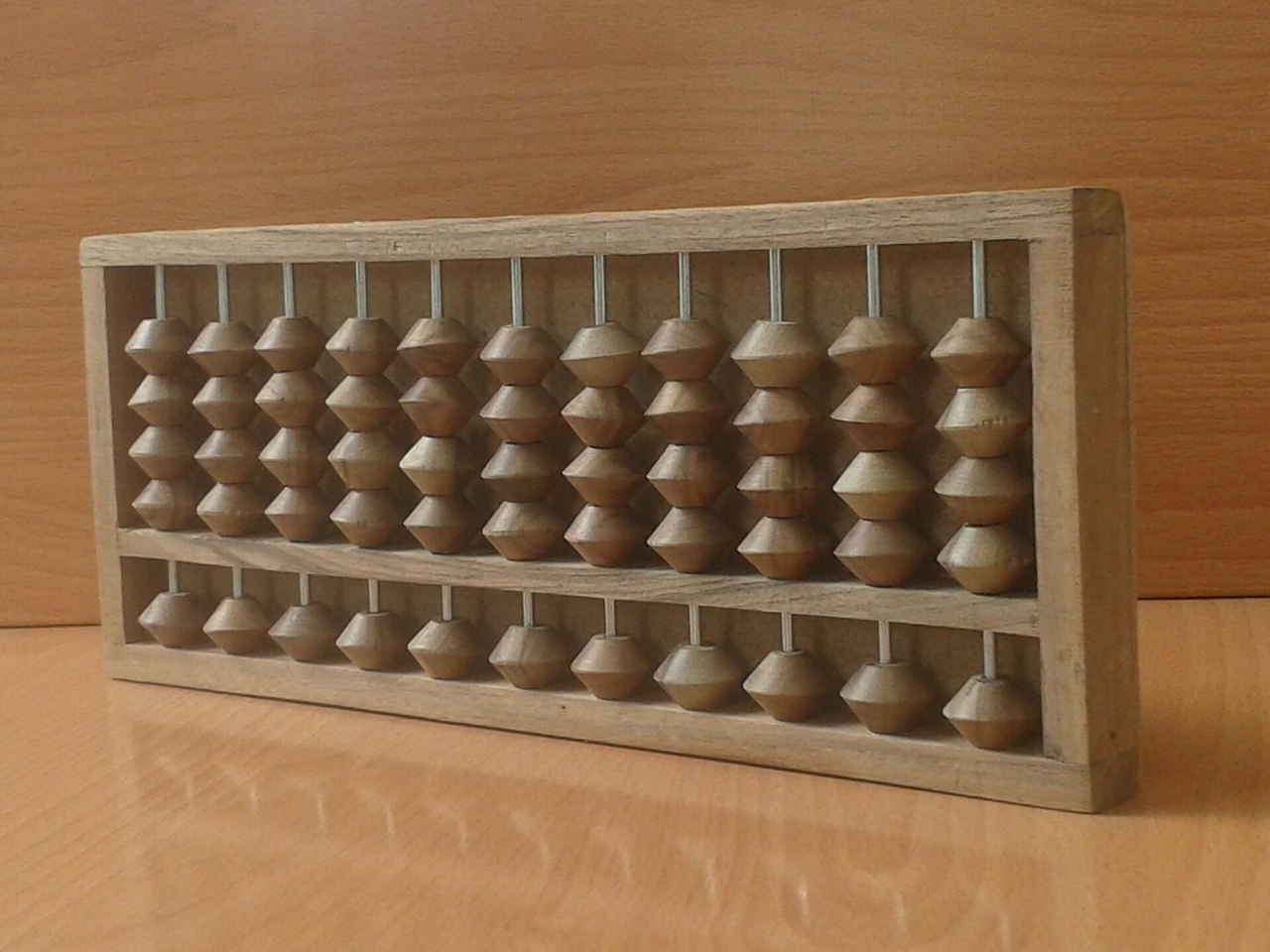
Number Sense · Counting One by OneCounting looks easy and is not. To count a large pile you must match one number to one object, keep firm hold of everything already said, and never skip or repeat, which is why careful counting is the ground floor of all arithmetic. Mrs. Jewls turns her lessons into counting adventures, and one of them sets the class after a number so vast that a whole school year of saying it aloud would not get them there. That is the comedy: an entire room sharing the slow, patient work of adding one more. When a story keeps a running total, follow it. Each new number raises the stakes and pulls you along, and the steady one-by-one habit behind it carries you into every larger idea in mathematics.
braveadj.Ch.9
Willing to face fear or danger
“Ron is brave enough to eat the mush.”
cafeterian.Ch.9
A room where school meals are served
“Miss Mush cooks in the cafeteria.”
instrumentn.Ch.10
A tool used to make music
“Each child plays an instrument.”
drownv.Ch.10
To cover a sound with a louder one
“The music drowns out Benjamin’s voice.”
moodn.Ch.11
The way a person feels at a time
“D.J. is always in a happy mood.”
cheerv.Ch.11
To make someone feel happier
“Kathy accidentally cheers D.J. up.”
gloomyadj.Ch.11
Sad and low in spirits
“She wants to make him gloomy.”
chewv.Ch.12
To bite again and again
“Jason likes to chew his pencil.”
tapen.Ch.12
A sticky strip used to hold things
“Mrs. Jewls uses tape on his mouth.”
stubbornadj.Ch.12
Unwilling to change or give in
“His habit is very stubborn.”
1Someone ‘brave’ is willing to —Ch.9
2An ‘instrument’ is a tool used to —Ch.10
3Fill in each blank with the correct word.Chs. 9–12
Word choices:cafeteriatapemoodchew- some words will not be used
Miss Mush cooks her strange meals in the school .
To stop his chewing, Mrs. Jewls puts over Jason’s mouth.
4To ‘cheer’ someone is to —Ch.11
5To ‘drown out’ a sound is to cover it with a louder one.Ch.10
6To ‘chew’ is to —Ch.12
7Fill in each blank with the correct word.Chs. 9–12
Word choices:moodgloomybravedrown- some words will not be used
Kathy tries to spoil D.J.’s cheerful .
She wants to make the smiling boy feel .
8Someone ‘stubborn’ is —Ch.12
9A ‘cafeteria’ is —Ch.9
10A ‘stubborn’ habit is one that is quick and easy to change.Ch.12
Part 2
Comprehension
How well do you understand Chapters 9–12?
🧠Knowledge Bank · Seeing the Backfire Coming
Reading Skill · Predicting OutcomesGood readers are always guessing what comes next, using the clues an author has planted. Sachar leaves his setups in plain sight. When Miss Mush announces a dish with a promising name, you already know the promise will not be kept. When the class is turned loose with instruments, you can hear the coming racket before a single note is played, a wall of sound so thick that a boy trying to speak inside it has no hope of being heard. Guessing keeps your mind awake and turns reading into a game played against the writer. Then check the guess against what actually happens. Every surprise shows which clues really mattered, and next time you will trust your own prediction.
1What does Ron bravely do in the cafeteria?Ch.9
2In ‘Music,’ what stops Benjamin from being heard?Ch.10
3What is Benjamin trying to do when the music drowns him out?Ch.10
4What is Kathy trying to do to D.J.?Ch.11
5Write the numbers 1–5 in the boxes to show the correct order across Part 3. Number 1 = what happens first.Chs. 9–12
Kathy tries to spoil D.J.’s mood but cheers him.
The music drowns out Benjamin’s name again.
Mrs. Jewls tapes Jason’s chewing mouth shut.
The class plays a concert of loud music.
Ron bravely eats the Mushroom Surprise.
6What is the surprising result of Kathy’s plan?Ch.11
7Why does Mrs. Jewls put tape on Jason’s mouth?Ch.12
8How does the tape plan turn out?Ch.12
9Benjamin easily and clearly tells the whole class his real name in ‘Music.’Ch.10
10In these chapters, characters’ plans often produce the opposite of what they intended.Chs. 9–12
Part 3
Literary Elements
Understanding HOW and WHY Louis Sachar tells the story across Chapters 9–12.
🧠Knowledge Bank · Writing You Can Taste
Literary Craft · Sensory ImageryImagery is descriptive language aimed straight at the five senses, and it is what makes these chapters so vivid. Miss Mush’s mushroom concoction is never merely called strange; the writing lets you smell it, see its color and imagine its texture on a spoon, so the lunch line grows far funnier and far worse than any label could manage. The class band is never merely called loud; you hear it, and hearing it is what makes the drowned-out voice at its center matter. Good imagery does more than decorate. It puts you inside the room, and a reader who is inside the room feels a joke instead of only reading it. When a scene grips you, look back and find which sense the author reached for, because that is where the writing gained its power.
📚 Literary Devices in This Part · definitions & examples
A running gag is a joke repeated across a story (Benjamin’s lost name). Irony appears when the result is the opposite of the goal (Kathy’s plan cheers D.J.). A motif is any image or idea that keeps returning — here, Miss Mush’s odd food comes back again and again.
1Benjamin’s name being blocked in chapter after chapter is a —Ch.10
2A running gag is a joke that keeps coming back through a story.Ch.10
3Fill in each blank with the correct word.Chs. 9–12
Word choices:running gagironyrhymeindex- some words will not be used
Benjamin’s lost name, blocked again and again, is a
Kathy cheering the boy she meant to sadden is pure .
4Kathy meaning to sadden D.J. but cheering him is an example of —Ch.11
5Miss Mush’s strange food returning again and again is a kind of motif.Ch.9
6Fill in the blank with the correct word.Chs. 9–12
Word choices:motifrhymesetting- some words will not be used
An image or idea that keeps returning through a book is a .
7Why is a running gag funnier the second and third time?Ch.10
8A plan that produces the opposite result is said to —Ch.11
9Fill in the blank with the correct word.Chs. 9–12
Word choices:ironyrhymeplot- some words will not be used
When Mrs. Jewls’ tape only makes a bigger mess, that outcome is a form of .
10Running gags and motifs both work best on a reader who —Chs. 9–12
Part 4
Think Deeper
Four deeper challenges — no single-word recall. Read, weigh the evidence, and reason it through.
🧠Knowledge Bank · Laughing at School Itself
Thinking & Character · School and EffortPart of why this classroom delights children is that it lets them laugh at their own school world, the lessons and the lunch and the odd rules of a grown-up building, without any of it turning mean. Inside that comfortable humor sits a real observation. Again and again a character wants something so badly that the wanting itself gets in the way; the harder the pushing, the worse the result, a truth you may have felt when nerves spoiled something you had practiced for weeks. Sachar never scolds. He simply lets us watch people trip over their own effort, and we remember it. Knowing when to press on and when to loosen your grip helps in games, in friendships and at a desk. Often the quiet secret to doing something well is plain patience.
1Claim: “These stories bring the cafeteria to life through the senses.” — choose the two details that best prove it.Claim & Evidence
2Shows the vivid, sensory cafeteria, or just a detail? Tap each item to send it left or right.Sort into two
◄ The vivid, sensory cafeteriaJust a detail ►
3Match each cause to its result. For each cause, pick its result.Cause & Effect
Miss Mush cooks lunch→
The dish looks strange→
Brave Ron eats it→
The scene is vivid→
4Fill both blanks to complete the reasoning.Build the Argument
The Mushroom Surprise story shows that , which means that .
Part 5
Standardized Test
The Science of Taste — SAT & TOEFL-style practice
🎯 You already have the skills from the sections above — this is just a fun way to meet real SAT & TOEFL-style questions. Read the passage (the highlighted words are tested below), then answer the questions below. Tap an answer to select it, then tap it again to confirm — you can change your choice until you confirm.
Why does one person love a food that another cannot stand? The answer begins on your tongue, which is covered with thousands of tiny sensors called taste buds. These taste buds detect five basic tastes: sweet, salty, sour, bitter, and a savory taste called umami. Together with your sense of smell, they let your brain decide whether a bite is delicious or dreadful. Interestingly, children often dislike bitter foods, such as certain vegetables, more than adults do, because young taste buds are especially sensitive. But taste is not fixed forever. Many foods we hate at first become favorites later, once we get used to them — this is called an acquired taste. That is why being a little brave at the lunch table, like trying a food you are unsure about, is actually worthwhile: the very dish that seems strange today might become something you love tomorrow. Your sense of taste, it turns out, can grow and change right along with you.
Original passage written for Garden Heights — not a quotation from the novel.
1What are the tiny sensors on the tongue called?TOEFL · Factual Information
2Taste buds “detect” tastes, meaning they —SAT · Words in Context
3How many basic tastes does the passage list?TOEFL · Factual Information
4Which other sense works with taste to judge food?TOEFL · Factual Information
5Children often dislike “bitter” foods, a taste that is —SAT · Words in Context
6Why do children often dislike bitter foods more than adults?TOEFL · Factual Information
7A food you learn to like over time is called an “acquired” taste, meaning one that is —SAT · Words in Context
8Why does the passage say trying new foods is worthwhile?SAT · Inference
9What is the passage’s main idea?TOEFL · Rhetorical Purpose
10This passage connects to the chapter because Ron —TOEFL · Rhetorical Purpose
Part 6 · Optional
Creative Writing
A bonus challenge to practice your English. Take your time and have fun with it.
About This Section
This writing task is optional and is not part of your auto-graded score. The feedback below checks only the basics — length, spelling, and grammar — not whether your ideas are right or wrong. It is meant for classroom discussion and creative practice, so feel free to use your imagination!
Writing Task — Part 3 “A Scene for the Senses”
Sachar makes you almost taste and hear his scenes. Write about a meal, a place, or a moment using all your senses — what you saw, heard, smelled, tasted, and touched. Or invent your own wild cafeteria dish like Mushroom Surprise. Write at least 40 words.
You can start with: “A scene I can describe with my senses is…”
0 / 40 words minimum
🗣 Teach It · Just for Fun (optional)
No right or wrong — close the screen and tell someone nearby about Miss Mush’s Mushroom Surprise or the music that drowned out Benjamin. Can’t find anyone? Tell yourself out loud. The moment you teach it, you truly understand it.

Part 3 Complete!
You finished Chapters 9–12 of Wayside School Is Falling Down.
Here are your auto-graded results:
-
points out of 100
Your Writing
Your writing was checked automatically for length, spelling, grammar, and whether you included the key parts of the scene. Scroll back to Part 5 anytime to read your feedback and improve your work.
Independent study guide by Garden Heights Academy. Not affiliated with or endorsed by the author or any rights holders. Contains original analysis only; no text from the novel is reproduced.
