New here? Just sign up with Google — your account includes Matilda, our gift book, forever.
Because of Winn-Dixie · Garden Heights
Part 5
for Because of Winn-Dixie · Part 5 · Chapters 15–17
8 Parts40 min
What Happens in Part 5
At the library, Miss Franny offers Opal and pinch-faced Amanda Wilkinson an old-fashioned candy called a Littmus Lozenge — and with it, the story of her great-grandfather, Littmus W. Block. At fourteen, Littmus lied about his age and marched off to the Civil War dreaming of glory; what he found was hunger, mud, and fear. When the war finally ended, he walked home to ruins: his house burned, his mother and sisters gone. Standing in the wreckage, young Littmus made a strange, stubborn decision — the world was so full of sadness that somebody ought to make something sweet. He built a candy factory and invented the Littmus Lozenge: a candy with a secret ingredient. The lozenge tastes sweet, but it also tastes of sorrow — everyone who sucks one finds an old sadness rising quietly in their chest. Opal tastes her mama in it. And Amanda, saying almost nothing, suddenly leaves the library looking sadder than any pinch-faced girl should.
What We Will Learn
Section
What you will practice
Vocabulary
Words of candy and war: lozenge, ingredient, enlist, ruins, bittersweet…
Literary Elements
Flashback, juxtaposition, and backstory
Cross-Curricular
How the Civil War touched families and how candy is actually made
Chapter Summary
Ch.
What happens
15
A Candy and a Story — Miss Franny shares Littmus Lozenges and begins her great-grandfather’s tale.
16
Littmus Goes to War — a fourteen-year-old lies his way into the Civil War and learns what war really is.
17
Sweetness from Sorrow — home in ruins, Littmus builds a candy factory; his lozenge carries a secret sad ingredient.
—
The Taste — Opal tastes her mama in the candy; Amanda leaves the library close to tears.
Part 1
Vocabulary
Study 10 key words from Chapters 15–17, then answer each question.
🧠Knowledge Bank · Boy Soldiers of the Civil War
Lexicology · Boy Soldiers of the Civil War
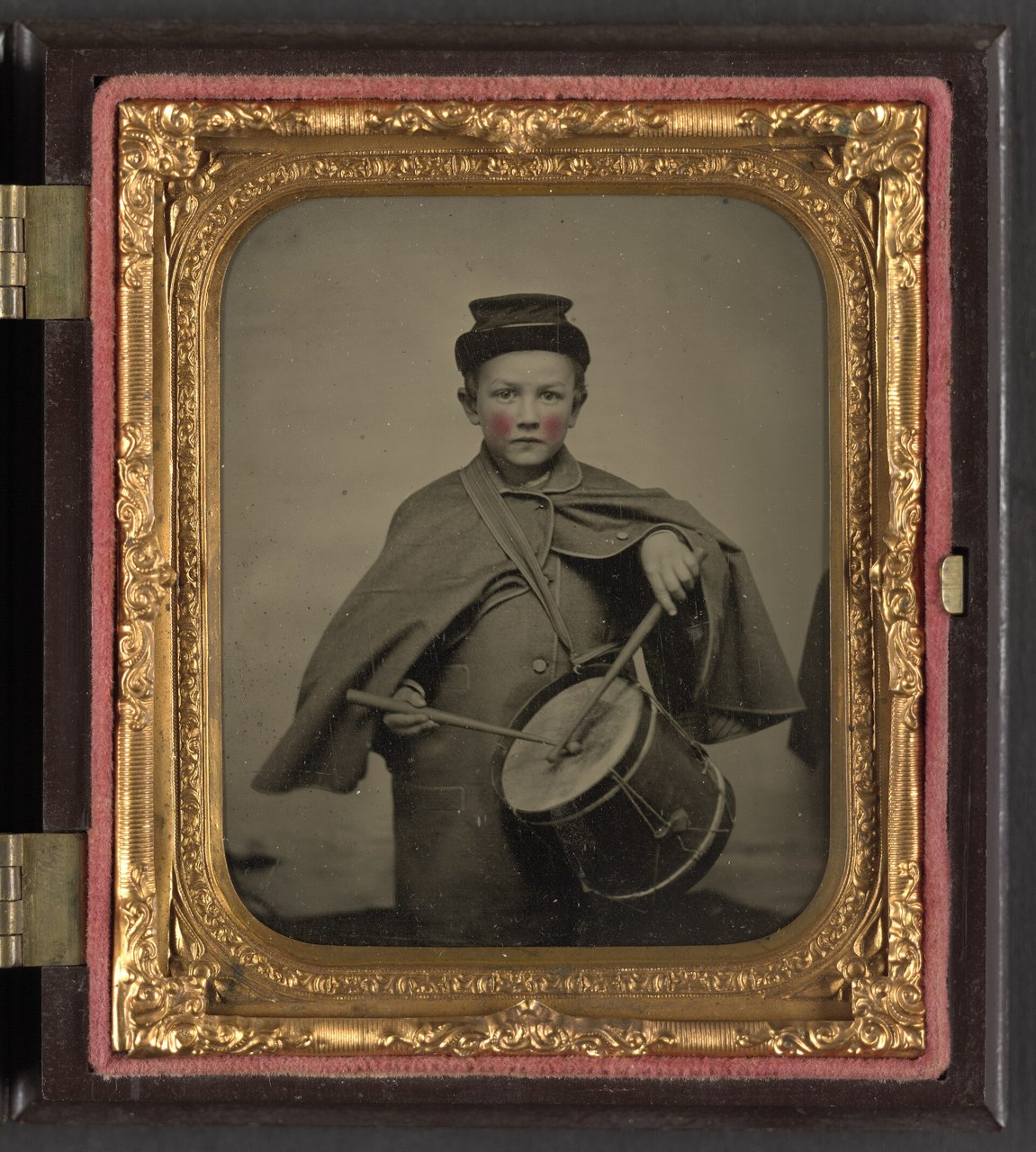
During the AmericanCivil War of the 1860s, some soldiers were barely more than children. Boys as young as twelve or thirteen slipped into the army, and they marched, fought, and often died far from home. Littmus W. Block, in Miss Franny’s story, is one such boy: he leaves eager for glory and returns to find his house burned and his family gone. War, the tale reminds us, does not only wound the body; it hollows out the heart and steals the years a child should have spent playing. Because Littmus lived through so much sorrow so young, he spent the rest of his life trying to make the world a little sweeter. History here is not dates but the ache of terrible loss.
Visual AidA soldier who was still a boy
Photograph of an unnamed drummer boy in a soldier’s uniform, made during the American Civil War of the 1860s and kept in a small hinged case, now in the Library of Congress. The Knowledge Bank explains that some soldiers in that war were barely more than children, and that Littmus W. Block in Miss Franny’s story is one such boy. This boy is real, and his name was never recorded; he is not Littmus. Notice how small he is behind the drum — that is the age the Knowledge Bank means.
Unidentified drummer boy, American Civil War, cased photograph; Liljenquist Family Collection, Library of Congress. Source: Wikimedia Commons, public domain.
lozengen.Ch.15
A small hard candy that dissolves slowly in the mouth
“Miss Franny kept a tin of Littmus Lozenges in her desk.”
ingredientn.Ch.17
One of the things a food or mixture is made from
“The candy’s secret ingredient was not on any label.”
manufacturev.Ch.17
To make goods in large amounts, usually in a factory
“The factory began to manufacture thousands of lozenges a day.”
enlistv.Ch.16
To join the army or another armed service
“Littmus lied about his age so he could enlist.”
wearyadj.Ch.16
Very tired in body or spirit
“The weary soldiers marched on through the mud.”
ruinsn.Ch.16
What is left of a building or place that has been destroyed
“He came home to find his house in ruins.”
fortunen.Ch.17
A large amount of money; wealth
“The candy factory earned Littmus a fortune.”
bittersweetadj.Ch.17
Mixing happiness and sadness at the same time
“The lozenge left a bittersweet taste that lingered.”
inventionn.Ch.17
Something new that someone has created
“The Littmus Lozenge was his greatest invention.”
samplev.Ch.15
To taste or try a small amount of something
“Miss Franny invited the girls to sample the old candy.”
ⓘ The vocabulary words in this list are selected to help you understand and complete this workbook. Some may not appear verbatim in the original novel.
🧠Knowledge Bank question
1According to the Knowledge Bank, Littmus W. Block spent his life making the world sweeter because ___.Ch.15
2To ‘enlist’ means to join the army.Ch.16
3One of the things a food is made from is an ___.Ch.17
4‘Ruins’ are brand-new buildings that no one has moved into yet.Ch.16
5Fill in each blank with the correct word.Ch.15–17
Word choices:wearysamplefortunemanufacture- some words will not be used
The girls were invited to the strange old candy.
After years of war, the soldiers came home to the bone.
6To make goods in large amounts in a factory is to ___ them.Ch.17
7A ‘bittersweet’ feeling mixes happiness and sadness at the same time.Ch.17
8Something new that someone has created is an ___.Ch.17
9Fill in the blanks with the correct words.Ch.16–17
Word choices:ruinsenlistlozengebittersweet- some words will not be used
Only chimneys and ashes remained of the house — nothing but .
Fourteen was far too young to , so he lied.
10A large amount of money is a ___.Ch.17
Part 2
Comprehension
Show you understood what happens in Chapters 15–17.
🧠Knowledge Bank · Finding the Big Idea
Narrative Logic · Finding the Big Idea
A theme is the big idea or life lesson a story quietly teaches, larger than any single event. Beginning readers often stop at what happens; stronger readers ask what it all means. In these chapters, a war orphan builds a candy that tastes of both sweetness and sorrow, and everyone who eats it thinks of something they have lost. Put those pieces together and a theme emerges: joy and sadness are woven together in every life. To find a theme, look for an idea the book keeps circling back to, then say it as a sentence about people in general, not just about Opal. Naming that hidden lesson is how you uncover a story’s true theme.
Visual AidFrom what happens to what it means
Diagram for the Knowledge Bank on finding the big idea. The top row is what happens in these chapters, in the Knowledge Bank’s own words; the arrow leads to the theme the Knowledge Bank says those pieces add up to. It does not claim this is the book’s only theme. Notice that the bottom sentence never mentions Opal or candy — a theme is about people in general.
Events and theme as given in the Knowledge Bank. Drawn for Garden Heights Academy.
🧠Knowledge Bank question
1The Knowledge Bank says the theme that emerges from the candy is ___.Ch.15
2How old was Littmus W. Block when he went to war, and how did he manage it?Ch.16
3The war turned out to be exactly the glorious adventure Littmus had imagined.Ch.16
4What did Littmus find when he finally walked home from the war?Ch.16
5Write the numbers 1–5 in the boxes to show the correct order of events in Miss Franny’s story. Number 1 = what happens first.Ch.15–17
The Littmus Lozenge — sweet with a secret sorrow — is born.
He finds his house burned and his family gone.
The war ends and Littmus walks home.
He decides the world needs something sweet and builds a factory.
Littmus lies about his age and marches off to war.
6Littmus responded to his loss by building a candy factory.Ch.17
7What is the secret ingredient in a Littmus Lozenge?Ch.17
8What does Opal taste in her lozenge, beneath the sweetness?Ch.17
9Amanda stays cheerful and chatty after tasting her lozenge.Ch.17
10What does Amanda’s reaction to the candy suggest about her?Ch.17
Part 3
Literary Elements
Understanding HOW and WHY Kate DiCamillo tells the story across Chapters 15–17.
🧠Knowledge Bank · A Candy Made of Theme
Literary Technique · A Candy Made of Theme
DiCamillo does something clever with the Littmus Lozenge: she makes a candy stand in for an entire feeling. Every person who tastes it finds it sweet and sad at once, as if the sorrow of the world were folded into the sugar. That is close to a metaphor — describing one thing, a hard and grieving life, by speaking of another, a piece of candy. Because the idea arrives as a taste instead of a lecture, we feel the lesson on our tongues rather than merely hearing it. Writers reach for images like this when a plain sentence would be too flat. Ask what a striking object might secretly represent, and you will often uncover a hidden metaphor.
Flashback
The story leaves the present to show the past — Littmus’s war years unfold inside Miss Franny’s telling.
Juxtaposition
Two opposites placed side by side so each sharpens the other — sweetness and sorrow in a single candy.
Backstory
A character’s history that explains the present — the ruined home and the factory tell us why the lozenge exists at all.
🧠Knowledge Bank question
1According to the Knowledge Bank, the Littmus Lozenge is close to a metaphor because it ___.Ch.16
2Fill in the blank with the correct literary term.Ch.16–17
Word choices:juxtapositionbackstorymoodrhyme- some words will not be used
Placing sweetness and sorrow side by side in one candy is .
The history that explains why the lozenge exists is Littmus’s .
3DiCamillo puts the book’s big idea INSIDE a candy because objects ___.Ch.17
4Juxtaposition means placing two opposite things side by side on purpose.Ch.17
5Miss Franny telling the war story WHILE the girls taste the candy makes the story ___.Ch.15–17
6The lozenge’s effect — each taster meets their OWN sadness — turns the candy into ___.Ch.17
7Backstory is history from before the main plot that helps explain the present.Ch.16
8Fill in the blank with the correct literary term.Ch.16
Word choices:flashbacksymbolhyperboledialogue- some words will not be used
A scene that leaves the present to show the past is a .
9Littmus answering ruin by making candy — instead of seeking revenge — shows the novel values ___.Ch.17
10Amanda’s abrupt, silent exit after tasting the candy is effective storytelling because it ___.Ch.17
Part 4
Think Deeper
Four deeper challenges — no single-word recall. Read, weigh the evidence, and reason it out.
🧠Knowledge Bank · What the Candy Knows
Ethical Reasoning · What the Candy Knows
The Littmus Lozenge carries a secret that the whole book is trying to teach: happiness and sadness usually come mixed together. Each character tastes sorrow in the sweetness — Miss Franny, Gloria, and Opal herself, who thinks at once of her absent mother. Why would an author give children a candy that tastes of grief? Because pretending sadness away does not help; naming it does. When Opal learns that even a treat can hold sorrow, she begins to accept that her own aching over her mama is normal and can be shared. That is a brave, grown-up truth for a young reader: we do not have to hide our sad feelings. Sweetness tastes richer once we have made room for grief.
Think back over the chapters. In a quiet library, an old woman opens a tin of candy invented by a boy who lost everything a century ago. One girl tastes it and finds her missing mother waiting in the sweetness. Another girl — the one with the pinched, guarded face — tastes it and hurries out before anyone can see what rises in her eyes. The candy does the same thing to everyone: it tells the truth.
Original passage written for Garden Heights — not a quotation from the novel.
1Claim: “The Littmus Lozenge refuses to pretend that life is only sweet.” — choose the two details that best prove it.Claim & Evidence
2Littmus before the war, or Littmus after the war? Tap each detail to sort it — tap again to switch sides. You can keep tapping to change your answer.Sort into two
◄ Littmus before the warLittmus after the war ►
3Match each cause to its result. For each cause, pick its result.Cause & Effect
Littmus dreams of glory at fourteen→
The war ends and he walks the long road home→
He decides the sad world needs sweetness→
He refuses to pretend the sadness away→
🧠Knowledge Bank question
4Fill both blanks to complete the reasoning.Build the Argument
The Knowledge Bank says an author gives children a candy that tastes of grief because , which shows that .
Part 5
Standardized Test
Reading passage · How Hard Candy Is Made · SAT & TOEFL-style practice
Read the passage — the highlighted words are tested — then answer. Tap an answer, then tap it again to confirm.
SATText Structure & Purpose — how the passage is built, and why
SATWords in Context — a word's meaning in this passage
SATDetail — a fact stated in the passage
SATText Connections — how two parts of the text relate
TOEFLFactual Information — a fact stated in the passage
TOEFLVocabulary — a tested word's meaning here
TOEFLRhetorical Purpose — why the author included a detail
The Making of Hard Candy
Every hard candy, from a peppermint to a lozenge, begins the same way: with sugar, water, and heat. Candy makers boil the mixture in great copper kettles, watching the temperature with total precision, because a few degrees decide everything — too cool and the candy stays soft and sticky, too hot and it burns bitter. As the water boils away, the syrup grows thick and golden. Then comes the most delicate ingredient: the flavor. Oils of lemon, mint, or cherry are stirred in only after the kettle leaves the fire, since fierce heat would destroy their taste in seconds. The finished syrup is poured onto cooling tables, cut into small shapes, and left to harden into glassy candy. In the 1800s, nearly every American town had its own small candy maker, and factories like the one in Miss Franny’s story really did manufacture their sweets and ship them by the trainload. The recipe has barely changed in two hundred years — sugar, heat, patience, and one perfectly timed drop of flavor.
Original passage written for Garden Heights — not a quotation from the novel.
1The passage is mainly organized as ___.SAT · Text Structure & Purpose
2In the passage, an ingredient is ___.SAT · Words in Context
3According to the passage, what happens if the syrup gets TOO hot?TOEFL · Factual Information
4Why is flavor added only AFTER the kettle leaves the fire?SAT · Detail
5In the passage, destroy most nearly means ___.TOEFL · Vocabulary
6The author includes the detail about copper kettles and cooling tables mainly to ___.TOEFL · Rhetorical Purpose
7In the passage, to manufacture sweets is to ___.SAT · Words in Context
8According to the passage, which step comes LAST in making hard candy?TOEFL · Factual Information
9The passage says the recipe has ‘barely changed in two hundred years.’ The author’s purpose in ending this way is to ___.TOEFL · Rhetorical Purpose
10Which ingredient of the Littmus Lozenge would this passage NOT be able to explain?SAT · Text Connections
Part 6 · Optional
Creative Writing
A bonus challenge to practice your English. Take your time and have fun with it.
About This Section
This writing task is optional and is not part of your auto-graded score. The feedback below checks only the basics — length, spelling, and grammar — not whether your ideas are right or wrong. It is meant for classroom discussion and creative practice, so feel free to use your imagination!
Writing Task — Part 5 “My Bittersweet Thing”
A Littmus Lozenge is sweet and sad at the same time. Think of one thing in YOUR life that is bittersweet — a memory, a place, a song, or a day that makes you happy and a little sad at once. Describe it, explain where the sweetness comes from and where the sadness comes from, and tell why you would not trade it away. Write 6–10 sentences.
You can start with: “The most bittersweet thing I know is...”
0 / 40 words minimum
🗣 Teach It · Just for Fun (optional)
No right or wrong — close the screen and tell someone nearby what happened in this part. Can’t find anyone? Tell yourself out loud. The moment you teach it, you truly understand it.
Part 5 Complete!
You finished Chapters 15–17 of Because of Winn-Dixie.
Here are your auto-graded results:
-
points out of 100
Teach it to someone
The best last step is to teach it. In your own words, explain what happened — retell a favorite scene, teach a character’s big choice, or sum up the main idea for a parent, friend, or classmate. When you can teach it clearly, you truly own it.
Independent study guide by Garden Heights. Not affiliated with or endorsed by Kate DiCamillo. Contains original analysis only; no text from the novel is reproduced. Reference text: This workbook follows Kate DiCamillo’s classic text (the standard Puffin edition sold worldwide). Revised 2023 UK editions change some wording and may not match the vocabulary studied here.
SAT® is a registered trademark of College Board, which is not affiliated with, and does not endorse, these materials. TOEFL® is a registered trademark of ETS. These materials are not endorsed or approved by ETS. Garden Heights is an independent provider of test-style reading practice.