New here? Just sign up with Google — your account includes Matilda, our gift book, forever.
📚
Garden Heights Academy
Members sign in to continue.
Wonder · Garden Heights Academy
Part 8
for Wonder · Part 8 · Narrated by August
a novel by R.J. Palacio
30 min6 Parts
This workbook is built on a solid pedagogical foundation, effectively integrating content and language learning based on the CLIL framework (Content and Language Integrated Learning), elevated by our unique 5th C — Connection — and an integrated Standardized Test section that weaves every SAT & TOEFL question type right into the novel, so learners build real test skills easily, naturally, and with fun.
💭 Before You Read · Just for Fun
No right or wrong answers — just think or chat about it: Have you ever watched something wrong happen while a whole group — including you — stood still? What would it take for you to move first? And who do you know who deserves a standing ovation they have never received?
What Happens in Part 8
In the final part, August narrates the end of fifth grade. On the class nature retreat, older boys from another school surround and taunt Auggie and Jack at night — until classmates Amos, Henry, and Miles rush to defend him, and the boys become friends. At graduation, Mr. Tushman awards Auggie a medal for quiet courage and kindness, and the whole school rises in a standing ovation. Auggie’s mother whispers that he is, truly, a wonder.
What We Will Learn
Literary Element
What It Means
Climax
The most intense, turning-point moment of a story
Resolution
The ending, where the story’s problems are settled
Theme
The big idea behind a story, here kindness and courage
Chapter Summary
In This Part
Key Events
The Retreat
On a nature retreat, older boys from another school taunt Auggie and Jack at night
Defended
Classmates Amos, Henry, and Miles defend Auggie, and they become friends
Graduation
Mr. Tushman gives Auggie a medal for courage and kindness
A Wonder
The school gives Auggie a standing ovation; his mother calls him a wonder
Copyright Notice
Independent study guide by Garden Heights Academy. Not affiliated with or endorsed by R.J. Palacio or Alfred A. Knopf. No text from the novel is reproduced. Students should read the original book.
Part 1
Vocabulary
Study 10 key words from Part Eight (August), then answer each question.
🧠Knowledge Bank · ‘Kinder Than Is Necessary’
Lexicology · ‘Kinder Than Is Necessary’
At graduation Auggie wins a medal and hears the famous idea that we should always try to be kinder than is necessary — a line the book draws from J.M. Barrie, the writer who created Peter Pan. All year, Auggie’s teacher Mr. Browne shares short rules to live by called precepts, a tradition as old as the ancient philosophers. Wonder gathers them into one simple message: choose kind. Schools now teach children to be upstanders instead, and Auggie’s year ends by rewarding exactly that courage. By the ending, admire and legacy help name both the outward event and its inward effect. Each endure term earns its place by distinguishing admire within ‘Kinder Than Is Necessary’. ‘Kinder Than Is Necessary’ becomes clearer when endure, admire, and legacy are treated as related but nonidentical terms.
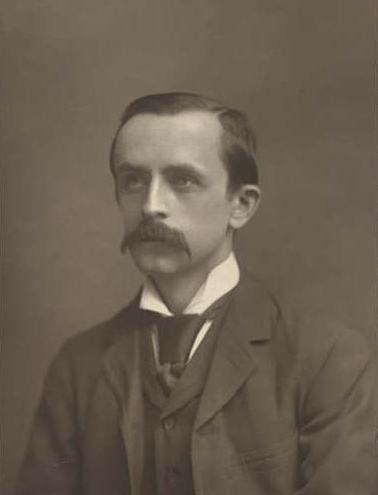
Visual AidWhere the line comes from
Photograph of the Scottish writer J. M. Barrie (1860–1937), who created Peter Pan. The Knowledge Bank explains that the idea Auggie hears at graduation — that we should try to be kinder than we need to be — is drawn from Barrie, not invented for the novel. The picture shows the writer only; he has no part in the story and never wrote about Auggie. Notice the date: the line was already about seventy years old when Palacio put it in a school hall.
J. M. Barrie, Scottish novelist and dramatist. Source: Wikimedia Commons, public domain.
ⓘ Vocabulary words are selected to help you understand and complete this workbook. Some may not appear verbatim in the novel.
ovationn.Pt.8
Long, enthusiastic applause
“Auggie receives a standing ovation at graduation.”
recognitionn.Pt.8
Public notice or praise for what someone has done
“The medal is recognition of Auggie’s courage.”
acceptancen.Pt.8
Being welcomed and included as you are
“By the end, Auggie finds real acceptance.”
triumphn.Pt.8
A great success or victory
“Graduation is a quiet triumph for Auggie.”
dignityn.Pt.8
The quality of being worthy of respect
“Auggie carries himself with dignity.”
unitev.Pt.8
To come together as one
“The night in the woods unites Auggie with new friends.”
retreatn.Pt.8
A trip away from everyday life, here into nature
“The class goes on a nature retreat.”
endurev.Pt.8
To bear something hard with strength
“Auggie has endured a year of stares and whispers.”
admirev.Pt.8
To respect and look up to someone
“By the end, his classmates admire Auggie.”
legacyn.Pt.8
What someone leaves behind or is remembered for
“Auggie’s kindness becomes his legacy at school.”
🧠Knowledge Bank question
1According to the Knowledge Bank, the precepts Mr. Browne shares belong to a long legacy. How old is that tradition?Pt.8
2“Acceptance” means being welcomed and included as you are.Pt.8
3Public notice or praise for what someone has done is —Pt.8
4Fill in each blank with the correct word.Pt.8
Word choices:triumphdignityovationlegacy- some words will not be used
A great success or victory is a
Being worthy of respect is
5To “unite” means to break apart into pieces.Pt.8
6A trip away from everyday life, here into nature, is a —Pt.8
7To bear something hard with strength is to —Pt.8
8To “admire” someone means to respect and look up to them.Pt.8
9Fill in each blank with the correct word.Pt.8
Word choices:recognitionacceptanceendureunite- some words will not be used
Praise for what you have done is
Being welcomed as you are is
10What someone leaves behind or is remembered for is their —Pt.8
Part 2
Comprehension
How well do you understand Part Eight (August)?
🧠Knowledge Bank · How a Story Ends
Narrative Logic · How a Story Ends
In the last part, watch how the story’s threads come together: the bullies, the friendships, and the question of whether Auggie will ever be accepted. A strong ending answers the questions the book has raised. The Retreat: On a nature retreat, older boys from another school taunt Auggie and Jack at night. Defended: Classmates Amos, Henry, and Miles defend Auggie, and they become friends. Graduation: Mr. Tushman gives Auggie a medal for courage and kindness. A Wonder: The school gives Auggie a standing ovation; his mother calls him a wonder. In the final part, August narrates the end of fifth grade. On the class nature retreat, older boys from another school surround and taunt Auggie and Jack at night — until classmates Amos, Henry, and Miles rush to defend him, and the boys become friends.
🧠Knowledge Bank question
1According to the Knowledge Bank, what does a strong ending do?Pt.8
2The class goes on a nature retreat near the end of the year.Pt.8
3What happens to Auggie and Jack at night on the retreat?Pt.8
4Who comes to defend Auggie?Pt.8
5Put these events from Part 8 in the correct order. Write 1–4 (1 = first).Pt.8
Amos, Henry, and Miles rush to defend Auggie.
At graduation, Auggie receives a medal.
The class goes on the nature retreat.
Older boys taunt Auggie and Jack at night.
6After the fight, the boys who defended Auggie become his friends.Pt.8
7What does Auggie receive at graduation?Pt.8
8How does the school respond when Auggie is honored?Pt.8
9Auggie’s mother tells him he is a ‘wonder.’Pt.8
10By the end, how has Auggie’s place at school changed?Pt.8
Part 3
Literary Elements
Understanding HOW and WHY R.J. Palacio writes Part Eight (August) the way she does.
🧠Knowledge Bank · Climax, Resolution, and Theme
Literary Technique · Climax, Resolution, and Theme
Part 8 holds the climax (the night fight on the retreat) and the resolution (acceptance and the graduation medal), and it lands the book’s central theme: kindness is not softness, but daily moral courage. Rhetoric — the graduation speech: Tushman’s address uses the classic form: a question, a definition, a charge to the audience — “always try to be a little kinder than is necessary” is a masterclass closing line. Ethics — the whisper that ends the book: the final word is private, not public — a mother’s whisper after the ovation; a ready discussion: why does Palacio end with the quiet voice instead of the crowd? Auggie’s mother whispers that he is, truly, a wonder. When older boys attack Auggie, his classmates step in — the opposite of the bystander effect, where the more people who witness trouble, the less likely any one acts.
Visual AidWhat the ending has to answer
Diagram for the Knowledge Bank on climax, resolution, and theme. It lists the questions the book raises early and draws them arriving together at the graduation, because that is what the Knowledge Bank means by a strong ending. It does not claim every question gets a happy answer. Notice that the questions are not new: each one was opened in an earlier part, which is why the last scene can close them.
Threads named in the Knowledge Bank. Drawn for Garden Heights Academy.
📚 Literary Devices in This Part · definitions & examples
The climax is the most intense, turning-point moment of a story. In Part 8 it is the night fight on the retreat.The resolution is the ending, where the story’s problems are settled. Auggie is finally accepted and honored at graduation.Theme is the big idea behind a story. Auggie being honored for kindness and courage lands the book’s central theme: choose kind.
The questions below are mixed — not grouped by device. Decide which device each one is about.
🧠Knowledge Bank question
1According to the Knowledge Bank, what classic three-part form does Mr. Tushman's graduation speech use?Pt.8
2The resolution is the part where the story’s problems are settled.Pt.8
3Fill in the blanks with the correct words.Pt.8
Word choices:themekindnessclimaxsetting- some words will not be used
The big idea behind a story is its
The central theme of Wonder is
4The graduation, where Auggie is finally accepted and honored, is the —Pt.8
5The book’s main theme is kindness.Pt.8
6Fill in the blanks with the correct words.Pt.8
Word choices:climaxturningsettingresolution- some words will not be used
The most intense moment of a story is the
A climax is a major
7Auggie being honored for kindness and courage shows the book’s —Pt.8
8A climax is the most intense, turning-point moment of a story.Pt.8
9Fill in the blanks with the correct words.Pt.8
Word choices:resolutionendingclimaxsetting- some words will not be used
The part where problems are settled is the
The resolution comes at the story’s
10Mr. Tushman’s medal citation honors the quiet strength that “carries up the most hearts.” Why is it right that the book’s final honor rewards CHARACTER rather than achievement?Part 8
Part 4
Think Deeper
Four deeper challenges — no single-word recall. Read, weigh the evidence, and reason it through.
🧠Knowledge Bank · Kindness Takes Courage
Ethical Reasoning · Kindness Takes Courage
At the end, Auggie is honored not for becoming ‘normal’ but for enduring cruelty with dignity while others learn to change. Palacio’s deepest message is that a community becomes better when ordinary people repeatedly choose courage, respect, and kindness. The book ends where it began — in August’s own voice. After a year of cruelty and kindness, Auggie is finally accepted by his classmates and honored at graduation. Palacio closes the story by showing how one child’s courage exposes the moral health of a whole school community. Climax: The most intense, turning-point moment of a story. Resolution: The ending, where the story’s problems are settled. At graduation, Mr. Tushman awards Auggie a medal for quiet courage and kindness, and the whole school rises in a standing ovation. The medal is not for a single brave act but for a year of ordinary persistence.
1Claim: “By the end, August is accepted and even admired.” — choose the two details that best prove it.Claim & Evidence
2Cruelty faced, or kindness that wins? Tap each item to sort it — tap again to switch sides. You can keep tapping to change your answer.Sort into two
◄ Cruelty facedKindness that wins ►
3Match each cause to its result. For each cause, pick its result.Cause & Effect
Older boys corner Auggie and Jack at night→
The boys stand together against the bullies→
The school year reaches its end→
Mr. Tushman honors Auggie’s quiet strength→
🧠Knowledge Bank question
4Fill both blanks to complete the reasoning.Build the Argument
The Knowledge Bank argues that Auggie's medal is not a reward for becoming normal because , which shows that .
Part 5
Standardized Test · Synthesis & Mixed Practice Test
Part 8 is your mixed practice test: every question family from Parts 1–7 can appear — Vocabulary in Context, Factual Detail, Command of Evidence, Inference, Central Ideas and the TOEFL Prose Summary — in the styles the SAT and TOEFL use. Read the passage (the highlighted words are tested below), then choose the answer best supported by the text.
Read the passage — the highlighted words are tested — then answer. Tap an answer, then tap it again to confirm.
SATWords in Context — a word's meaning in this passage
SATInference — a conclusion the passage implies
SATCentral Ideas — the passage's main point
TOEFLFactual Information — a fact stated in the passage
TOEFLVocabulary — a tested word's meaning here
TOEFLProse Summary — the three sentences that sum it up
TOEFLInsert Text — where a sentence best fits
The Bystander Effect and Its Cure
In the 1960s, psychologists John Darley and Bibb Latané uncovered one of the strangest facts about human crowds: the MORE witnesses an emergency has, the LESS likely any one of them is to help. Each onlooker, seeing others do nothing, begins to assume that someone else will act — or that, since nobody is moving, the situation must not be serious. Responsibility, divided among many shoulders, somehow lands on none; the researchers named this the bystander effect. But their mirror-image finding is the hopeful one. The spell has a simple counter-charm: ONE person moving. The moment a single onlooker treats the situation with urgency — steps forward, speaks up, kneels down — the crowd’s arithmetic reverses.
Others unite behind the first mover within seconds, because action turns out to be exactly as contagious as hesitation; the first mover does not need to be strong, or loud, or important — she needs only to be visibly FIRST. Out of this research grew what schools now call upstander training. Its rules are almost embarrassingly small: name what is happening out loud (“that’s not okay”); act in some visible way, however modest (stand beside the target, protecting their dignity); and if help is needed, recruit it by name (“YOU — find a teacher”), because a direct request dissolves the divided responsibility instantly. Ordinary people become first movers not by being braver than everyone else, but by deciding IN ADVANCE what kind of witness they intend to be — and so they restore what the crowd had lost: the sense that someone is responsible. Someone is. It is whoever moves.
Original passage written for Garden Heights — not a quotation from the novel.
1In the passage, “unite” most nearly means —SAT · Words in Context
2The passage most strongly suggests that people become ‘first movers’ in a crowd mainly by —SAT · Inference
3According to the passage, what happens as the number of witnesses to an emergency grows?TOEFL · Factual Information
4According to the passage, what reverses the crowd’s arithmetic?TOEFL · Factual Information
5In the passage, “dignity” most nearly means —SAT · Words in Context
6In the passage, the word “recruit” is closest in meaning to —TOEFL · Vocabulary
7Prose Summary. Which detail is MOST important to include in a short summary of the passage?TOEFL · Prose Summary
8Insert Text (TOEFL). Look at the four squares [1]–[4] in the passage excerpt below. They show where the following sentence could be added: “In test after test, the crowd stayed frozen right up until that first move came.”
[1] But their mirror-image finding is the hopeful one. [2] The spell has a simple counter-charm: ONE person moving. [3] The moment a single onlooker treats the situation with urgency — steps forward, speaks up, kneels down — the crowd’s arithmetic reverses. [4]
Where would the sentence fit best?TOEFL · Insert Text
9The passage most strongly suggests that when several boys rush TOGETHER to defend a smaller child, most of them are probably —SAT · Inference
10Which statement best expresses the central idea of the passage?SAT · Central Ideas
Part 6 · Optional
Creative Writing
A bonus challenge to practice your English.
About This Section
This writing task is optional and not part of your auto-graded score. Feedback checks length, spelling, and grammar only.
Writing Task — Part 8 “A Standing Ovation”
Write a short speech honoring Auggie at graduation, OR describe a time someone’s quiet courage deserved a ‘standing ovation.’ Make the book’s theme of kindness shine through. Write at least 40 words.
You can start with: “If you only ever saw August Pullman’s face, you would miss the most important thing about him, which is…”
0 / 40 words minimum
🗣 Teach It · Just for Fun (optional)
No right or wrong — close the screen and tell someone nearby what happened in this part. Can’t find anyone? Tell yourself out loud. The moment you teach it, you truly understand it.
🏆
Part 8 Complete!
You finished Part Eight (August) of Wonder.
Here are your auto-graded results:
-
points out of 100
Teach it to someone
The best last step is to teach it. In your own words, explain what happened — retell a favorite scene, teach a character’s big choice, or sum up the main idea for a parent, friend, or classmate. When you can teach it clearly, you truly own it.
SAT® is a registered trademark of College Board, which is not affiliated with, and does not endorse, these materials. TOEFL® is a registered trademark of ETS. These materials are not endorsed or approved by ETS. Garden Heights is an independent provider of test-style reading practice.