
Part 2
An old woman's kindness returns Salva to the walking Dinka, where honey, a friend, and his uncle Jewiir find him.
The Old WomanSalva wakes in the barn to silence: the villagers left in the night, judging a child alone would slow and endanger them. Wandering, frightened and hungry, he finds a small house and an old woman, who questions him, then shares raw peanuts and water dipped from a gourd. He stays several days, gathering firewood and waiting for family who never come.
Joining the LineThe pond is shrinking, the birds are leaving, and the sounds of war draw closer; the old woman must leave, and Salva cannot survive at her side. When Dinka walkers — Salva's own people — pass, she pleads with them to take the boy. They refuse at first, exactly as the villagers did, then give in, and Salva joins the line, careful to keep up and stay useful.
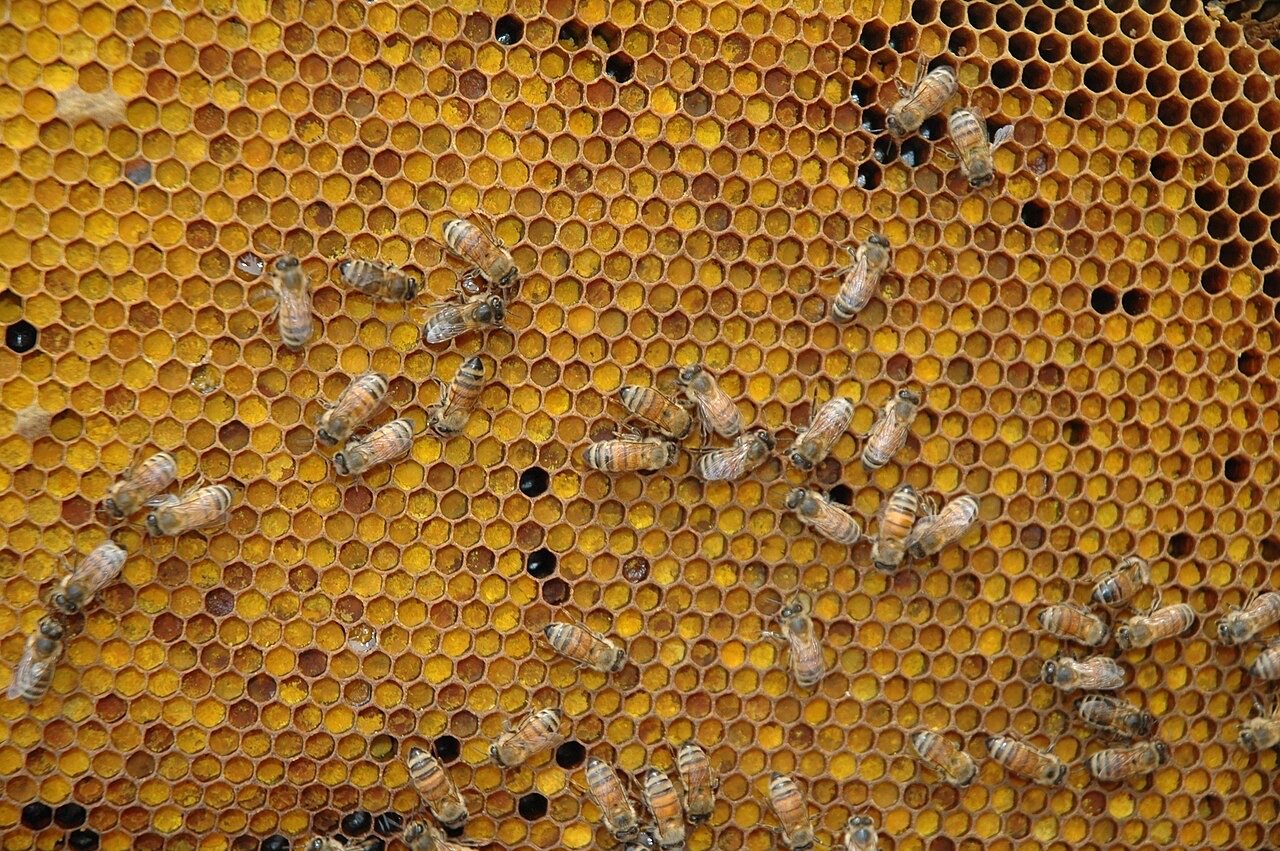
Honey and MarialThe group swells with people of other tribes. A young Jur-chol man, Buksa, tracks a far-off sound to a tree heavy with honeycomb, and the travelers feast, gladly paying in bee stings — Salva takes one near his eye and decides a full stomach is worth it. He also finds a friend, Marial, a Dinka boy his own age separated from his family, who says the group is walking east toward Ethiopia.
Jewiir and NyaThen Salva hears his full name called: his uncle Jewiir, his father's youngest brother, a former soldier with a gun. For the first time since the shooting began, Salva belongs to someone. In 2008, Nya walks daily to the pond, little sister Akeer trailing; for the dry season the family camps beside a great lake no longer a lake, where Nya digs damp clay for seep water shared uneasily with rival herding peoples.
| Section | What you will practice |
|---|---|
| Vocabulary | Words for a land running dry and a boy left behind: abandoned, arid, gourd, reluctant, seep… |
| Literary Elements | A dual narrative told in two time periods, characterization through choices under pressure, and foreshadowing carried by drying water |
| Cross-Curricular | Dinka and Nuer cattle culture — why herds are wealth, milk and markings, and how grass and water set two peoples against each other |
| Ch. | What happens |
|---|---|
| Chapter 3 | The Old Woman — Nya keeps up her long, hot round trips to the pond. In 1985, Salva — left behind in the barn — wanders alone until he finds an old woman outside a small house. She shares raw peanuts and water from a gourd, and lets the boy stay while he hopes his family will come. |
| Chapter 4 | Left Behind No Longer — Nya’s second daily trip means bringing her little sister Akeer along. In 1985, the pond shrinks and war creeps closer; the old woman says they both must go. She asks a passing Dinka group to take Salva; some fear a child will slow them down, but a man agrees because the boy is Dinka. |
| Chapter 5 | Honey and a Name — In the dry season Nya’s family moves to a camp by the great dried lake, where she digs for seep water in the clay. In 1985, the group feasts on Buksa’s honey, Salva befriends Marial, a Dinka boy his own age — and then Salva hears his full name. His uncle Jewiir has found him. |
ⓘ The vocabulary words in this list are selected to help you understand and complete this workbook. Some may not appear verbatim in the original novel.
- The old woman sends Salva off with a passing Dinka group.
- Salva hears his full name and finds his uncle Jewiir.
- An old woman shares her peanuts and water with Salva.
- The travelers feast on honeycomb and accept the stings.
- Buksa follows a buzzing sound to a honey-filled hive.
Picture an eleven-year-old boy waking up in an empty barn. The people he fell asleep beside are gone; they slipped away in the dark because a boy is one more mouth and one more pair of slow feet. He has no food, no water, and no idea which direction home is. What saves him is not a soldier or a miracle. It is an old woman sitting in front of a small house, who looks at a stranger’s child and decides, at real cost to herself, to share her peanuts and her water. Part 2 is a relay of such decisions: the woman who shelters him, the walking group that grudgingly lets him join, the man who follows a buzzing sound to a tree full of honey, and finally — unbelievably — a voice calling Salva by his full name. Twenty-three years later, in the same land, a girl named Nya kneels on a dried lakebed, scooping at the clay, waiting for a handful of brown water to seep up out of the earth.
In South Sudan, the two largest peoples — the Dinka and the Nuer — have built whole ways of life around cattle. A family’s wealth is counted not in coins but in the size and health of its herd. When a young man marries, his family gives cattle — a payment called bridewealth — to the bride’s family, and fines and debts are settled in animals. Cattle work as a true currency, yet a herder almost never slaughters one for meat, because killing a cow means spending the family’s savings.
A living herd pays out its value a little at a time. Milk is the staple food of the herding camps, and the animals also give dung for cooking fires and ash that keeps insects away. Boys spend long seasons guarding calves, young men take proud names in honor of a favorite ox, and songs praise a fine bull as other songs praise heroes. Herders use dozens of precise words for the colors and patterns of hides, so a single glance can name an animal exactly. A herd is more than money: it is a family’s history, walking.
All of this depends on grass and water, and both follow the seasons. In the rainy months, herds graze near the home villages; in the long dry season the grass withers, the plain turns arid, and herders must drive their animals toward the rivers and lakes where pasture survives. When water grows scarce and two herding peoples need the same shrinking lake, the land around it becomes contested ground, and raids to seize cattle can harden into long and bitter feuds. The half-dried lake where Nya’s family digs is exactly that kind of place, where wealth, thirst, and rivalry meet.
This writing task is optional and is not part of your auto-graded score. The feedback below checks only the basics — length, spelling, and grammar — not whether your ideas are right or wrong. It is meant for classroom discussion and creative practice, so feel free to use your imagination!
Writing Task — Part 2 “The Cost of Helping”
Salva survives Part 2 because strangers decide, one after another, to help him even though helping is risky or expensive — an old woman shares scarce food, and a wary group makes room for a child. Write about a time a stranger helped you or your family, or a time you helped someone you did not know. Describe what the help cost the giver, how it felt to receive or to give it, and what happened afterward. 6–10 sentences. End with what the moment taught you about kindness.
No right or wrong — close the screen and tell someone nearby what happened in this part. Can’t find anyone? Tell yourself out loud. The moment you teach it, you truly understand it.

Part 2 Complete!
You finished Chapters 3–5 of A Long Walk to Water.
Here are your auto-graded results:
Independent study guide by Garden Heights. Not affiliated with or endorsed by Linda Sue Park. Contains original analysis only; no text from the novel is reproduced. Reference text: This workbook follows Linda Sue Park’s classic text (the standard Puffin edition sold worldwide). Revised 2023 UK editions change some wording and may not match the vocabulary studied here.