
Part 1
During a stormy night and the day after, Meg Murry meets two strange women who hint that her missing father needs help.
The stormA violent storm rattles the Murry house, and Meg Murry cannot sleep. She is thirteen, miserable at school, quick to lose her temper, and certain she is a misfit; worst of all, her father has been missing a long time and no one will explain where he went. Downstairs her five-year-old brother, Charles Wallace, is already awake and heating milk for her, as though he knew she would come.
Mrs Whatsit arrivesCharles Wallace is a prodigy who barely speaks before strangers but reads Meg's mind at home. Their mother, Mrs. Murry, a microbiologist with a laboratory built into the house, joins them, and the family dog, Fortinbras, growls at the door. In blows Mrs Whatsit, a tiny old woman in a ridiculous heap of clothing, dripping wet and perfectly happy. She cheerfully admits she is the 'tramp' the neighbors whisper about, and that the constable's wife's missing bedsheets are hers now.
The word tesseractOn her way out she mentions a tesseract, and Mrs. Murry goes white. Next morning Mrs. Murry tells Meg that a thing need not be understood to be real. At school the principal, Mr. Jenkins, calls Meg in, scolds her sulky behavior, and hints her father may never return; Meg defends her parents fiercely. Walking home, Meg and Charles Wallace meet Calvin O'Keefe, a tall, popular boy who says he came because he felt a pull to be there.
Mrs Who's sewingAt the old dilapidated house in the woods they find not Mrs Whatsit but Mrs Who, an eccentric woman in enormous spectacles who quotes other writers instead of speaking her own sentences and is calmly sewing the stolen sheets into ghost costumes. She tells them their father needs help, then sends them home to dinner. The three walk back together as friends, and Calvin, for the first time, feels he belongs somewhere.
| Section | What you will practice |
|---|---|
| Vocabulary | Storm-night and misfit words: misfit, frantic, prodigy, eccentric, dilapidated… |
| Literary Elements | Mood built from weather, foreshadowing planted in a single word, and a third-person limited view tied to Meg |
| Cross-Curricular | Women in science — a mother with a home laboratory, and a 1962 novel that put a girl at the center of physics |
| Ch. | What happens |
|---|---|
| Chapter 1 | Mrs Whatsit — A storm keeps Meg awake; she joins Charles Wallace and Mrs. Murry in the kitchen. A strange old woman blows in from the night, confesses to stealing a neighbor’s sheets, and leaves behind one word that terrifies Meg’s mother. |
| Chapter 2 | Mrs Who — Mr. Jenkins scolds Meg at school and doubts her father will return. Walking home, Meg and Charles Wallace meet Calvin O’Keefe, and at the old house in the woods they find Mrs Who, who speaks in borrowed quotations and says their father needs them. |
Four words, and three of them are about not belonging anywhere. A misfit is someone the group has decided does not belong: Meg has been sorted into that box at school long before the book begins. Frantic means wild with worry, fear, or hurry — the word the storm earns as it tears at the shutters all night. A tramp is a homeless wanderer who travels on foot, and the village passes the rumor of one around like weather. A constable is a small-town police officer; it is his wife’s sheets that have gone missing. Put them together and you have the whole social world of the opening: a village with a policeman, a rumor about a stranger, and a girl already filed in the wrong place. L’Engle spends two chapters proving Meg is the odd one out before she gives her one reason to be proud.
ⓘ The vocabulary words in this list are selected to help you understand and complete this workbook. Some may not appear verbatim in the original novel.
In Chapters 1–2, plot comprehension depends on locating the trigger, tracing mounting pressure, and recognizing the decisive turn. A violent storm rattles the Murry house, and Meg Murry cannot sleep. She is thirteen, miserable at school, quick to lose her temper, and certain she is a misfit; worst of all, her father has been missing for a long time and no one will explain where he went. Downstairs she finds her five-year-old brother, Charles Wallace, already awake and already heating milk for her, as though he had known she would come. Charles Wallace is a prodigy who barely speaks in front of strangers but reads Meg’s mind at home. Their mother, Mrs. Murry — a microbiologist who runs experiments in a laboratory built into the house — joins them, and the family dog, Fortinbras, begins to growl at the door. Seen as cause and effect, “The Night Everything Changed” becomes the opening catalyst.
- Meg, Charles Wallace, and Calvin meet Mrs Who in the old house.
- Mrs Whatsit blows in, then says a word that makes Mrs. Murry go pale.
- A storm keeps Meg awake in her attic bedroom.
- Mr. Jenkins scolds Meg in his office the next day.
- Charles Wallace has hot milk waiting in the kitchen.
In Chapters 1–2, Madeleine L’Engle (author) coordinates mood, foreshadowing, and limited to establish the novel’s opening design. Notice that nothing supernatural happens for several pages — and yet the opening already feels dangerous. That is mood at work: the atmosphere a writer builds through weather, sound, and detail. L’Engle gives us a house that shudders in the wind, rain flung against glass, a cold attic, a growling dog, and a girl lying awake cataloguing everything wrong with her life. Every one of those details is chosen. The storm outside matches the storm inside Meg — her anger, her fear for her father, her sense of being a misfit — so that the weather becomes a picture of her mind. It also does practical work: a wild night makes a stranger at the door frightening, and it lets an impossible visitor arrive without immediately seeming impossible. That authorial design makes “The Storm as a Doorway” a lesson in deliberate atmosphere.
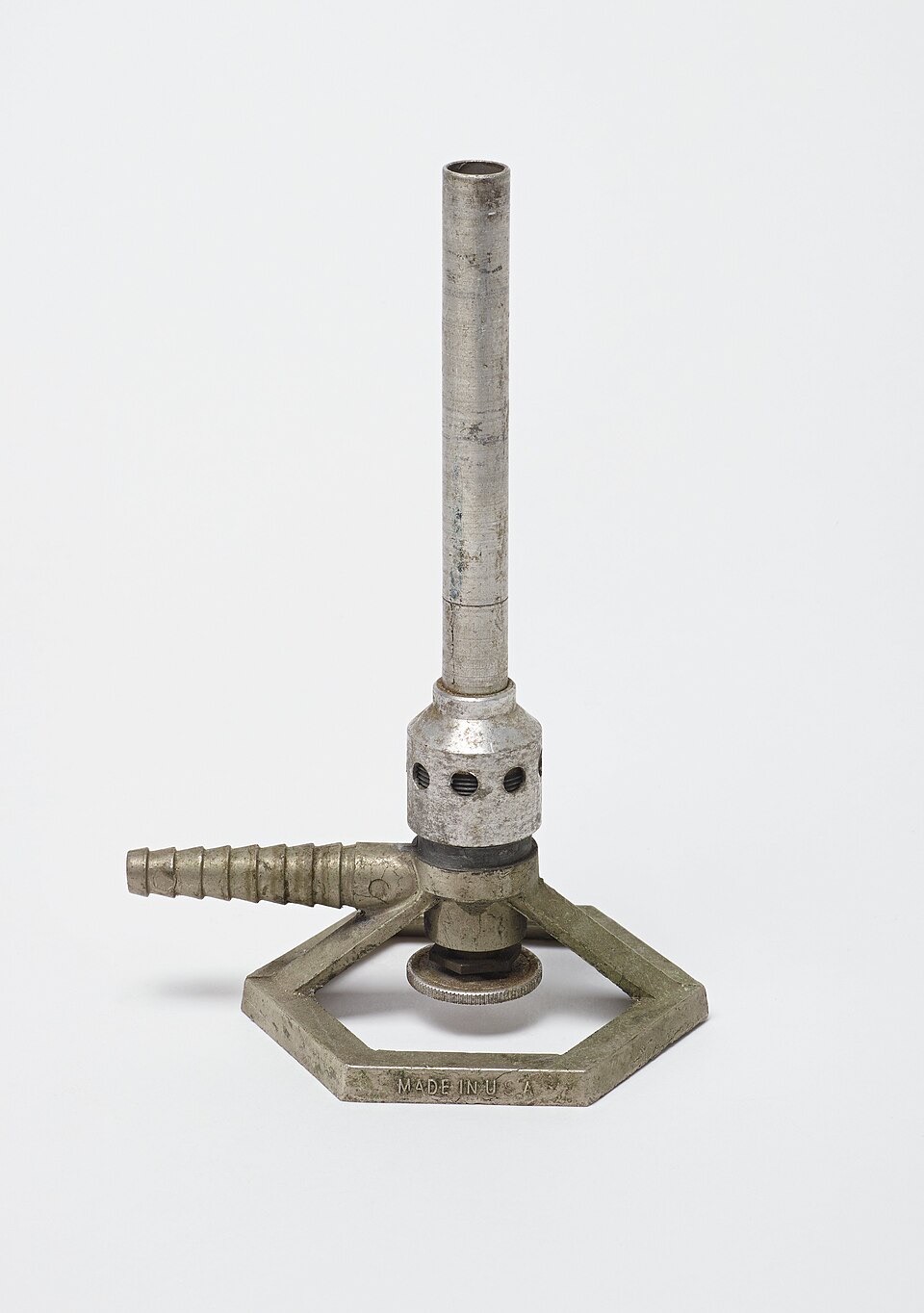
Look closely at Mrs. Murry. She is not simply a worried mother waiting by the door: she is a working research scientist, a microbiologist who holds two doctorates and who runs her own laboratory in a room attached to the family house. She stirs a stew over a Bunsen burner while her experiments run, and she answers her daughter’s questions the way a scientist does — by saying that a thing does not have to be understood in order to be real. That detail mattered enormously in 1962, the year A Wrinkle in Time was published. Women then made up only a tiny fraction of working scientists in the United States; laboratories, physics departments, and university faculties were overwhelmingly male, and many girls were quietly steered away from mathematics and science before they ever reached high school. So Mrs. Murry is an argument as much as a character. L’Engle puts a woman with two doctorates at a Bunsen burner in a family kitchen and never once treats it as remarkable, which in 1962 was itself the point.
Picture a house shaking in the middle of the night. Wind claws at the shutters, rain drives sideways, and a girl lies awake in a cold attic room with a blanket pulled to her chin, listening to the roof strain and thinking about everything that has gone wrong: the teachers who say she is failing, the boys who call her brother strange, and the father who walked out of their lives and never came back. Downstairs the dog growls at the door. Someone is out there in the storm. When the door finally opens, the thing that stumbles in is not a tramp at all but a small, soaked, oddly cheerful old woman in far too many scarves — a woman who wants her boots pulled off, who admits she stole a neighbor’s bedsheets, and who then says one quiet word that drains the color from a scientist’s face. The storm outside was never the real danger. Something far stranger has just walked into the kitchen.
The night that opens A Wrinkle in Time is wild, and wild nights have a physics of their own. The atmosphere presses down on the ground, but not equally everywhere: where air sinks and piles up, pressure rises; where air rises and thins out, pressure falls. Air flows from higher pressure toward lower, and that flow is what we call wind. Shuddering walls and rattling shutters are evidence of one invisible fact: nearby, the pressure has dropped sharply. A dilapidated house, its boards loose and shutters worn, only reports that fact more loudly.
Most violent weather begins where two great air masses meet. Cold, dense polar air and warm, moist air do not blend politely; they converge along a narrow boundary called a front, a boundary so abrupt that a traveler can cross it in minutes and feel the temperature fall ten degrees Fahrenheit (about six degrees Celsius). Because cold air is heavier, it wedges under warm air and shoves it upward; that forced lifting is the engine of the storm.
The lifted air explains the rest. Rising air cools, and cool air holds less water vapor, so the vapor condenses into droplets; condensation releases heat, which warms the rising parcel and speeds its climb. When the atmosphere is unstable in this way, a modest updraft can feed on itself, and its climb turns frantic — wild and rushing — until a cloud tower stands in under an hour. Inside that tower, colliding ice crystals and water droplets strip electric charge from one another until the difference breaks down the air, and lightning answers. A storm, then, is not a mood but a machine: pressure makes wind, a front makes lift, and rising moist air pays for its own climb.
This writing task is optional and is not part of your auto-graded score. The feedback below checks only the basics — length, spelling, and grammar — not whether your ideas are right or wrong. It is meant for classroom discussion and creative practice, so feel free to use your imagination!
Writing Task — Part 1 “The Night the Weather Matched”
L’Engle (author) uses a storm to show us how Meg feels inside before Meg ever explains it. Write about a time when the weather seemed to match your mood — or clashed with it completely. Describe the sky, the sound, and the feeling together. 6–10 sentences. End with what the weather seemed to be telling you.
No right or wrong — close the screen and tell someone nearby what happened in this part. Can’t find anyone? Tell yourself out loud. The moment you teach it, you truly understand it.


Part 1 Complete!
You finished Chapters 1–2 of A Wrinkle in Time.
Here are your auto-graded results:
The best last step is to teach it. In your own words, explain what happened — retell a favorite scene, teach a character’s big choice, or sum up the main idea for a parent, friend, or classmate. When you can teach it clearly, you truly own it.
Independent study guide by Garden Heights. Not affiliated with or endorsed by Madeleine L'Engle. Contains original analysis only; no text from the novel is reproduced. Reference text: This workbook follows Madeleine L'Engle’s classic text (the standard Puffin edition sold worldwide). Revised 2023 UK editions change some wording and may not match the vocabulary studied here.