
Part 3
Chapter 5 explains the title, then a rough journey shows the children Earth under the Dark Thing and who fights it.
Folding the skirtBefore traveling, Meg asks how anyone crosses such distances; the guides demonstrate instead of lecturing. A piece of skirt is stretched flat, an insect imagined walking the long way across, then the fabric is folded until the two far points touch and the trip shrinks to one step. Charles Wallace recites the ladder, line, square, cube; the guides add the fourth dimension, time, and the fifth, the tesseract, so the shortest distance between two points stops being a straight line.
A bad landingThen they tesser, and it goes badly. By mistake the party stops on a two-dimensional planet, where Meg is pressed flat, cannot open her lungs, and cannot hold a thought; Mrs Which apologizes, having forgotten that human bodies are less adjustable than hers. They move on to a gray, foggy planet in the belt of Orion, where a cave holds the Happy Medium, a jolly woman in a turban with a crystal ball.
Earth in the ballAsked to show them home, the Medium turns the ball to Earth, which is smothered by the same Dark Thing the children saw from above Uriel. Mrs Which names it: evil, the power of darkness. Calvin asks whether anyone has ever fought it; Earth has fought it all along. Mrs Who offers a line about light shining in darkness, the darkness never mastering it, and Charles Wallace recognizes the speaker as Jesus.
Earth's fightersThe guides add more names: da Vinci, Michelangelo, Shakespeare, Bach, Beethoven, Rembrandt, Einstein, Madame Curie, Gandhi, Buddha, St. Francis, artists and scientists and teachers from many traditions, all counted as fighters. The chapter closes on Meg's father: he is on a planet that has given in. Mrs Whatsit tells her the rescue will be hard and that she can do it anyway.
| Section | What you will practice |
|---|---|
| Vocabulary | Words of dimension and dread: tesseract, dimension, comprehend, shroud, ominous… |
| Literary Elements | The teaching analogy, the Dark Thing as symbol, and allusions to real artists, scientists and religious figures |
| Cross-Curricular | Physics and cosmology — how the dimension ladder works, and what it would mean to fold space instead of crossing it |
| Ch. | What happens |
|---|---|
| Chapter 5 · Folding the Cloth | The Tesseract — the guides fold a piece of skirt so two far points touch, Charles Wallace counts the dimensions to the fifth, and a botched tesser flattens the travelers onto a two-dimensional planet where Meg cannot breathe. |
| Chapter 5 · The Gray Planet | The Happy Medium — in a cave near Orion a crystal ball shows Earth wrapped in the Dark Thing; the guides name the fighters who have pushed back against it, and reveal that Meg’s father is on a planet that surrendered. |
Four words, and one of them is doing something no dictionary can quite manage. A tesseract is a fold in space and time used as a shortcut: the guides crossed the galaxy by tesseract. A dimension is a direction in which something can be measured: a cube has one dimension more than a square. To comprehend is to understand something fully: Meg could not comprehend the fifth dimension. To shroud is to cover something so it cannot be seen: the Dark Thing seemed to shroud the whole Earth. Notice that L’Engle gives Meg the word comprehend precisely so she can fail at it. Meg’s confusion is not a failure of the lesson; it is the lesson. The book is not asking a child to picture five dimensions. It is asking her to accept that a real thing can be true, and useful, and still lie past what a mind is able to hold.
ⓘ The vocabulary words in this list are selected to help you understand and complete this workbook. Some may not appear verbatim in the original novel.
This portion of A Wrinkle in Time links setting to conflict, then measures the human change produced by that collision. Chapter 5 is where the book explains its own title. Before the traveling begins, Meg wants to know how anyone crosses that much space, and the guides answer with a demonstration rather than a lecture: a piece of skirt is stretched flat, an insect is imagined walking the long way from one end to the other, and then the fabric is brought together so that the two distant points touch and the journey shrinks to a single step. Charles Wallace rattles off the ladder that leads there — a line, then a square, then a cube — and the guides supply the fourth dimension, time, and the fifth, the tesseract. This event pattern makes “The Chapter That Names the Book” the section’s central reversal.
- The dimensions are counted up to the fifth, the tesseract.
- A piece of skirt is stretched flat to model a long journey.
- A mistaken stop leaves the travelers on a two-dimensional planet.
- The cloth is folded so the two far points touch.
- A crystal ball on a gray planet shows Earth wrapped in darkness.
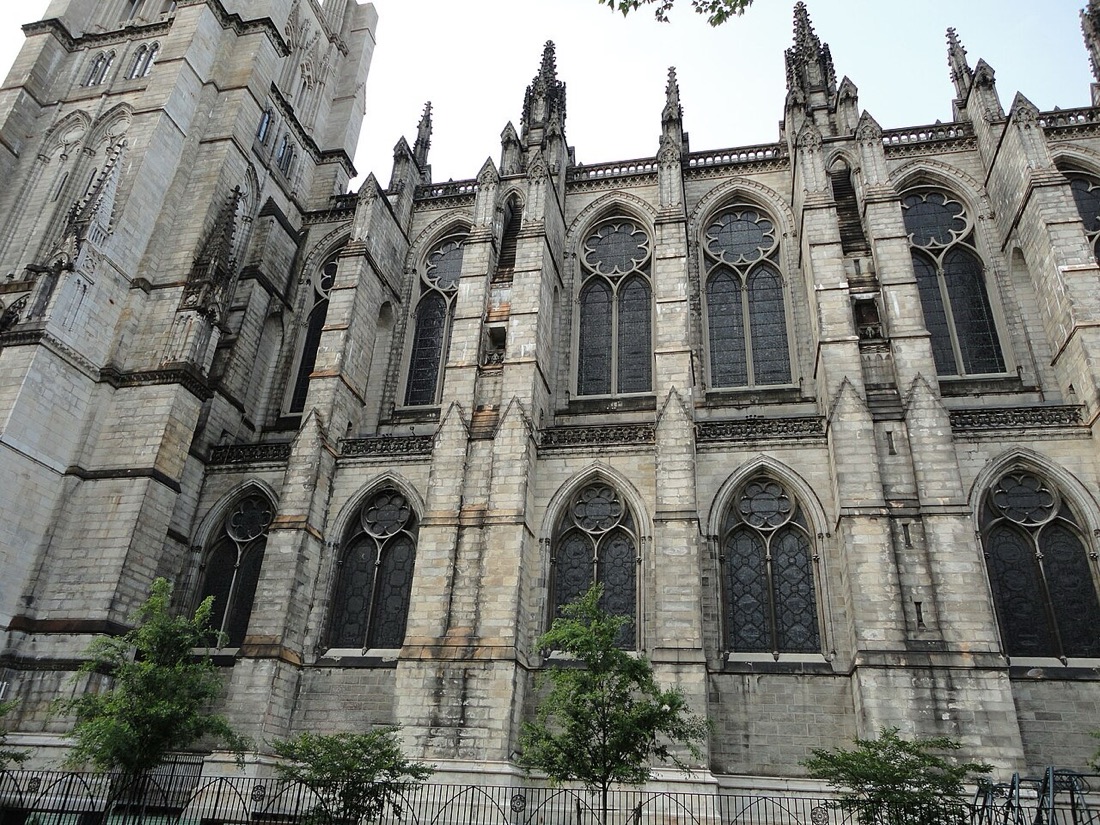
Across Chapter 5, analogy interacts with symbol and allusion to complicate the apparent meaning of events. When Calvin asks who has fought the Darkness, Mrs Who answers with a line from the opening of the Gospel of John — the image of a light that shines in darkness without the darkness ever mastering it — and Charles Wallace identifies the figure as Jesus. Some background, stated as fact. Madeleine L’Engle (1918–2007) was an American writer and a lifelong Episcopalian, a Protestant denomination in the Anglican tradition; for many years she was the writer-in-residence and volunteer librarian at the Cathedral of St. John the Divine in New York. Christian ideas were part of her material, and readers should expect to meet them here. What matters for reading Chapter 5 accurately is the shape of the list. That authorial design makes “The List of Fighters” a lesson in deliberate contrast.
The tesseract is not invented nonsense, and Chapter 5 walks up to it the way a geometry teacher would. Start with a line: it has length and nothing else, so one number fixes where you are on it. Sweep that line sideways, at right angles to itself, and you sweep out a square — two numbers, across and along. Lift the square straight up, again at right angles to everything you already have, and you get a cube. Three numbers. That is where our eyes stop, and it is where the book stops drawing: Meg works out that no pencil can manage the fourth the way it manages the first three, and she names that fourth one Time. Charles Wallace then names the fifth, and the fifth is the tesseract. Add it and a straight line is no longer the shortest way between two points. We cannot picture the fourth because it would have to run at right angles to length, width and height at once, and nothing we have ever seen does that. It is not merely hard to sketch; it lies past our conception.
Picture a piece of cloth pulled flat between two hands. An insect starts at one end and sets off walking, and the crossing takes forever, because along the cloth there is only one road. Then the hands come together, the two far ends touch, and the insect steps across in an instant — not by traveling faster, but because the road itself was folded. That is the whole idea of the tesseract, and it is the idea the book is named for. Charles Wallace counts the dimensions off like a times table, Meg understands for one shining second and then loses it, and Calvin listens the way a boy listens when the floor of the world quietly moves. Moments later the fold goes wrong, the travelers are squeezed flat onto a two-dimensional world, and Meg discovers what it feels like to be a three-dimensional girl in a place with no room for her. And when they finally reach a gray planet and a cheerful woman with a crystal ball, the picture that swims up in the glass is not a wonder at all. It is Earth, wrapped in something dark.
Chapter 5 borrows its central idea from real mathematics, and the ladder is easier than it sounds. Begin with a line, sweep it sideways at right angles to itself, and it sweeps out a square; lift that square straight upward and you have a cube. Most people stop there, because eyes and hands do, but the instruction never changed: move the shape in a fresh perpendicular direction, and a cube becomes a hypercube, or tesseract. No one can picture it, and the fourth step will bewilder nearly anyone — not from a failure of cleverness but of habit, since we were assembled inside three dimensions; the corners double at each step: two, four, eight, sixteen.
Physics reached the fourth dimension by a different road, easier to comprehend because everyone already lives in its extra direction. In relativity, time is treated as an axis alongside the three of space, so any event needs four numbers: three saying where, one saying when. This arena, called spacetime, is not rigid — mass and energy bend it, and what we feel as gravity is not a rope pulling planets inward but a curve that objects simply follow.
If space can curve, can it also be folded? Imagine a flat sheet and an insect that must traverse it from edge to edge; along the surface the trip is long, but fold the sheet until the edges touch and the insect steps across at once, because the shortcut passed through a direction the sheet itself does not contain. Fold three-dimensional space through a fourth direction and the shortest distance between two points is no longer a straight line. Physicists have a cousin of this idea: the wormhole, a tunnel joining two distant regions of spacetime, allowed by the equations, never observed.
This writing task is optional and is not part of your auto-graded score. The feedback below checks only the basics — length, spelling, and grammar — not whether your ideas are right or wrong. It is meant for classroom discussion and creative practice, so feel free to use your imagination!
Writing Task — Part 3 “Explain It With Cloth”
The guides do not define the tesseract for Meg — they fold a piece of cloth and let her see it. Think of something you understand well but that is hard to explain: a game, a skill, a rule, an idea from school. Write an explanation that uses a comparison to an everyday object, the way the cloth and the insect are used here. 6–10 sentences. End by saying what your comparison gets right, and where it stops working.
No right or wrong — close the screen and tell someone nearby what happened in this part. Can’t find anyone? Tell yourself out loud. The moment you teach it, you truly understand it.

Part 3 Complete!
You finished Chapter 5 of A Wrinkle in Time.
Here are your auto-graded results:
The best last step is to teach it. In your own words, explain what happened — retell a favorite scene, teach a character’s big choice, or sum up the main idea for a parent, friend, or classmate. When you can teach it clearly, you truly own it.
Independent study guide by Garden Heights. Not affiliated with or endorsed by Madeleine L'Engle. Contains original analysis only; no text from the novel is reproduced. Reference text: This workbook follows Madeleine L'Engle’s classic text (the standard Puffin edition sold worldwide). Revised 2023 UK editions change some wording and may not match the vocabulary studied here.