
Part 4
The children learn Mrs Whatsit was once a star, glimpse their mothers, and land on Camazotz with gifts and a warning.
A light goes outIn the dim cave of the Happy Medium, a plump, laughing woman in a turban who would far rather look at cheerful things than terrible ones, the children bend over the crystal ball again. They see the Dark Thing, a smothering shadow spreading across the galaxy, then a single point of brilliance moving straight into it. The light strikes; the darkness tears open; the light itself goes out.
Mrs Whatsit's secretMrs Whatsit quietly explains that they have watched a star battle the Dark Thing, and win, and die. Then Mrs Which says the thing that changes everything: that star was Mrs Whatsit. She was once a star, and she spent herself to push back the shadow; what stands before them now is what is left of her. Meg, Calvin, and Charles Wallace look at their odd little companion with new eyes.
Their mothers, then CamazotzThe Medium, upset by so much gloom, insists on a kinder picture first and shows their mothers: Calvin's mother shouting and swatting at a small child in a cluttered house, and Mrs. Murry alone in her laboratory, writing another nightly letter to a husband who never answers, until she puts her face in her hands. Meg's determination hardens. Then the party tessers to Camazotz; the crossing is cold, dark, wrong, for this time they pass near the Black Thing itself.
Gifts on the hillsideOn a hillside above a town of identical houses, the Mrs W's explain that they cannot come further. Each child gets a parting gift: Calvin the power to speak and be understood, Charles Wallace the plain fact that he does not know everything, and Meg her own faults, plus Mrs Who's spectacles, to be used only in the last extremity. Stay together, Mrs Which warns. Below, the town waits, every house the same, every ball bouncing on the same beat.
| Section | What you will practice |
|---|---|
| Vocabulary | Light-and-sacrifice words: medium, luminous, radiance, sacrifice, vanquish… |
| Literary Elements | The dying star as symbol, the pun hidden in ‘the Happy Medium,’ and foreshadowing in the parting gifts |
| Cross-Curricular | Physics and cosmology — how a star burns, how a star dies, and what a supernova leaves behind |
| Ch. | What happens |
|---|---|
| Chapter 6 · In the Cave | The Star That Died — the Happy Medium’s crystal ball shows a star hurling itself into the Dark Thing and dying to wound it; Mrs Which reveals that the star was Mrs Whatsit. |
| Chapter 6 · On to Camazotz | Gifts on the Hillside — a last vision of the mothers, a bitterly cold tesser past the Black Thing, and three parting gifts before the children face the town alone. |
Three of these four words are about light, and the fourth is about what light costs. A medium is someone said to see or speak past the ordinary world; the Happy Medium does it with a crystal ball and a cheerful refusal to look at anything sad. Luminous means glowing, giving off its own light — the word for the small point that moves straight into the shadow. Radiance is brilliant, shining light, and the book spends it all at once when the darkness is torn open for a single moment. A sacrifice is something precious given up for others, which is what that moment cost: the life of a star. Read in that order the set delivers the chapter’s argument without needing the plot. This is where the book stops being a rescue mission and starts being a story about price. Something sees, something shines, something burns — and the light in the third word is paid for in the fourth.
ⓘ The vocabulary words in this list are selected to help you understand and complete this workbook. Some may not appear verbatim in the original novel.
The Star in the Crystal Ball is organized around a difficult decision, the risk it creates, and the eventual result. In the dim cave of the Happy Medium — a plump, laughing woman in a turban who would far rather look at cheerful things than terrible ones — the children are asked to bend over the crystal ball one more time. What they see is the Dark Thing, that smothering shadow spreading across the galaxy, and then a single point of brilliance moving straight into it. The light strikes; the darkness tears open; and the light itself goes out. Mrs Whatsit explains quietly that they have just watched a star do battle with the Dark Thing, and win, and die. Then Mrs Which says the thing that changes everything: that star was Mrs Whatsit. Once decision and result are joined, “The Star in the Crystal Ball” supplies narrative momentum.
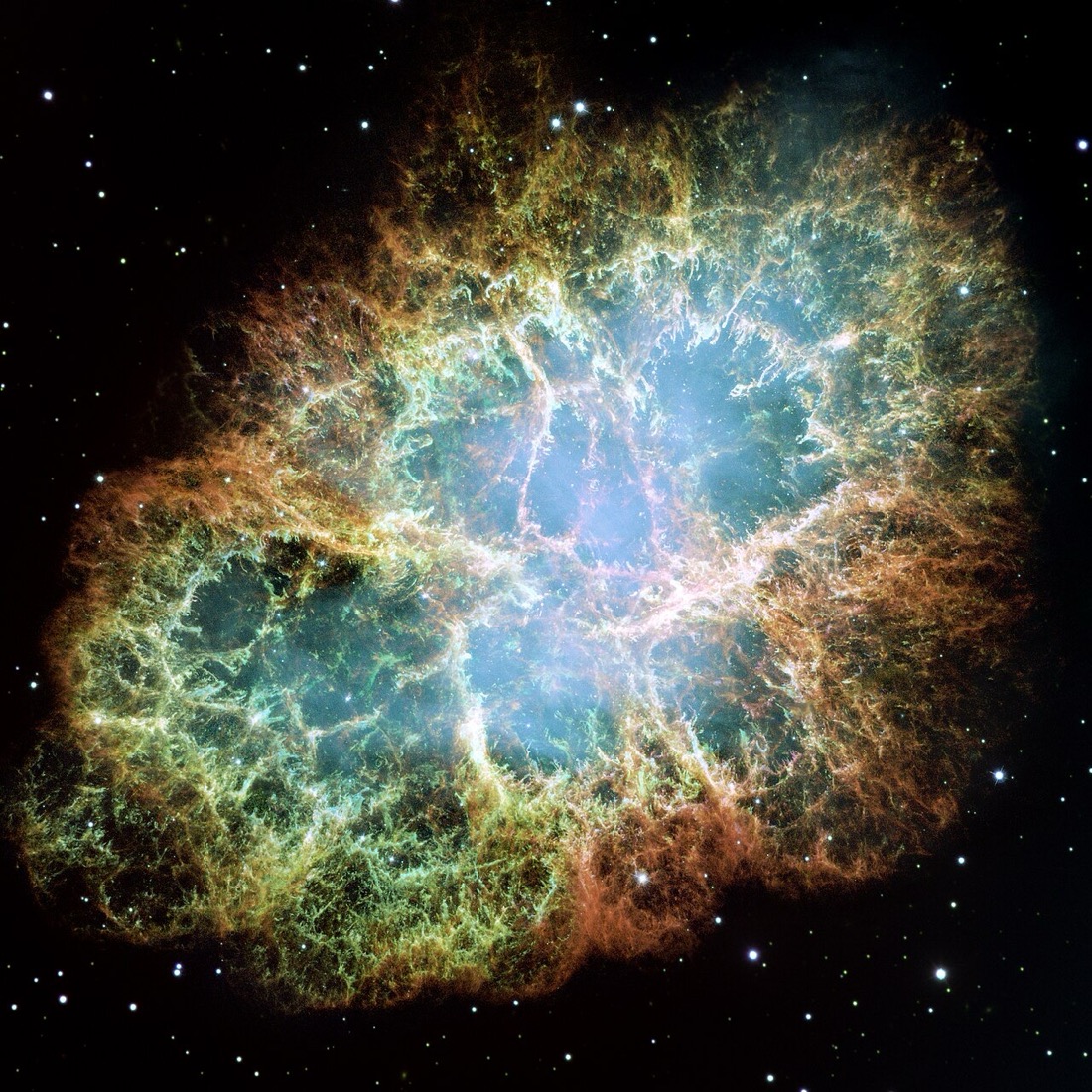
- Mrs Which reveals that the star was Mrs Whatsit.
- The Medium shows the children a last vision of their mothers.
- The Medium turns her crystal ball toward the far galaxy.
- A star hurls itself at the Dark Thing and the shadow tears.
- The party tessers to Camazotz and the gifts are handed out.
Madeleine L’Engle (author) makes the midpoint turn through symbol, pun, and foreshadowing rather than through explanation alone. A symbol is a concrete thing that carries a meaning larger than itself, and the star in the crystal ball is one of the finest in the novel. The children do not watch an army or a weapon; they watch a single point of light choose to go into the shadow rather than away from it. Notice how L’Engle stages the moment. The star wins — the darkness genuinely tears — and the star is also gone. Victory and loss arrive in the same instant, which is exactly what the book wants to say about standing against evil. The symbol then does something clever: it steps out of the crystal ball and stands beside the children. That authorial design makes “The Star as Symbol” a lesson in deliberate symbolism.
When Mrs Which says that Mrs Whatsit was once a star, L’Engle is reaching for one of the grandest facts in physics. A star is a vast ball of gas locked in a lifelong contest: gravity crushing inward, and the energy of nuclear fusion in the core pushing outward. In that core, hydrogen nuclei are forced together into helium, and a sliver of their mass is converted into staggering amounts of light and heat. That balance can hold for billions of years — but not forever. When the fuel thins, gravity wins. A modest star like our Sun will puff up into a red giant, shrug off its outer layers, and fade into a white dwarf. A heavier star ends far more violently, collapsing and then detonating as a supernova bright enough to outshine its whole galaxy for weeks. Either way the star spends itself entirely. That is what Mrs Whatsit was and what she stopped being, and it is why the book can call her loss by the plain name of a sacrifice.
Picture a cave lit only by the glow of a great glass ball, and three children leaning in until their faces are washed pale by its light. Far off in that glass, a shadow is eating a corner of the sky. Something small and burning moves toward it — not away, toward — and for one instant the darkness splits like torn cloth. Then the light is gone. Gone entirely. The children are still catching their breath when they learn whose light it was: the small, shabby, chattering creature standing right beside them used to be that star, and she traded her whole blazing self for one wound in the dark. Nothing in the cave looks the same afterward. Not the crystal ball, not the Medium’s laughter, and certainly not Mrs Whatsit.
A star is a colossal ball of hot gas held together by its own gravity, and its life is one long argument between two forces. Gravity presses inward, trying to crush the star into its center, while energy released in the core pushes back. There the pressure and temperature grow so extreme that hydrogen nuclei are squeezed into helium — a process called nuclear fusion, which converts a tiny fraction of matter into enormous energy that streams outward as heat and light. As long as the outward push balances the inward pull the star is steady, and our Sun has held that balance for about four and a half billion years.
No star burns forever, because no star carries an endless supply of fuel. When the hydrogen in the core runs low, gravity is finally able to vanquish the outward push, and the center collapses. A modest star like the Sun swells into a red giant and cools into a white dwarf. A star many times heavier than the Sun ends far more violently: its core falls inward in less than a second and rebounds in a titanic explosion called a supernova, whose radiance can briefly outshine every other star in its galaxy combined. What survives at the center is either a dense neutron star or a black hole.
A supernova is not only an ending. Nearly every element heavier than the lightest few was forged inside stars and thrown outward when they died: the carbon in a pencil, the oxygen in a lungful of air, the iron in blood. Those clouds of enriched dust drift for ages, gather under gravity, and condense into new stars and planets. Astronomers therefore describe a star’s death as an act of seeding rather than a simple end.
“But the biggest stars end far more violently.”
This writing task is optional and is not part of your auto-graded score. The feedback below checks only the basics — length, spelling, and grammar — not whether your ideas are right or wrong. It is meant for classroom discussion and creative practice, so feel free to use your imagination!
Writing Task — Part 4 “What Would You Give Up?”
Mrs Whatsit gave up being a star — her whole blazing life — to wound the darkness for a while. Write about something you would be willing to give up for someone else, or for something you believe in. What is it, who or what is it for, and what would it actually cost you? 6–10 sentences. End by explaining whether you think a sacrifice still counts if nobody ever finds out about it.
No right or wrong — close the screen and tell someone nearby what happened in this part. Can’t find anyone? Tell yourself out loud. The moment you teach it, you truly understand it.


Part 4 Complete!
You finished Chapter 6 of A Wrinkle in Time.
Here are your auto-graded results:
The best last step is to teach it. In your own words, explain what happened — retell a favorite scene, teach a character’s big choice, or sum up the main idea for a parent, friend, or classmate. When you can teach it clearly, you truly own it.
Independent study guide by Garden Heights. Not affiliated with or endorsed by Madeleine L'Engle. Contains original analysis only; no text from the novel is reproduced. Reference text: This workbook follows Madeleine L'Engle’s classic text (the standard Puffin edition sold worldwide). Revised 2023 UK editions change some wording and may not match the vocabulary studied here.