
The Boxcar Children #1 cover
Garden Heights Academy

The Boxcar Children #1

This workbook is for Garden Heights members. Sign in to continue.

Sign in with Google →
New here? Just sign up with Google — your account includes Matilda, our gift book, forever.
📚

Garden Heights Academy

Enter your access code to open this workbook.

The Boxcar Children · Garden Heights Academy

Part 5

for The Boxcar Children · Part 5 · Chapters 9–10
a novel by Gertrude Chandler Warner
30 min5 Parts
This workbook is built on a solid pedagogical foundation, effectively integrating content and language learning based on the CLIL framework (Content and Language Integrated Learning), elevated by our unique 5th C — Connection — and an integrated Standardized Test section that weaves every SAT & TOEFL question type right into the novel, so learners build real test skills easily, naturally, and with fun.
What Happens in Part 5

Henry is hired to pick fruit in a cherry orchard, and the other children come along to help and have fun among the ripe cherries. Then the town of Silver City holds a Field Day — a day of races and contests. Henry competes in the big free-for-all race and, swift and strong, he wins, earning cheers and a prize. Kind Dr. Moore watches proudly. Little do the children know that the day will help bring a long-lost part of their family closer.

What We Will Learn
Literary ElementWhat It Means
SuspenseThe excited, tense feeling of wanting to know what happens next
Character TraitA word that describes what a character is like inside
ThemeThe big idea behind a story, such as hard work earning reward
Chapter Summary
ChapterKey Events
Ch.9Fun in the Cherry Orchard — Henry picks cherries for pay while the children help and enjoy a happy day
Ch.10Henry and the Free-For-All — Henry runs in the Field Day races and wins the free-for-all and a prize
Copyright Notice

Independent study guide by Garden Heights Academy. Not affiliated with or endorsed by Gertrude Chandler Warner or Albert Whitman & Company. No text from the novel is reproduced. Students should read the original book. Reference edition: this workbook follows the standard Albert Whitman & Company edition (the 1942 text) — the version sold in bookstores today. Early 1924-text reprints differ substantially and will not match this workbook’s chapters.
Part 1
Vocabulary
Study 10 key words from Chapters 9–10, then answer each question.
🧠Knowledge Bank · Field Day Races
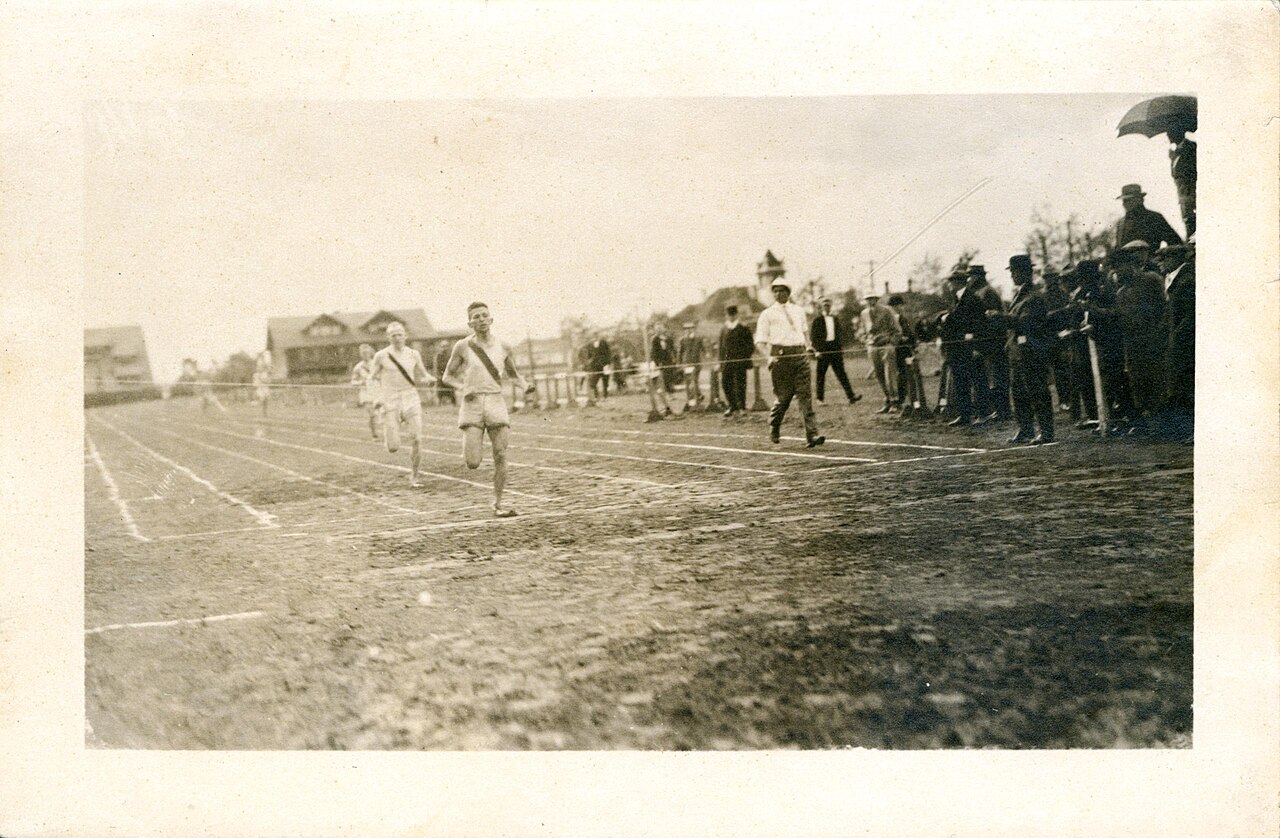
Lexical Meaning · Field Day RacesA Field Day was a cheerful community event that early-1900s American towns held outdoors, usually in summer. Neighbors gathered on a green or in a park to watch foot races, jumping contests, and other games, and winners took home ribbons or small cash prizes. For a town with no television and few machines, a Field Day was grand entertainment and a rare chance for ordinary people to show off their speed and strength. That is why Henry’s decision to enter the race matters so much: a quick, hardworking boy could actually win real money for his family in a single afternoon. The event also draws a crowd, which quietly sets up the story’s bigger surprise. Notice how a simple small-town tradition becomes the stage where Henry’s effort turns into a well-earned victory.

ⓘ Vocabulary words are selected to help you understand and complete this workbook. Some may not appear verbatim in the novel.

orchardn.Ch.9
A field where fruit trees grow
“Rows of cherry trees filled the orchard.”
ripeadj.Ch.9
Grown and ready to be picked and eaten
“The ripe cherries were red and sweet.”
harvestv.Ch.9
To gather a crop when it is ready
“The workers came to harvest the cherries.”
rewardn.Ch.9
Something good given for work or a kind act
“A fair wage was Henry’s reward for hard work.”
contestn.Ch.10
A competition to see who is best
“Field Day was full of races and contests.”
competev.Ch.10
To take part in a contest against others
“Henry chose to compete in the big race.”
spectatorn.Ch.10
A person who watches an event
“Spectators lined the track to watch the runners.”
swiftadj.Ch.10
Very fast
“Henry was swift and pulled ahead of the others.”
victoryn.Ch.10
A win
“Henry’s victory brought loud cheers.”
prizen.Ch.10
Something you win in a contest
“Henry won a prize for the free-for-all race.”
1A field where fruit trees grow is an —Ch.9
2Fruit that is “ripe” is ready to be picked and eaten.Ch.9
3To gather a crop when it is ready is to —Ch.9
4Fill in each blank with the correct word.Ch.9
Word choices:rewardripeorchardprize- some words will not be used
Good pay was Henry’s
The cherries were red and
5To “compete” means to take part in a contest against others.Ch.10
6A person who watches an event is a —Ch.10
7Henry was very fast. Another word for fast is —Ch.10
8A “victory” means losing a contest.Ch.10
9Fill in each blank with the correct word.Ch.10
Word choices:contestprizespectatorripe- some words will not be used
Field Day was full of races and each
For winning, Henry was given a
10Henry’s win in the race is called his —Ch.10
Part 2
Comprehension
How well do you understand Chapters 9–10?
🧠Knowledge Bank · Reading for Big Moments
Narrative Logic · Reading for Big MomentsNot every sentence in a story carries the same weight; some moments are quiet steps, while others are turning points that change everything. A sharp reader learns to feel the difference and to slow down when a big moment arrives. In Part 5, the Field Day race is exactly such a moment — the writing tightens, the crowd leans in, and you can sense that something important hangs on the outcome. Clues help you spot these peaks: rising excitement, a character taking a risk, or a prize within reach. When you notice those signals, read carefully, because turning points usually decide where the plot goes next. Learning to separate ordinary scenes from the big moments is a skill that makes you a sharper, more alert reader.
1What job does Henry do in the orchard?Ch.9
2The other children come to help and have fun in the orchard.Ch.9
3What fruit do they pick in the orchard?Ch.9
4What special day is held in Silver City?Ch.10
5Put these events from Part 5 in the correct order. Write 1–4 (1 = first).Ch.9–10
  • The children have fun helping in the orchard.
  • Henry wins the free-for-all race.
  • Silver City holds its Field Day races.
  • Henry is hired to pick cherries.
6Henry enters the races on Field Day.Ch.10
7Which race does Henry win?Ch.10
8What does Henry win for his running?Ch.10
9Henry is a slow runner who finishes last.Ch.10
10Who watches Henry proudly at the race?Ch.10
Part 3
Literary Elements
Understanding HOW and WHY Gertrude Chandler Warner writes Chapters 9–10 the way she does.
🧠Knowledge Bank · Warner’s Word-Craft: ‘Silver City’
Language · Evocative-Naming SpotlightSometimes a writer chooses a name not for accuracy but for the picture it paints, a trick we can call evocative naming. When the children gaze at a distant, sparkling town and call it their Silver City, they are not claiming it is truly made of silver. The name captures a feeling — the shimmer of far-off lights, the glow of a place that seems magical and just out of reach. A plain phrase like the town over there would carry none of that wonder. By reaching for a bright, imaginative name, Warner lets the reader share the children’s sense of hope and adventure. Watch how a single vivid label can wrap an ordinary sight in magic, and how the names characters invent quietly reveal their dreams.
📚 Literary Devices in This Part · definitions & examples
Suspense is the excited, tense feeling of wanting to know what happens next — like wondering whether Henry will win the race.
A character trait is a word that describes what a character is like inside, such as hard-working or brave. Henry is hard-working and swift.
Theme is the big idea behind a story. A theme of Part 5 is that hard work and effort are rewarded.
The questions below are mixed — not grouped by device. Decide which device each one is about.
1The tense wait to see whether Henry will win the race is —Ch.9–10
2Suspense is the tense feeling of not knowing what will happen.Ch.9–10
3Fill in each blank with the correct word.Ch.9–10
Word choices:suspensethememoodsetting- some words will not be used
The tense wait during the race builds
The big idea that hard work is rewarded is a .
4The big idea that honest effort pays off is the story’s —Ch.9–10
5A theme is a big idea a story explores, like effort rewarded.Ch.9–10
6Fill in each blank with the correct word.Ch.9–10
Word choices:themesuspensemoodplot- some words will not be used
The idea that hard work brings reward is a
The tense race that keeps us guessing builds .
7Not knowing if Henry will win the race creates —Ch.9–10
8That Henry’s honest effort wins the day reflects the book’s —Ch.9–10
9Fill in each blank with the correct word.Ch.9–10
Word choices:suspensethememoodplot- some words will not be used
The tense wait for the race result is
The idea that effort is rewarded is the .
10The suspense of the race mainly makes readers feel —Ch.9–10
Part 4
Think Deeper
Four deeper challenges — no single-word recall. Read, weigh the evidence, and reason it through.
🧠Knowledge Bank · Effort Earns Its Reward
Ethical Inquiry · Effort Earns Its RewardPart 5 rewards a value Warner cares about deeply: effort. Henry does not stumble into prize money by luck; he trains, works his odd jobs, and then pushes hard down the track to win. The story draws a clear line from labor to reward, teaching young readers that good things usually follow honest, sustained work rather than idle wishing. Notice, too, that Henry’s reward is not only the cash but the quiet pride of having earned it fairly in front of a watching crowd. Warner never suggests that money falls from the sky; every dollar in this book is the fruit of someone’s effort. Ask yourself how the children’s steady willingness to work shapes their luck, and why a prize feels so much sweeter when it is truly earned.
1Claim: “Henry works hard and shines at the Field Day.” — choose the two details that best prove it.Claim & Evidence
2Shows Henry’s effort and success, or just a detail of the day? Tap each item to send it left or right.Sort into two
◄ Henry’s effort and successJust a detail ►
3Match each cause to its result. For each cause, pick its result.Cause & Effect
Henry needs to earn money
The siblings come along
Silver City holds a Field Day
Henry runs his hardest
4Fill both blanks to complete the reasoning.Build the Argument
Henry’s work and racing show that , which means that .
Part 5
Standardized Test · Inference & Central Ideas
Part 5 practices exam reading skills — Vocabulary in Context, Inference & Central Ideas — in the styles the SAT and TOEFL use. Read the passage (the highlighted words are tested below), then choose the answer best supported by the text.
🎓Knowledge Bank · How the SAT & TOEFL Ask
Test Skills · Part 5This section keeps building the four exam question families: Vocabulary in Context, Main Idea, Inference, and Author’s Purpose. For a vocabulary item, cover the word, read the sentence, and predict a replacement before you look at the choices; for main idea and purpose, ask what job the whole passage is doing.

When germs slip into the body, an invisible battle begins at once. White blood cells act like tiny soldiers: they hunt down invading germs and destroy them before they can spread. A fever, though it feels miserable, is really a weapon, because most germs cannot survive the extra heat the body creates on purpose. Rest helps the soldiers win, which is why a sick person feels so tired and heavy. Drinking water and eating well give the body the strength it needs to recover. Over several days the immune system remembers each germ it has beaten, so the next attack is met faster and the illness is milder or does not appear at all. This memory is exactly why a vaccine works, for it teaches the body to fight a germ safely before the real one ever arrives. The body’s defense is patient, powerful, and almost entirely invisible.

Original passage written for Garden Heights — not a quotation from the novel.
1As used in the passage, the word “destroy” most nearly means —SAT · Words in Context
2The passage suggests a fever mainly helps the body by making it —SAT · Inference
3According to the passage, why is a fever useful?TOEFL · Factual Information
4As used in the passage, the word “recover” most nearly means —SAT · Words in Context
5According to the passage, why does the same illness often become milder the second time?TOEFL · Factual Information
6The passage mainly presents the body’s defense as —SAT · Rhetorical Purpose
7Which statement best expresses the central idea of the passage?SAT · Central Ideas
8As used in the passage, the word “arrives” most nearly means —SAT · Words in Context
9The passage most strongly suggests that a vaccine protects a person by —TOEFL · Inference
10Why does the author call white blood cells “tiny soldiers”?SAT · Text Structure & Purpose
Part 6 · Optional
Creative Writing
A bonus challenge to practice your English.
About This Section

This writing task is optional and not part of your auto-graded score. Feedback checks length, spelling, and grammar only.

Writing Task — Part 5 “The Big Race”

Describe the free-for-all race from the moment it begins. Use suspense to make the reader unsure whether Henry will win — then show his victory. Write at least 40 words.

You can start with: “The starter raised his arm, the crowd went quiet, and Henry crouched low at the line…”
0 / 40 words minimum
🗣 Teach It · Just for Fun (optional)

No right or wrong — close the screen and tell someone nearby what happened in this part. Can’t find anyone? Tell yourself out loud. The moment you teach it, you truly understand it.


🏆

Part 5 Complete!

You finished Chapters 9–10 of The Boxcar Children.

Here are your auto-graded results:

-
points out of 100
Move on to Part 6 →⌂ Back to Boxcar Children Home 🏠 Library