
Part 1
It is 1936, in Flint, Michigan, and the Great Depression has left ten-year-old Bud Caldwell an orphan living in ‘the Home.’ When he and his friend Jerry are called to the office, Bud learns he is being sent to a new foster family, the Amoses. Bud is quick to correct anyone who gets it wrong: his name is Bud, not Buddy — his mother, who died four years ago when he was six, told him that Buddy is a dog’s name. All he has left of her fits in a battered cardboard suitcase he guards fiercely: a soft blue blanket, a photograph, a bag of smooth rocks with strange writing on them, and a stack of flyers advertising a bandleader named Herman E. Calloway. At the Amos house, twelve-year-old Todd Amos torments Bud, then throws a punch and blames Bud for starting it. Mrs. Amos believes her son instantly. As punishment, Bud is denied supper, has his suitcase taken away, and is locked in the shed out back for the night — to be returned to the Home in the morning. Alone in the dark, Bud leans on the survival wisdom he has taught himself: his private list, ‘Bud Caldwell’s Rules and Things for Having a Funner Life and Making a Better Liar Out of Yourself.’
| Section | What you will practice |
|---|---|
| Vocabulary | Hard-times words: orphan, foster, Depression, suitcase, punishment… |
| Literary Elements | First-person voice, Bud’s Rules, and a suitcase full of clues |
| Cross-Curricular | The Great Depression and the children it left behind |
| Ch. | What happens |
|---|---|
| Chapter 1 | Sent to the Amoses — in 1936 Flint, orphaned Bud is placed with a new foster family; he insists his name is Bud, not Buddy, and guards a suitcase of his late mother’s things. |
| Chapter 2 | Locked in the Shed — Todd Amos picks a fight and blames Bud; Mrs. Amos punishes Bud with no supper and a night locked in the shed, planning to send him back in the morning. |
Four words, and the last one measures the first three. An orphan is a child whose parents have died, and Bud has been one at the Home for years. Foster describes caring for a child not born to you, which is what the Amoses are paid to do. The Depression was a long, severe drop in the economy, and it had thrown millions out of work by the time Bud is ten. A suitcase is a flat case for carrying belongings, and everything Bud owns fits inside one. Notice that three of the four describe things that happened to him, and the fourth is the only one he controls. Curtis makes a suitcase the most important object in the novel, because for a boy with no address it is the only thing that counts as home.
ⓘ The vocabulary words in this list are selected to help you understand and complete this workbook. Some may not appear verbatim in the original novel.
In Chapters 1–2, plot comprehension depends on locating the trigger, tracing mounting pressure, and recognizing the decisive turn. It is 1936, in Flint, Michigan, and the Great Depression has left ten-year-old Bud Caldwell an orphan living in ‘the Home.’ When he and his friend Jerry are called to the office, Bud learns he is being sent to a new foster family, the Amoses. Bud is quick to correct anyone who gets it wrong: his name is Bud, not Buddy — his mother, who died four years ago when he was six, told him that Buddy is a dog’s name. All he has left of her fits in a battered cardboard suitcase he guards fiercely: a soft blue blanket, a photograph, a bag of smooth rocks with strange writing on them, and a stack of flyers advertising a bandleader named Herman E. Calloway. Seen as cause and effect, “A Boy and His Suitcase” becomes the opening catalyst.
- Bud arrives at the Amos house.
- Bud is called to the office and placed with the Amoses.
- Bud is locked in the shed for the night.
- Todd starts a fight and blames Bud.
- Mrs. Amos believes Todd and punishes Bud.
In Chapters 1–2, Christopher Paul Curtis coordinates narrator, mystery, and humor to establish the novel’s opening design. Watch for ‘Bud Caldwell’s Rules and Things’ — the numbered life-lessons Bud has invented to survive on his own. They are funny (a rule about what a lie is really for) but they are also armor: a parentless boy building his own instruction manual for a world that keeps knocking him down. Curtis uses the Rules to do two jobs at once — they make us laugh, and they show us a child forced to raise himself. Each time a Rule appears, notice WHAT it is protecting Bud from. The Rules are how Bud keeps control of a life in which the grown-ups keep letting him down. That authorial design makes “Bud’s Rules” a lesson in deliberate atmosphere.
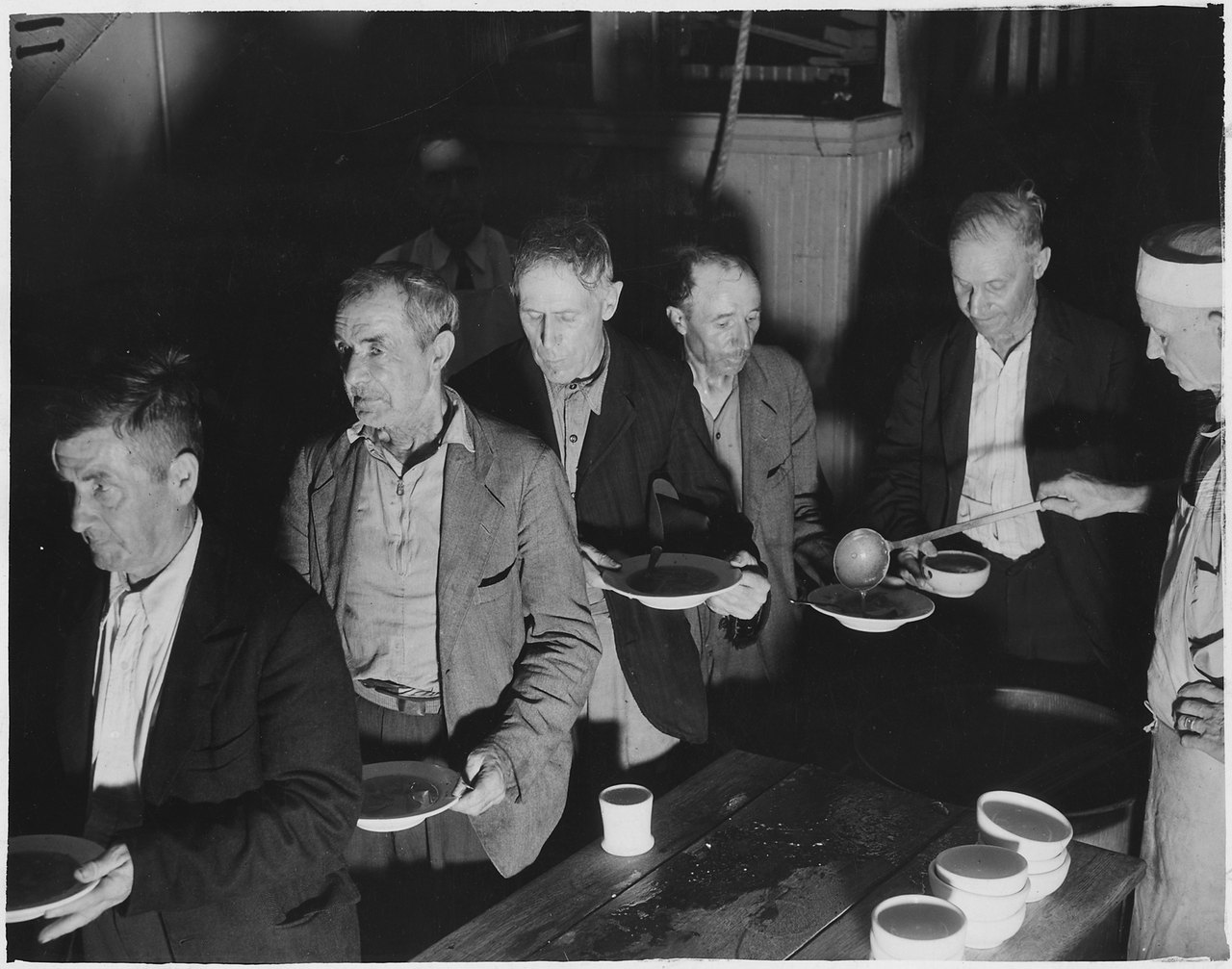
Bud’s story opens in the depths of the Great Depression, the long economic collapse that began in 1929 and threw a quarter of American workers out of jobs. When parents could not feed their children — or died, as Bud’s mother did — those children often ended up in crowded orphanages like Bud’s ‘Home,’ or were placed with foster families who were paid a small sum to take them in. For a Black child in 1936, the choices were fewer and the treatment often harsher; some foster homes, like the Amoses’, wanted the money more than the child. Curtis does not editorialize about that. He shows a family with a spare bedroom giving it to their own son and putting the foster child out in the shed, and leaves a reader to notice which of the two was the paycheck.
Think back over the opening. A boy in a crowded Home is told to pack; a new family waits, and he already knows how these things go. He says his name the way his mother taught him — Bud, not Buddy — and holds a taped suitcase like it is made of glass, because inside it is everything left of her: a blanket, a picture, some rocks with writing, and flyers for a band he has never heard play. Then a bigger boy’s fist, a mother’s quick blame, an empty stomach, and a shed door clicking shut in the dark — where, instead of crying, Bud reaches for the rules he wrote himself, because they are the one thing no one can lock away.
Bud’s world is shaped by the Great Depression, the worst economic disaster in American history. It began in 1929, when the stock market crashed, and for more than a decade it gripped the country. Banks failed, factories closed, and at its worst about one in four American workers had no job. Families that had lived comfortably suddenly could not pay rent or buy food. Cities like Flint, Michigan — built around automobile factories — were hit especially hard when those factories slowed or shut down.
The disaster fell heavily on children. When parents lost everything, or died, there was often no one able to take their sons and daughters in. Crowded children’s homes filled with boys and girls like Bud, and an orphan who was not sent to one might be placed instead with a foster family paid a small sum for housing him. That system could be kind, but it could also be cold: some families, like the one Bud is sent to, seemed to want the money more than the child. For a Black child in the segregated America of 1936, the choices were even narrower and the treatment often harsher. Understanding the Depression explains why a boy like Bud must be so resourceful — in a world where the safety nets had broken, a child sometimes had to become his own.
This writing task is optional and is not part of your auto-graded score. The feedback below checks only the basics — length, spelling, and grammar — not whether your ideas are right or wrong. It is meant for classroom discussion and creative practice, so feel free to use your imagination!
Writing Task — Part 1 “My Own Rules”
Bud invents his own ‘Rules and Things’ to survive a hard world. Write about a personal rule or piece of wisdom you live by. What is the rule, where did it come from, and how has it helped you? 6–10 sentences. End with why you would pass it on to someone else.
No right or wrong — close the screen and tell someone nearby what happened in this part. Can’t find anyone? Tell yourself out loud. The moment you teach it, you truly understand it.


Part 1 Complete!
You finished Chapters 1–2 of Bud, Not Buddy.
Here are your auto-graded results:
The best last step is to teach it. In your own words, explain what happened — retell a favorite scene, teach a character’s big choice, or sum up the main idea for a parent, friend, or classmate. When you can teach it clearly, you truly own it.
Independent study guide by Garden Heights. Not affiliated with or endorsed by Christopher Paul Curtis. Contains original analysis only; no text from the novel is reproduced. Reference text: This workbook follows Christopher Paul Curtis’s classic text (the standard Puffin edition sold worldwide). Revised 2023 UK editions change some wording and may not match the vocabulary studied here.