New here? Just sign up with Google — your account includes Matilda, our gift book, forever.
Bud, Not Buddy · Garden Heights
Part 3
for Bud, Not Buddy · Part 3 · Chapters 5–6
8 Parts40 min
What Happens in Part 3
On the way, hunger drives Bud to a mission handing out free breakfast. He has just missed the cutoff when a kind man and woman pretend he is their own son — ‘come on, Clarence’ — so he will not be turned away, and Bud gets a hot meal and a lesson in how strangers protect one another in hard times. Then he and Bugs reach the ‘Hooverville’ by the railroad tracks: not one shantytown but a whole rough city of tents and packing-crate shacks, full of people of every color who have lost everything and are waiting, like Bud, for a train out. Around the communal fire Bud learns the rules of this place — everyone shares, everyone helps — and meets Deza Malone, a thoughtful girl who talks with him about family and home, and gives him his first kiss. The people cook a shared stew, sing, and prepare for the westbound train due before dawn. Bud washes up, guards his suitcase, and lets himself feel, for a night, part of something like a family. But the mood is uneasy too: the railroad guards are cruel, the train is dangerous, and everyone knows that only some of them will make it aboard. Bud settles in to wait, closer than ever to leaving Flint behind.
The kindness of strangers, a living setting, and a tender first friendship
Cross-Curricular
Hoovervilles: the shantytowns of the Depression
Chapter Summary
Ch.
What happens
Chapter 5
‘Come On, Clarence’ — a kind couple pretend Bud is their son so he can get a free mission breakfast; Bud learns how strangers shield one another in hard times.
Chapter 6
The Hooverville — Bud and Bugs reach the trackside shantytown, share a communal stew, and Bud meets thoughtful Deza Malone while everyone waits for the westbound train.
Part 1
Vocabulary
Study 10 key words from Chapters 5–6, then answer each question.
🧠Knowledge Bank · Words of the Camp
Lexical Semantics · Words of the Camp
Four words, and together they describe an economy. A mission is a place giving free food or aid to the poor, and one serves the breakfast Bud eats by pretending to belong to a family. A Hooverville is a Depression shantytown of makeshift huts, and this one sprawls along the tracks. Communal means shared by a whole group, and the camp cooks one pot for everyone. A stew is a dish of meat and vegetables cooked slowly, and everyone in the camp adds something to it. Notice what the last two words do together. The mission line is charity from outside; the stew is not. Nobody in the Hooverville has enough, so nobody eats alone — and Curtis puts the most generous meal in the entire book in the poorest place Bud has ever stood.
Visual AidTwo meals, two arrangements
Diagram for the Knowledge Bank on the words of the camp. Card 1 is the mission line and card 2 is the communal pot, with card 3 naming the condition they share. Card 4 is the conclusion the Knowledge Bank draws. Notice the third line of card 1: at the mission Bud has to belong to a family to be fed, which is exactly what he does not have, and exactly what the camp does not ask for.
The mission line set beside the camp's shared pot, as described in the Knowledge Bank. Drawn for Garden Heights Academy.
missionn.Ch.5
A place giving free food or aid to the poor
“The mission served a free breakfast.”
Hoovervillen.Ch.6
A Depression shantytown of makeshift huts
“The Hooverville sprawled along the tracks.”
communaladj.Ch.6
Shared by a whole group
“They cooked one communal pot of stew.”
stewn.Ch.6
A dish of meat and vegetables cooked slowly
“Everyone added something to the stew.”
wearyadj.Ch.6
Very tired
“The weary travelers waited by the fire.”
generosityn.Ch.5
Willingness to give and share
“The couple’s generosity fed a stranger.”
sheltern.Ch.6
Something that gives cover or protection
“The shacks were rough shelter from the cold.”
gratefuladj.Ch.5
Thankful
“Bud was grateful for the hot meal.”
tenderadj.Ch.6
Gentle and kind
“Deza spoke to him in a tender voice.”
gatherv.Ch.6
To come together in one place
“The camp would gather around the fire.”
ⓘ The vocabulary words in this list are selected to help you understand and complete this workbook. Some may not appear verbatim in the original novel.
🧠Knowledge Bank question
1According to the Knowledge Bank, how is the camp's stew different from the mission line?Ch.5
2‘Communal’ means owned by just one person.Ch.6
3A dish of meat and vegetables cooked slowly is a ___.Ch.6
4To be ‘weary’ is to be full of energy.Ch.6
5Fill in each blank with the correct word.Ch.6
Word choices:Hoovervillecommunalmissionsneer- some words will not be used
The sprawled in shacks along the tracks.
The camp shared one pot of stew.
6‘Generosity’ is a willingness to ___.Ch.5
7To be ‘grateful’ is to feel thankful.Ch.5
8‘Shelter’ is something that gives ___.Ch.6
9Fill in each blank with the correct word.Ch.6
Word choices:tendergatherwearystew- some words will not be used
Deza spoke to Bud in a voice.
The camp would around the evening fire.
10Someone ‘tender’ in the way they speak is ___.Ch.6
Part 2
Comprehension
Show you understood what happens in Chapters 5–6.
🧠Knowledge Bank · A Meal and a Camp
Narrative Causality · A Meal and a Camp
This portion of Bud, Not Buddy links setting to conflict, then measures the human change produced by that collision. On the way, hunger drives Bud to a mission handing out free breakfast. He has just missed the cutoff when a kind man and woman pretend he is their own son — ‘come on, Clarence’ — so he will not be turned away, and Bud gets a hot meal and a lesson in how strangers protect one another in hard times. Then he and Bugs reach the ‘Hooverville’ by the railroad tracks: not one shantytown but a whole rough city of tents and packing-crate shacks, full of people of every color who have lost everything and are waiting, like Bud, for a train out. This event pattern makes “A Meal and a Camp” the section’s central reversal.
🧠Knowledge Bank question
1The Knowledge Bank explains that Bud is fed at the mission because ___.Ch.5
2The couple’s trick lets Bud get ___.Ch.5
3The Hooverville is a single small hut.Ch.6
4The people in the Hooverville mainly survive by ___.Ch.6
5Write the numbers 1–5 in the boxes to show the correct order of events. Number 1 = what happens first.Chapters 5–6
A kind couple call him ‘Clarence’ so he can eat.
Hunger leads Bud to a mission breakfast.
Bud meets Deza Malone and they talk of home.
Bud and Bugs reach the trackside Hooverville.
The camp shares a communal stew around the fire.
6In the Hooverville, people of only one color are allowed.Ch.6
7Deza Malone is ___.Ch.6
8The camp is waiting for ___.Ch.6
9Everyone in the camp is sure to get aboard the train.Ch.6
10For one night, the Hooverville gives Bud a feeling of ___.Ch.6
Part 3
Literary Elements
Understanding HOW and WHY Christopher Paul Curtis tells the story across Chapters 5–6.
🧠Knowledge Bank · The Kindness of Strangers
Narrative Technique · The Kindness of Strangers
Across Chapters 5–6, theme interacts with character and tenderness to complicate the apparent meaning of events. A theme Curtis returns to again and again is that in the hardest times, unrelated people become one another’s family. The couple who claim Bud as ‘Clarence’ owe him nothing, yet they shield him; the Hooverville feeds a boy it just met. This is not sentimental — these people are barely surviving themselves — which is exactly why their generosity means so much. Curtis is building an argument across the whole book: Bud has lost his blood family, but he keeps finding chosen family among strangers. Watch how each act of kindness prepares us for the ending, where Bud will finally find a family that is both chosen and, it turns out, his own. That authorial design makes “The Kindness of Strangers” a lesson in deliberate contrast.
Theme
The kindness of strangers — unrelated people becoming a ‘chosen family’ in hard times.
Setting as character
The Hooverville — a place with its own customs, mood, and rules, almost alive.
Tenderness
Deza Malone’s talk of home and Bud’s first kiss — a soft moment in a hard road.
🧠Knowledge Bank question
1According to the Knowledge Bank, why does the strangers' kindness mean so much?Ch.5
2Fill in each blank with the correct literary term.Ch.5
Word choices:themesettingnarratorrhyme- some words will not be used
Strangers becoming a chosen family is a of the book.
The Hooverville, with its own rules and mood, is a vivid .
3A theme is a big idea that runs through a whole story.Ch.5
4Curtis gives the Hooverville its own fire, rules, and mood, treating the ___ almost like a character.Ch.6
5The ‘Clarence’ scene mainly develops the theme of ___.Ch.5
6A setting can only ever be an empty background.Ch.6
7Deza’s talk of home and the first kiss add a note of ___ to the hard road.Ch.6
8Fill in each blank with the correct literary term.Ch.6
Word choices:tendernessthememotifnarrator- some words will not be used
Deza’s gentle talk and the first kiss bring a moment of .
Strangers becoming family is a recurring .
9The warmth of the fire is shadowed by the danger of the train.Ch.6
10The Hooverville chapter mostly shows that the Depression’s poor were ___.Ch.6
Part 4
Think Deeper
Four deeper challenges — no single-word recall. Read, weigh the evidence, and reason it out.
🧠Knowledge Bank · Cities Built of Nothing
Hoovervilles · Cities Built of Nothing
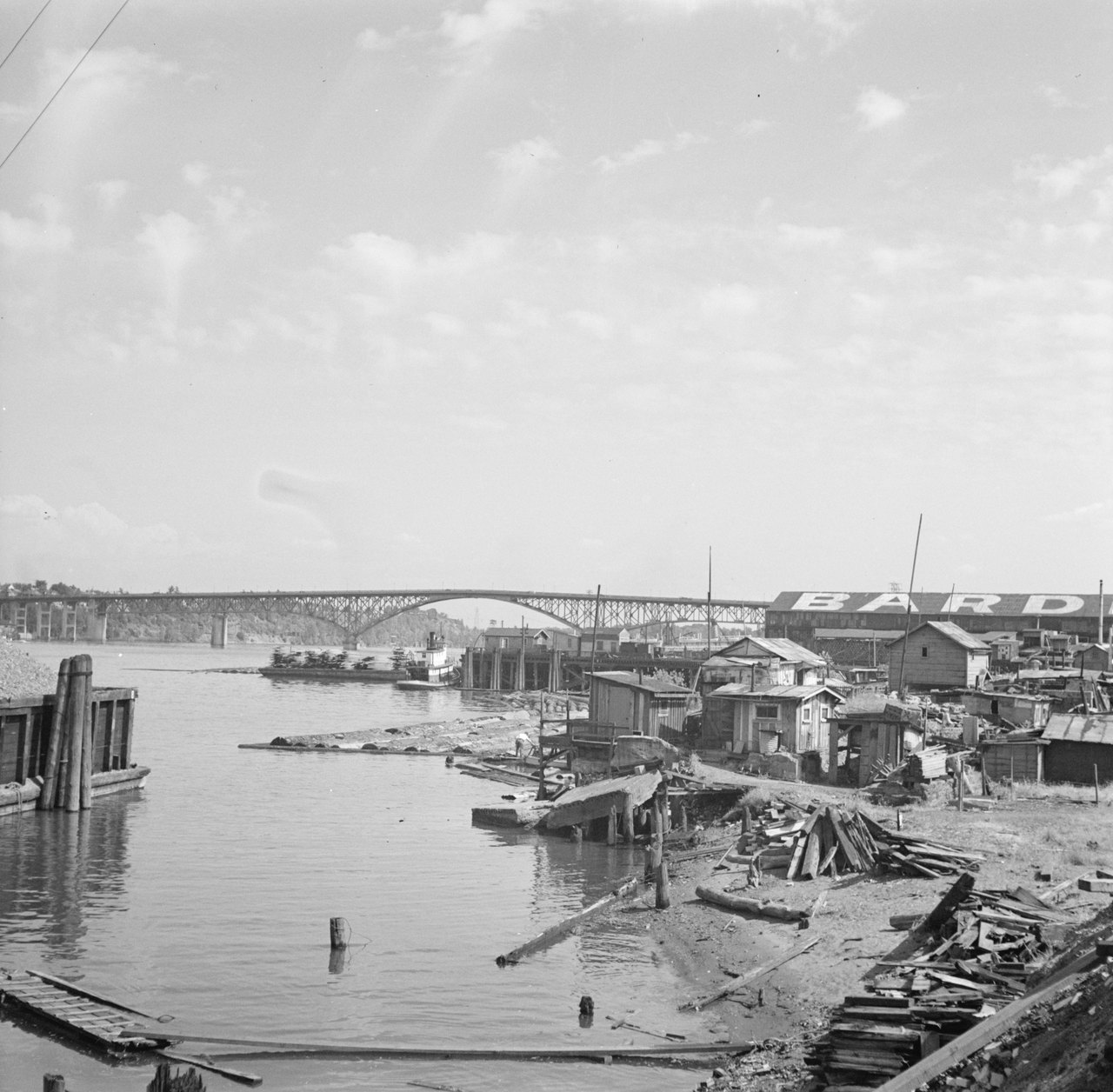
The rough camp Bud enters was a real feature of the Depression, and it had a bitter nickname. As families lost their homes, they built shelters from whatever they could find — scrap wood, cardboard, flattened tin cans — on empty land at the edges of towns and along the railroads. People called these shantytowns ‘Hoovervilles,’ a jab at President Herbert Hoover, whom many blamed for the hard times. A Hooverville could hold a few families or thousands, and Curtis captures a real truth about them: they were desperate places, but also communities, where people who had nothing still shared food, kept a fire going, and looked out for the newcomer and the child. That nickname is worth pausing on. Naming your cardboard shack after the President is not despair; it is an accusation, made by people with no newspaper, no vote that anybody counted, and nothing to write it on but the town.
Visual AidA city built out of scraps
A Hooverville along a river, its shacks built from scavenged boards, crates and flattened tin. The Knowledge Bank explains that families put out of their homes built shelters like these on empty land and along the railroads, and that the name was a jab at President Herbert Hoover, whom many blamed for the hard times. Look at where it sits: on the waterfront, in plain view of the bridge. These camps were not hidden away, and everybody in the city drove past them.
A Hooverville on the Willamette riverfront; Farm Security Administration photograph. Source: Wikimedia Commons, public domain.
Think back over these chapters. A hungry boy reaches a breakfast line one minute too late — and a man and woman he has never met call out to their ‘son Clarence’ and fold him into their family long enough to feed him. Down by the tracks a whole city has risen out of cardboard and tin, its people of every color sharing one fire and one pot, singing while they wait for a train that will only take some of them. A thoughtful girl sits beside Bud and talks of home, and gives him a first kiss he will not forget. For one night, an orphan with a taped suitcase gets to feel what it is to belong.
Original passage written for Garden Heights — not a quotation from the novel.
1Claim: “Part 3 argues that, in the Depression, people who had nothing still built a kind of family for one another.” — choose the two details that best prove it.Claim & Evidence
2What the poor lacked, or What the poor still gave? Tap each detail to sort it — tap again to switch sides. You can keep tapping to change your answer.Sort into two
◄ What the poor lackedWhat the poor still gave ►
3Match each cause to its result. For each cause, pick its result.Cause & Effect
A couple call Bud ‘Clarence’→
The Hooverville shares its stew→
Deza talks of home with Bud→
The camp waits for the train→
🧠Knowledge Bank question
4Fill both blanks to complete the reasoning.Build the Argument
The Knowledge Bank argues that the word Hooverville was a protest because , which shows that .
Part 5
Standardized Test
Reading passage · Hoovervilles: Cities Built of Nothing · SAT & TOEFL-style practice
Read the passage — the highlighted words are tested — then answer. Tap an answer, then tap it again to confirm.
SATCentral Ideas — the passage's main point
SATDetail — a fact stated in the passage
SATWords in Context — a word's meaning in this passage
SATInference — a conclusion the passage implies
TOEFLFactual Information — a fact stated in the passage
TOEFLVocabulary — a tested word's meaning here
TOEFLRhetorical Purpose — why the author included a detail
Life in a Depression-Era Hooverville
The camp Bud enters had a name repeated across Depression America: a Hooverville. When the economy collapsed after 1929, millions of people could no longer pay rent, and families were put out of their homes. With nowhere to go, they built shelter from whatever they could scavenge — scrap lumber, flattened tin cans, cardboard, and old crates — on vacant land at the edges of cities and along the railroad lines. A single Hooverville might shelter a few families or, in the largest cities, thousands of people living in these makeshift huts.
The name was an insult aimed at President Herbert Hoover, who led the country as the Depression began and whom many blamed for failing to end it. People bitterly attached his name to the symbols of their poverty: a ‘Hooverville’ was a shantytown, ‘Hoover blankets’ were newspapers used for warmth, and empty turned-out pockets were ‘Hoover flags.’ Yet these desperate places were not only misery. As Curtis shows, a Hooverville was often a real community, where people who had almost nothing still kept a shared fire burning, cooked pooled food in one communal pot, passed along news of which towns had work, and looked after the sick, the old, and the newly arrived. The Hoovervilles are a stark picture of how far Americans fell in the 1930s — and a quiet testimony to the generosity of people with almost nothing to share.
Original passage written for Garden Heights — not a quotation from the novel.
1What is the main idea of the passage?SAT · Central Ideas
2Hoovervilles appeared because families could no longer ___.TOEFL · Factual Information
3People built the huts from ___.SAT · Detail
4The name ‘Hooverville’ was meant as ___.TOEFL · Factual Information
5‘Hoover blankets’ were really ___.SAT · Detail
6According to the passage, Hoovervilles were also often ___.TOEFL · Factual Information
7In the passage, communal most nearly means ___.SAT · Words in Context
8In the passage, generosity most nearly means ___.TOEFL · Vocabulary
9The passage suggests Hoovervilles held both misery and ___.SAT · Inference
10Which detail from Part 3 does this passage BEST help explain?TOEFL · Rhetorical Purpose
Part 6 · Optional
Creative Writing
A bonus challenge to practice your English. Take your time and have fun with it.
About This Section
This writing task is optional and is not part of your auto-graded score. The feedback below checks only the basics — length, spelling, and grammar — not whether your ideas are right or wrong. It is meant for classroom discussion and creative practice, so feel free to use your imagination!
Writing Task — Part 3 “The Kindness of Strangers”
A couple who owed Bud nothing pretended he was their son so he could eat. Write about a time a stranger, or someone you barely knew, showed you unexpected kindness — or a time you helped someone you didn’t know. What happened, and how did it feel? 6–10 sentences. End with what the moment taught you about people.
You can start with: “I barely knew them, and yet...”
0 / 40 words minimum
🗣 Teach It · Just for Fun (optional)
No right or wrong — close the screen and tell someone nearby what happened in this part. Can’t find anyone? Tell yourself out loud. The moment you teach it, you truly understand it.
Part 3 Complete!
You finished Chapters 5–6 of Bud, Not Buddy.
Here are your auto-graded results:
-
points out of 100
Teach it to someone
The best last step is to teach it. In your own words, explain what happened — retell a favorite scene, teach a character’s big choice, or sum up the main idea for a parent, friend, or classmate. When you can teach it clearly, you truly own it.
Independent study guide by Garden Heights. Not affiliated with or endorsed by Christopher Paul Curtis. Contains original analysis only; no text from the novel is reproduced. Reference text: This workbook follows Christopher Paul Curtis’s classic text (the standard Puffin edition sold worldwide). Revised 2023 UK editions change some wording and may not match the vocabulary studied here.
SAT® is a registered trademark of College Board, which is not affiliated with, and does not endorse, these materials. TOEFL® is a registered trademark of ETS. These materials are not endorsed or approved by ETS. Garden Heights is an independent provider of test-style reading practice.