New here? Just sign up with Google — your account includes Matilda, our gift book, forever.
Chains · Garden Heights
Part 1
for Chains · Part 1 · Chapters 1–6
8 Parts40 min
What Happens in Part 1
Isabel and Ruth learn their promised freedom is worthless, are sold to the Locktons, and shipped to New York.
A Broken WillMiss Mary Finch has died, and Isabel, thirteen, and her five-year-old sister Ruth ride to the burying ground with Reverend Weeks and Mr. Robert Finch, who has been helping himself to the dead woman's money. Isabel kneels at her mother's grave, then says the thing she has held back: Miss Mary's will promised both girls their freedom.
Sold in NewportIsabel read the will herself, but the lawyer who kept it has moved to Boston, which the war has closed off. Mr. Robert refuses to believe an enslaved girl can read, threatens to beat her, and announces the sisters will be sold. Isabel pockets a handful of her mother's seeds. In a Newport tavern, Madam Anne Lockton outbids a kind tavern keeper's wife purely to win.
Landing in New YorkTwo nights below deck among cargo and animals bring them to New York on May 29. Soldiers want to search Madam's walnut chest, an official named Bellingham questions the Locktons about their loyalties, and when Ruth giggles Madam strikes Isabel harder than she has ever been hit. Isabel is sent off with a bucket to fetch water.
Curzon's OfferHer guide is Curzon, a boy in a red hat belonging to Bellingham. He walks her to the Tea Water Pump, buys buttered rolls, and makes an offer: the Locktons speak freely before people they treat as furniture, so Isabel should listen and carry what she hears to Colonel Regan, and the rebels might reward her with freedom for herself and Ruth. She does not say yes.
What We Will Learn
Section
What you will practice
Vocabulary
Words from a funeral, an auction, and a wharf: bequeath, heir, bondage, auction, wharf…
Literary Elements
A first-person narrator speaking in the present tense, seeds that carry meaning far beyond a garden, foreshadowing planted in memory, and characterization built at an auction
Cross-Curricular
Slavery in the northern colonies — how many people were held in New York and New England in 1776, how a will was supposed to free someone, and the law that made a human being into property
Chapter Summary
Ch.
What happens
Chapter 1
The Burying Ground — May 27, 1776. Isabel and Ruth attend Miss Mary Finch’s funeral in Rhode Island. Isabel kneels at her mother’s grave, dead nearly a year of smallpox, and asks for guidance. She tells Reverend Weeks that Miss Mary’s will frees them both, and that the lawyer Cornell, who holds it, has moved to Boston.
Chapter 2
A Paper Nobody Will Read — The same day. Mr. Robert Finch, the dead woman’s nephew, refuses to believe an enslaved girl can read and threatens Isabel for saying so. With the will out of reach he declares the sisters his property and announces that they will be sold. Isabel remembers her father being beaten when he fought the men who took him.
Chapter 3
Sold in a Newport Tavern — Allowed only a blanket and shoes, Isabel takes a handful of her mother’s seeds. In a crowded Newport tavern Jenny, who knew their mother, tries to buy the girls; Madam Lockton makes her husband raise the bid out of spite and wins them for New York.
Chapter 4
Two Nights of Salt Water — May 27 to May 29. The sisters cross from Newport to New York shut below deck with cargo and animals. Isabel is sick and frightened, half wishing the ship would go down somewhere without slavery, and grieves the distance opening between her and her parents’ graves.
Chapter 5
The Wharf and the Walnut Chest — May 29. Soldiers try to inspect Madam Lockton’s chest and she makes a scene; the official Bellingham questions the Locktons about their loyalties. Ruth giggles, and Madam strikes Isabel harder than she has ever been struck. Isabel is sent for water with Bellingham’s boy, Curzon.
Chapter 6
An Offer at the Pump — Curzon marches Isabel across the city to the Tea Water Pump, stops at a stationer’s shop — a seller of paper and ink — and shares two buttered rolls. Then he asks her to listen inside the Lockton house and carry what she hears to Colonel Regan, arguing that owners talk freely in front of people they refuse to see.
Part 1
Vocabulary
Study 10 key words from Chapters 1–6, then answer each question.
📜Knowledge Bank · Property on Paper
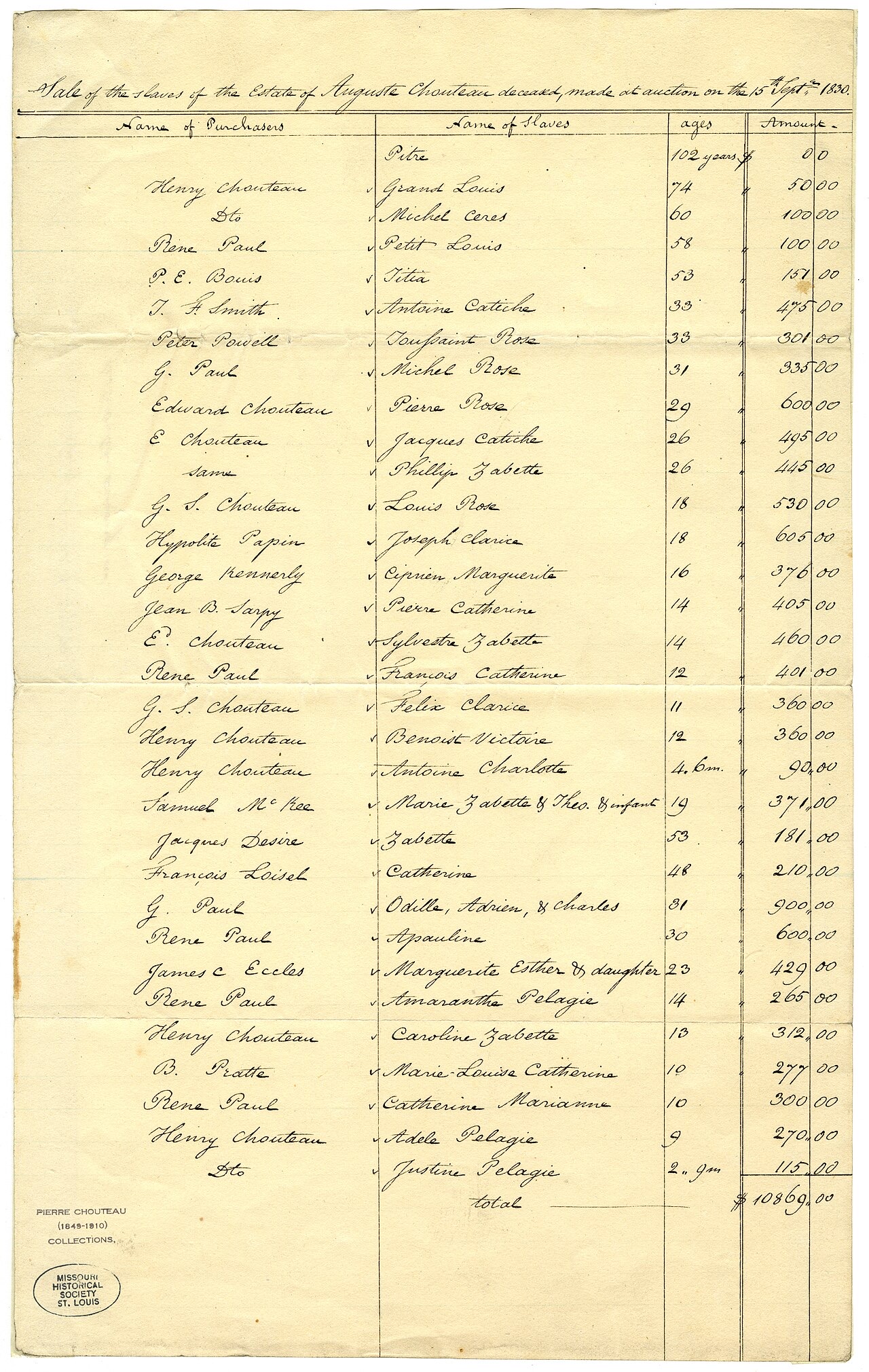
Law · Chattel SlaveryThe sale in the Newport tavern is possible because of a single legal word. Colonial statutes classed an enslaved person as chattel — movable property, in the same legal category as a cart or a cow. Everything else follows from that classification. Property can be listed in an estate inventory when an owner dies, appraised by neighbors at a money value, taxed, mortgaged against a loan, seized by a creditor, and handed to an heir. Property cannot make a binding contract, cannot marry with legal force, and cannot own so much as the shoes it stands in. That is why Isabel may carry away only a blanket, and why taking a few of her mother’s seeds counts, technically, as theft. When Mr. Robert says the sisters are his, he is not inventing a private cruelty. He is quoting the law of 1776. Notice how much of Part 1 happens through documents rather than violence: a will, an estate, a bill of sale. Slavery in the colonies was held in place first of all by paperwork.
Visual AidWhat the paperwork actually looked like
Photograph of a handwritten auction sheet from 1830 recording the sale of the people held by a dead man’s estate in St. Louis, ruled into four columns: purchaser, name, age, price. This is the paperwork the Knowledge Bank describes doing its ordinary work — human beings entered in an estate account, priced to the dollar, and totaled at the bottom of the page. It is an American document but not a New York one, and it comes from half a century after the novel, because records of this kind survive far better from the 1800s; nobody named on it appears in Chains. Read the two ends of the ages column: a man of 102 is given a price of nothing at all, and a child of two years and nine months is given a price.
Estate auction record listing enslaved people with purchasers, ages and prices, St. Louis, September 15, 1830; Missouri History Museum, Pierre Chouteau Collections. Source: Wikimedia Commons, file "Sale of slaves of the estate of Auguste Chouteau, deceased, made at auction, September 15, 1830.jpg", public domain.
mournern.Ch.1
A person who attends a funeral to grieve for the dead
“Every mourner stood bareheaded while the grave was filled.”
bequeathv.Ch.1
To leave property or a promise to someone in a will
“Miss Mary Finch meant to bequeath freedom to both sisters.”
heirn.Ch.2
The person who legally receives what a dead person owned
“Mr. Robert arrived as the only heir Miss Mary had left.”
bondagen.Ch.2
The condition of being held by another person as property
“The will was supposed to end the sisters’ bondage forever.”
auctionn.Ch.3
A public sale where goods go to the highest bidder
“Mr. Robert wanted an auction on the tavern steps.”
spiten.Ch.3
A mean wish to hurt or beat somebody else
“Madam Lockton raised the bid out of plain spite.”
cargon.Ch.4
The goods a ship carries from one port to another
“Isabel and Ruth crossed to New York packed in with the cargo.”
wharfn.Ch.5
A landing built out over water where ships tie up
“The wharf was loud with soldiers, sailors, and rolling barrels.”
sentryn.Ch.5
A soldier posted to stand guard and watch
“A sentry wanted the walnut chest opened before it left the dock.”
errandn.Ch.6
A short trip made to carry something or do a small job
“Curzon had his own errand at the stationer’s shop.”
ⓘ The vocabulary words in this list are selected to help you understand and complete this workbook. Some may not appear verbatim in the original novel.
🧠Knowledge Bank question
1According to the Knowledge Bank, why could an enslaved person be taxed, mortgaged, and handed to an heir?Ch.1
2To ‘bequeath’ something is to ___.Ch.1
3An ‘heir’ is the person who legally receives what a dead person owned.Ch.2
4‘Bondage’ means being ___.Ch.2
5Fill in each blank with the correct word.Ch.3
Word choices:auctionspitecargoheir- some words will not be used
Mr. Robert wanted an on the tavern steps.
Madam Lockton raised the bid out of pure .
6A ‘sentry’ is a merchant who buys goods at a dock.Ch.5
7A ‘wharf’ is ___.Ch.5
8An ‘errand’ is ___.Ch.6
9‘Cargo’ means the goods a ship carries.Ch.4
10Fill in each blank with the correct word.Ch.1
Word choices:mournerbondagespitecargo- some words will not be used
Every at the graveside stood bareheaded.
The will was meant to end the sisters’ .
Part 2
Comprehension
Show you understood what happens in Chapters 1–6.
📜Knowledge Bank · The Promise That Failed
History · Manumission by WillIsabel’s situation was common enough to have a name. Manumission is the formal freeing of an enslaved person by an owner, and northern owners often promised it in a will, where it cost them nothing while they lived. Very few such promises survived the owner’s death. A will had to be carried through probate — the court process that proves a document and settles an estate — and the people who ran that process were the heirs, the executor, and the creditors, every one of whom lost money if the promise was kept. Debts were paid first, and enslaved people were usually the most valuable movable property an estate held, so they were sold. New York made freeing someone expensive on purpose: a 1712 statute required an owner to post a bond of two hundred pounds sterling and pay the freed person twenty pounds a year. Against all that machinery, an enslaved girl who could not sue and could not testify had nothing but her word. The promise was real. What Isabel lacks is proof.
Visual AidHow a promised freedom died in probate
Sequence diagram of the machinery the Knowledge Bank sets out: an owner dies having promised freedom in a will, probate court settles the estate, debts are paid before any promise is kept, and the most valuable movable property is sold instead. Four panels stand in for a process that could run for years and differed from colony to colony, and the drawing follows the ordinary case rather than the rare one where a promise held. It does not diagram Miss Mary Finch’s estate, which Laurie Halse Anderson (author) invented. Notice the last line: what fails Isabel is not the promise but the proof.
Manumission by will, colonial probate practice, and the New York act of 1712 requiring a 200-pound bond and a 20-pound annual payment, as set out in the Knowledge Bank and in standard histories of slavery in the northern colonies. Drawn for Garden Heights Academy.
🧠Knowledge Bank question
1The Knowledge Bank explains that a promise of freedom written into a will usually failed because ___.Ch.1
2What does Isabel believe Miss Mary Finch’s will does?Ch.1
3Isabel can read because Miss Mary Finch taught her.Ch.1
4Why can nobody check what the will actually says?Ch.2
5Write the numbers 1–5 in the boxes to show the correct order of events. Number 1 = what happens first.Chapters 1–6
Madam Lockton strikes Isabel on the New York wharf.
Mr. Robert sells the sisters in a Newport tavern.
Isabel kneels at her mother’s grave after the burial.
Curzon asks Isabel to listen for the rebel cause.
Isabel tells Reverend Weeks about the will that frees them.
6What does Isabel take with her when she leaves the farm?Ch.3
7Jenny, who knew the sisters’ mother, tries to buy them at the tavern.Ch.3
8Why do the Locktons end up buying Isabel and Ruth?Ch.3
9Isabel and Ruth travel to New York by coach along the post road.Ch.4
10What does Curzon ask Isabel to do at the Tea Water Pump?Ch.6
Part 3
Literary Elements
Understanding HOW and WHY Laurie Halse Anderson tells the story across Chapters 1–6.
🎭Knowledge Bank · A Story Told as It Happens
Authorial Craft · Present-Tense NarrationMost historical novels are told in the past tense by a narrator who already knows how everything turned out. Anderson (author) refuses that comfort. Isabel narrates in the first person and in the present tense, so the sentences arrive at the same moment the events do. Three things follow. First, the reader is locked inside Isabel’s knowledge: when she does not know whether the will exists, neither do we, and the uncertainty is not a puzzle to be solved but a condition to be endured. Second, there is no reassuring voice from the future promising that she survives to tell this. Third, the narration itself becomes evidence. Isabel notices prices, distances, and exact wording because those are the things that decide her life, and her habit of reading paper carefully is the same habit that will make her a useful listener. A voice this close also raises the stakes of every insult. When Madam strikes her on the wharf, no narrator stands between the blow and the reader. It simply happens, and it happens now.
First-Person Present Tense
Isabel narrates her own story as it is happening, so the reader never learns anything before she does and never gets the comfort of a survivor looking back.
Symbolism
The seeds from her mother’s garden are seeds, and they are also home, memory, and the idea that something can be planted now and harvested later.
Foreshadowing
Isabel’s memory of her father being beaten when he fought the men who sold him warns the reader what resistance costs in this world.
Characterization
Anderson (author) builds people through choices under pressure: Jenny bids, Reverend Weeks sympathizes and does nothing, and Madam Lockton pays extra just to win.
🧠Knowledge Bank question
1According to the Knowledge Bank, what does present-tense narration take away from the reader?Ch.1
2The seeds Isabel carries from her mother’s garden work in the story as ___.Ch.3
3Foreshadowing is a hint that prepares a reader for something later.Ch.2
4Isabel’s memory of her father being beaten when he was sold mainly serves as ___.Ch.2
5Fill in each blank with the correct literary term.Ch.3
Word choices:symbolismforeshadowingrhymeindex- some words will not be used
A pouch of seeds standing for a lost home is .
A warning planted early in a story is .
6Symbolism means an object stands only for itself and nothing more.Ch.3
7Madam Lockton raising the bid only to beat Jenny mainly shows ___.Ch.3
8One effect of telling the story in the present tense is that the reader ___.Ch.1
9Characterization is the work an author does to show what a person is like.Ch.5
10Fill in each blank with the correct literary term.Ch.3
Word choices:characterizationpresentepiloguerhyme- some words will not be used
Showing Madam Lockton’s spite at the sale is .
Anderson (author) writes Isabel’s story in the tense.
Part 4
Think Deeper
Four deeper challenges — no single-word recall. Read, weigh the evidence, and reason it out.
⚖Knowledge Bank · Who Was Allowed to Speak
Civics · Standing Before the LawColonial courts were open to enslaved people in one direction only. A person held in slavery could be arrested, whipped, branded, and hanged under statutes written specifically for them, yet could rarely use those same courts to defend a right. The technical term is legal standing — the recognized power to bring a case and be heard in it — and property has none. Most colonies also barred Black testimony against a white person, so even a witnessed promise could not be proved by the people who witnessed it. There were cracks. In Massachusetts a handful of enslaved people sued for their freedom before the Revolution, and some won: Jenny Slew went to court in 1766, convinced a jury, and walked out free with four pounds sterling in damages. Such cases were rare, needed a sympathetic white attorney, and depended on a local court willing to hear them. Isabel’s trap has that shape exactly. She knows the truth and can read the document, and the courts are shut to her anyway. What defeats her is not ignorance. It is law.
Picture a burying ground in Rhode Island on the morning of May 27, 1776. A wagon carries a coffin; a pastor walks beside it; two sisters follow, and they belong to the woman being lowered into the ground. Isabel is thirteen. Ruth is five. And Isabel is not only grieving — she is counting. Their owner wrote them into her will as free, and Isabel knows this for certain, because that same owner taught her to read the words herself. What Isabel does not have is the paper. The lawyer who holds it has gone to Boston, the dead woman’s nephew has already helped himself to her money, and no court in the colony will take a thirteen-year-old enslaved girl’s word for what a document says. By nightfall the sisters have been sold in a tavern to a couple who do not want them so much as they want to win. Two days later Isabel is standing on a wharf in New York, three hundred miles from her mother’s grave, being asked by a boy in a red hat to become a spy. Part 1 is the sound of a door closing on a promise.
Original passage written for Garden Heights — not a quotation from the novel.
1Claim: “Part 1 argues that Isabel loses her freedom through legal machinery rather than through any single villain’s decision.” — choose the two details that best prove it.Claim & Evidence
2Law and paperwork, or Kindness that changes nothing? Tap each detail to send it left or right.Sort into two
◄ Law and paperworkKindness that changes nothing ►
3Match each cause to its result. For each cause, pick its result.Cause & Effect
Miss Mary Finch dies with a will promising freedom→
Isabel says she has read the document herself→
Jenny bids for the sisters at the Newport tavern→
Ruth giggles at the fuss over the walnut chest→
🧠Knowledge Bank question
4Fill both blanks to complete the reasoning.Build the Argument
Isabel cannot use the courts to prove her promised freedom because , which shows that .
Part 5
Standardized Test
Bondage in the Northern Colonies · Reading & Vocabulary · SAT & TOEFL-style practice
Read the passage — the highlighted words are tested — then answer. Tap an answer, then tap it again to confirm.
SATCentral Ideas — the passage's main point
SATInference — a conclusion the passage implies
SATAuthor’s Purpose — what the author wants to achieve
SATWords in Context — a word's meaning in this passage
TOEFLFactual Information — a fact stated in the passage
TOEFLVocabulary — a tested word's meaning here
Bondage in the Northern Colonies
Slavery in British North America was never confined to the southern colonies. In 1776 it was legal in all thirteen, and in the north it ran through port towns, farms, and shipyards rather than plantations. New York held the biggest enslaved population of any colony north of Maryland, close to twenty thousand people in the early 1770s. Rhode Island held the highest proportion in New England, and its merchants sent out more slaving voyages than all the others combined.
What held the system together was law rather than local custom. Colonial statutes defined an enslaved person as chattel — movable property, in the same legal class as a cart or a cow. A human being could therefore be listed in an estate inventory, valued by appraisers, taxed, mortgaged, seized by a creditor, and an owner’s will could bequeath that person to an heir. Because status descended through the mother, a child born to an enslaved woman was enslaved from birth. Enslaved people could not marry with legal force, own property, or testify against a white person in most colonies.
Release was possible, but it was made difficult on purpose. Manumission, the formal freeing of an enslaved person by an owner, carried a price in New York: a 1712 statute required a bond of two hundred pounds sterling and a yearly payment of twenty pounds to the freed person. A promise of freedom written into a will met another obstacle: the will had to survive probate, the court process that proves such a document. Heirs contested the clause, creditors claimed the estate’s most valuable property to clear its debts, and the people it named went to auction. Somebody who could not sue or testify had almost no way to force the promise.
Original passage written for Garden Heights — not a quotation from the novel.
1What is the main idea of the passage?SAT · Central Ideas
2According to the passage, which colony held the largest enslaved population north of Maryland?TOEFL · Factual Information
3The passage says Rhode Island merchants ___.TOEFL · Factual Information
4According to the passage, a child’s status was decided by ___.TOEFL · Factual Information
5The passage suggests that the New York bond and yearly payment were meant to ___.SAT · Inference
6It can be inferred from the passage that creditors often defeated freedom clauses because ___.SAT · Inference
7Why does the writer compare an enslaved person to a cart or a cow?SAT · Author’s Purpose
8In the passage, chattel most nearly means ___.SAT · Words in Context
9In the passage, bequeath most nearly means ___.TOEFL · Vocabulary
10In the passage, auction most nearly means ___.TOEFL · Vocabulary
Part 6 · Optional
Creative Writing
A bonus challenge to practice your English. Take your time and have fun with it.
About This Section
This writing task is optional and is not part of your auto-graded score. The feedback below checks only the basics — length, spelling, and grammar — not whether your ideas are right or wrong. It is meant for classroom discussion and creative practice, so feel free to use your imagination!
Writing Task — Part 1 “Something Small Worth Keeping”
On the day she is sold, Isabel takes almost nothing — but she takes a handful of her mother’s seeds. Write about one small object you would take if you had to leave home suddenly and could carry only what fit in a pocket. Describe the object exactly, explain who or what it connects you to, and say why it would be worth more to you than something valuable. 6–10 sentences. End by saying what you would want it to remind you of later.
You can start with: “If I could take only one thing, it would be...”
0 / 40 words minimum
🗣 Teach It · Just for Fun (optional)
No right or wrong — close the screen and tell someone nearby what happened in this part. Can’t find anyone? Tell yourself out loud. The moment you teach it, you truly understand it.
Independent study guide by Garden Heights. Not affiliated with or endorsed by Laurie Halse Anderson. Contains original analysis only; no text from the novel is reproduced. Reference text: This workbook follows Laurie Halse Anderson’s classic text (the standard Puffin edition sold worldwide). Revised 2023 UK editions change some wording and may not match the vocabulary studied here.