
Chains cover
Garden Heights

Chains

This workbook is for Garden Heights members. Sign in to continue.

Sign in with Google →
New here? Just sign up with Google — your account includes Matilda, our gift book, forever.
Chains · Garden Heights

Part 4

for Chains · Part 4 · Chapters 19–24
8 Parts40 min
What Happens in Part 4

Ruth is sold away, Regan breaks his promise, and Isabel is branded for speaking the truth.

British SailsAt Sunday service in Trinity Church, a boy brings news that the British fleet has reached the harbor, and the church empties into an uproar — joy for the Loyalists, fury for the rebels. In the confusion Ruth freezes in a seizure and Madam sees it; Isabel says her sister is only tired. Over the next week Bellingham, Colonel Regan, and Curzon all drop out of sight.

The Drugged MilkOn July 9 the city hears that Congress has declared independence, and the crowd pulls down the lead statue of King George the Third to be melted into musket balls. That evening Madam turns unaccountably kind — gingerbread, spiced milk, an evening off. Isabel wakes to find Ruth gone. Becky says the milk was drugged; Madam says Ruth has been sold to the West Indies. Isabel speaks her mind and Madam smashes a painting over her head.

Regan RefusesIsabel runs to Colonel Regan's headquarters, shouts the password until they let her in, and asks him to honor their bargain. He refuses: the law forbids him to interfere with another household's property, and the property is Isabel. Madam arrives to collect her. Isabel goes for an open window and is dragged back. She is hauled through the streets behind a horse, beaten, and locked two days in the cell beneath City Hall.

The BrandBefore the magistrate, Madam gives her account and no one asks Isabel for hers; the court orders her branded on the cheek with the letter I for insolence, and on July 15 the sentence is carried out in the stocks. Isabel wakes six days later at Lady Seymour's, nursed and bandaged. Curzon saw her in the stocks and sent word; without him she would have died. Madam already wants her back at work.

What We Will Learn
SectionWhat you will practice
VocabularyThe language of court and punishment: magistrate, insolence, property, stocks, brand
Literary ElementsSituational irony, juxtaposition of a celebration against a sentence, and a symbol whose meaning the novel refuses to settle
Cross-CurricularColonial law and punishment — what a magistrate could order in 1776, why a court called a runaway a thief, and how the law kept the enslaved from speaking
Chapter Summary
Ch.What happens
Chapter 19Sunday, June 30 – Monday, July 1, 1776 — From the church gallery reserved for the enslaved, Isabel hears a boy shout that British warships have entered the harbor. The congregation breaks into cheers and threats. Ruth goes rigid in a seizure and cannot walk, Madam notices, and Isabel covers for her sister. Isabel decides she must force Bellingham or Colonel Regan to keep their side of the bargain.
Chapter 20Tuesday, July 2 – Tuesday, July 9, 1776 — The harbor fills with British ships and Madam’s temper worsens. Bellingham, Regan, and Curzon all vanish. On July 9 word arrives that the Congress has declared independence; the city celebrates and a crowd tears down the lead statue of the king to be melted into bullets. That night Madam is strangely generous with sweets and spiced milk, and Isabel falls asleep in the library.
Chapter 21Wednesday, July 10, 1776 — Isabel wakes to an empty bed. Becky admits the milk was drugged; Madam announces that Ruth has been sold away to the West Indies. Isabel confronts her and is struck with a framed painting. She runs to Colonel Regan’s headquarters and demands the freedom she was promised. Regan answers that the law will not let him touch another household’s property. Madam comes for her, and Isabel is pulled back from an open window.
Chapter 22Wednesday, July 10 – Monday, July 15, 1776 — Isabel is dragged through the streets behind a horse while onlookers mock her, beaten badly, and held two days in the cell under City Hall among rats and frightened prisoners. She is then brought before the magistrate. Madam’s account is the only one the court considers, and the sentence handed down is a brand on the cheek: the letter I, for insolence.
Chapter 23Monday, July 15, 1776 — Isabel is locked into the stocks in the open while a man heats the iron and a crowd gathers to watch, in the same city that had cheered a declaration of liberty six days earlier. She tries to hold on to Rhode Island, her mother, and Ruth, and the memories are not enough. Afterward, half out of her senses, she believes she sees her dead parents standing over her and weeping.
Chapter 24Monday, July 15 – Sunday, July 21, 1776 — Isabel wakes in Lady Seymour’s house after six days without sense, her cheek dressed and her fever breaking. Curzon saw her abandoned in the stocks and fetched help; she would not have lived otherwise. Lady Seymour has pressed the Locktons for Ruth’s whereabouts and been refused. Madam wants Isabel back at work as soon as she can stand.
Part 1
Vocabulary
Study 10 key words from Chapters 19–24, then answer each question.
Knowledge Bank · Reading a Sentence Out Loud
Language · Words of the CourtHalf the key words in these six chapters come out of a courtroom. A magistrate was a local official who could hear a smaller case, decide it alone, and order the punishment the same day, with no jury in the room. Insolence was not a crime in the modern sense at all; it named an attitude, disrespect toward a person with authority, and colonial law allowed that attitude to be answered on the body. The stocks were a hinged wooden frame that held a convicted person out in the open where a crowd could gather, because being seen was part of the sentence. To brand meant to burn a lasting mark into skin with a heated iron. Underneath all four sits the coldest word of the group, the one that makes the other three possible — the legal term that let a court discuss a living girl in the same language it used for a stolen horse, property.
galleryn.Ch.19
An upper balcony of seats inside a church or hall
“Isabel and Ruth sit in the gallery above the main pews.”
seizuren.Ch.19
A sudden attack — caused by a burst of disordered electrical activity in the brain — in which a person briefly loses control of the body
“Ruth’s seizure leaves her rigid and unable to walk.”
declarationn.Ch.20
A formal public statement announcing something important
“News of the declaration reaches New York on July 9.”
sedativen.Ch.20
A drug given to make a person sleepy and slow to wake
“The sweetened milk had a sedative stirred into it.”
propertyn.Ch.21
Anything that the law treats as owned by someone
“Colonel Regan calls Isabel another household’s property.”
betrayaln.Ch.21
The breaking of a trust or a promise
“Regan’s refusal is the second betrayal of the week.”
magistraten.Ch.22
A local official with the power to judge smaller cases in a court
“The magistrate hears Madam and passes sentence the same day.”
insolencen.Ch.22
Bold disrespect shown toward a person in authority
“The court records her offense as insolence.”
stocksn.Ch.23
A hinged wooden frame that locked a person’s hands and head in public view
“They fasten Isabel into the stocks before the crowd.”
deliriousadj.Ch.24
Confused and wandering in mind, usually from fever or injury
“She is delirious for six days before she knows the room.”

ⓘ The vocabulary words in this list are selected to help you understand and complete this workbook. Some may not appear verbatim in the original novel.

🧠Knowledge Bank question
1The Knowledge Bank explains that the coldest word of the group is property because ___.Ch.19
2A ‘seizure’ is a sudden attack in which a person ___.Ch.19
3A ‘declaration’ is a formal public statement.Ch.20
4A ‘sedative’ is a drug given to make someone ___.Ch.20
5Fill in each blank with the correct word.Ch.21–22
Word choices:propertymagistrategallerystocks- some words will not be used
The law of 1776 called an enslaved person .
A could hear the case and sentence her the same day.
6A ‘magistrate’ is a local official who ___.Ch.22
7‘Insolence’ means polite and careful obedience.Ch.22
8The ‘stocks’ were a wooden frame that ___.Ch.23
9Fill in each blank with the correct word.Ch.23–24
Word choices:branddeliriousseizuregallery- some words will not be used
A is a mark burned into the skin.
Fever left Isabel for six days.
10To ‘brand’ someone is to burn a lasting mark into the skin.Ch.23
Part 2
Comprehension
Show you understood what happens in Chapters 19–24.
🔒Knowledge Bank · The Door That Would Not Open
Civics · Standing and TestimonyWhen Isabel demands what she was promised, she runs into something far larger than one officer’s cowardice. Colonial law gave enslaved people almost no standing — the right to bring a case, be heard, and be answered. In most colonies an enslaved person could not sue, could not sign a binding agreement, and could not give testimony against a white person, which meant that a promise made privately by an officer had no legal existence whatever. There was no paper, no witness the court would accept, and no office where a complaint could be entered. Against all that, an owner’s claim was short and fully backed: this person is my property, and I want her back. Notice that Regan never argues that Isabel is lying. He says the law will not let him act, and about the law he is telling the truth. The cruelty here is not a broken rule but a rule working exactly as written, which is why no amount of courage from Isabel can open that door.
Visual AidTwo claims arrive at the same door
Two claims arrive at the same doorA tall narrow box in the middle stands for the court. From the left, a box holding Isabel's claim — a promise made aloud, with no paper and no witness the court will accept — sends an arrow that is labelled does not pass. From the right, a box holding the owner's claim — this person is property, written into statute — sends an arrow labelled passes. Notes underneath explain that having no standing means no power to bring a case, be heard and be answered; that the officer never argues she is lying but says the law will not let him act; and that this is a rule working exactly as written.TWO CLAIMS ARRIVE AT THE SAME DOORISABEL’S CLAIMa promise made aloudno paper, no witnessthe court will acceptTHE OWNER’S CLAIMthis person is propertywritten into statute,and I want her backTHE COURTDOES NOT PASSPASSESno standing means no power to bring a case, be heard in it, and be answeredthe officer never argues that she is lying — he says the law will not let him act,and about the law he is telling the truthnot a broken rule, but a rule working exactly as it was written
Structure diagram of the obstacle the Knowledge Bank describes: two claims reach the same court, and only one of them is allowed through. Isabel brings a promise made aloud, with no paper and no witness the court would accept; the owner brings a claim of property written into statute. The drawing simplifies a court into a single door and leaves out the rare colonial freedom suits that did succeed, which the novel’s Part 1 Knowledge Banks discuss. It stages no scene from the book. Notice the wording of the left-hand box: nothing there is untrue, and it still does not pass.
Legal standing, the bar on Black testimony against a white person, and the owner’s property claim, as set out in the Knowledge Bank and in standard histories of colonial law. Drawn for Garden Heights Academy.
🧠Knowledge Bank question
1According to the Knowledge Bank, why can Regan refuse to act on the promise he made?Ch.19
2What happens to Ruth during the uproar in the church?Ch.19
3Isabel tells Madam the plain truth about Ruth’s seizures.Ch.19
4Why does Madam suddenly give the girls sweets and an evening off?Ch.20
5Write the numbers 1–5 in the boxes to show the correct order of events. Number 1 = what happens first.Chapters 19–24
  • Isabel wakes to find that Ruth has been sold away.
  • Isabel wakes in Lady Seymour’s house six days later.
  • New York hears that the Congress has declared independence.
  • Colonel Regan refuses to honor his promise of freedom.
  • A boy runs into the church shouting that British ships have come.
6What does the crowd do to the lead statue of the king?Ch.20
7Becky tells Isabel that the milk she drank had been drugged.Ch.21
8What reason does Colonel Regan give for refusing to help Isabel?Ch.21
9Isabel is let go without any hearing after two days in the cell.Ch.22
10Who gets word to Lady Seymour that Isabel has been left in the stocks?Ch.24
Part 3
Literary Elements
Understanding HOW and WHY Laurie Halse Anderson tells the story across Chapters 19–24.
🎭Knowledge Bank · A Letter That Changes Meaning
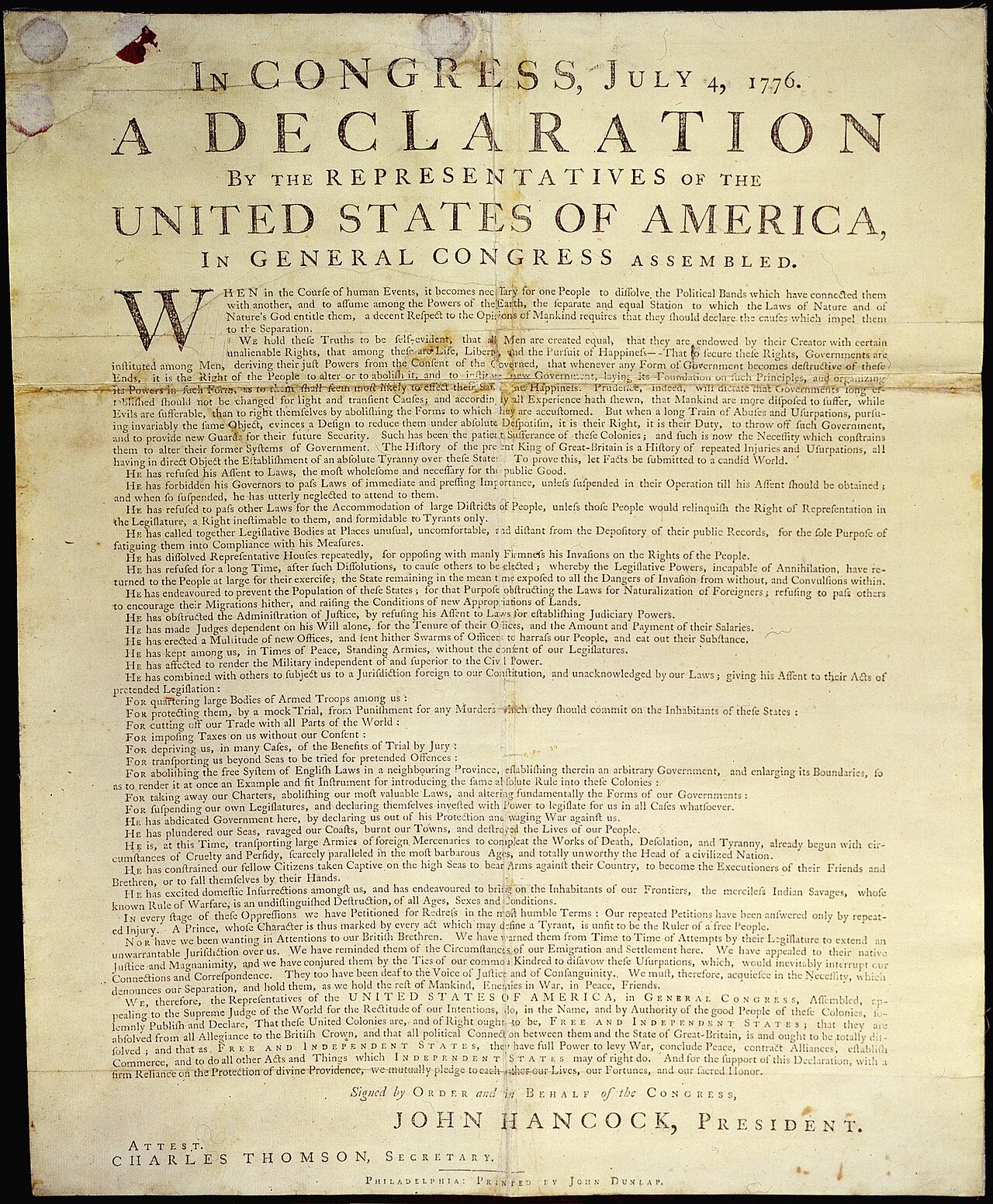
Literary Craft · Symbol and IronyThree tools carry Chapters 19 through 24. The first is juxtaposition, the deliberate placing of two things side by side: a city reading out a declaration about liberty, and, days later, a girl held in the stocks a short walk from the same street. Neither scene has to comment on the other, because the arrangement does the arguing. The second is irony, and here it is situational — the outcome is the reverse of what the moment appears to promise. Independence is declared, and Isabel loses everything she has left. The third is the symbol burned onto her cheek. A court intends that letter to say one word about her character, and for a long stretch of the book it succeeds. What makes it a living symbol rather than a fixed label is that its meaning is contested, because Isabel will eventually decide the letter is the first letter of her own name.
Visual AidThe sheet a city heard read aloud
A stained single printed sheet headed In Congress, July 4, 1776, A Declaration by the Representatives of the United States of America, in dense eighteenth-century type, ending with the printed name John Hancock, President
Photograph of a Dunlap broadside, one of the sheets printed in Philadelphia on the night of July 4, 1776 and sent out by rider to be read aloud; this copy is held by the National Archives. It is the object behind the first half of the juxtaposition the Knowledge Bank describes: the declaration a city hears in its streets, which New York heard read from print on July 9. The famous parchment covered in signatures was made later — here only John Hancock’s name is set in type, and the sheet is dirty because it was working paper. Read the line about all men being created equal, then read what a court does to Isabel a few days afterward; the arrangement, as the Knowledge Bank says, does the arguing without a word of comment.
Dunlap broadside printing of the Declaration of Independence, Philadelphia, July 1776; U.S. National Archives. Source: Wikimedia Commons, file "Dunlap Broadside (Declaration of Independence) - NARA - 301682.jpg", public domain.
Situational Irony
A city shouting about liberty in the same days that a girl is sold, refused a hearing, and marked by a court.
Juxtaposition
Anderson (author) sets a bonfire and a toppled statue right beside a drugged cup and an empty bed, and lets the arrangement argue.
Symbol
The letter burned onto Isabel’s cheek is meant to fix her meaning forever — and the novel spends the rest of its length unfixing it.
🧠Knowledge Bank question
1The Knowledge Bank explains that the brand is a living symbol rather than a fixed label because ___.Ch.20–21
2The letter burned onto Isabel’s cheek works in the novel mainly as a ___.Ch.23
3A symbol always means exactly what it names and nothing more.Ch.23
4Placing the statue-toppling celebration directly beside Ruth’s sale is an example of ___.Ch.20
5Fill in each blank with the correct literary term.Ch.20–21
Word choices:ironyjuxtapositionprefaceindex- some words will not be used
Shouts of liberty above a sold child create .
A parade set beside a branding is .
6Which detail best shows situational irony in Chapters 20–21?Ch.21
7Juxtaposition means placing two things side by side so that each affects how we read the other.Ch.20
8Isabel later decides the letter on her cheek stands for her own name. This shows that a symbol can ___.Ch.23
9Fill in each blank with the correct literary term.Ch.23
Word choices:juxtapositionsymbolfootnoteappendix- some words will not be used
Setting a bonfire beside an empty bed is .
A mark that stands for more than itself is a .
10Situational irony happens when an outcome turns out to be the opposite of what the situation seemed to promise.Ch.21
Part 4
Think Deeper
Four deeper challenges — no single-word recall. Read, weigh the evidence, and reason it out.
👁Knowledge Bank · Marks Made to Be Read
Legal History · Punishment on the BodyBefore prisons became the ordinary answer to crime, punishment was something done to a body in front of witnesses. English courts had marked convicted felons with a heated iron for centuries, and colonial courts carried the practice across the ocean along with the rest of the common law. A whipping ended; a brand did not. That permanence was the whole point, because the mark turned a person into a public record that any stranger could read without asking a question, and it traveled with the marked person into every town for the rest of a life. Applied to an enslaved girl, the punishment did a second job as well. It answered running away not as a bid for freedom but as theft, since the law held that she had stolen a piece of her owner’s property and the property was herself. A court could therefore sentence her without ever hearing her, because in that room she was at once the goods, the accused, and the evidence.

Picture the upstairs gallery of a New York church on the last Sunday in June, the narrow bench where the enslaved are seated, above and behind everybody else. A boy bursts in shouting that British ships have filled the harbor, and the whole congregation comes apart. In the middle of that noise a five-year-old goes still, her eyes empty, her teeth chattering, and her sister lies about it to keep her safe one more week. Nine days later the city hears that the Congress has declared independence. There are bonfires. A crowd hauls down the lead statue of the king to melt it into bullets. And in a quiet house on Wall Street, on the very evening the word liberty is being shouted in the street, a woman hands two girls gingerbread and sweetened milk and tells one of them to take the night off. Part 4 is what a free country looks like from the wrong side of the law.

Original passage written for Garden Heights — not a quotation from the novel.
1Claim: “In Chapters 19–24 the law works against Isabel even when nobody breaks it.” — choose the two details that best prove it.Claim & Evidence
2The law closing in, or The war in the streets? Tap each detail to send it left or right.Sort into two
◄ The law closing inThe war in the streets ►
3Match each cause to its result. For each cause, pick its result.Cause & Effect
Ruth freezes in the church gallery
Isabel drinks the sweetened milk
Isabel demands the freedom she was promised
Isabel is left fastened in the stocks
🧠Knowledge Bank question
4Fill both blanks to complete the reasoning.Build the Argument
Colonial courts branded convicted people instead of only whipping them because , which shows that .
Part 5
Standardized Test
Slave Codes and Colonial Courts · Reading & Vocabulary · SAT & TOEFL-style practice
Slave Codes and Colonial Courts

In the thirteen British colonies the rules governing enslaved people were written by colonial assemblies and known as slave codes. Virginia passed its largest set in 1705, and New York tightened its own after the uprising of 1712. These laws did two things at once. They defined an enslaved person as property that could be taxed, willed, and sold, and they listed acts for which that person could be punished: traveling without a written pass, gathering in groups, showing insolence to a white person, and running away.

Most such cases never reached a grand jury. A magistrate — a local official with authority over smaller matters — could hear the complaint, decide it in an afternoon, and order the sentence carried out the same day. In most colonies an enslaved person could not sue, could not call witnesses, and could not testify against a white person, so the record of the event was usually the owner’s account and nothing more. The defendant stood in a room where the law had already settled that her word carried no weight.

Punishment was public because it was meant to be seen. Whipping was the common sentence, the stocks held a convicted person in the open where a crowd could gather, and for certain offenses a court could order a mark burned into the skin. Branding was not invented for slavery: English courts had marked felons for centuries, and the colonies inherited the practice. Running away, however, was prosecuted as a form of theft, on the reasoning that the runaway had stolen property and the property was herself. That logic explains the usual outcome, the seizure and return of the worker plus a permanent mark, rather than a prison term that would have cost the owner her labor.

Original passage written for Garden Heights — not a quotation from the novel.
1What is the main idea of the passage?SAT · Central Ideas
2According to the passage, what did Virginia do in 1705?TOEFL · Factual Information
3The passage says that in most colonies an enslaved person could not ___.TOEFL · Factual Information
4The passage suggests that these hearings were settled quickly because ___.SAT · Inference
5Insert Text (TOEFL). Look at the four squares [1][4] in the excerpt below. They show where this sentence could be added:
“One official therefore held the roles that a judge, a jury, and an appeal court would ordinarily divide.”
Most such cases never reached a grand jury. [1] A magistrate — a local official with authority over smaller matters — could hear the complaint, decide it in an afternoon, and order the sentence carried out the same day. [2] In most colonies an enslaved person could not sue, could not call witnesses, and could not testify against a white person, so the record of the event was usually the owner’s account and nothing more. [3] The defendant stood in a room where the law had already settled that her word carried no weight. [4]
Where would the sentence fit best?
TOEFL · Insert Text
6In the passage, defendant most nearly means ___.SAT · Words in Context
7According to the passage, running away was prosecuted as a form of ___.TOEFL · Factual Information
8In the passage, insolence most nearly means ___.TOEFL · Vocabulary
9In the passage, seizure most nearly means ___.SAT · Words in Context
10Why does the writer point out that English courts branded felons long before the colonies existed?SAT · Author’s Purpose
Part 6 · Optional
Creative Writing
A bonus challenge to practice your English. Take your time and have fun with it.
About This Section

This writing task is optional and is not part of your auto-graded score. The feedback below checks only the basics — length, spelling, and grammar — not whether your ideas are right or wrong. It is meant for classroom discussion and creative practice, so feel free to use your imagination!

Writing Task — Part 4 “When the Rule Was the Problem”

Colonel Regan does not tell Isabel she is wrong. He tells her the law will not let him help, and about the law he is right. Write about a time you ran into a rule that was being followed correctly and was still unfair — at school, in a game, in a family, or anywhere else. Explain what the rule was, who it protected, who it cost, and what you did about it. 6–10 sentences. End by saying what you would change about the rule and why.

You can start with: “Nobody was breaking the rule. That was the problem...”
0 / 40 words minimum
🗣 Teach It · Just for Fun (optional)

No right or wrong — close the screen and tell someone nearby what happened in this part. Can’t find anyone? Tell yourself out loud. The moment you teach it, you truly understand it.

Garden Heights

Part 4 Complete!

You finished Chapters 19–24 of Chains.

Here are your auto-graded results:

-
points out of 100
🗣 Teach It · Just for Fun (optional)
Move on to Part 5 →

Independent study guide by Garden Heights. Not affiliated with or endorsed by Laurie Halse Anderson. Contains original analysis only; no text from the novel is reproduced. Reference text: This workbook follows Laurie Halse Anderson’s classic text (the standard Puffin edition sold worldwide). Revised 2023 UK editions change some wording and may not match the vocabulary studied here.