
Part 6
Fire destroys much of New York, and Isabel discovers Curzon among the American prisoners.
The City BurnsIsabel is lent out to Lady Seymour when firelight through the window wakes her. She rouses the old woman, who will not be hurried and insists on saving a portrait of a fair-haired man and a packet of letters. The ceiling gives way on the stairs, knocking Lady Seymour senseless, and Isabel drags her out and up the street. The letters and portrait survive; Ruth's doll burns with the house.
A Crowded HouseHundreds of buildings are gone, but the Lockton house still stands, and Lady Seymour, felled by a stroke, is carried there to be nursed. Isabel coughs for weeks from the smoke. British officers quarter homeless soldiers and families in the remaining rooms, and a pregnant soldier's wife named Sarah takes over much of the kitchen work. The plants grown from Isabel's mother's seeds die under the ash.
A Thin Red HatIn mid-November Isabel watches British troops march American prisoners taken at Fort Washington toward a jail near the Tea Water Pump, and among them she recognizes a worn red hat: Curzon. At Madam's victory dinner, officers discuss more than three thousand captives and agree that cold, hunger, and sickness will thin them out. Lady Seymour objects and is waved off. Isabel makes a plan.
Feeding the PrisonOn December second she carries a bucket of food to the prison, says she has come to see her brother, watches a guard eat half of it, and finds Curzon alive but frozen and barely himself. A sergeant shares out the rest, then asks her to carry messages to their captain; she refuses but promises to return, and keeps returning. Lady Seymour calls the work honorable. A bookseller's errand brings her a copy of Common Sense.
| Section | What you will practice |
|---|---|
| Vocabulary | Words for a burned city and a cold prison: blaze, rubble, quarter, gaunt, squalid… |
| Literary Elements | Imagery built entirely from the senses, objects that work as symbols of what a person is allowed to keep, and the situational irony of who gets rescued |
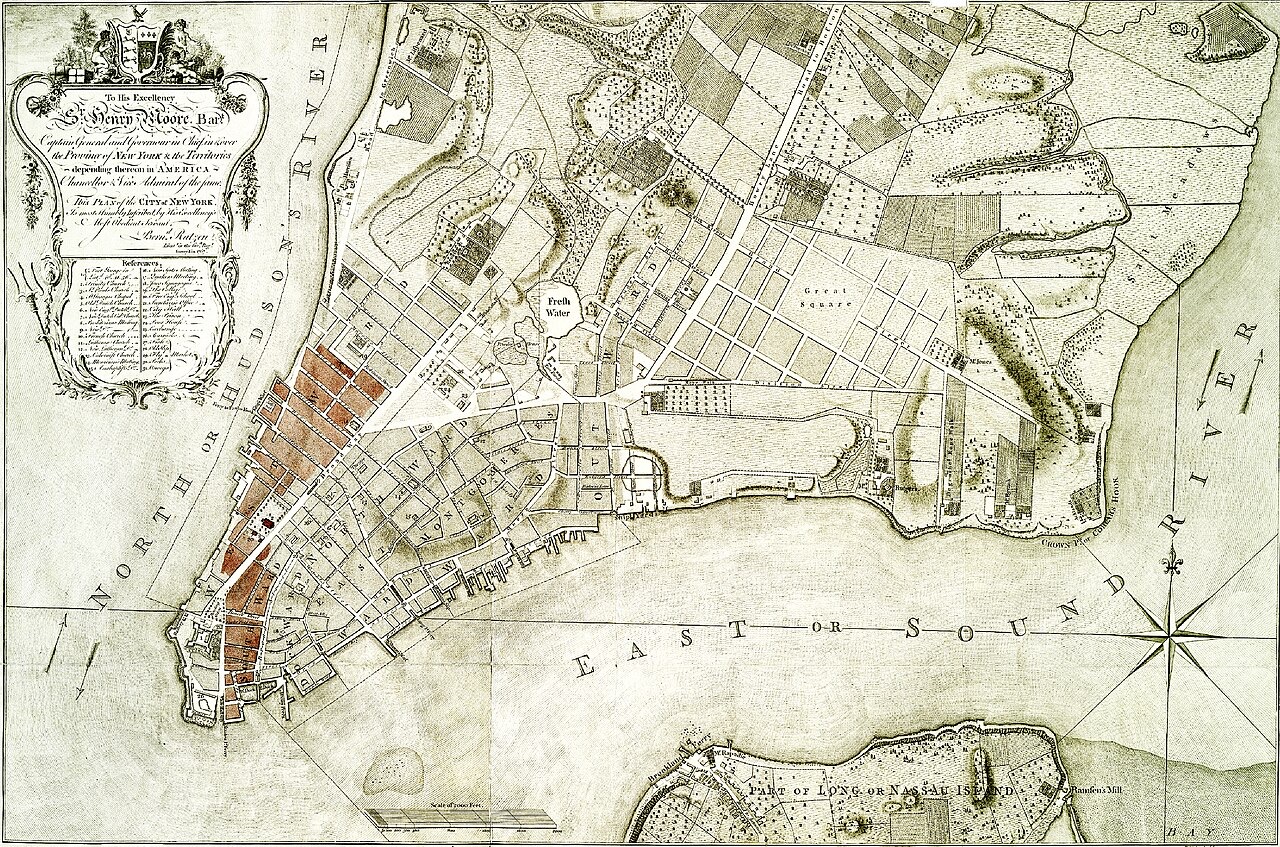
| Cross-Curricular | The Great New York Fire of September 1776 — leather buckets, hand-pumped engines and fire hooks, the burned district, and an argument no one has settled |
| Ch. | What happens |
|---|---|
| Chapter 31 | Saturday, September 21–Sunday, September 22, 1776 — Isabel wakes at Lady Seymour’s house to find the city on fire. Lady Seymour stops to empty a trunk and hands over a portrait and a packet of letters; on the stairs the ceiling collapses and knocks her senseless. Isabel drags her clear. Ruth’s doll is lost in the blaze. |
| Chapter 32 | Sunday, September 22–Thursday, September 26, 1776 — Hundreds of buildings are gone and thousands are homeless. Lady Seymour suffers a stroke and is brought to the Lockton house to be nursed. Isabel’s lungs ache from the smoke, and officers order soldiers and their wives quartered in the crowded rooms — including Sarah, who takes on kitchen work. |
| Chapter 33 | Friday, September 27–Saturday, November 16, 1776 — Ash settles over the city as winter comes on, and the plants grown from her mother’s seeds die. Lady Seymour, recovering, gives Isabel warm clothes. Then Isabel watches American prisoners taken at Fort Washington marched to jail and recognizes Curzon’s faded red hat. |
| Chapter 34 | Sunday, November 17–Sunday, November 24, 1776 — Madam throws an elaborate dinner to celebrate the British victory. Over the food, officers speak of more than three thousand prisoners and expect cold, hunger, and disease to finish them. Lady Seymour objects and is dismissed. Clearing up afterward, Isabel settles on a plan. |
| Chapter 35 | Monday, December 2, 1776 — With Madam out, Isabel carries a bucket of food to the prison and claims she is visiting her brother. A guard eats half of it. Curzon is alive but frozen and hollowed out. A sergeant shares the rest fairly, then asks her to carry messages; she refuses, and promises to return. |
| Chapter 36 | Tuesday, December 3–Friday, December 13, 1776 — Lady Seymour sickens, and Madam presses a doctor to send her south to Charleston, a journey he says would kill her. Isabel is set to nurse her instead. Lady Seymour reveals she knows about the food, calls it honorable, and warns her to be careful. A bookseller slips Isabel a copy of Common Sense. |
ⓘ The vocabulary words in this list are selected to help you understand and complete this workbook. Some may not appear verbatim in the original novel.
- A sergeant asks Isabel to carry messages out of the prison.
- Lady Seymour is hurt on the stairs and carried out.
- Isabel wakes at Lady Seymour’s house to a city on fire.
- Isabel recognizes Curzon among the marching prisoners.
- The Lockton house fills with strangers who will not leave.
Picture waking in a strange bed and thinking the sun has come up in the middle of the night. It has not. The window is orange because the street is orange, and so is the next street, and the one after that. A thirteen-year-old girl has about four minutes to decide what a life is worth carrying down a staircase. She chooses an old woman who cannot hurry, and while she is choosing, the one small cloth thing that still connects her to her sister is somewhere behind her, in a room that is already gone. Part 6 is the night a quarter of New York City burns, and the long gray weeks that follow it — ash on every sill, strangers billeted in the kitchen, and a column of captured American soldiers shuffling up the street toward a locked door. One of them is wearing a red hat that has faded almost to brown.
The British had held New York City for less than a week when it began to burn. Flames appeared shortly after midnight on September 21, 1776, near the crowded wharves at the southern tip of Manhattan. A hard wind from the south drove them north and west through a city built to burn: wooden houses packed along narrow lanes, many roofed with cedar shingles. Before dawn the fire had crossed Broadway and was running toward the Hudson River.
Fighting such a fire meant hand labor. Householders kept leather buckets by the door, and neighbors formed a brigade, a double line passing full buckets toward the flames and empty ones back to the well. Others worked hand-pumped engines or swung long hooks to pull down the next house in line, since an empty gap could stop a fire that water could not. That night almost none of it worked, because most of the population had fled the occupied city. Trinity Church burned to its foundations; a bucket line on the roof of Saint Paul's Chapel saved that building alone.
When the wind shifted and residents finally checked the flames, somewhere between four hundred and five hundred buildings were gone, burned down to smoking rubble, perhaps a quarter of the roughly four thousand that had stood. Families who could not salvage a home camped for years afterward in the burnt district under tents and old sailcloth, a squalid shantytown of mud and ash called Canvas Town. How the fire started is still disputed. British officers were certain that rebels had set it and questioned more than two hundred people, yet no one was ever charged. Historians still divide between deliberate arson and an accident in a tinder-dry wooden city.
This writing task is optional and is not part of your auto-graded score. The feedback below checks only the basics — length, spelling, and grammar — not whether your ideas are right or wrong. It is meant for classroom discussion and creative practice, so feel free to use your imagination!
Writing Task — Part 6 “What You Would Carry Out”
Lady Seymour spends her last safe minutes choosing what to take out of a burning house, and what Isabel carries down the stairs is not her own. Write about something you own that would be hard to replace — not because it is expensive, but because of what it stands for. Describe the object, explain who or what it connects you to, and tell what you would feel if it were gone. 6–10 sentences. End with one thing about that object that no one else would understand.
No right or wrong — close the screen and tell someone nearby what happened in this part. Can’t find anyone? Tell yourself out loud. The moment you teach it, you truly understand it.

Part 6 Complete!
You finished Chapters 31–36 of Chains.
Here are your auto-graded results:
Independent study guide by Garden Heights. Not affiliated with or endorsed by Laurie Halse Anderson. Contains original analysis only; no text from the novel is reproduced. Reference text: This workbook follows Laurie Halse Anderson’s classic text (the standard Puffin edition sold worldwide). Revised 2023 UK editions change some wording and may not match the vocabulary studied here.