
The City of Ember cover
Garden Heights

The City of Ember

This workbook is for Garden Heights members. Sign in to continue.

Sign in with Google →
New here? Just sign up with Google — your account includes Matilda, our gift book, forever.
The City of Ember · Garden Heights

Part 4

for The City of Ember · Part 4 · Chapters 8–10
8 Parts40 min
What Happens in Part 4

Still rattled by the long blackout, Doon stops wasting his shifts. He walks the Pipeworks with his map, leaving small objects as trail markers where the map runs out, filling a jar with insects, and noting a locked closet, a hatch in a tunnel roof, and marked rocks near the river. His temper still gets away from him. At home he takes an electric outlet apart and learns nothing, so he tries the library — and finds no order at all: unsorted shelves, no catalog, and old sayings built from words that name things nobody in Ember can identify. Lina finds him there. In Ch.9 the two bend over her chewed page together, matching surviving letter strokes against the size of the gaps, arguing over what the missing words could be; three readable words — Pipeworks, river, door — convince them the sheet matters enormously. The next evening Lina slips underground, and in a roped-off tunnel they watch a lurching stranger unlock a metal door, vanish inside, and come out with a bulging sack: somebody already has a key. Then Ch.10 turns the city’s failures personal. Granny is gravely ill, Dr. Tower admits the medicine is nearly gone, and Granny wakes only long enough to ask whether they found it. Lina says yes. She draws with Poppy on the backs of can labels — buildings under a sky she colors blue — and that night, with the lights dark, Granny calls out and Lina cannot see her face.

What We Will Learn
SectionWhat you will practice
VocabularyArchive words: fragment, legible, decipher, conjecture, brittle…
Literary ElementsA page full of holes: dramatic irony, gapped text, and a blue-sky drawing
Cross-CurricularRecord-keeping and archives: why paper decays and how gaps get filled
Chapter Summary
Ch.What happens
8Explorations — still shaken by the long blackout, Doon refuses to waste an hour: he maps unfamiliar stretches of the Pipeworks, drops small objects as trail markers, gathers insects, loses his temper with mocking coworkers, and notes a locked closet, a ceiling hatch, and marked rocks near the river; at home he takes an outlet apart and understands nothing, so he goes to the library hunting anything written about fire — and finds unsorted shelves and old words naming things nobody in Ember can identify.
9The Door in the Roped-Off Tunnel — Doon comes to Lina’s room and the two bend over the chewed page together, matching surviving letters against the size of the gaps and arguing over what the missing words might be; a handful of readable words — Pipeworks, river, door — convinces them the sheet matters enormously. The next evening Lina slips into the Pipeworks, and in a roped-off tunnel they watch a lurching stranger unlock a metal door, disappear inside, and come out with a bulging sack.
10Blue Sky and Goodbye — Granny is gravely ill. Dr. Tower comes and admits the city’s medicine is nearly gone, prescribing soup and cool cloths. Granny surfaces once to ask whether they found it, and Lina says yes so she can rest. Next day Lina draws with Poppy on the backs of can labels — buildings under a sky she colors blue. That night Granny calls out; the lights are dark, and Lina cannot see her face. By morning Granny is gone.
Part 1
Vocabulary
Study 10 key words from Chapters 8–10, then answer each question.
📚Knowledge Bank · The Words Archivists Use
Library Science · Archival TermsWhen a page is damaged, the people who study it need language precise enough to separate what they can actually see from what they are supplying themselves. A fragment is any piece that has broken away from a larger whole, and a single sheet may survive as dozens of them. Text that can still be read is called legible; text worn past reading is not, however confidently someone names it. The empty space where writing has been destroyed has its own term, a lacuna, borrowed from a Latin word for a pit or gap. To decipher a battered line is to determine what it says using evidence, while a reading offered without full proof is properly labeled a conjecture. Vocabulary of this kind is not decoration. Each term marks a different level of certainty, and blurring those levels is exactly how errors slip into a permanent record. Lina and Doon own none of these words, so they work the same chewed sheet with nothing sharper than a guess.
fragmentn.Ch.9
A small piece broken away from a whole
“Every fragment of the page had to be matched to its neighbor.”
legibleadj.Ch.9
Clear enough to be read
“Only a dozen words were still legible on the chewed sheet.”
decipherv.Ch.9
To work out the meaning of something hard to read
“The two friends bent close, trying to decipher a ruined line.”
conjecturen.Ch.9
A guess formed from incomplete evidence
“His conjecture about the missing letters was only a beginning.”
archiven.Ch.8
An organized collection of records kept for the future
“Ember owned books but nothing that worked as an archive.”
brittleadj.Ch.8
Hard, dry, and easily broken
“The oldest library pages had gone brittle at the corners.”
inventoryn.Ch.8
A complete itemized list of what a place holds
“No inventory existed for the shelves Doon searched.”
lurchv.Ch.9
To move forward in sudden uneven jerks
“They watched the stranger lurch toward the locked door.”
dwindlev.Ch.10
To grow steadily smaller
“The doctor admitted that her supplies continued to dwindle.”
salvagev.Ch.9
To rescue something usable from damage or ruin
“They hoped to salvage a few sentences from the wreckage.”

ⓘ The vocabulary words in this list are selected to help you understand and complete this workbook. Some may not appear verbatim in the original novel.
1A small piece broken away from a whole is a ___.Ch.9
2‘Legible’ means too worn to be read.Ch.9
3To work out the meaning of something hard to read is to ___.Ch.9
4Fill in each blank with the correct word.Ch.8–9
Word choices:brittleconjectureinventorysalvage- some words will not be used
The oldest library paper had gone at the corners.
Doon offered a about the missing letters.
5A guess formed from incomplete evidence is a ___.Ch.9
6To grow steadily smaller is to ___.Ch.10
7To ‘salvage’ is to rescue something usable from damage.Ch.9
8Fill in each blank with the correct word.Ch.8–9
Word choices:archivelegiblelurchdwindle- some words will not be used
A working keeps records safe for the future.
Only a few words were still on the chewed page.
9An organized collection of records kept for the future is an ___.Ch.8
10To move forward in sudden uneven jerks is to ___.Ch.9
Part 2
Comprehension
Show you understood what happens in Chapters 8–10.
📋Knowledge Bank · How a Real Archive Works
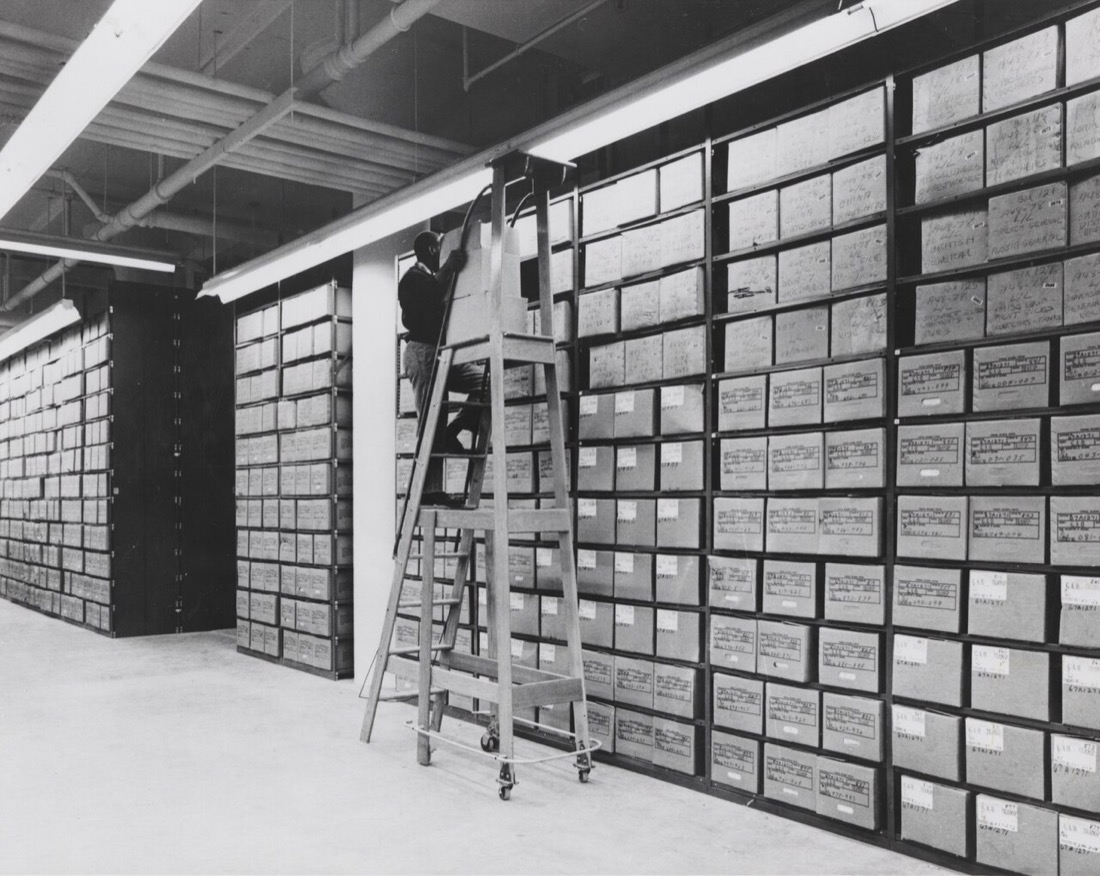
Information Science · Preservation SystemsAn archive is a machine for carrying paper into the future, and like any machine it has parts. The first part is the building: records are held at steady temperature and humidity, away from sunlight, because heat and moisture speed the chemical reactions that weaken paper fibers. The second part is packaging, since acid-free folders and boxes keep an unstable sheet from damaging its neighbors on the shelf. The third part is description. Every item receives a number, a shelf location, and an entry in a catalog, plus a finding aid explaining what the collection holds; a document nobody can locate is functionally missing. The fourth part is duplication, because a photograph, a microfilm, or a scan lets readers work from a copy while the original rests undisturbed in the dark. Ember has a library and none of this system: its shelves sit unsorted, its records are incomplete, and its one surviving sheet of instructions spent generations in a bedroom closet, guarded by a family who never learned what they were preserving.
1How does Doon spend his time in the Pipeworks in Ch.8?Ch.8
2Why does Doon go to the library in Ch.8?Ch.8
3Ember’s library is carefully organized, with every book listed in a catalog.Ch.8
4What does Doon notice about some words in Ember’s old books?Ch.8
5Write the numbers 1–5 in the boxes to show the correct order of events in Chapters 8–10. Number 1 = what happens first.Ch.8–10
  • Doon searches the library for anything written about fire.
  • Doon maps new stretches of the Pipeworks and gathers insects.
  • Granny dies in the night while the city lights are out.
  • In the roped-off tunnel, a stranger unlocks the door with a key.
  • Lina and Doon compare the chewed page’s surviving letters.
6Working together, Lina and Doon manage to read the whole document.Ch.9
7Which words can Lina and Doon actually make out on the page?Ch.9
8What do Lina and Doon see in the roped-off tunnel?Ch.9
9Dr. Tower tells Lina that Ember has plenty of medicine to spare.Ch.10
10How does Ch.10 end?Ch.10
Part 3
Literary Elements
Understanding HOW and WHY Jeanne DuPrau tells the story across Chapters 8–10.
🧠Knowledge Bank · Reading a Page Full of Holes
Literary Craft · The Gapped DocumentDuPrau does something risky in these chapters: she hands her two main characters a text they cannot read, and then makes the reader watch them fail at it. The damaged sheet is a device, not merely a prop. Because the prologue already told us that instructions were written and hidden, we know more than Lina and Doon do, and that imbalance is irony of the dramatic kind. Every wrong reading they propose lands with a small ache, since we can guess what the vanished letters were meant to spell. The holes also do structural work: they let the author release her plot in measured pieces rather than one explanation, which keeps tension alive over many chapters. Notice, too, that the gapped page mirrors the city around it, where knowledge has worn away until only broken pieces of the past remain. In this novel a ruined document is therefore both an obstacle and a symbol.
Dramatic irony
The prologue already told us what the paper says — so every wrong guess Lina and Doon make lands harder on us than on them.
Gapped text
The chewed page releases meaning in fragments, letting DuPrau ration information across many chapters instead of one explanation.
Foreshadowing
Lina draws buildings under a sky she colors blue — a hint pointed forward, and never explained.
1Because the prologue already revealed that instructions were written, the reader’s extra knowledge creates ___.Ch.9
2Fill in each blank with the correct literary term.Ch.9–10
Word choices:ironyforeshadowingrhymesequel- some words will not be used
The reader’s head start creates dramatic .
Lina’s blue-sky drawing works as .
3Why does DuPrau damage the document instead of letting Lina read it whole?Ch.9
4The chewed page also works as a symbol of Ember’s lost knowledge.Ch.9
5Lina’s drawing of buildings beneath a blue sky functions as ___.Ch.10
6Placing Granny’s death right after the tunnel discovery mainly ___.Ch.10
7The reader knows more about the paper than Lina and Doon do.Ch.9
8Fill in the blank with the correct literary term.Ch.9
Word choices:symbolfragmentnarratorsetting- some words will not be used
The ruined page becomes a of knowledge lost over generations.
9Chapters 8–10 are told entirely through Doon’s eyes.Ch.8–10
10Chapters 8–10 mainly work to ___.Ch.8–10
Part 4
Think Deeper
Four deeper challenges — no single-word recall. Read, weigh the evidence, and reason it out.
💡Knowledge Bank · Filling Gaps Without Inventing
Reasoning · Evidence and UncertaintyReconstructing a ruined text is one of the clearest tests of honest reasoning, because the temptation is always to write the sentence you wish were there. Trained editors work under constraints. They measure the missing space to estimate how many characters vanished, study the surviving strokes of ink, and compare the wording against other documents from the same office and period; each step narrows the field of possible readings using evidence rather than preference. A supplied word is then printed inside brackets so that a later reader can tell restored text from original text, and a note records how confident the editor actually is. That labeling is the ethical core of the practice, since a reconstruction that hides its seams quietly turns one scholar’s opinion into apparent fact. Judged by this standard, Lina and Doon are understandable but weak: they guess from meaning alone, keep no record of the alternatives, and let hope steer them. Reasoning well in front of a gap demands disciplined restraint.

Think back over these chapters. A boy walks tunnels nobody bothers with, dropping a bolt here and a bent nail there so he can find his way back, filling a jar with insects that have no names. Above him, a girl spreads a ruined page across a table and counts the empty spaces, measuring holes the way you might measure a wound. Two heads over one sheet, arguing: could that be a letter, or only a shadow? Then a roped-off passage, a stranger who should not have a key, and a sack carried away into the dark. And at the end of it all, a room where the lamp will not hold, and a voice calling a name that its owner cannot see.

Original passage written for Garden Heights — not a quotation from the novel.
1Claim: “These chapters argue that Ember has lost not only its records but the ability to read them.” — choose the two details that best prove it.Claim & Evidence
2What a real archive does, or What Ember actually does? Tap each detail to send it left or right.Sort into two
◄ What a real archive doesWhat Ember actually does ►
3Match each cause to its result. For each cause, pick its result.Cause & Effect
The long blackout leaves the whole city frightened
Ember keeps no ordered catalog of its books
Poppy chews the paper into fragments
A stranger opens the locked tunnel door
4Fill both blanks to complete the reasoning.Build the Argument
DuPrau lets Poppy ruin the paper BEFORE anyone reads it because , which shows that .
Part 5
Standardized Test
Reading passage · Saving Paper From Time · Words in Context & Insert Text · SAT & TOEFL-style practice
🎯 You already have the skills from the sections above — this is just a fun way to meet real SAT & TOEFL-style questions. Read the passage (the highlighted words are tested below), then answer the questions below. Tap an answer to select it, then tap it again to confirm — you can change your choice until you confirm.

Every archive begins with the same problem: paper does not want to last. From the middle of the nineteenth century onward, most books and documents were made from wood pulp treated with acidic sizing, and that acid slowly attacks the very fibers that give a sheet its strength. Decade by decade the page yellows, darkens along its edges, and finally turns brittle, until a careless thumb can snap a corner clean away. Archivists therefore treat storage itself as a preservation tool: steady temperature and humidity, low light, acid-free folders and boxes, and shelving that lifts records well off the floor. Nothing halts decay completely, and good storage only slows the clock.

Storage alone does not make a document usable; an archive is also a system of description. Each record receives a location, a catalog entry, and a finding aid that tells a reader what a collection contains and where a single sheet sits inside it. Fragile originals are also copied — photographed, microfilmed, or digitized — so that researchers can consult a surrogate while the original rests in the dark. Duplication matters because a document that survives in only one copy is one accident away from vanishing completely.

When damage has already happened, archivists become detectives. A torn or chewed page leaves a lacuna — a gap where text used to be — and filling it is disciplined guesswork, never invention. Specialists measure the empty space to estimate how many letters vanished and compare surviving strokes of ink with known handwriting. A reading proposed on that evidence is called a conjecture and is printed inside brackets, so that later readers can always tell supplied text from original text. An honest reconstruction shows its seams and leaves the gap visible for anyone who someday finds better evidence.

Original passage written for Garden Heights — not a quotation from the novel.
1What is the main idea of the passage?SAT · Central Ideas
2According to the passage, why does much modern paper decay?TOEFL · Factual Information
3Which conditions does the passage say archivists control?TOEFL · Factual Information
4In the passage, brittle means ___.SAT · Words in Context
5Insert Text (TOEFL). Look at the four squares [1][4] in the excerpt below. They show where this sentence could be added:
“Knowledge that cannot be located is, for practical purposes, as lost as knowledge nobody ever wrote down.”
Storage alone does not make a document usable; an archive is also a system of description. [1] Each record receives a location, a catalog entry, and a finding aid that tells a reader what a collection contains and where a single sheet sits inside it. [2] Fragile originals are also copied — photographed, microfilmed, or digitized — so that researchers can consult a surrogate while the original rests in the dark. [3] Duplication matters because a document that survives in only one copy is one accident away from vanishing completely. [4]
Where would the sentence fit best?
TOEFL · Insert Text
6In the passage, a lacuna is ___.TOEFL · Vocabulary
7In the passage, a conjecture is ___.SAT · Words in Context
8Why is restored text printed inside brackets?TOEFL · Factual Information
9The statement that good storage ‘only slows the clock’ suggests that ___.SAT · Inference
10Which Part 4 event does this passage BEST explain?SAT · Inference
Part 6 · Optional
Creative Writing
A bonus challenge to practice your English. Take your time and have fun with it.
About This Section

This writing task is optional and is not part of your auto-graded score. The feedback below checks only the basics — length, spelling, and grammar — not whether your ideas are right or wrong. It is meant for classroom discussion and creative practice, so feel free to use your imagination!

Writing Task — Part 4 “A Page Full of Holes”

Lina and Doon try to rebuild a message from a page that has been chewed into fragments. Write about a time you had to figure something out from incomplete information — a half-heard conversation, a torn note, a photograph with no explanation. What did you actually know, what did you guess, and how did you tell the two apart? 6–10 sentences. End with the one thing you still are not sure about.

You can start with: “I had only part of it, and I kept filling in the rest without meaning to...”
0 / 40 words minimum
πŸ—£ Teach It · Just for Fun (optional)

No right or wrong — close the screen and tell someone nearby what happened in this part. Can’t find anyone? Tell yourself out loud. The moment you teach it, you truly understand it.


Garden Heights

Part 4 Complete!

You finished Chapters 8–10 of The City of Ember.

Here are your auto-graded results:

-
points out of 100
Your Writing

Your writing was checked automatically for length, spelling, grammar, and whether you included the key parts of the scene. Scroll back to Part 5 anytime to read your feedback and improve your work.

Move on to Part 5 →

Independent study guide by Garden Heights. Not affiliated with or endorsed by Jeanne DuPrau. Contains original analysis only; no text from the novel is reproduced. Reference text: This workbook follows Jeanne DuPrau’s classic text (the standard Puffin edition sold worldwide). Revised 2023 UK editions change some wording and may not match the vocabulary studied here.