New here? Just sign up with Google — your account includes Matilda, our gift book, forever.
The City of Ember · Garden Heights
Part 5
for The City of Ember · Part 5 · Chapters 11–12
8 Parts40 min
What Happens in Part 5
Ember keeps shrinking. Lina and baby Poppy are taken in by Mrs. Murdo, whose apartment matches their old one room for room but is scrubbed, quiet, and orderly; three lavender turnips stand on her table like a bouquet, because nothing prettier is left to put there. Between deliveries Lina hears talk of the coming Singing, and carries messages from neighbors too frightened to go out. Then she spots Lizzie hurrying from the Supply Depot with a heavy bag and a thin story about shopping after work; pressed, Lizzie admits that a storeroom worker named Looper passes her canned fruit no shop has sold in years. Lina refuses a taste — treats that reach only a few are not treats at all. Meanwhile Doon goes back to the locked door in Tunnel 351 and finds a key waiting in it. Inside is a bright room stacked with food, bulbs, and supplies — and, asleep in a chair in the middle of all that plenty, Mayor Cole. The two friends fit their halves of the story together and decide the guards must hear it.
Two plots on one clock, a telling detail, and dramatic irony
Cross-Curricular
Rationing: how a city shares out a shrinking supply
Chapter Summary
Ch.
What happens
11
A Tidy Room, a Heavy Bag — Mrs. Murdo takes Lina and Poppy in, three lavender turnips standing on her table like flowers; talk turns to the coming Singing; then Lina catches Lizzie leaving the Supply Depot with canned fruit no shop has sold in years, and refuses a share of it.
12
The Key in the Locked Door — Doon tries the door in Tunnel 351 again and finds a key waiting in it; inside, a bright room is stacked with food, bulbs, and supplies, with Mayor Cole asleep in the middle of the plenty. Lina and Doon fit their halves together and decide the guards must be told.
Part 1
Vocabulary
Study 10 key words from Chapters 11–12, then answer each question.
📚Knowledge Bank · Words for a Thinning Supply
Economics · Words for ScarcityShortage carries its own vocabulary, and every shopkeeper in Ember would recognize it. Economists begin with scarcity: fewer goods exist than people want to buy. When a city office limits how much any household may take, that policy is rationing, and the fixed amount each family may claim is its ration. Someone must then allocate the remaining stock, deciding who receives what, in what order, on which day, and at which of the city’s shops. Shoppers answer with vocabulary of their own. A substitute stands in for whatever has vanished: roasted grain instead of coffee, patched cloth instead of new cloth, root vegetables instead of fruit. A surplus is the comfortable leftover that Ember has not seen in living memory. And when frightened families buy far past their needs and stack tins under a bed, the word for that quiet, understandable, destructive habit is hoarding.
scarcityn.Ch.11–12
A shortage of something people need
“Scarcity showed on every shelf in the shop.”
rationv.Ch.11–12
To limit each person to a fixed share
“Clerks had to ration the last bolts of cloth.”
allocatev.Ch.11–12
To give out a supply according to a plan
“The city tried to allocate pencils fairly.”
hoardv.Ch.11–12
To pile up and hide more than one needs
“Frightened families begin to hoard cans.”
dwindlev.Ch.11–12
To shrink steadily toward nothing
“The supply of light bulbs continued to dwindle.”
substituten.Ch.11–12
Something used in place of a missing item
“Turnip mash became the substitute for almost everything.”
contrabandn.Ch.11–12
Goods obtained or moved against the rules
“The heavy bag held contraband from a storeroom.”
surplusn.Ch.11–12
An amount left over beyond what is needed
“No surplus of anything remained in Ember.”
orderlyadj.Ch.11–12
Neatly arranged and carefully kept
“Mrs. Murdo kept a neat and orderly apartment.”
furtiveadj.Ch.11–12
Trying hard not to be noticed
“A furtive walk gave the errand away.”
ⓘ The vocabulary words in this list are selected to help you understand and complete this workbook. Some may not appear verbatim in the original novel.
1A shortage of something people need is ___.Ch.11–12
2To limit each person to a fixed share is to ___.Ch.11–12
3To ‘hoard’ is to pile up and hide more than one needs.Ch.11–12
4To give out a supply according to a plan is to ___.Ch.11–12
5Fill in each blank with the correct word.Ch.11–12
Word choices:dwindlesubstitutesurplusorderly- some words will not be used
The supply of light bulbs continued to .
Turnip mash became the for almost everything.
6Goods obtained or moved against the rules are ___.Ch.11–12
7A ‘surplus’ is a supply that has almost run out.Ch.11–12
8Trying hard not to be noticed is ___.Ch.11–12
9Fill in each blank with the correct word.Ch.11–12
Word choices:contrabandorderlyrationhoard- some words will not be used
Mrs. Murdo kept a neat and apartment.
Frightened families begin to cans.
10Something used in place of a missing item is a ___.Ch.11–12
Part 2
Comprehension
Show you understood what happens in Chapters 11–12.
📋Knowledge Bank · How Rationing Is Run
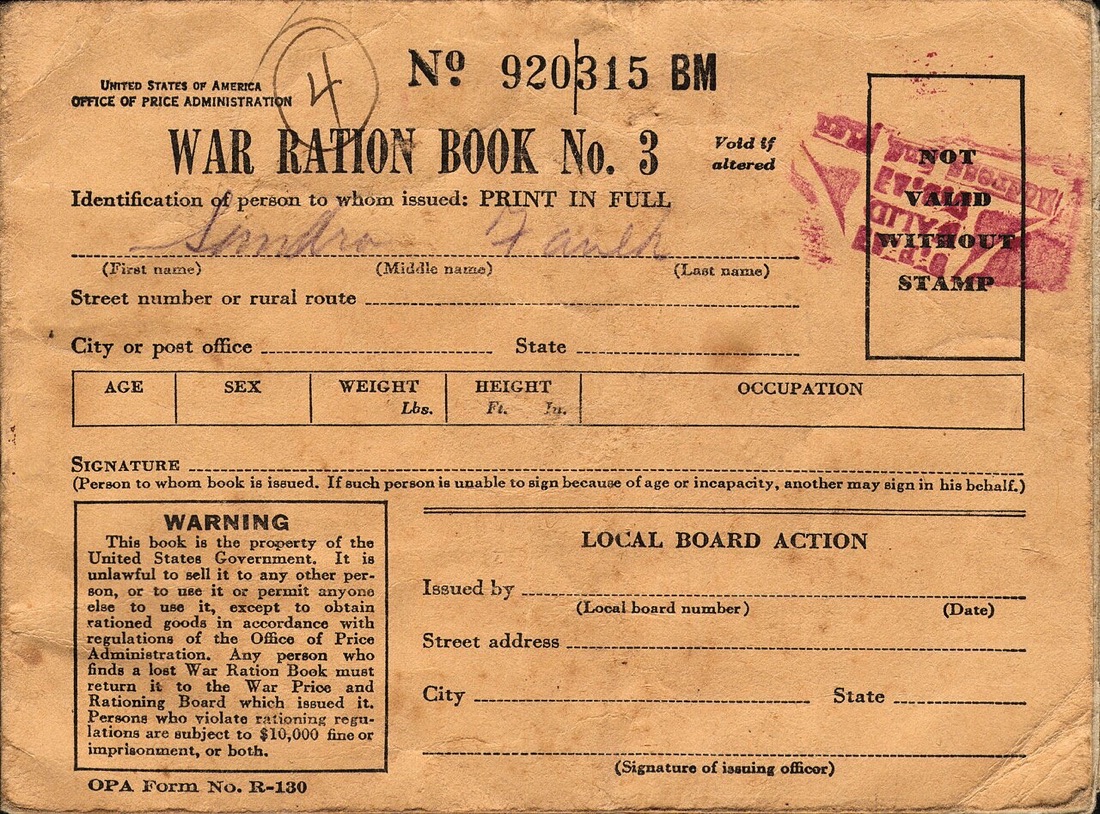
Economics · Allocating a Shrinking SupplyA ration system is a piece of administration, not magic. It usually starts with a register: every household is counted, then issued a book of coupons or stamps valid for a set period. At the counter a clerk takes both money and coupons, so a shopper cannot buy a second share simply by paying more. The coupons travel back to a central office, where staff tally them and set the next period’s quota from whatever the depots still hold. Planners then add categories, because need is not identical: heavy laborers, nursing mothers, and the sick usually receive extra. Alongside coupons sits a price ceiling, a legal maximum that stops sellers from pricing poorer families out of a thinning market. Because money can no longer decide who buys, the queue decides instead, and hours of standing in line become the real price of bread. Every part of the machine runs on careful counting, honest clerks, and unglamorous paperwork.
1Where are Lina and Poppy living in Chapter 11?Ch.11–12
2What sits on Mrs. Murdo’s table like a small bouquet?Ch.11–12
3What city event do Lina and Mrs. Murdo talk about?Ch.11–12
4Why does Lizzie’s story about shopping not hold up?Ch.11–12
5Write the numbers 1–5 in the boxes to show the correct order of events in Chapters 11–12. Number 1 = what happens first.Ch.11–12
Doon tries the tunnel door again and finds a key in it.
The two friends compare stories and choose the guards.
Mrs. Murdo asks Lina and Poppy to stay with her for good.
Doon looks into a bright room stacked with supplies.
Lina refuses the canned fruit Lizzie offers her.
6What surprises Doon at the tunnel door on his second try?Ch.11–12
7Ember’s shops and depots are well stocked in these chapters.Ch.11–12
8Whom does Doon find asleep among the crates and cans?Ch.11–12
9The messages Lina carries show people growing more frightened.Ch.11–12
10Lina and Doon agree to tell nobody what they have found.Ch.11–12
Part 3
Literary Elements
Understanding HOW and WHY Jeanne DuPrau tells the story across Chapters 11–12.
🧠Knowledge Bank · Two Plots, One Clock
Literary Craft · Parallel StorylinesDuPrau tells this stretch of the novel in two lanes. One chapter follows Lina through the streets above; the next follows Doon into the tunnels below. Neither character can see the whole picture, but the reader is handed both halves, and that is how parallel plotting builds pressure: we assemble the pattern before the characters can meet to compare notes. The gap between what a reader knows and what a character knows is dramatic irony, and it makes an ordinary moment—a boy standing quietly in a stocked room—feel dangerous. DuPrau also works by contrast. A tidy apartment with three turnips arranged like flowers sits a few pages from crates nobody is meant to see, and readers measure the city by the distance between them. Notice how little the author explains along the way. She trusts one chosen object to carry an argument about an entire economy, a technique writers call the telling detail.
Two plots, one clock
Lina’s chapter and Doon’s chapter run side by side — the reader holds both halves at once.
Telling detail
Three lavender turnips set out like flowers — one small object measures a whole economy.
Dramatic irony
We know what the sleeping man does not: a boy is standing in his storeroom, counting the crates.
1Alternating between Lina’s day and Doon’s day creates ___.Ch.11–12
2The three lavender turnips on the table work as ___.Ch.11–12
3The reader knows something the sleeping man does not — dramatic irony.Ch.11–12
4Fill in each blank with the correct literary term.Ch.11–12
Word choices:parallelironyrhymeballad- some words will not be used
Lina’s and Doon’s chapters run as plots.
A sleeping official watched by a boy creates dramatic .
5Keeping any public announcement from arriving builds ___.Ch.11–12
6DuPrau sets tidy rooms beside bare shops in order to build a contrast.Ch.11–12
7Closing on a stranger asleep among the crates works mainly as ___.Ch.11–12
8Fill in each blank with the correct literary term.Ch.11–12
Word choices:contrastdetailsettingmeter- some words will not be used
One object standing for a whole system is a telling .
Tidy rooms beside bare shops create a sharp .
9Lizzie’s canned fruit means nothing beyond her personal appetite.Ch.11–12
10Chapters 11–12 mainly work to ___.Ch.11–12
Part 4
Think Deeper
Four deeper challenges — no single-word recall. Read, weigh the evidence, and reason it out.
💡Knowledge Bank · Fair Shares Under Pressure
Ethics · Fairness in a CrisisLina is offered fruit that no shop has stocked for years, and she says no. That refusal deserves slow examination, because the argument against it sounds reasonable: the cans already exist, somebody will eat them, and one girl’s appetite changes nothing. Ethical reasoning tests such logic by asking what follows once the rule is made universal. If everyone with a useful connection quietly takes a private share, the common store stops being common, and the households with no connection carry the entire loss. Philosophers call the fair-share principle reciprocity: I accept a limit because my neighbors are accepting one as well. Break that expectation often enough and the arrangement loses its legitimacy, which is why small thefts from a shared supply are not small wrongs. Notice, finally, what fairness costs here. Lina surrenders a taste she may never be offered again, and a choice that costs nothing would hardly test anyone’s integrity.
Think back over these chapters. A kitchen table, scrubbed clean, with three pale purple turnips standing in a row where flowers used to go — because there is nothing prettier left in Ember to put there. Out on the streets a messenger runs errands for neighbors too frightened to leave their rooms, and passes shop windows with a great deal of shelf and very little on it. Then a heavy bag, a hurried friend, and a story about shopping that does not fit the clock. Somewhere below all of it, a boy turns a key that should not be there and looks into a room where the light is bright, the crates are stacked high, and a man sleeps comfortably in the middle of everything the city has been told it cannot have.
Original passage written for Garden Heights — not a quotation from the novel.
1Claim: “By Chapters 11–12, Ember’s shortages are no longer an inconvenience but a countdown.” — choose the two details that best prove it.Claim & Evidence
2How rationing is supposed to work, or How Ember is actually working? Tap each detail to send it left or right.Sort into two
◄ How rationing is supposed to workHow Ember is actually working ►
3Match each cause to its result. For each cause, pick its result.Cause & Effect
The sisters are left alone after their grandmother’s death→
Lina watches Lizzie leave the depot with a heavy bag→
Doon returns to the locked door a second time→
The two friends trade what each of them has learned→
4Fill both blanks to complete the reasoning.Build the Argument
DuPrau lets Doon find a bright, well-stocked room in the same week the shops go bare because , which shows that .
Part 5
Standardized Test
Reading passage · Sharing Out What Is Left · Words in Context & Central Ideas · SAT & TOEFL-style practice
🎯 You already have the skills from the sections above — this is just a fun way to meet real SAT & TOEFL-style questions. Read the passage (the highlighted words are tested below), then answer the questions below. Tap an answer to select it, then tap it again to confirm — you can change your choice until you confirm.
When a city cannot supply everything its people want, planners face one hard question: who gets what remains? Rationing is a common answer. Instead of letting price alone decide, an authority registers every household and issues coupon books, stamps, or record cards; each family may then claim only its listed share of flour, fuel, cloth, or soap. Notice what rationing cannot do: it does not add a single sack of flour to the supply. Its purpose is equitable distribution — a fair spread of a fixed amount, so that a clerk’s family and an official’s family draw from the same shelf.
Two other tools usually appear beside the coupon book. The first is a price ceiling, a legal maximum that keeps sellers from raising prices as stock thins. The second is the queue: once money can no longer sort buyers, waiting does the sorting instead, and a line before dawn becomes the true cost of a loaf. Families adapt through substitution, replacing what has vanished with whatever remains — roasted grain for coffee, patched cloth for new cloth, root vegetables for fruit. Wartime governments printed pamphlets teaching exactly these swaps, because households that can cook without a scarce ingredient stop competing for it.
The system’s weakest point is fear. When shoppers believe the shelves will be empty tomorrow, they buy more than they need today, and that behavior — hoarding — empties the shelves faster than any real drop in supply would. Each hoarder acts sensibly alone and destructively together, a pattern economists call a collective-action problem. That is why a ration system depends less on inspectors than on belief: people will accept a small fair share only while they trust that their neighbors are accepting one too.
Original passage written for Garden Heights — not a quotation from the novel.
1What is the main idea of the passage?SAT · Central Ideas
2According to the passage, rationing does NOT ___.TOEFL · Factual Information
3In the passage, equitable means ___.SAT · Words in Context
4A price ceiling is meant to ___.TOEFL · Factual Information
5In the passage, substitution means ___.TOEFL · Vocabulary
6Once money can no longer sort buyers, what does the sorting?TOEFL · Factual Information
7In the passage, hoarding means ___.SAT · Words in Context
8Governments printed pamphlets of swaps because ___.SAT · Inference
9Calling hoarding a collective-action problem means it is ___.SAT · Command of Evidence
10Which detail from Chapters 11–12 does this passage BEST explain?SAT · Inference
Part 6 · Optional
Creative Writing
A bonus challenge to practice your English. Take your time and have fun with it.
About This Section
This writing task is optional and is not part of your auto-graded score. The feedback below checks only the basics — length, spelling, and grammar — not whether your ideas are right or wrong. It is meant for classroom discussion and creative practice, so feel free to use your imagination!
Writing Task — Part 5 “Your Fair Share”
Lina is offered something rare and refuses it because only a few people could have it. Write about a time you had to decide between taking something you wanted and keeping things fair for everyone. What made the decision hard, and what did you finally do? 6–10 sentences. End with the sentence you would say to someone facing the same choice.
You can start with: “It would have been so easy to take it, and nobody would have known...”
0 / 40 words minimum
π£ Teach It · Just for Fun (optional)
No right or wrong — close the screen and tell someone nearby what happened in this part. Can’t find anyone? Tell yourself out loud. The moment you teach it, you truly understand it.

Part 5 Complete!
You finished Chapters 11–12 of The City of Ember.
Here are your auto-graded results:
-
points out of 100
Your Writing
Your writing was checked automatically for length, spelling, grammar, and whether you included the key parts of the scene. Scroll back to Part 5 anytime to read your feedback and improve your work.
Independent study guide by Garden Heights. Not affiliated with or endorsed by Jeanne DuPrau. Contains original analysis only; no text from the novel is reproduced. Reference text: This workbook follows Jeanne DuPrau’s classic text (the standard Puffin edition sold worldwide). Revised 2023 UK editions change some wording and may not match the vocabulary studied here.