
New here? Just sign up with Google — your account includes Matilda, our gift book, forever.
The Cricket in Times Square · Garden Heights
Part 1
for The Cricket in Times Square · Part 1 · Chapters 1–2
8 Parts40 min
What Happens in Part 1
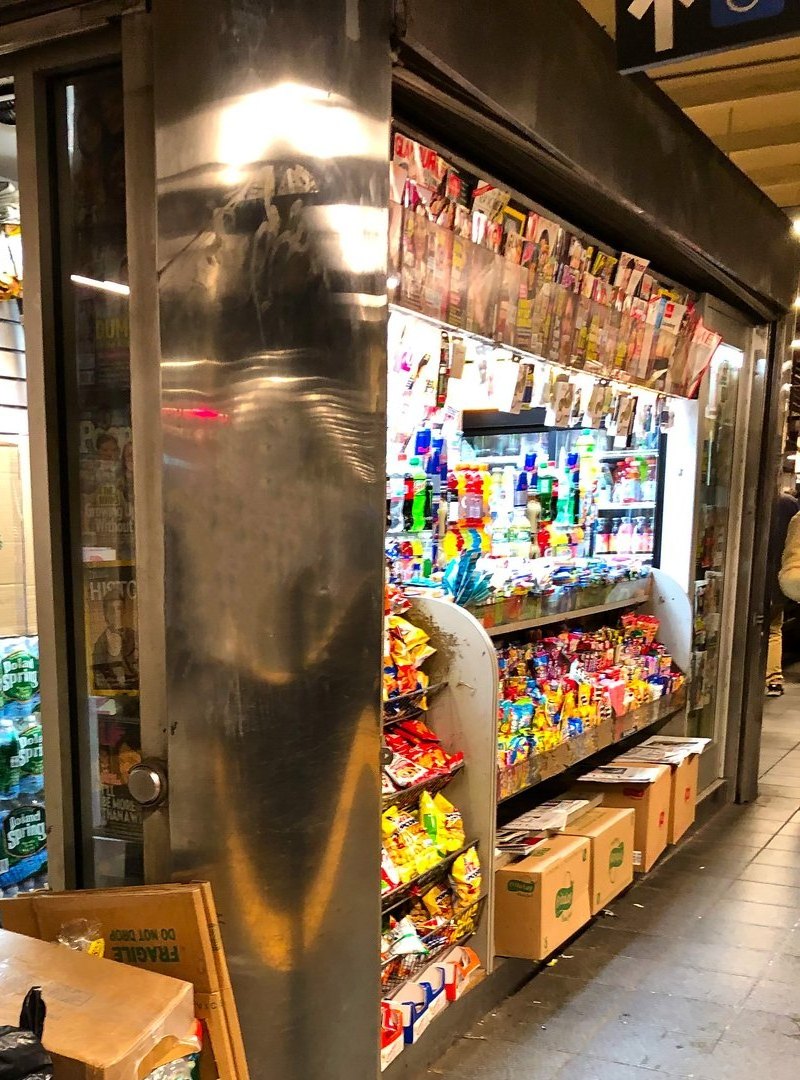
Deep under Times Square, in the busiest subway station in New York, lives Tucker — a fast-talking mouse with a home in an abandoned drainpipe and a genius for scrounging whatever the crowds drop. From his doorway he watches the Bellini family — Papa, Mama, and young Mario — run their tiny newsstand, where the papers are stacked high but the customers are few and the money box stays worryingly light. Late one Saturday night, while Mario minds the stand alone, a sound rises through the rumble of the trains that neither boy nor mouse has ever heard down there before: a small, clear, musical chirp. Mario follows it to a pile of dirt and litter by the station wall and gently digs out the musician — a cricket, far from any field. He makes the little traveler a bed in a matchbox lined with a tissue and begs his parents to let him stay. Mama eyes the ‘bug’ with deep suspicion, Papa speaks up kindly — and the cricket wins a careful trial: he may stay, for now.
What We Will Learn
Section
What you will practice
Vocabulary
Words of the station: scrounge, drainpipe, newsstand, rumble, examine…
Literary Elements
Setting contrast, animal fantasy, and how a story hooks its reader
Cross-Curricular
How a cricket really sings, and how a tiny newsstand does business
Chapter Summary
Ch.
What happens
1
Tucker — a scrounging mouse watches the struggling Bellini newsstand — then hears a sound that does not belong underground.
2
Mario — Mario follows the mysterious chirp, uncovers a cricket in the litter, makes him a matchbox bed, and wins him a trial stay.
Part 1
Vocabulary
Study 10 key words from Chapters 1–2, then answer each question.
🧠Knowledge Bank · A Song Made by Wings
Insect Science · StridulationA cricket makes music without a mouth, lungs, or voice of any kind. Along one front wing runs a rough, ridged vein called a file; on the other sits a hard little bump called a scraper. Drawing one across the other sets both wings shivering, the way a fingernail buzzes down the teeth of a comb, and scientists name that rubbing stridulation. The thin wing surfaces then work like small loudspeakers, pushing the trembling out into the air. In nature only male crickets sing, and each species repeats its own steady pattern, so a listener who knows insects can often name the singer without ever seeing it. That is the instrument echoing off tiled walls in a Times Square station — a country musician who carries his whole orchestra.
scroungev.Ch.1
To find or collect things others have left or thrown away
“Tucker could scrounge a meal from any corner of the station.”
drainpipen.Ch.1
A pipe that carries water away; Tucker’s home
“The mouse ducked into his drainpipe with his newest treasure.”
newsstandn.Ch.1
A small booth that sells newspapers and magazines
“The Bellini family ran the newsstand at the Times Square station.”
rumblen.Ch.1
A deep, rolling, continuous sound
“The rumble of the trains never really stopped.”
chirpn.Ch.2
The short, musical sound a cricket or bird makes
“One clear chirp rose over all the station noise.”
examinev.Ch.2
To look at something closely and carefully
“Mario bent down to examine the little insect in the dirt.”
delicateadj.Ch.2
Small, fine, and easily damaged
“He lifted the delicate creature as gently as he could.”
begv.Ch.2
To ask for something with all your heart
“Mario had to beg his parents to let the cricket stay.”
suspiciousadj.Ch.2
Not trusting; feeling something may be wrong
“Mama gave the strange bug a long, suspicious look.”
insistv.Ch.2
To say firmly that something must happen
“Mama would insist on one thing: no bugs near the cash box.”
ⓘ The vocabulary words in this list are selected to help you understand and complete this workbook. Some may not appear verbatim in the original novel.
1To find or collect things that others have dropped or thrown away is to ___.Ch.1
2A ‘rumble’ is a short, sharp, high-pitched squeak.Ch.1
3A small booth that sells newspapers and magazines is a ___.Ch.1
4If you ‘examine’ something, you look at it closely and carefully.Ch.2
5Fill in each blank with the correct word.Ch.1–2
Word choices:chirpdrainpipeinsistexamine- some words will not be used
Tucker’s cozy home was an old in the station wall.
A clear little rose over the noise of the trains.
6Something small, fine, and easily damaged is ___.Ch.2
7Mama’s ‘suspicious’ look means she completely trusts the cricket.Ch.2
8To ask for something with all your heart is to ___.Ch.2
9Fill in the blanks with the correct words.Ch.1–2
Word choices:suspiciousscroungedelicaterumble- some words will not be used
Tucker went out each night to for dropped snacks.
Mama gave the newcomer a frown.
10To say firmly that something must happen is to ___.Ch.2
Part 2
Comprehension
Show you understood what happens in Chapters 1–2.
🧠Knowledge Bank · A Shop the Size of a Closet
City Economics · The Subway NewsstandA newsstand was once one of the smallest businesses in America: a wooden booth barely wider than a closet, stacked with newspapers and magazines and earning a few cents at a time. In 1960 the stands tucked into New York subway stations lived or died on the crowds hurrying past, so a slow corner meant a thin cash box and real worry at home. The busiest crossroads of all lay beneath Times Square, where several lines met and a short train called the shuttle carried riders back and forth to Grand Central Terminal. Above the tiles a station is only a passage; below them, drainpipes and dropped crumbs make it a whole neighborhood. Reading Selden well begins with picturing that crowded, roaring setting.
1Where does Tucker the mouse live?Ch.1
2How is business at the Bellini newsstand?Ch.1
3Mario is minding the newsstand alone late on a Saturday night when he hears the sound.Ch.2
4What does Mario hear over the rumble of the trains?Ch.2
5Write the numbers 1–5 in the boxes to show the correct order of events in Chapters 1–2. Number 1 = what happens first.Ch.1–2
Over the train rumble, a strange musical sound rises.
A matchbox with a tissue becomes a tiny bed.
Mario digs through the dirt pile beside the station wall.
Mama agrees — reluctantly — that the cricket may stay for now.
Tucker the mouse watches the station from his drainpipe.
6Mario finds the cricket inside the cash register of the newsstand.Ch.2
7What does Mario make for the cricket?Ch.2
8How do Mama and Papa each react to the cricket?Ch.2
9The cricket is allowed to stay permanently, with no conditions at all.Ch.1–2
10Why is the timing of the chirp — late on a quiet night — important?Ch.2
Part 3
Literary Elements
Understanding HOW and WHY George Selden tells the story across Chapters 1–2.
🧠Knowledge Bank · When Animals Talk Like Us
Literary Craft · PersonificationSelden hands a cricket, a mouse, and a cat something no real animal owns: speech. Giving human thought, feeling, and language to a creature is called personification, and it is a bargain the writer and the reader strike together. A living cricket only rubs its wings; it cannot miss a meadow or trade a joke with a mouse. Yet by letting Chester talk, the author lets us look up at a city of giants from inside a body two inches long, and the science underneath is not spoiled — it is made to matter. Notice how quickly you stop asking whether insects converse and start caring whether this one is frightened. That surrender is the craft working, bought with a single invented voice.
Setting contrast
Two worlds placed side by side — the roaring Times Square subway and the quiet Connecticut meadow folded inside one chirp.
Animal fantasy
A story where animals think and talk like people — while the human world around them stays true to real life.
Narrative hook
The mystery an author dangles to pull readers in — here, a sound in Chapter 1 that is not explained until Chapter 2.
1The chirp in the subway station is striking mainly because ___.Ch.1–2
2Fill in the blank with the correct literary term.Ch.1–2
Word choices:fantasyhookrhymemoral- some words will not be used
Animals who think and talk make this an animal .
A mystery that pulls readers onward is a narrative .
3Selden begins with Tucker’s point of view mainly to ___.Ch.1
4In this animal fantasy, the human city around the animals is described as completely unrealistic.Ch.1
5Keeping the sound unexplained until Mario digs in the litter creates ___.Ch.2
6The Bellinis’ light cash box works in the story as ___.Ch.1
7Placing two very different worlds side by side in a story is called contrast.Ch.1–2
8Fill in the blank with the correct literary term.Ch.1
Word choices:settingdialogueclimaxsequel- some words will not be used
The time and place of a story — here a 1960s subway station — is its .
9Mama’s suspicion and Papa’s kindness in Chapter 2 set up ___.Ch.2
10Chapter 2 ends with a country cricket asleep in a matchbox under Times Square. This image mainly promises readers ___.Ch.2
Part 4
Think Deeper
Four deeper challenges — no single-word recall. Read, weigh the evidence, and reason it out.
🧠Knowledge Bank · A Country Cricket in a City of Stone
Social-Emotional · Feeling Out of PlaceChester never chose New York; he followed a smell of liverwurst into a picnic basket and woke hundreds of miles from his meadow. His first feeling is not wonder but homesickness, the ache of being far from where you belong, and everything around him is stone instead of grass. Mario is displaced in a smaller way, minding the family stand late on a Saturday night because the Bellinis need every sale the passing crowd might bring. Feeling out of place is among the oldest human experiences — a new school, a new town, a new country — and Selden trusts young readers to recognize it. What eases the ache is never the city softening; it is somebody choosing to reach out, and a home built of friendship.
Think back over the chapters. A mouse watches from a drainpipe as a family counts too few coins. A boy sits alone at a newsstand near midnight, surrounded by papers nobody is buying. And then, over the endless rumble of the trains, comes a sound so out of place that both of them stop still: a chirp, small and clear, like a piece of a summer field mailed to the wrong address. The boy digs; the litter parts; and a black, delicate traveler blinks up at the biggest, loudest world a cricket has ever seen.
Original passage written for Garden Heights — not a quotation from the novel.
1Claim: “The Bellini family’s newsstand is in real trouble.” — choose the two details that best prove it.Claim & Evidence
2Tucker’s city world, or Chester’s country world? Tap each detail to send it left or right.Sort into two
◄ Tucker’s city worldChester’s country world ►
3Match each cause to its result. For each cause, pick its result.Cause & Effect
The station falls quiet late on Saturday night→
Mario follows the strange sound to the station wall→
Mario lines a matchbox with a tissue→
Mama eyes the newcomer with deep suspicion→
4Fill both blanks to complete the reasoning.Build the Argument
Selden lets us hear the chirp in Chapter 1 but hides the cricket until Chapter 2 because , which shows that .
Part 5
Standardized Test
Reading passage · The Insect That Sings with Its Wings · SAT & TOEFL-style practice
🎯 You already have the skills from the sections above — this is just a fun way to meet real SAT & TOEFL-style questions. Read the passage (the highlighted words are tested below), then answer the questions below. Tap an answer to select it, then tap it again to confirm — you can change your choice until you confirm.
A cricket’s song is one of the most familiar sounds of summer, yet the singer has no voice at all. A male cricket makes his music with his wings. One wing carries a row of tiny teeth, ridged like the edge of a comb; the other wing has a hard, sharp scraper. When the cricket rubs the scraper across the teeth, the wings shake very fast, and that shaking — called vibration — makes the chirping sound. Scientists call this way of singing stridulation.
The cricket even lifts his wings as he plays, and their thin surfaces amplify the sound, making it much louder, the way a guitar’s hollow body makes its strings ring. Crickets do not chirp for fun alone: each song is a signal, a message that may call to other crickets or warn rivals away. Only the males sing, and each kind of cricket repeats its own pattern, so a careful listener can name the species without ever seeing the insect. People have loved the sound for thousands of years. To many listeners, a cricket’s chirp is not noise at all, but the smallest violin in the world, playing from the grass.
Original passage written for Garden Heights — not a quotation from the novel.
1What is the main idea of the passage?SAT · Central Idea
2In the passage, ridged most nearly means ___.SAT · Words in Context
3What actually produces the chirping sound?TOEFL · Factual Information
4The passage compares the cricket’s lifted wings to a guitar’s hollow body because both ___.TOEFL · Rhetorical Purpose
5In the passage, amplify most nearly means ___.TOEFL · Vocabulary
6What is the scientific name for the cricket’s way of singing?TOEFL · Factual Information
7In the passage, a signal is ___.SAT · Words in Context
8According to the passage, which crickets chirp?TOEFL · Factual Information
9The closing line calls the chirp ‘the smallest violin in the world’ mainly to ___.SAT · Author’s Purpose
10Which moment from the chapters does this passage BEST explain?SAT · Text Connections
Part 6 · Optional
Creative Writing
A bonus challenge to practice your English. Take your time and have fun with it.
About This Section
This writing task is optional and is not part of your auto-graded score. The feedback below checks only the basics — length, spelling, and grammar — not whether your ideas are right or wrong. It is meant for classroom discussion and creative practice, so feel free to use your imagination!
Writing Task — Part 1 “The Sound Nobody Else Noticed”
Mario hears one tiny sound under the roar of a whole city — and follows it. Now imagine YOU are somewhere loud and busy (a cafeteria, a street, a station) and you hear one small sound nobody else notices. What is it? Where does it lead you? Describe what you find in 6–10 sentences — and let the sound stay a mystery for at least three of them, the way Selden does.
You can start with: “At first I thought I had imagined it, but then the sound came again...”
0 / 40 words minimum
🗣 Teach It · Just for Fun (optional)
No right or wrong — close the screen and tell someone nearby what happened in this part. Can’t find anyone? Tell yourself out loud. The moment you teach it, you truly understand it.

Part 1 Complete!
You finished Chapters 1–2 of The Cricket in Times Square.
Here are your auto-graded results:
-
points out of 100
Your Writing
Your writing was checked automatically for length, spelling, grammar, and whether you included the key parts of the scene. Scroll back to Part 5 anytime to read your feedback and improve your work.
Independent study guide by Garden Heights. Not affiliated with or endorsed by George Selden. Contains original analysis only; no text from the novel is reproduced. Reference text: This workbook follows George Selden’s classic text (the standard Puffin edition sold worldwide). Revised 2023 UK editions change some wording and may not match the vocabulary studied here.