
The Cricket in Times Square cover
Garden Heights

The Cricket in Times Square

This workbook is for Garden Heights members. Sign in to continue.

Sign in with Google →
New here? Just sign up with Google — your account includes Matilda, our gift book, forever.
The Cricket in Times Square · Garden Heights

Part 4

for The Cricket in Times Square · Part 4 · Chapters 7–8
8 Parts40 min
What Happens in Part 4

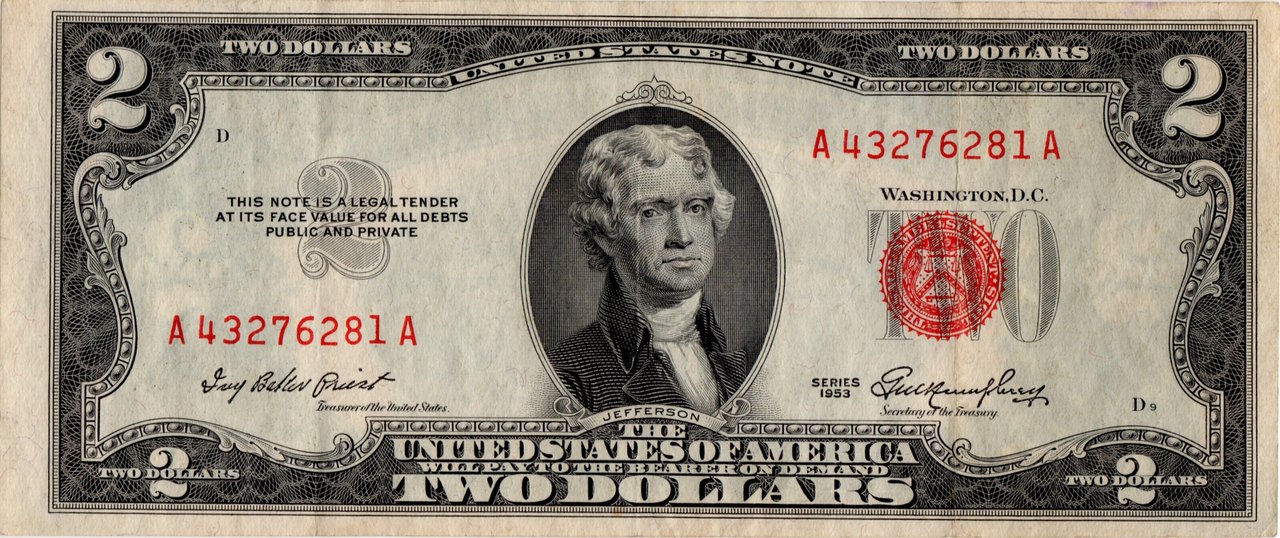
The emperor’s cage turns out to be a beautiful mistake. Chester feels restless behind its bars — watched, shut in, more prisoner than prince — and misses his plain old matchbox. Falling asleep at last, he dreams himself home in Connecticut, nibbling a fresh green leaf… and wakes to a horror: the ‘leaf’ was a two-dollar bill from the newsstand’s cash drawer, and half of it is gone — eaten in his sleep. Tucker arrives with a mouse’s worth of wild schemes, but morning comes first, and with it Mama Bellini. Furious, she pronounces sentence: the cricket stays locked in the cage until the money is paid back. Chester, honest to his bones, refuses every escape plan — he ate the money, and he will serve his time fairly. Then Tucker reveals a secret: years of scrounged coins, a life savings of two dollars and ninety-three cents. Groaning at every coin, the miser of Times Square gives up two whole dollars — keeping ninety-three cents — and he and Harry stack the money in a gleaming tower for the family to find. In the morning the Bellinis marvel, the debt is paid, and Chester steps out of the cage a free cricket.

What We Will Learn
SectionWhat you will practice
VocabularyWords of crime and kindness: restless, horrified, accuse, sentence, sacrifice…
Literary ElementsSymbols, situational irony, and what motivates a miser to give
Cross-CurricularHow crickets hear, and what paper money is really made of
Chapter Summary
Ch.What happens
7The Cricket Cage — restless in his splendid cage, Chester dreams of a Connecticut leaf — and eats half a two-dollar bill in his sleep. Mama’s sentence: caged until it is repaid.
8Tucker’s Life’s Savings — refusing to escape, Chester serves his time — until Tucker sacrifices $2.00 of his $2.93 savings, stacked in a shining tower, and buys his friend’s freedom.
Part 1
Vocabulary
Study 10 key words from Chapters 7–8, then answer each question.
🧠Knowledge Bank · Listening with Your Knees
Insect Science · Ears on the LegsA creature that makes music must also be able to hear it, and a cricket hears from one of the oddest places in nature. Its ears sit not on the head but on the front legs, just below the knee. Each one is a thin patch of skin called a tympanum, a small drum that shivers when sound waves strike it, exactly as a real drumhead does under a stick. Nerves behind that membrane carry the shivering to the brain, so a cricket can pick one rival’s song out of a whole noisy field. It also means vibration reaches him through the ground, and footsteps coming down a station stairway are felt before they are heard. Picture Chester leaning toward a boy’s voice and remember that he is listening with his knees.
restlessadj.Ch.7
Unable to relax or stay still
“Chester turned restless circles inside the splendid cage.”
nibblev.Ch.7
To take small, gentle bites
“In his dream he began to nibble a fresh green leaf.”
horrifiedadj.Ch.7
Shocked and filled with dread
“Chester woke horrified to see what he had eaten.”
accusev.Ch.7
To say that someone has done wrong
“Mama was quick to accuse the cricket of ruining the bill.”
sentencen.Ch.8
A punishment given for doing wrong
“The sentence was plain: stay caged until the money is repaid.”
honestadj.Ch.8
Truthful; refusing to cheat or lie
“Chester was too honest to run from what he had done.”
savingsn.Ch.8
Money put aside little by little
“Tucker’s savings came to two dollars and ninety-three cents.”
sacrificen.Ch.8
Giving up something precious for someone else
“Two dollars was an enormous sacrifice for a mouse.”
stackv.Ch.8
To pile things neatly, one on another
“The friends began to stack the coins into a tower.”
releasev.Ch.8
To set someone free
“The Bellinis agreed to release the cricket from the cage.”

ⓘ The vocabulary words in this list are selected to help you understand and complete this workbook. Some may not appear verbatim in the original novel.
1If you cannot relax or stay still, you are ___.Ch.7
2To ‘nibble’ is to swallow something whole in one gulp.Ch.7
3To say that someone has done wrong is to ___ them.Ch.7
4In this story, a ‘sentence’ means a punishment for doing wrong.Ch.8
5Fill in each blank with the correct word.Ch.7–8
Word choices:horrifiedsavingsnibblerelease- some words will not be used
Chester woke at what his dream had done.
Tucker’s filled a corner of the drainpipe.
6Money put aside little by little is called ___.Ch.8
7A ‘sacrifice’ costs the giver nothing at all.Ch.8
8To pile things neatly one on another is to ___ them.Ch.8
9Fill in the blanks with the correct words.Ch.7–8
Word choices:honestrestlessaccusesacrifice- some words will not be used
Chester was too to sneak away from his punishment.
Giving the two dollars was a true for Tucker.
10To set someone free is to ___ them.Ch.8
Part 2
Comprehension
Show you understood what happens in Chapters 7–8.
🧠Knowledge Bank · Cloth Money and a Rare Bill
Everyday Economics · American CurrencyAmerican paper money is not paper. Bills are woven from a blend of cotton and linen, closer to fine cloth than to newsprint, because cloth survives thousands of foldings, soakings, and journeys through a cash drawer. Within that family the two-dollar bill has always been the oddity: entirely real money, printed in small numbers, and rare enough that a newsstand drawer might hold only one. Money also travels the other way underground, where hurrying passengers drop coins that a patient mouse can gather one at a time — a penny by the token booth, a dime rolled against a wall, night after night for years. In 1960 a hoard of two dollars and ninety-three cents would buy a good dinner, which made it a genuine fortune.
1Why is Chester unhappy in his beautiful new cage?Ch.7
2What does Chester dream about on the terrible night?Ch.7
3Chester eats the two-dollar bill on purpose, to get revenge on Mama.Ch.7
4What is Mama’s sentence for the half-eaten bill?Ch.7–8
5Write the numbers 1–5 in the boxes to show the correct order of events in Chapters 7–8. Number 1 = what happens first.Ch.7–8
  • A tower of coins buys Chester’s freedom.
  • Mama discovers the damage and pronounces sentence.
  • Dreaming of a leaf, he nibbles the two-dollar bill.
  • Tucker reveals his life savings of $2.93.
  • Restless in the cage, Chester finally falls asleep.
6Chester happily agrees to Tucker’s plans for escaping the cage.Ch.8
7How did Tucker build his life savings?Ch.8
8Exactly how much does Tucker give, and how much does he keep?Ch.8
9Tucker and Harry leave the coins stacked in a tower for the Bellinis to find.Ch.8
10What do the Bellinis do when they find the money?Ch.8
Part 3
Literary Elements
Understanding HOW and WHY George Selden tells the story across Chapters 7–8.
🧠Knowledge Bank · The Trouble That Drives a Story
Literary Craft · ConflictEvery story runs on conflict — a problem a character cannot simply walk away from — and Part 4 hands Chester a painful one. Conflict is the engine of fiction because trouble forces people to act, and what they do under pressure shows who they have been all along. Notice that this particular trouble is not a villain but an accident; some of the finest stories set a good character against a mistake rather than an enemy, which makes the outcome much harder to guess. The tension pulls a reader forward: forgiven, caged, or sent away? Just as revealing is how the friends respond, since a mouse who loves money is suddenly asked what it is worth. A well-built problem clears a stage on which loyalty and honesty can finally appear.
Situational irony
When events turn out the opposite of what is expected — a gift cage becomes a jail; a famous miser pays a friend’s debt.
Symbol
A thing that stands for something larger — the dreamed leaf is Chester’s homesickness, strong enough to chew through real money.
Motivation
The reason behind a character’s choice — Tucker’s love for his friend outweighs his love for his fortune.
1A cage bought to honor Chester ends up imprisoning him. This reversal is an example of ___.Ch.7
2Fill in the blank with the correct literary term.Ch.7–8
Word choices:symbolironysequelchorus- some words will not be used
The dream-leaf stands for Chester’s homesickness — it is a .
An outcome flipped against expectation is situational .
3Chester eating money while dreaming of a leaf shows readers that ___.Ch.7
4Tucker giving up his treasure is surprising because Selden has painted him as a miser who counts every coin.Ch.8
5What does Chester’s refusal to escape reveal about his character?Ch.8
6The gleaming coin tower left overnight works in the story as ___.Ch.8
7A symbol is a thing in a story that stands for something larger than itself.Ch.7
8Fill in the blank with the correct literary term.Ch.8
Word choices:motivationsettingrhymeclimax- some words will not be used
The reason behind a character’s choice is called .
9Mama demanding repayment — rather than simply throwing Chester out — quietly shows that she ___.Ch.7–8
10Chapter 8 leaves Tucker with 93 cents and Chester with his freedom. Selden ends on this trade to show that ___.Ch.8
Part 4
Think Deeper
Four deeper challenges — no single-word recall. Read, weigh the evidence, and reason it out.
🧠Knowledge Bank · Tucker Opens His Hoard
Social-Emotional · What Friendship CostsFor chapters Tucker has bragged about his savings — coins and a crumpled dollar rescued from the subway floor and guarded like a dragon’s gold. So when he offers that hoard to cover another creature’s mistake, the moment carries real weight. Selden is showing young readers something hard and beautiful: friendship sometimes asks you to give up the very thing you love best. Being a friend is easy while it costs nothing; it means far more when the price can be counted out in coins. Nor is this instinct, since a mouse feels no natural pull toward a cricket. It is a deliberate choice of somebody else’s good over your own comfort, and that choice is what turns companions into true friends. Love is measured by what we will surrender.

Think back over the chapters. In the middle of the night, a homesick cricket dreams of the greenest leaf in Connecticut — and wakes with half of the family’s rarest bill inside him. He could vanish between the bars before morning; instead he folds his wings and waits for the judge. Across the station, a mouse who has counted his coins a thousand times counts them once more — and pushes two dollars of his two-ninety-three across the floor toward a friend he has known for barely a week. By sunrise there is a tower of silver on the shelf, and nobody upstairs will ever know who built it.

Original passage written for Garden Heights — not a quotation from the novel.
1Claim: “Tucker’s gift of two dollars is a true sacrifice.” — choose the two details that best prove it.Claim & Evidence
2The cage as Mario sees it, or The cage as Chester feels it? Tap each detail to send it left or right.Sort into two
◄ The cage as Mario sees itThe cage as Chester feels it ►
3Match each cause to its result. For each cause, pick its result.Cause & Effect
Chester dreams he is nibbling a Connecticut leaf
Mama finds the ruined bill in the morning
Chester refuses every plan of escape
Tucker gives two dollars from his life savings
4Fill both blanks to complete the reasoning.Build the Argument
Selden has Chester eat a two-dollar bill — scarce money from a struggling family — because , which shows that .
Part 5
Standardized Test
Reading passage · Money Made of Cloth · SAT & TOEFL-style practice
🎯 You already have the skills from the sections above — this is just a fun way to meet real SAT & TOEFL-style questions. Read the passage (the highlighted words are tested below), then answer the questions below. Tap an answer to select it, then tap it again to confirm — you can change your choice until you confirm.

The dollar bill in your pocket is not really paper at all. American money is printed on a special blend of cotton and linen — cloth, not wood — because cloth is far more durable than ordinary paper. A bill must survive being folded, crumpled, sat on, and soaked, thousands of times over. Even so, money wears out. A one-dollar bill lasts only a few years as it passes from hand to hand and store to store — what banks call staying in circulation — before it grows too limp and torn to use.

Worn-out bills are collected by banks, shredded, and replaced with crisp new ones. And a damaged bill is not always a lost cause: the government’s rule is generous, and if you can turn in clearly more than half of a torn bill, you can redeem it — exchange it for a whole new one. So a bill nibbled at the edges is only wounded. Rarer notes, such as the two-dollar bill that most cash drawers hold only one of, are certainly worth the walk to the bank. But if half of a bill has vanished completely — say, into a sleeping cricket — its owner has a real problem.

Original passage written for Garden Heights — not a quotation from the novel.
1What is the main idea of the passage?SAT · Central Idea
2American money is printed on ___.TOEFL · Factual Information
3In the passage, durable most nearly means ___.SAT · Words in Context
4In the passage, staying in circulation means ___.TOEFL · Vocabulary
5What happens to bills that grow too limp and torn to use?TOEFL · Factual Information
6In the passage, to redeem a damaged bill means to ___.SAT · Words in Context
7According to the passage, a torn bill can be redeemed if ___.TOEFL · Factual Information
8The author calls the government’s replacement rule ‘generous’ because it ___.TOEFL · Rhetorical Purpose
9The final sentences connect the passage to the novel by pointing out that ___.SAT · Text Connections
10Insert Text (TOEFL). Look at the four squares [1][4] in the excerpt below. They show where this sentence could be added:
“That is why a wounded bill is not always a lost bill.”
Money wears out fast as it circulates from hand to hand. [1] Banks gather the worn-out bills, shred them, and issue new ones in their place. [2] The government will even exchange a torn bill, if clearly more than half of it is turned in. [3] Only when too much of a bill is missing does its owner truly lose out. [4]
Where would the sentence fit best?
TOEFL · Insert Text
Part 6 · Optional
Creative Writing
A bonus challenge to practice your English. Take your time and have fun with it.
About This Section

This writing task is optional and is not part of your auto-graded score. The feedback below checks only the basics — length, spelling, and grammar — not whether your ideas are right or wrong. It is meant for classroom discussion and creative practice, so feel free to use your imagination!

Writing Task — Part 4 “The Hardest Thing to Give”

Tucker gives away two dollars of his $2.93 — almost everything he has — to free a friend. Write about a time someone gave up something that truly mattered to them for somebody else (it can be real or invented). What was given, what did it cost the giver, and what did it buy that money never could? Tell it in 6–10 sentences, and let us feel the moment of letting go, the way Selden lets us hear Tucker groan over every coin.

You can start with: “Everyone said it was just a small thing to give away, but I knew better...”
0 / 40 words minimum
πŸ—£ Teach It · Just for Fun (optional)

No right or wrong — close the screen and tell someone nearby what happened in this part. Can’t find anyone? Tell yourself out loud. The moment you teach it, you truly understand it.


Garden Heights

Part 4 Complete!

You finished Chapters 7–8 of The Cricket in Times Square.

Here are your auto-graded results:

-
points out of 100
Your Writing

Your writing was checked automatically for length, spelling, grammar, and whether you included the key parts of the scene. Scroll back to Part 5 anytime to read your feedback and improve your work.

Move on to Part 5 →

Independent study guide by Garden Heights. Not affiliated with or endorsed by George Selden. Contains original analysis only; no text from the novel is reproduced. Reference text: This workbook follows George Selden’s classic text (the standard Puffin edition sold worldwide). Revised 2023 UK editions change some wording and may not match the vocabulary studied here.