New here? Just sign up with Google — your account includes Matilda, our gift book, forever.
The Miraculous Journey of Edward Tulane · Garden Heights
Part 4
for The Miraculous Journey of Edward Tulane · Part 4 · Chapters 13–16
8 Parts40 min
What Happens in Part 4
From hearth to heap: Edward lands in the town dump, buried under coffee grounds and eggshells, breathing stench instead of sea air. In the dark he hears Pellegrina’s warthog tale in his memory and begins to understand it. Rescue comes on four legs — a dog named Lucy digs him out and carries him to her master, Bull, a gentle giant of a hobo. Bull looks the battered rabbit over, names him Malone, and makes him one of the family. So begins Edward’s longest schooling: riding the rails in rattling boxcars, sharing campfires with the wandering men of the road. Around those fires, Edward discovers his work: the men murmur the names of the people they miss — wives, children, mothers — into his listening china ears, and the rabbit who once loved no one becomes the keeper of a hundred loves. Year after tattered year it goes, until one night a railroad man’s boot delivers a cruel jolt — and Edward is kicked from the moving train, away from Bull and Lucy, alone again beside the rails.
What We Will Learn
Section
What you will practice
Vocabulary
Words of the road: heap, stench, hobo, freight, boxcar, murmur…
Literary Elements
Repetition in the plot, the chorus of minor characters, and symbol
Cross-Curricular
Who the hoboes of the Great Depression were, and how the rails carried them
Chapter Summary
Ch.
What happens
13
The Dump — buried in garbage, Edward finally begins to understand Pellegrina’s tale.
14
Lucy and Bull — a dog digs him out; a gentle hobo names him Malone and takes him in.
15
The Campfires — boxcars and firelight; lonely men murmur the names of their missing loved ones to the listening rabbit.
16
The Boot — a railroad man kicks Edward from the moving train — alone again beside the rails.
Part 1
Vocabulary
Study 10 key words from Chapters 13–16, then answer each question.
🧠Knowledge Bank · Hoboes of the Great Depression
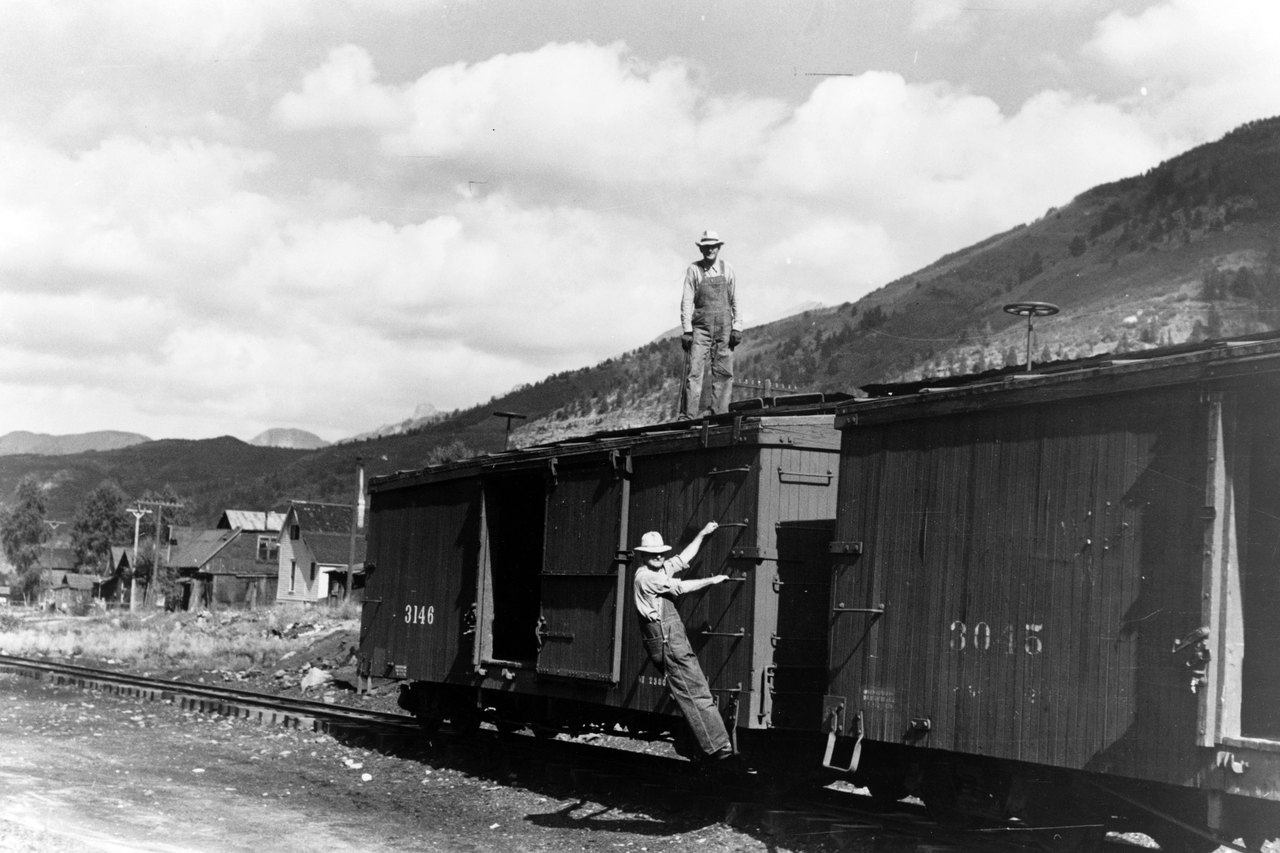
History · Riding the RailsWhen the dog Lucy drags Edward to her owner Bull, the rabbit joins the world of the hoboes. During the Great Depression of the 1930s, millions of people lost their jobs, and many wandered the country searching for work. They rode secretly in the boxcars of freight trains, hopping aboard as the cars rolled slowly out of the rail yards. At night they gathered around campfires to share food, songs, and stories of the homes they had left behind. It was a hard, hungry, and dangerous life always on the move. Knowing this history helps you understand why Bull and the others cling so tightly to small comforts — and why a quiet, listening rabbit becomes so precious to men so far from home.
heapn.Ch.13
A large, messy pile
“He lay somewhere inside the great heap.”
buryv.Ch.13
To cover something over completely
“Fresh garbage buried him deeper each day.”
stenchn.Ch.13
A strong, terrible smell
“The stench of the dump replaced the sea air.”
hobon.Ch.14
A traveling worker who rode the freight trains
“Bull was a gentle giant of a hobo.”
freightn.Ch.15
Goods carried by train, ship, or truck
“The freight trains ran day and night.”
boxcarn.Ch.15
An enclosed railway car for carrying goods
“They rode in a rattling boxcar.”
companionn.Ch.14–15
One who travels or lives alongside you
“Lucy made a warm, watchful companion.”
tatteredadj.Ch.15
Ragged and torn from wear
“Their coats grew more tattered each winter.”
murmurv.Ch.15
To speak in a low, soft voice
“The men murmured names into the firelight.”
joltn.Ch.16
A sudden, rough shake or blow
“A cruel jolt sent him from the moving train.”
ⓘ The vocabulary words in this list are selected to help you understand and complete this workbook. Some may not appear verbatim in the original novel.
1A large, messy pile is a ___.Ch.13
2A ‘stench’ is a lovely, delicate perfume.Ch.13
3A traveling worker who rode the freight trains was called a ___.Ch.14
4‘Freight’ means the passengers on a luxury train.Ch.15
5Fill in each blank with the correct word.Ch.13–14
Word choices:burycompanionheapstench- some words will not be used
Each day’s garbage seemed to him deeper.
Lucy made a warm, watchful .
6An enclosed railway car for carrying goods is a ___.Ch.15
7To ‘murmur’ is to speak in a low, soft voice.Ch.15
8Clothes ragged and torn from long wear are ___.Ch.15
9Fill in the blanks with the correct words.Ch.15–16
Word choices:joltmurmurboxcarfreight- some words will not be used
They rode north in a rattling .
A cruel ended the years on the rails.
10One who travels or lives alongside you is a ___.Ch.14–15
Part 2
Comprehension
Show you understood what happens in Chapters 13–16.
🧠Knowledge Bank · The Power of Listening
Reading Skill · Tracking a ThemeA theme is a big idea that runs through a whole story, and one theme grows strong in these chapters: the power of truly listening. Around the campfire, the hoboes tell Edward about their children and the homes they miss, and because he holds so still, he becomes the perfect listener. Track this idea as it returns, because a theme reveals itself by repeating. Edward cannot speak a single word, yet by simply paying attention he gives these lonely men something rare — the feeling of being heard. That is a quiet kind of love, and it is changing him. When you notice an idea appearing again and again, you have found the beating heart of the book’s deepest meaning.
1Where does Edward land after Lolly’s rubbish bin?Ch.13
2What does Edward begin to understand while buried?Ch.13
3A dog named Lucy digs Edward out of the dump.Ch.14
4What does Bull call the rabbit?Ch.14
5Write the numbers 1–5 in the boxes to show the correct order of events in Chapters 13–16. Number 1 = what happens first.Ch.13–16
A railroad man’s boot sends Edward from the train.
Bull names him Malone and takes him in.
Campfire men murmur loved ones’ names to Malone.
Edward lies buried in the town dump.
Lucy digs the rabbit out of the garbage.
6Bull treats Edward as a joke to entertain the other hoboes.Ch.14–15
7What do the men at the campfires do with Edward?Ch.15
8How do Edward’s years with Bull and Lucy pass?Ch.15
9Edward chooses to leave Bull and Lucy to continue alone.Ch.16
10How does this part of the journey end?Ch.16
Part 3
Literary Elements
Understanding HOW and WHY Kate DiCamillo tells the story across Chapters 13–16.
🧠Knowledge Bank · The Many Names of Edward
Literary Craft · MotifHave you noticed that every new owner gives Edward a new name? To Nellie he was Susanna; to Bull he becomes Malone. A detail that keeps returning in different forms is called a motif, and the changing names are one of this book’s richest. Each name marks a new life, a new set of people, a new leg of Edward’s long journey. Together they show how far he has traveled from the pampered rabbit on Egypt Street. A motif works like a thread stitched through the whole story, tying separate chapters into one shape. So when a name changes, pause and ask what has changed in Edward himself — because each new name quietly marks another place he has learned to belong.
Repetition
The plot’s drumbeat — found, renamed, loved, lost — each cycle deepening the change.
The Chorus
Many brief characters speaking one truth — the campfire men, each with a name to miss.
Symbol
The murmured names — love spoken aloud — making Edward the road’s keeper of hearts.
1Found, renamed, loved, lost — happening again and again — is the story using ___.Ch.13–16
2Fill in the blank with the correct literary term.Ch.15
Word choices:symbolchorussettingpacing- some words will not be used
The murmured names, carrying love aloud, work as a .
The many brief campfire voices act as a .
3Edward understanding Pellegrina’s tale AT THE DUMP — his lowest point — suggests that ___.Ch.13
4The campfire men trust Edward partly because a china rabbit can never mock them.Ch.15
5Naming the rabbit ‘Malone’ does for Edward what Susanna did: it ___.Ch.14
6The railroad man’s boot — sudden, unexplained, final — teaches the journey’s harshest rule: ___.Ch.16
7A chorus of minor characters can deliver a theme no single character carries alone.Ch.15
8Fill in the blank with the correct literary term.Ch.13–16
Word choices:repetitionsymbolironydialogue- some words will not be used
The recurring cycle of found-renamed-loved-lost is plot .
9Bull — huge, poor, gentle — continues the book’s pattern of rescuers who are ___.Ch.14
10Edward becoming the keeper of a hundred strangers’ loves — before understanding his own — makes the boxcar years ___.Ch.15
Part 4
Think Deeper
Four deeper challenges — no single-word recall. Read, weigh the evidence, and reason it out.
🧠Knowledge Bank · Feeling What Others Feel
Social-Emotional · EmpathyEmpathy means sharing in another person’s feelings — imagining your way into their joy or their sorrow. As the hoboes pour out their memories, Edward does something he never could have done before: he aches for them. He thinks of the children they miss and feels their loneliness as if it were his own. This is a huge step for a rabbit who once cared only about his silk suits. Empathy is what turns a cold heart warm, because you cannot truly feel for others while thinking only of yourself. The men’s hard lives on the road teach Edward that everyone he meets carries a hidden weight. Learning to feel another’s pain is one of the kindest and most human of all gifts.
Think back over the road years. A rabbit under eggshells finally hears an old story clearly. A dog’s nose finds him; a giant’s hands mend him into a family. Firelight, boxcars, and a parade of worn faces, each leaning close to whisper a name they cannot stop missing. Seasons of it — until iron rails and one indifferent boot scatter the family down the line, and the keeper of names lies alone in the gravel, still holding every one.
Original passage written for Garden Heights — not a quotation from the novel.
1Claim: “The boxcar years are Edward’s apprenticeship in love.” — choose the two details that best prove it.Claim & Evidence
2The dump (Chapter 13), or The road with Bull and Lucy? Tap each detail to send it left or right.Sort into two
◄ The dump (Chapter 13)The road with Bull and Lucy ►
3Match each cause to its result. For each cause, pick its result.Cause & Effect
Lolly’s rubbish reaches the town dump→
Lucy’s nose reads the buried treasure→
Bull’s family has room for one more→
Lonely men need a listener who cannot mock→
4Fill both blanks to complete the reasoning.Build the Argument
The campfire men murmur their loved ones’ names to a china rabbit because , which shows that .
Part 5
Standardized Test
Knights of the Road · SAT & TOEFL-style practice
🎯 You already have the skills from the sections above — this is just a fun way to meet real SAT & TOEFL-style questions. Read the passage (the highlighted words are tested below), then answer the questions below. Tap an answer to select it, then tap it again to confirm — you can change your choice until you confirm.
In the 1930s, America fell into the hard years called the Great Depression: banks failed, farms dried out, and millions of jobs simply vanished. With nothing to hold them, hundreds of thousands of people — mostly men, but women and children too — took to the railroads, slipping into empty boxcars to cross the country in search of labor: harvests to pick, wood to cut, any honest day’s work. They called themselves hoboes — traveling workers — and they insisted on the difference between a hobo, who wanders and works, and a bum, who only wanders. The road had its own civilization. Near the rail yards, camps the men called jungles offered a fire, a shared cooking pot, and unwritten rules: contribute what you can, harm no one, leave the camp clean. Hoboes even kept a written language of chalk marks — a signal scratched on a fence might mean ‘kind woman lives here’ or ‘bad dog.’ It was a hard life wrapped in real fellowship — and around its fires, strangers grew expert at one another’s sorrows.
Original passage written for Garden Heights — not a quotation from the novel.
1What was the Great Depression, according to the passage?TOEFL · Factual Information
2Why did so many people take to the railroads?SAT · Detail
3In the passage, “labor” means ___.SAT · Words in Context
4What difference did hoboes insist on?TOEFL · Factual Information
5What were the camps called ‘jungles’?SAT · Detail
6Which of these was a rule of the camps?TOEFL · Factual Information
7In the passage, a chalk “signal” on a fence was ___.TOEFL · Vocabulary
8What does the passage say strangers grew expert at, around the fires?SAT · Detail
9How does the passage connect to Chapters 14–16?SAT · Text Connections
10Insert Text (TOEFL). Look at the four squares [1]–[4] in the excerpt below. They show where this sentence could be added: “That fellowship is why a silent listener was treasured at the fires.”
The camps ran on shared pots and unwritten rules. [1] Around the fires, strangers grew expert at one another’s sorrows. [2] Some griefs, though, were easier to speak to ears that could never judge. [3] So the men told their names and losses to whatever would hold them. [4]
Where would the sentence fit best?TOEFL · Insert Text
Part 6 · Optional
Creative Writing
A bonus challenge to practice your English. Take your time and have fun with it.
About This Section
This writing task is optional and is not part of your auto-graded score. The feedback below checks only the basics — length, spelling, and grammar — not whether your ideas are right or wrong. It is meant for classroom discussion and creative practice, so feel free to use your imagination!
Writing Task — Part 4 “The Name I Would Say”
At the campfires, each man says the name he misses most. If you sat in that circle, whose name would you say, and what one story about them would you tell the fire? Write it the way the road men would — simply, and from the heart. Write at least 40 words.
You can start with: “When the fire burned low, I said the name I carry…”
0 / 40 words minimum
đź—Ł Teach It · Just for Fun (optional)
No right or wrong — close the screen and tell someone nearby what happened in this part. Can’t find anyone? Tell yourself out loud. The moment you teach it, you truly understand it.

Part 4 Complete!
You finished Chapters 13–16 of The Miraculous Journey of Edward Tulane.
Here are your auto-graded results:
-
points out of 100
Your Writing
Your writing was checked automatically for length, spelling, grammar, and whether you included the key parts of the scene. Scroll back to Part 5 anytime to read your feedback and improve your work.
Independent study guide by Garden Heights. Not affiliated with or endorsed by Kate DiCamillo. Contains original analysis only; no text from the novel is reproduced. Reference text: This workbook follows Kate DiCamillo’s classic text (the standard Puffin edition sold worldwide). Revised 2023 UK editions change some wording and may not match the vocabulary studied here.