New here? Just sign up with Google — your account includes Matilda, our gift book, forever.
The Miraculous Journey of Edward Tulane · Garden Heights
Part 5
for The Miraculous Journey of Edward Tulane · Part 5 · Chapters 17–19
8 Parts40 min
What Happens in Part 5
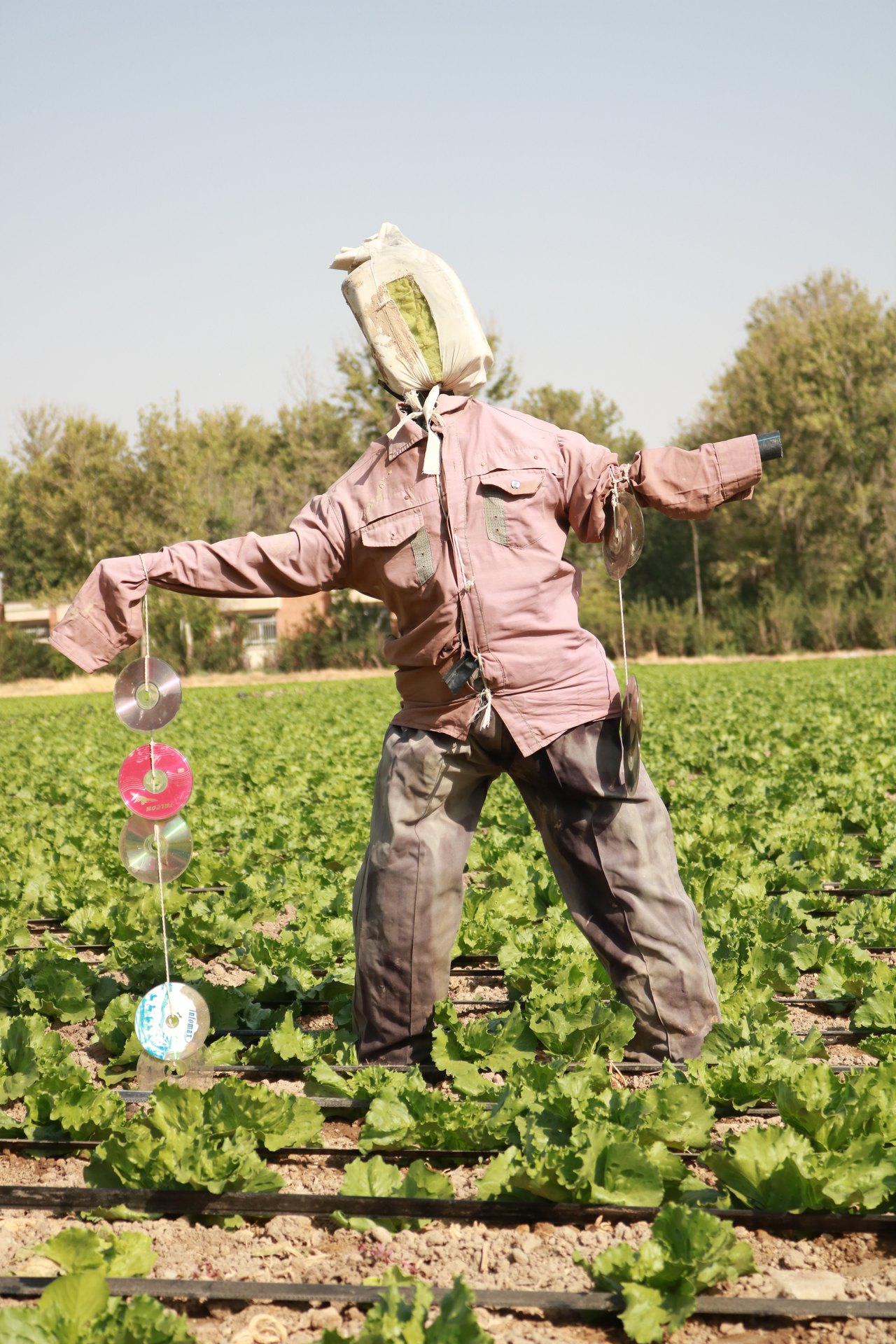
An old woman finds the rabbit lying by the tracks and puts him to the only use she can see: nailed up a pole in her garden, arms out, a china scarecrow over the crops. She calls him Clyde. Edward dangles there, day and night, ears fluttering, and something in him goes darker than the dump: after so many losses, he decides he is done with caring. But even a scarecrow has a watcher. Bryce, a thin, watchful boy who works the old woman’s garden, talks to the rabbit on the pole — and one moonlit night he climbs up, takes Edward down, and runs. He carries him home to a bare cabin where his little sister Sarah Ruth lies sick — a girl so fragile she seems made of the same stuff as Edward. Bryce puts the rabbit in her arms. She cradles him, beams — and the rabbit who swore he was done with caring feels his china heart, traitorously, begin again.
What We Will Learn
Section
What you will practice
Vocabulary
Words of the garden and the cabin: scarecrow, dangle, crops, cabin, fragile, cradle…
Literary Elements
The dark moment, reversal, and the kindness of the poor
Cross-Curricular
Why farmers raise scarecrows, and how crows keep outsmarting them
Chapter Summary
Ch.
What happens
17
Clyde — an old woman nails the rabbit up a garden pole as a scarecrow; Edward decides he is done with caring.
18
The Watcher — Bryce, the hired boy, talks to the rabbit on the pole — and takes him down by moonlight.
19
Sarah Ruth — in a bare cabin, Bryce lays Edward in his sick little sister’s arms — and a closed heart re-opens.
Part 1
Vocabulary
Study 10 key words from Chapters 17–19, then answer each question.
🧠Knowledge Bank · Scarecrows and Hungry Crows
History · Hard Times on the LandAfter Edward is thrown from the train, he is nailed up as a scarecrow in a garden. For hundreds of years, farmers have propped up figures in their fields to frighten off crows and other birds that steal the seeds and crops. In the poor, hungry years of the Depression, protecting every row of food truly mattered, for a raided garden could mean an empty table. So Edward, dressed in rags with his arms flung wide, is given a real and humble job to do. Picture how strange this is for a rabbit who once wore silk and gold. Knowing why scarecrows stand out in the fields helps you feel how low, and how oddly useful, Edward has now become.
scarecrown.Ch.17
A figure set up to frighten birds from crops
“They made the rabbit a scarecrow.”
danglev.Ch.17
To hang or swing loosely
“Edward dangled from the garden pole.”
flutterv.Ch.17
To wave or flap quickly in the air
“His ears fluttered in the wind.”
cropsn.Ch.17
Plants grown for food
“The old woman’s crops needed guarding.”
watchfuladj.Ch.18
Alert; observing closely
“Bryce was a thin, watchful boy.”
moonlitadj.Ch.18
Lit by the moon
“The rescue came on a moonlit night.”
cabinn.Ch.19
A small, rough house
“Bryce’s cabin was bare and poor.”
fragileadj.Ch.19
Delicate; easily broken
“Sarah Ruth was fragile as china.”
cradlev.Ch.19
To hold gently, as in one’s arms
“She cradled the rabbit close.”
tremblev.Ch.19
To shake gently
“Her thin arms trembled with the effort.”
ⓘ The vocabulary words in this list are selected to help you understand and complete this workbook. Some may not appear verbatim in the original novel.
1A figure set up to frighten birds away from crops is a ___.Ch.17
2To ‘dangle’ means to hang or swing loosely.Ch.17
3Plants grown for food are called ___.Ch.17
4Something ‘fragile’ is nearly impossible to break.Ch.19
5Fill in each blank with the correct word.Ch.17–18
Word choices:flutterwatchfuldanglemoonlit- some words will not be used
His ears would in the garden wind.
Bryce was a thin, boy.
6A small, rough house is a ___.Ch.19
7To ‘cradle’ something is to hold it gently in your arms.Ch.19
8Lit by the moon describes a ___ night.Ch.18
9Fill in the blanks with the correct words.Ch.19
Word choices:cradletremblecabinfragile- some words will not be used
Her thin arms would with the effort.
Bryce carried the rabbit home to the bare .
10Alert and observing closely means ___.Ch.18
Part 2
Comprehension
Show you understood what happens in Chapters 17–19.
🧠Knowledge Bank · When a Character Gives Up
Narrative Logic · When a Character Gives UpTracking how a character changes means noticing the low points as well as the high ones. By these chapters, Edward has loved and lost so many times — Abilene, Nellie, Bull — that he decides he is done with caring. He no longer lets himself hope, because hoping has brought him too much pain. This is a real and honest kind of change, and a sad one: a heart can close as surely as it can open. Mark this moment carefully, because a character often sinks lowest just before the turning point that lifts them. Ask yourself what has pushed Edward to give up, and whether a heart, once shut, can ever be coaxed open again. The lowest place in a story is where the deepest change is often born.
1What use does the old woman find for Edward?Ch.17
2What does the old woman call the rabbit?Ch.17
3On the pole, Edward decides he is done with caring.Ch.17
4Who is Bryce?Ch.18
5Write the numbers 1–5 in the boxes to show the correct order of events in Chapters 17–19. Number 1 = what happens first.Ch.17–19
Sarah Ruth cradles the rabbit in her arms.
Edward vows that he is done with caring.
The old woman nails the rabbit up as a scarecrow.
Bryce carries Edward home to the bare cabin.
By moonlight, Bryce climbs the pole and takes him down.
6Bryce buys Edward from the old woman with his wages.Ch.18
7Who waits at Bryce’s cabin?Ch.19
8What is the cabin like?Ch.19
9Edward’s vow of numbness survives Sarah Ruth’s smile.Ch.19
10Why does Bryce steal the scarecrow at real risk to himself?Ch.18–19
Part 3
Literary Elements
Understanding HOW and WHY Kate DiCamillo tells the story across Chapters 17–19.
🧠Knowledge Bank · A Rabbit on a Pole
Literary Craft · A Rabbit on a PoleEdward hanging in the garden is a striking symbol — a picture that carries a bigger meaning. Stuck on a pole, arms spread and unable to move, he is held helpless above a field, cut off from everyone below. His body cannot stir and, by now, his heart refuses to. A scarecrow’s whole job is to keep living things at a distance, and that is exactly what the closed-off Edward is trying to do: keep every feeling far away. So the image and his inner state rhyme perfectly. Great authors choose pictures that match what is happening inside a character. When you meet a strong image like this, pause and ask what feeling it quietly stands for, because the scene is showing you Edward’s guarded and lonely spirit.
The Dark Moment
The point of deepest loss — not the pole but the vow: ‘done with caring.’
Reversal
Fortune flipped in a stroke — the scarecrow nobody wanted becomes a dying girl’s treasure.
Theme
The kindness of the poor — the barest cabin gives Edward more than the mansion ever did.
1Edward’s vow that he is ‘done with caring’ is the story’s ___.Ch.17
2Fill in the blank with the correct literary term.Ch.18–19
Word choices:reversalthemeimagerynarrator- some words will not be used
Fortune flipping from pole to cradling arms is a .
The kindness of the poor is the part’s .
3Why is the vow of numbness worse than any physical low point?Ch.17
4The scarecrow scene reverses Edward’s role: once watched over, he now watches over.Ch.17
5Bryce talking to the rabbit BEFORE rescuing him matters because it shows ___.Ch.18
6Sarah Ruth being fragile ‘like china’ links her to Edward and suggests ___.Ch.19
7A reversal lands hardest when it follows the story’s darkest point.Ch.17–19
8Fill in the blank with the correct literary term.Ch.17
Word choices:dark momentreversalmotifirony- some words will not be used
A story’s point of deepest loss is its .
9The pattern of Edward’s rescuers — fisherman, hobo, hired boy — argues that in this book ___.Ch.18
10The heart restarting ‘traitorously’ — against Edward’s own vow — suggests the book believes ___.Ch.19
Part 4
Think Deeper
Four deeper challenges — no single-word recall. Read, weigh the evidence, and reason it out.
🧠Knowledge Bank · The Danger of Not Caring
Social-Emotional · Despair & Guarding the HeartWhen Edward declares he is finished with love, we reach the saddest place in his journey. It is easy to understand: every time he has opened his heart, someone has been torn away, and the ache has grown too heavy. So he tries to protect himself by feeling nothing at all. But the book gently shows us the danger in this. A heart that refuses to care may hurt less, yet it also grows cold, empty, and alone — which is its own kind of sorrow. Real courage is staying open even after you have been hurt. As you read, hold on to hope for Edward, because a life spent guarding against every pain can accidentally shut out every chance at joy.
Think back over the garden days. A rabbit nailed against the sky, ears snapping in the wind, makes the coldest promise of his life: never again. Below him a hired boy hoes rows and talks upward, softly, the way the lonely do. Then a moonlit climb, a run through the dark, a bare cabin — and thin arms closing around him like an answer. The heart he canceled comes back without asking permission.
Original passage written for Garden Heights — not a quotation from the novel.
1Claim: “Bryce’s rescue is an act of love for his sister, not theft for himself.” — choose the two details that best prove it.Claim & Evidence
2On the pole (Clyde), or In the cabin (with Sarah Ruth)? Tap each detail to send it left or right.Sort into two
◄ On the pole (Clyde)In the cabin (with Sarah Ruth) ►
3Match each cause to its result. For each cause, pick its result.Cause & Effect
The old woman sees only a use for junk→
Loss upon loss hardens the rabbit’s heart→
A lonely boy talks to the garden guard→
A sick girl needs one bright thing→
4Fill both blanks to complete the reasoning.Build the Argument
DiCamillo lets Edward’s heart restart in the POOREST home of the whole journey because , which shows that .
Part 5
Standardized Test
The Guard in the Garden · SAT & TOEFL-style practice
🎯 You already have the skills from the sections above — this is just a fun way to meet real SAT & TOEFL-style questions. Read the passage (the highlighted words are tested below), then answer the questions below. Tap an answer to select it, then tap it again to confirm — you can change your choice until you confirm.
For as long as people have farmed, birds have arrived at harvest time — and farmers have posted guards that never sleep. The scarecrow is an ancient answer to an ancient pest: a person-shaped figure of poles, straw, and cast-off clothes, raised above the ripening rows. Egyptian farmers guarded grain beside the Nile; Japanese farmers still raise straw kakashi over rice paddies. The design is a bluff — from a bird’s-eye view, anything person-shaped that stirs in the wind might be a farmer, and might mean danger. The bluff’s weakness is its audience. Crows, the scarecrow’s oldest opponents, are among the cleverest birds alive: they study what never moves, test it from a safe branch, and within days may perch on the guard itself. So farmers learned that an effective scarecrow must change — new rags, a new post, a head that swings — staying one surprise ahead of its audience. A guardian of cloth and straw, it turns out, keeps its job exactly as long as it keeps its mystery.
Original passage written for Garden Heights — not a quotation from the novel.
1What is a scarecrow, according to the passage?TOEFL · Factual Information
2In the passage, a “pest” is ___.TOEFL · Vocabulary
3Which farmers does the passage mention raising scarecrows?SAT · Detail
4Why does the scarecrow bluff work at all?TOEFL · Factual Information
5What makes crows such difficult opponents?SAT · Detail
6What may crows do to a failed scarecrow within days?TOEFL · Factual Information
7In the passage, an “effective” scarecrow is one that ___.SAT · Words in Context
8In the passage, a “guardian” is ___.TOEFL · Vocabulary
9How does the passage connect to Chapter 17?SAT · Text Connections
10The passage’s last line — a guardian keeps its job ‘as long as it keeps its mystery’ — means ___.TOEFL · Sentence Simplification
Part 6 · Optional
Creative Writing
A bonus challenge to practice your English. Take your time and have fun with it.
About This Section
This writing task is optional and is not part of your auto-graded score. The feedback below checks only the basics — length, spelling, and grammar — not whether your ideas are right or wrong. It is meant for classroom discussion and creative practice, so feel free to use your imagination!
Writing Task — Part 5 “Night Watch”
Imagine one night as the guard in the garden — scarecrow, garden gnome, or china rabbit on a pole. Describe your watch: what moves in the dark, what tests you, and what you think about while the house sleeps. Write at least 40 words.
You can start with: “The moon came up, and the crows began their questions…”
0 / 40 words minimum
🗣 Teach It · Just for Fun (optional)
No right or wrong — close the screen and tell someone nearby what happened in this part. Can’t find anyone? Tell yourself out loud. The moment you teach it, you truly understand it.

Part 5 Complete!
You finished Chapters 17–19 of The Miraculous Journey of Edward Tulane.
Here are your auto-graded results:
-
points out of 100
Your Writing
Your writing was checked automatically for length, spelling, grammar, and whether you included the key parts of the scene. Scroll back to Part 5 anytime to read your feedback and improve your work.
Independent study guide by Garden Heights. Not affiliated with or endorsed by Kate DiCamillo. Contains original analysis only; no text from the novel is reproduced. Reference text: This workbook follows Kate DiCamillo’s classic text (the standard Puffin edition sold worldwide). Revised 2023 UK editions change some wording and may not match the vocabulary studied here.