
New here? Just sign up with Google — your account includes Matilda, our gift book, forever.
Elmer and the Dragon · Garden Heights Academy
Part 3
for Elmer and the Dragon · Part 3 · Chapters 4
a novel by Ruth Stiles Gannett
30 min5 Parts
This workbook is built on a solid pedagogical foundation, effectively integrating content and language learning based on the CLIL framework (Content and Language Integrated Learning), elevated by our unique 5th C — Connection — and an integrated Standardized Test section that weaves every SAT & TOEFL question type right into the novel, so learners build real test skills easily, naturally, and with fun.
What Happens in Part 3
Exploring deeper into the island, Elmer makes a surprising discovery: the trees grow in neat rows, and there is a little brook with skunk cabbages along its banks. Plants do not usually grow in such tidy lines by themselves, so Elmer realizes that people must once have lived here and planted them. He gathers tangerines and other refreshments to carry back to the worn-out dragon, all the while wondering who settled this lonely place and where they have gone.
What We Will Learn
Focus
What It Means
Reading Clues
How Elmer infers that people once lived here
Science (Plants)
Why planted trees grow in neat rows
Geography
Signs that humans have settled a place
Chapter Summary
Chapter
Key Events
Ch.4
Elmer finds neatly planted trees and a brook, and realizes humans once settled the island; he gathers food to help the dragon recover
💭 Before You Read · Warm-Up (not scored)
There are no wrong answers here — just think, guess, and talk:
Elmer works out that people once lived on the island — without meeting a single person. What clues might tell you a place used to be somebody’s home?
Why do plants growing in perfectly straight rows prove that someone planted them?
Predict: if people once lived here and then left, what could have made them go — and are they truly gone?
Copyright Notice
This is an independent study guide created by Garden Heights Academy to support reading comprehension and literary analysis. It contains original analysis questions and does not reproduce any text from the novel. Elmer and the Dragon is a work by Ruth Stiles Gannett. This guide is not affiliated with, authorized by, or endorsed by the author or any associated rights holders. Students should read the original book, available from libraries and booksellers.
Part 1
Vocabulary
Study 10 key words from Chapters 4, then answer each question.
🧠Knowledge Bank · Where Canaries Come From
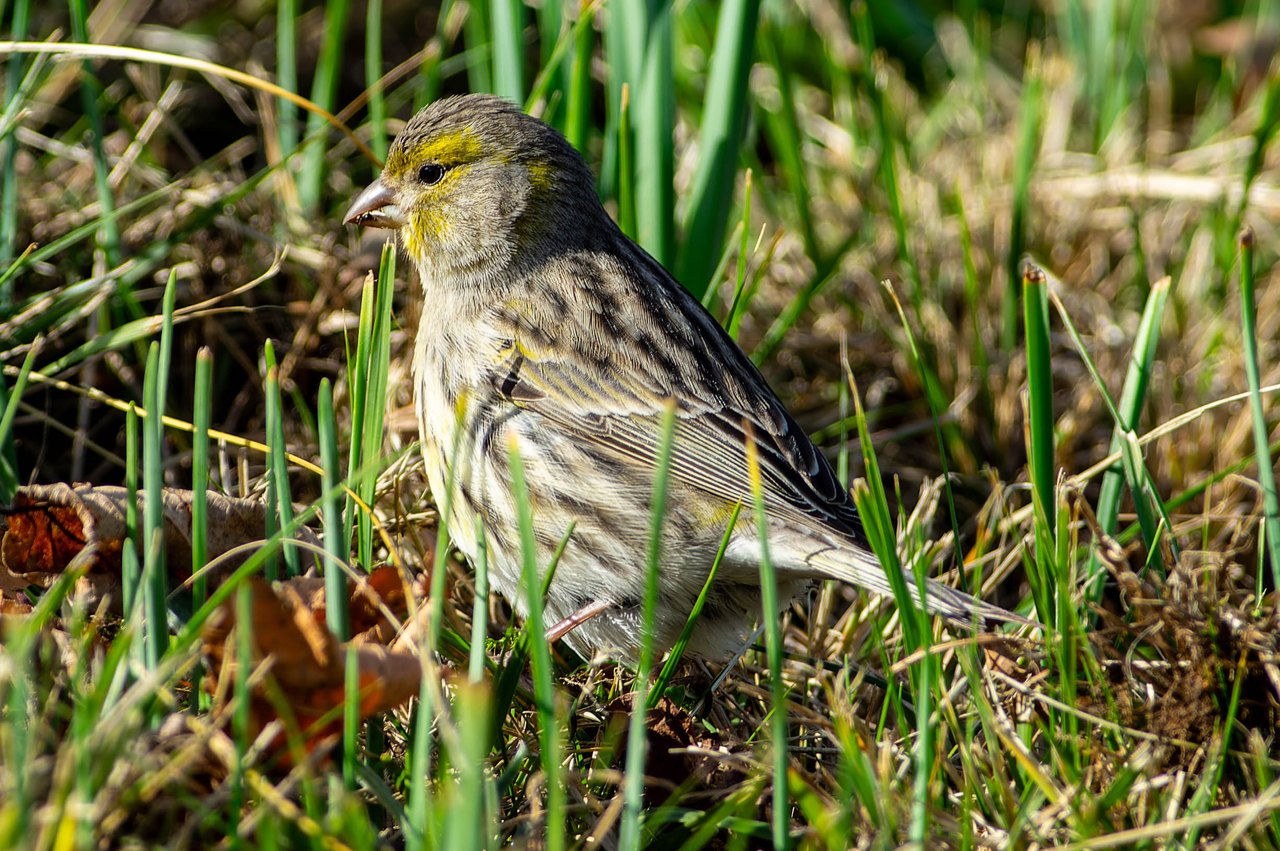
Ornithology · CanariesOn this island Elmer meets talking canaries. Real canaries are small songbirds. Wild ones are mostly greenish-yellow, while the bright lemon-yellow canaries people keep in cages were bred by humans over many years. Canaries are famous for their sweet singing. They got their name from a group of islands in the ocean called the Canary Islands, near the coast of Africa. Here is a surprise: those islands were not named after the bird — the bird was named after the islands! Sailors once carried canaries all over the world. Now you know the true story behind every cheerful little yellow canary.
brookn.Ch.4
A small stream
“A clear brook ran through the trees.”
orchardn.Ch.4
A place where fruit trees are grown
“The trees stood in rows like an orchard.”
settlev.Ch.4
To make a home in a new place
“People must have settled here long ago.”
gatherv.Ch.4
To collect things together
“Elmer gathered fruit for the dragon.”
orderlyadj.Ch.4
Neatly arranged
“The trees grew in orderly rows.”
realizev.Ch.4
To suddenly understand something
“Elmer realized people had lived here.”
evidencen.Ch.4
Signs that show something is true
“The neat rows were evidence of people.”
abandonv.Ch.4
To leave a place for good
“The settlers seemed to abandon the island.”
sproutv.Ch.4
To begin to grow
“Green shoots sprouted along the brook.”
refreshv.Ch.4
To make someone feel cool and rested
“Cool fruit would refresh the tired dragon.”
ⓘ The vocabulary words in this list are selected to help you understand and complete this workbook. Some may not appear verbatim in the original novel.
1A small stream is a ___.Ch.4
2True or False: An “orchard” is a place where fruit trees are grown.Ch.4
3To “settle” in a place means to ___.Ch.4
4True or False: Something “orderly” is messy and scattered.Ch.4
5Fill in each blank with the correct word.Ch.4
Word choices:realizeevidencegatherabandon- some words will not be used
The neat rows were that made Elmer people had once lived here.
6True or False: To “abandon” a place means to leave it for good.Ch.4
7To “gather” things means to ___.Ch.4
8True or False: To “sprout” means to begin to grow.Ch.4
9Fill in the blanks with the correct words.Ch.4
Word choices:gatherrefreshorderlybrook- some words will not be used
Elmer stopped to fruit that would the tired dragon.
10Signs that show something is true are called ___.Ch.4
Part 2
Comprehension
How well do you understand Chapters 4?
🧠Knowledge Bank · Why Things Happen
Reading Skill · Cause & EffectStories are built on cause and effect. A cause is why something happens. An effect is what happens because of it. The storm was a cause, and being blown to this island is the effect. One event pushes the next, like a line of falling dominoes. Good readers keep asking two questions: why did this happen, and what happened because of it? Words like because, so, and since often point to a cause and its effect. When you can trace how one thing leads to another, the whole story fits together, and every action reveals its effect.
1What does Elmer notice about the trees on the island?Ch.4
2What does Elmer find running through the island?Ch.4
3What does Elmer conclude from the neat rows of trees?Ch.4
4True or False: Elmer gathers food to bring back to the dragon.Ch.4
5Write the numbers 1–5 in the boxes to show the correct order of events in Part 3.Ch.4
He finds a brook with skunk cabbages along it.
Elmer explores deeper into the green island.
Elmer gathers food to take back to the dragon.
He notices the trees grow in neat, orderly rows.
He realizes people must once have settled here.
6True or False: Elmer sees the people who planted the trees.Ch.4
7Why are neat rows of trees an important clue?Ch.4
8What grows along the banks of the brook?Ch.4
9True or False: Elmer forgets all about the dragon while he explores.Ch.4
10Fill in the blanks to complete the sentence.Ch.4
Word choices:peoplerowsdragonscities- some words will not be used
Because the trees grew in neat , Elmer knew that had once lived here.
Part 3
Literary Elements
Understanding HOW and WHY Ruth Stiles Gannett creates certain feelings across Chapters 4.
🧠Knowledge Bank · Showing Instead of Telling
Literary Craft · Show, Don’t TellGood writers like to show instead of tell. Telling would be flat: the canaries were sad. Showing paints a picture instead: drooping wings, quiet songs, and rows of birds that barely lift their heads. From those details, you feel the sadness yourself, without being told the word. Ruth Stiles Gannett fills her island with such small, clear pictures. As you read, hunt for the details that let you see and hear a scene. Ask what each little clue is showing you about how a character feels. A writer who shows, rather than tells, lets the reader discover meaning through vivid details.
📚 Literary Devices in This Part · definitions & examples
An inference is a smart guess made from clues, like Elmer deciding people once lived here.Good writers show clues and let readers conclude things for themselves.A detail is a small fact, like the neat rows of trees, that carries big meaning.
The questions below are mixed — not grouped by device. Decide which device each one is about.
1Instead of telling us people lived here, the author shows clues — this craft is —Ch.4
2‘Showing, not telling’ reveals ideas through clues and details.Ch.4
3Fill in each blank with the correct word.Ch.4
Word choices:showinginferenceimagerysetting- some words will not be used
Revealing that people lived here through clues, not plain telling, is
What Elmer figures out from those clues is an .
4What Elmer concludes from the neat rows and brook is an —Ch.4
5An inference is a conclusion drawn from clues and evidence.Ch.4
6Fill in each blank with the correct word.Ch.4
Word choices:imageryshowinginferencemood- some words will not be used
The vivid pictures of rows, brook, and trees are
What Elmer reasons out from the clues is an .
7The vivid word-pictures of the orchard and brook are —Ch.4
8Elmer reasoning that people once lived here is an —Ch.4
9Fill in each blank with the correct word.Ch.4
Word choices:showinginferenceimageryplot- some words will not be used
Revealing ideas through clues is
The conclusion Elmer draws is an .
10The author showing clues instead of telling mainly makes readers —Ch.4
Part 4
Think Deeper
Four deeper challenges — no single-word recall. Read, weigh the evidence, and reason it through.
🧠Knowledge Bank · Noticing the Small Things
Thinking Skill · ObservationElmer solves problems by noticing. He watches closely and remembers small things other people miss. That careful attention is a kind of cleverness anyone can practice. On this island, the tiny details he spots will help him understand the canaries’ big mystery. In your own life, noticing matters too: a look on a friend’s face, a clue in a math problem, a change in the weather. Slow down and really look. Ask what the small signs are telling you. Elmer never rushes past what his eyes and ears report. Paying close attention to little things is often the first step to being truly clever.
1Claim: “Elmer figures out that the island is not as wild as it seems.” — choose the two details that best prove it.Claim & Evidence
2Shows Elmer reasoning from clues, or just a detail of the scene? Tap each item to send it left or right.Sort into two
◄ Reasoning from cluesJust a detail ►
3Match each cause to its result. For each cause, pick its result.Cause & Effect
Elmer explores deeper→
Plants don’t grow in tidy lines alone→
He looks for more clues→
He puts the clues together→
4Fill both blanks to complete the reasoning.Build the Argument
Elmer’s discovery shows that , which means that .
Part 5
Standardized Test
Factual Details & EXCEPT Questions — SAT & TOEFL-style practice
🎯 You already have the skills from the sections above — this is just a fun way to meet real SAT & TOEFL-style questions. Read the passage (the highlighted words are tested below), then answer the questions below. Tap an answer to select it, then tap it again to confirm — you can change your choice until you confirm.
When explorers or scientists reach an empty place, they can often tell that people once lived there long ago, even with no one left to ask. They look for clues that nature could not have made on its own. Straight rows of trees or plants are one of the strongest signs, because wild seeds fall at random and never grow in tidy lines — only a farmer plants an orchard that way. Other clues include the low remains of stone walls, broken pieces of pot or pottery, flattened ground where buildings once stood, and fruit trees still bearing food far from any wild forest. Scientists who study these traces are called archaeologists, and they treat a site like a puzzle, reading each clue to reconstruct a vanished way of life. What they cannot learn from clues alone is a person’s name or exact thoughts — those are lost. But from the patient reading of evidence, a whole community can step back out of the silence, hundreds of years after its people are gone.
Original passage written for Garden Heights — not a quotation from the novel.
1In the passage, “clues” are —SAT · Words in Context
2Why are straight rows of plants such a strong sign of people?TOEFL · Factual Information
3An “orchard” is —SAT · Words in Context
4The passage lists all of the following as clues that people once lived somewhere EXCEPT —TOEFL · Negative Fact (EXCEPT)
5“Pottery” is —SAT · Words in Context
6What are scientists who study these traces called?TOEFL · Factual Information
7The passage suggests that from a few clues, one can — the past.SAT · Inference
8What can the reader infer about archaeology from the passage?SAT · Inference
9Which sentence best states the main idea of the passage?SAT · Central Ideas
10The author writes that a community can “step back out of the silence” mainly to —TOEFL · Rhetorical Purpose
Part 6 · Optional
Creative Writing
A bonus challenge to practice your English. Take your time and have fun with it.
About This Section
This writing task is optional and is not part of your auto-graded score. The feedback below checks only the basics — length, spelling, and grammar — not whether your ideas are right or wrong. It is meant for classroom discussion and creative practice, so feel free to use your imagination!
Writing Task — Part 3 “Signs of the Past”
Elmer finds clues that people once lived on the island. Imagine you discover an old, empty place — a cabin, a garden, or a ruin. Describe three clues you find and explain what you think happened to the people who lived there. Write at least 40 words.
You can start with: “The first clue that someone had once lived here was…”
0 / 40 words minimum
🗣 Teach It · Just for Fun (optional)
No right or wrong — close the screen and tell someone nearby what happened in this part. Can’t find anyone? Tell yourself out loud. The moment you teach it, you truly understand it.

Part 3 Complete!
You finished Chapters 4 of Elmer and the Dragon.
Here are your auto-graded results:
-
points out of 100
Your Writing
Your writing was checked automatically for length, spelling, grammar, and whether you included the key parts of the scene. Scroll back to Part 5 anytime to read your feedback and improve your work.
Independent study guide by Garden Heights Academy. Not affiliated with or endorsed by the author or any rights holders. Contains original analysis only; no text from the novel is reproduced.