New here? Just sign up with Google — your account includes Matilda, our gift book, forever.
Esperanza Rising · Garden Heights
Part 2
for Esperanza Rising · Part 2 · Las Papayas & Los Higos
8 Parts40 min
What Happens in Part 2
With Papa gone, Tio Luis makes his move. He offers to marry Mama — not out of love, but because their marriage would hand him the ranch, the land, and Esperanza herself, whom he would send away to school. Mama refuses him with quiet dignity, and Esperanza is proud of her. But Tio Luis is not a man who accepts no. One night the great house and its grapes are set ablaze; the family escapes into the dark, but the estate they have loved is reduced to smoke and ruin, and Abuelita hurts her ankle in the flight. Tio Luis returns and repeats his proposal, warning that a widow and her mother have no future in Mexico without him. This time Mama seems to give in — but it is a trick. In secret she plans to flee to the United States with the family’s loyal former servants: Hortensia, her husband Alfonso, and their son Miguel, who has always been Esperanza’s quiet friend. Alfonso’s relatives already work at a farm camp in California. Abuelita, too injured to travel, will stay behind to heal with the sisters at a convent and follow when she can. The plan is desperate and dangerous, and it means Esperanza must leave behind everything that made her who she was — including, for now, her grandmother.
The villain’s ultimatum, the fire as turning point, and a secret plan
Cross-Curricular
Why Mexicans crossed to California for farm work in the 1930s
Chapter Summary
Ch.
What happens
Las Papayas
The Papayas — Tio Luis offers to marry Mama to seize the ranch and send Esperanza away; Mama refuses him, and his cold ambition turns to threat.
Los Higos
The Figs — the house and vineyard are burned; Abuelita is hurt in the escape; Mama pretends to accept Tio Luis while secretly planning to flee to California with Hortensia, Alfonso, and Miguel.
Part 1
Vocabulary
Study 10 key words from Las Papayas & Los Higos, then answer each question.
🧠Knowledge Bank · Words of Threat and Flight
Lexical Semantics · Words of Threat and Flight
Four words, and three of them are about a woman with no protection left. A proposal is an offer of marriage, or a plan put forward — and Tío Luis’s is a trap dressed as kindness. A widow is a woman whose husband has died, which is what Mama becomes and what makes her vulnerable in the first place. Dignity is calm, self-respecting seriousness, and it is the only weapon Mama has when she refuses him. Ablaze means on fire, burning brightly, and by midnight the whole house is. It burns because she said a single word. Notice what the fire is for. Luis cannot take the estate by law while Mama says no, so the book shows you exactly what a refusal costs a woman who owns everything and controls nothing.
proposaln.Las Papayas
An offer of marriage, or a plan put forward
“His proposal was a trap dressed as kindness.”
widown.Las Papayas
A woman whose husband has died
“As a widow, Mama had to guard the family alone.”
dignityn.Las Papayas
Calm, self-respecting seriousness
“Mama refused him with quiet dignity.”
ablazeadj.Los Higos
On fire; burning brightly
“By midnight the whole house was ablaze.”
fleev.Los Higos
To run away from danger
“They would flee north before the uncle could act.”
conventn.Los Higos
A place where nuns live and care for others
“Abuelita would heal at the convent with the sisters.”
ruinn.Los Higos
The remains of something destroyed
“By dawn the estate was a smoking ruin.”
desperateadj.Los Higos
Filled with a sense of hopeless urgency
“The plan was desperate, but there was no other choice.”
loyaladj.Los Higos
Faithful and steady in support
“The loyal servants risked everything to help them.”
ultimatumn.Las Papayas
A final demand backed by a threat
“His offer was really an ultimatum: marry me or lose everything.”
ⓘ The vocabulary words in this list are selected to help you understand and complete this workbook. Some may not appear verbatim in the original novel.
🧠Knowledge Bank question
1According to the Knowledge Bank, what makes Mama vulnerable to Tio Luis?Las Papayas
2If a house is ‘ablaze,’ it is covered in snow.Los Higos
3To ‘flee’ is to ___.Los Higos
4‘Dignity’ means loud, angry shouting.Las Papayas
5Fill in each blank with the correct word.Los Higos
Word choices:conventruinwidowharvest- some words will not be used
By dawn the grand estate was a smoking .
Abuelita would heal at the with the sisters.
6An ‘ultimatum’ is ___.Las Papayas
7A ‘convent’ is a place where soldiers train.Los Higos
8Someone who is ‘loyal’ is ___.Los Higos
9Fill in each blank with the correct word.Los Higos
Word choices:desperatefleeproposaldignity- some words will not be used
The plan was , but there was no other choice.
They would north before the uncle could act.
10A ‘proposal’ can mean an offer of marriage OR ___.Las Papayas
Part 2
Comprehension
Show you understood what happens in Las Papayas & Los Higos.
🧠Knowledge Bank · From Ranch to Refugee
Narrative Causality · From Ranch to Refugee
The events of Las Papayas & Los Higos become clearer when readers separate a character’s motive from the obstacle encountered and the response that follows. With Papa gone, Tio Luis makes his move. He offers to marry Mama — not out of love, but because their marriage would hand him the ranch, the land, and Esperanza herself, whom he would send away to school. Mama refuses him with quiet dignity, and Esperanza is proud of her. But Tio Luis is not a man who accepts no. One night the great house and its grapes are set ablaze; the family escapes into the dark, but the estate they have loved is reduced to smoke and ruin, and Abuelita hurts her ankle in the flight. Following motive through response reveals why “From Ranch to Refugee” forms a consequential sequence.
Visual AidFour steps from a great house to a train
Diagram for the Knowledge Bank on the fall from the ranch. The four cards are the chain the Knowledge Bank runs, in order, and card 5 is what the chain adds up to. Notice that the fire is not random cruelty. It is step three, and it follows step two, which is the moment a woman with no legal power says no to a man who has all of it.
How one refusal turns a family into refugees, as described in the Knowledge Bank. Drawn for Garden Heights Academy.
🧠Knowledge Bank question
1The Knowledge Bank explains that Tio Luis proposes marriage in order to ___.Las Papayas
2Mama’s first response to the proposal is to ___.Las Papayas
3The house burns down by accident when a candle tips over.Los Higos
4Abuelita is hurt when she ___.Los Higos
5Write the numbers 1–5 in the boxes to show the correct order of events. Number 1 = what happens first.Las Papayas & Los Higos
The house and vineyard are set ablaze.
Mama pretends to accept Tio Luis’s second offer.
Mama refuses him with dignity.
The family secretly plans to flee to California.
Tio Luis proposes marriage to seize the ranch.
6Mama’s second ‘yes’ to Tio Luis is sincere.Los Higos
7The family plans to escape with ___.Los Higos
8Abuelita does NOT leave with them because she ___.Los Higos
9Leaving means Esperanza gives up her old wealthy life.Los Higos
10By the end of Part 2, Esperanza is best described as ___.Los Higos
Part 3
Literary Elements
Understanding HOW and WHY Pam Muñoz Ryan tells the story across Las Papayas & Los Higos.
🧠Knowledge Bank · The Fire as a Hinge
Narrative Technique · The Fire as a Hinge
The craft of Part 2 works through antagonist, point, and suspense, each shaping how readers judge the new conflict. Every long story turns on a hinge — a single event after which nothing can go back — and in Esperanza Rising the hinge is the fire. Before it, escape is one option among several; after it, the family has no home, no vineyard, and no wealth to bargain with, and flight becomes the only road. Notice how Ryan uses a physical event (a burning house) to force an emotional and social one (a rich girl becoming a refugee). The fire is not just cruelty; it is the machine that pushes Esperanza off the mountain of her old life and down into the valley where the real story lives. That authorial design makes “The Fire as a Hinge” a lesson in deliberate suspense.
Antagonist
Tio Luis — the character whose greed drives the conflict and forces the family to flee.
Turning point
The fire — the single event after which the family cannot return to their old life.
Suspense
The secret plan — the reader’s worry over whether the family can escape before Tio Luis discovers the trick.
🧠Knowledge Bank question
1According to the Knowledge Bank, why is the fire called a hinge?Las Papayas
2Fill in each blank with the correct literary term.Los Higos
Word choices:turning pointsuspensesettingrhyme- some words will not be used
The fire is the story’s — after it, nothing can go back.
The fear that the family may be caught before they flee is .
3Suspense is the reader’s certainty that everything will be fine.Los Higos
4Mama’s fake ‘yes’ raises suspense because the reader fears Tio Luis will ___.Los Higos
5An antagonist is best defined as the character who ___.Las Papayas
6A turning point can happen many times on every page.Los Higos
7Ryan burns the house instead of letting the family simply choose to leave in order to make the escape feel ___.Los Higos
8Fill in each blank with the correct literary term.Las Papayas
Word choices:antagonistironymotifnarrator- some words will not be used
Tio Luis, who opposes the family and drives the conflict, is the .
Calling his threat a ‘proposal’ is an example of .
9The word ‘proposal’ here is ironic, since the offer is really a threat.Las Papayas
10The strongest source of suspense at the end of Part 2 is whether the family can ___.Los Higos
Part 4
Think Deeper
Four deeper challenges — no single-word recall. Read, weigh the evidence, and reason it out.
🧠Knowledge Bank · A Door Closing at Home
Why Families Left Mexico · A Door Closing at Home
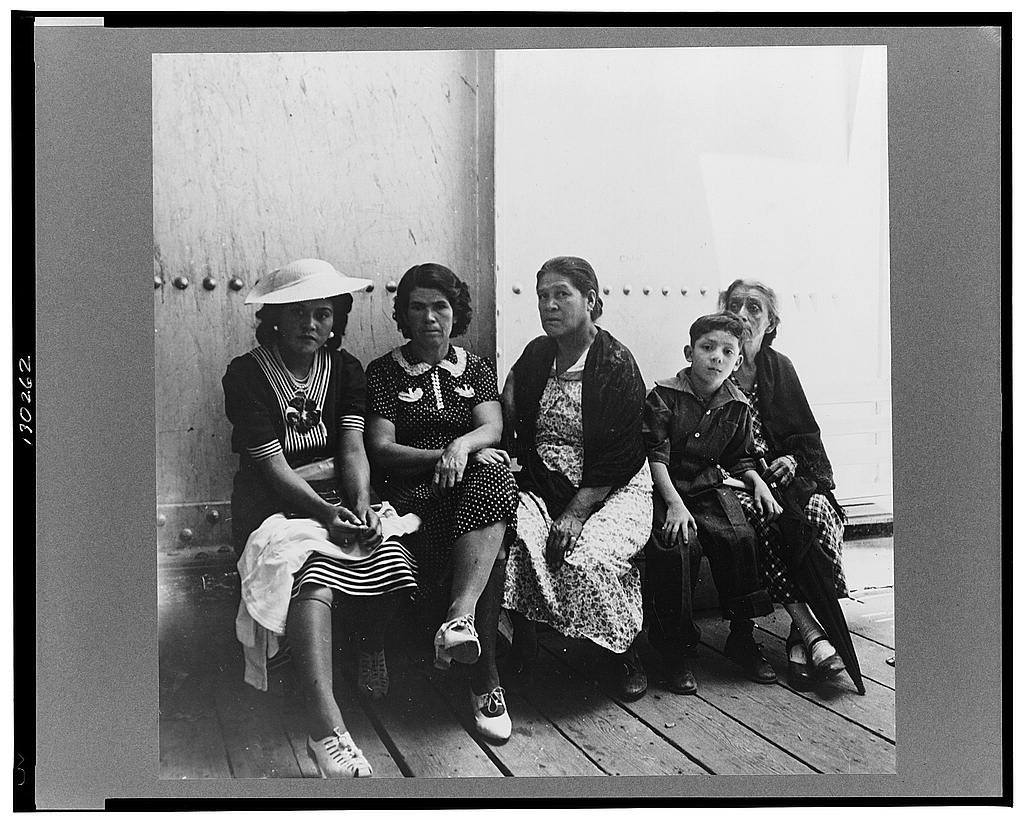
Esperanza’s flight is invented, but the road she takes was real and crowded. In the 1920s and 1930s, hundreds of thousands of Mexicans crossed north into the United States, many to work the vast farms of California’s Central Valley, which needed cheap hands to pick its fruit and vegetables. Some were pushed by poverty and by the danger and instability that lingered after the Revolution; others were pulled by labor agents promising steady work and pay unheard of at home. Esperanza’s family carries a private terror — a scheming uncle — but their route was the same one thousands of ordinary families walked for ordinary reasons: there was no future left where they stood, and the fields of El Norte were hiring. Keep both halves of that in view. Ryan gives Esperanza a villain so the plot can move, but she is careful to put the family on a train that was already full — which is how a private disaster gets told as a public history.
Visual AidWaiting at the door of another country
A family waiting at the United States immigration station at El Paso, Texas, photographed for a federal agency in 1938. The Knowledge Bank explains that in the 1920s and 1930s hundreds of thousands of Mexicans crossed north, some pushed by poverty and the danger left over from the Revolution, others pulled by agents promising steady work in California’s fields. Look at the grandmother at the end of the bench. Esperanza’s family has a villain of its own, but the bench they wait on was already full.
Family at the United States immigration station, El Paso, Texas, 1938; Farm Security Administration photograph. Source: Wikimedia Commons, public domain.
Think back over these chapters. A cold man in a fine suit offers marriage the way a banker offers a loan, and a widow answers him with a steadiness that costs her everything. Days later the sky over the vineyard turns orange; smoke pours from the windows of the only home a girl has ever known, and an old woman limps out into the dark. The cold man comes again, smiling, sure now that he has won — and the widow lowers her eyes and says yes, and means no. In a back room, by candlelight, servants who once carried the family’s dishes now plan to carry the family itself across a border, while a grandmother packs a half-finished blanket she cannot yet follow.
Original passage written for Garden Heights — not a quotation from the novel.
1Claim: “Part 2 argues that the fire, not the proposal, is what truly traps the family into fleeing.” — choose the two details that best prove it.Claim & Evidence
2Tio Luis’s public face, or Tio Luis’s real aim? Tap each detail to sort it — tap again to switch sides. You can keep tapping to change your answer.Sort into two
◄ Tio Luis’s public faceTio Luis’s real aim ►
3Match each cause to its result. For each cause, pick its result.Cause & Effect
Tio Luis proposes marriage→
Mama refuses him with dignity→
The house is set ablaze→
Mama pretends to accept→
🧠Knowledge Bank question
4Fill both blanks to complete the reasoning.Build the Argument
The Knowledge Bank argues that Esperanza's road north was a crowded one because , which shows that .
Part 5
Standardized Test
Reading passage · El Norte: Leaving Mexico in the 1930s · SAT & TOEFL-style practice
Read the passage — the highlighted words are tested — then answer. Tap an answer, then tap it again to confirm.
SATCentral Ideas — the passage's main point
SATWords in Context — a word's meaning in this passage
SATDetail — a fact stated in the passage
SATInference — a conclusion the passage implies
TOEFLFactual Information — a fact stated in the passage
TOEFLVocabulary — a tested word's meaning here
TOEFLProse Summary — the three sentences that sum it up
TOEFLInference — what the passage implies
Mexican Migration to 1930s California
Esperanza's family flees for private reasons, but the road they take was a highway for hundreds of thousands. In the decades around 1930, great numbers of Mexicans crossed north into the United States, and many settled in California's Central Valley, a stretch of flat, sun-baked farmland that fed much of the nation. The valley's enormous farms depended on human hands: hands to thin the fruit, cut the asparagus and tie the vines. Some families came because the work was there, and others came because ruin at home had left them nothing to stay for.
Life on the other side of the border rarely matched the promise. Families lived in company camps, in small wooden cabins with dirt between them, and worked from before dawn until their backs gave out, all for wages that barely covered food. Many arrived desperate enough to accept any terms offered. When the Great Depression struck after 1929, the welcome grew colder still: as jobs vanished, Mexican workers were blamed for taking work Americans now wanted, and hundreds of thousands were pressured or forced across the border, a great many of them United States citizens by birth.
Original passage written for Garden Heights — not a quotation from the novel.
1What is the main idea of the passage?SAT · Central Ideas
2According to the passage, California’s farms hired Mexican workers because they needed ___.TOEFL · Factual Information
3In the passage, ruin most nearly means ___.SAT · Words in Context
4The Central Valley is described as ___.SAT · Detail
5According to the passage, the promise of life across the border ___.TOEFL · Factual Information
6In the passage, desperate most nearly means ___.TOEFL · Vocabulary
7How did the Great Depression change the treatment of Mexican workers?TOEFL · Factual Information
8That even U.S.-BORN people were forced to leave shows the pressure fell on Mexican families based on ___.SAT · Inference
9Prose Summary (TOEFL).The passage describes why Mexican families migrated to California and what they found there. This TOEFL task lists six sentences; choose the THREE that best capture the passage’s main ideas. The other three do not belong — they state minor details or ideas the passage does not present.TOEFL · Prose Summary
10Which choice from Part 2 does this passage BEST help explain?TOEFL · Inference
Part 6 · Optional
Creative Writing
A bonus challenge to practice your English. Take your time and have fun with it.
About This Section
This writing task is optional and is not part of your auto-graded score. The feedback below checks only the basics — length, spelling, and grammar — not whether your ideas are right or wrong. It is meant for classroom discussion and creative practice, so feel free to use your imagination!
Writing Task — Part 2 “A Yes That Means No”
To protect her family, Mama says ‘yes’ to Tio Luis while secretly planning to escape — a hard choice made under pressure. Write about a time you had to make a difficult choice to protect yourself or someone you cared about. What was the situation, what did you decide, and how did it feel? 6–10 sentences. End with what the choice taught you.
You can start with: “I did not want to do it, but I could not see another way...”
0 / 40 words minimum
🗣 Teach It · Just for Fun (optional)
No right or wrong — close the screen and tell someone nearby what happened in this part. Can’t find anyone? Tell yourself out loud. The moment you teach it, you truly understand it.
Part 2 Complete!
You finished Las Papayas & Los Higos of Esperanza Rising.
Here are your auto-graded results:
-
points out of 100
Teach it to someone
The best last step is to teach it. In your own words, explain what happened — retell a favorite scene, teach a character’s big choice, or sum up the main idea for a parent, friend, or classmate. When you can teach it clearly, you truly own it.
Independent study guide by Garden Heights. Not affiliated with or endorsed by Pam Muñoz Ryan. Contains original analysis only; no text from the novel is reproduced. Reference text: This workbook follows Pam Muñoz Ryan’s classic text (the standard Puffin edition sold worldwide). Revised 2023 UK editions change some wording and may not match the vocabulary studied here.
SAT® is a registered trademark of College Board, which is not affiliated with, and does not endorse, these materials. TOEFL® is a registered trademark of ETS. These materials are not endorsed or approved by ETS. Garden Heights is an independent provider of test-style reading practice.